
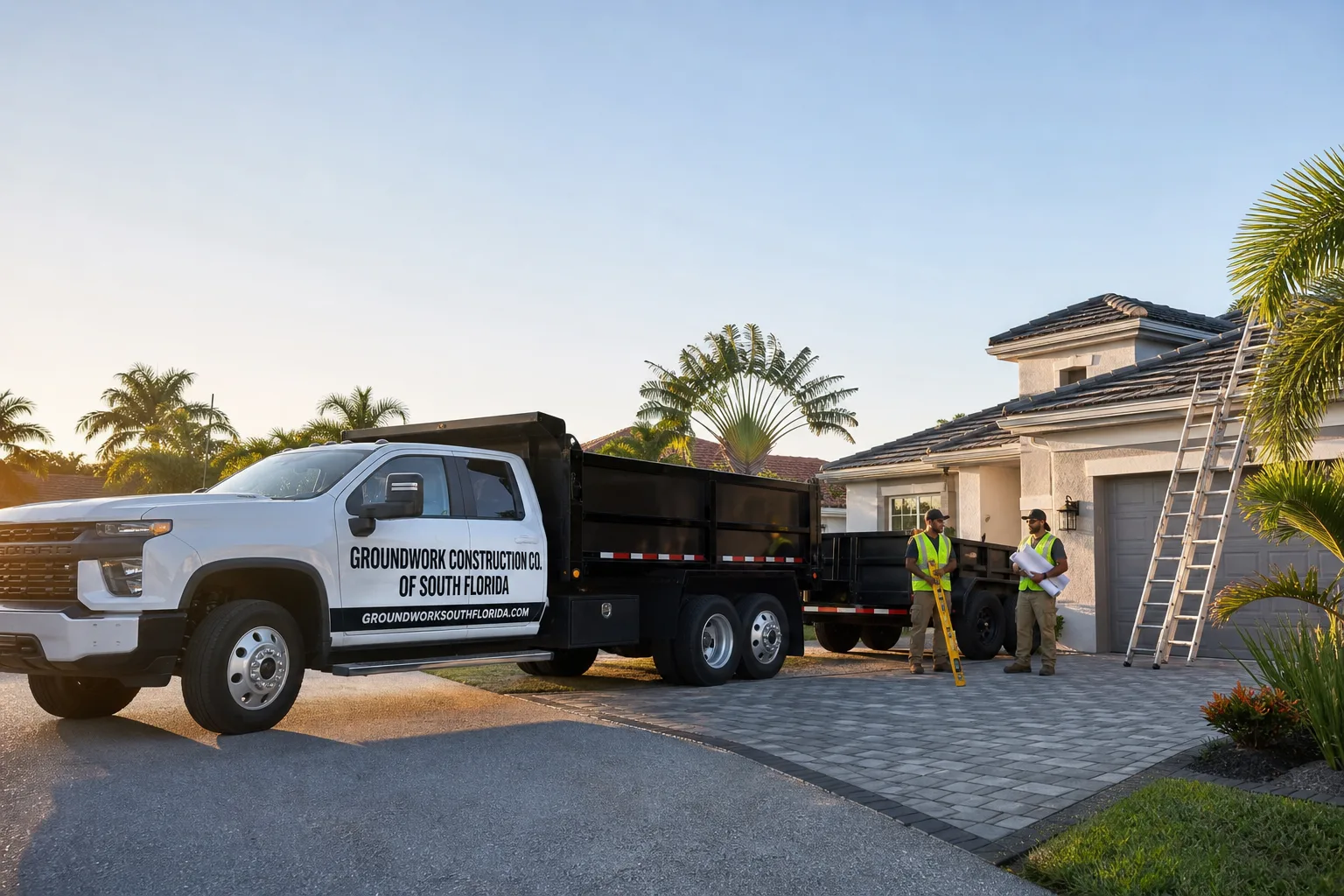
Chain Link Fence in Wellington, FL - Cost, Timeline & What to Expect
A chain link fence installation in Wellington typically runs $3,500-$9,000 for residential properties, with most single-family lots in neighborhoods like Lakeview South and Manchester Greens completed in 2-4 business days once permits clear. You’ll want to call (844) 665-0162 early in your planning, especially if your home sits within an HOA that reviews fencing materials, which is common around Hidden Creek and Brindlewood. Chain link remains the practical choice for Wellington homeowners who need secure pet containment, pool code compliance, or property-line definition without the maintenance overhead of wood or the premium cost of aluminum.
How We Build a Chain Link Fence - Start to Finish
We’ve installed chain link fencing across Wellington’s CBS-built subdivisions long enough to know where the process stalls and where it moves. Here’s what actually happens, and when you need to make decisions.
Stage 1: Site measure and utility clear (Day 1, 2-3 hours)
We walk the line with you, marking post locations and confirming what’s underground. Wellington’s high seasonal water table means we flag any area where post holes might hit saturated soil, especially on properties near The Trace or lower-lying sections of Pike Road. You’ll decide fence height (4′, 5′, or 6′ typical), whether you want vinyl-coated or galvanized finish, and gate placement. We call 811 for utility locates if we’re within 2 feet of marked lines.
Stage 2: Permit pull and HOA submission (2-10 business days, overlapping)
Palm Beach County requires a building permit for any fence over 4 feet or any pool-barrier fence regardless of height. We handle the application, but you’ll need to sign off if your HOA - common in Laurel Estates and Manchester Greens - has its own architectural review. Some associations here require black vinyl-coated chain link specifically; others ban it outright. We verify before we order material.
Stage 3: Layout and post setting (Day 2-3, weather dependent)
We snap lines and auger post holes 24-30 inches deep, below the frost line and into firmer substrate where possible. In Wellington’s former wetland soils, we sometimes hit muck within the first 18 inches. When that happens, we extend depth or switch to concrete footing rather than standard post-mix, which adds half a day but prevents the lean that ruins fences in five years. You don’t need to be home for this stage unless we need gate swing clearance confirmed.
Stage 4: Frame and fabric hang (Day 3-4)
Top rail, line posts, and terminal posts go in first. We tension the chain link fabric with a come-along, not by hand, so the mesh stays drum-tight through hurricane season. For pool barriers, we install self-closing, self-latching gates with the latch 54 inches high - Palm Beach County’s interpretation of the Florida Building Code on pool access. You’ll do the final walk with us to confirm gate swing direction and latch height.
Stage 5: Final inspection and walkthrough (Day 4 or 5)
County inspection verifies post depth, tension, and pool-barrier compliance if applicable. We don’t schedule this until you’re satisfied; if the inspector flags anything, we correct and reschedule at no charge. Most Wellington chain link jobs pass on first visit.
If your project is part of a full Fence Installation in Wellington that includes multiple fence types or a full property reconfiguration, we stage the work to keep one section secure while others come down.
The Chain Link Fence Options You’ll Actually Choose Between
- Galvanized vs. vinyl-coated mesh. Galvanized runs 15-20% less and holds up fine inland, but the zinc coating chalks and rust-spots within 8-10 years in Wellington’s salt-tinged air, especially east of Belvedere Road. Black or green vinyl-coated chain link costs more upfront but buys you 15-20 years with near-zero surface maintenance. Most HOA communities we work in require the coated product.
- 9-gauge vs. 11-gauge wire. Thicker 9-gauge is the standard for residential; 11-gauge is lighter, cheaper, and adequate for decorative or temporary runs. We don’t spec 11-gauge for pool barriers or any gate section that sees daily use. The difference in material cost is modest; the difference in longevity is significant.
- 2-inch vs. 1-inch diamond mesh. Standard 2-inch mesh is what you picture: economical, quick to install, fine for dogs over 30 pounds. The 1-inch “mini-mesh” costs roughly 25% more and is worth it if you have small breeds, need to contain poultry, or want a slightly less industrial look. It tensions harder, so labor runs higher too.
- Residential vs. industrial framework. Residential-grade 1 3/8″ top rail and 1 5/8″ line posts handle normal use. If you’re containing large dogs, running fence along a property line that takes wind head-on, or building in the Aero Club area where hangar-adjacent lots see prop wash and unusual wind patterns, we step up to 1 5/8″ rail and 2 1/2″ posts. The framing cost jumps 30-40% but eliminates the sway and rattle that cheap installs develop.
- Single vs. double swing gates. A 4-foot single gate handles pedestrian traffic. For lawn equipment, ATVs, or equestrian use - common in Wellington - you’ll want a 10-foot double swing or a rolling gate. Rolling hardware adds $800-$1,500 but saves the sag problem that ruins wide swing gates in sandy soils.
Our Fence Installation crew sources from multiple suppliers, so you’re not locked into one manufacturer’s grade mix. You choose the spec; we build to it.
What Chain Link Fence Costs in Wellington, FL
| Project Component | Typical Range |
|---|---|
| Standard residential chain link (150 linear ft, 4′ galvanized) | $3,500-$5,200 |
| Mid-grade chain link (150 linear ft, 5′ vinyl-coated, 1 gate) | $5,200-$7,800 |
| Premium chain link (150 linear ft, 6′ vinyl-coated, double gate, upgraded posts) | $7,800-$9,000+ |
| Pool barrier upgrade (self-closing hardware, 48″ minimum height) | Add $400-$800 |
| Gate operator (rolling or swing, residential) | Add $1,200-$2,500 |
Five factors push your number up or down:
Linear footage and corners. Straight runs are efficient; every corner or gate break adds a terminal post, concrete, and labor. A rectangular backyard in Berkshire Park costs less than the same footage wrapping a pool with multiple radiused sections.
Existing fence removal. We haul away old chain link for $2-$4 per linear foot. Wood or concrete footing removal runs higher, especially if posts were set in Wellington’s dense sandy loam with expansive concrete collars.
Soil conditions and drainage. The high water table on properties near Southern Boulevard or lower elevations can force us to over-excavate and import crushed stone for post drainage, adding $15-$25 per post.
Permit and inspection scope. Standard residential fence permits in Palm Beach County run $150-$300. Pool barriers trigger additional plan review. HOA architectural review fees vary; we don’t mark these up, but they hit your total.
Material grade and coating. The jump from galvanized to vinyl-coated, or from residential to industrial framework, is the single biggest variable within our control. We quote both so you can see the break-even.
Our written estimates include posts, fabric, rails, hardware, gates, concrete, permit fees, and haul-off. They don’t include irrigation repair if we nick a line, landscape restoration beyond basic grading, or electrical for gate operators - those get scoped separately if needed.
What Wellington Specifically Does to This Job
Wellington’s identity as the equestrian capital of the Americas shapes construction here in ways no neighboring city replicates. Our Wellington crews regularly build chain link fencing for horse paddocks, turnout areas, and equipment yards alongside conventional residential work. That means we keep 5-foot and 6-foot heights in stock, we understand the spacing requirements for safe equine containment, and we’re familiar with the county’s agricultural outbuilding codes that sometimes overlap with residential fence permits on larger parcels.
The housing stock itself is relatively uniform: CBS construction from the late 1970s through early 2000s, original aluminum-framed windows, flat lots with mature landscaping. Chain link fence installs here rarely encounter the rock or steep grade we see closer to the coast, but the uniform age means we often pull out original 1980s galvanized fencing that’s simply reached end of life - rusted at the base, stretched by tree growth, or undermined by decades of sprinkler runoff.
Post-Hurricane Andrew code enforcement also means any fence tied to a pool barrier must meet current Florida Building Code, even if the original fence predated the rules. We’ve replaced “grandfathered” pool fences in Lakeview South and Manchester Greens that technically passed until the homeowner sold, at which point the buyer’s inspection flagged non-compliance. If you’re fencing a pool, we build to current code regardless of what existed before.
Homeowners in this market often pair fencing with hardscape work. If you’re resurfacing the approach to your property, Concrete Driveways & Concrete Work in Wellington can be scheduled in sequence so the fence line and apron meet cleanly. Similarly, Asphalt Driveways & Resurfacing in Wellington projects sometimes require temporary fence removal and reinstallation, which we coordinate as a single scope.
Serving Wellington, FL - Our Local Coverage Area
We’re based in the Wellington area and know this community well. Use the map below to see our service coverage - if you’re nearby, we can almost certainly help.
Frequently Asked - Chain Link Fence in Wellington
Most residential chain link fence projects take 2-4 business days of actual construction once permits are approved. Permitting through Palm Beach County adds 2-10 business days depending on backlog, and HOA review in communities like Hidden Creek or Brindlewood can add another 5-14 days. Call (844) 665-0162 and we’ll check current turnaround times for your specific address.
Yes, Palm Beach County requires a building permit for any fence over 4 feet tall and for any pool barrier regardless of height. We pull the permit as part of our scope; you provide the survey and sign the application. Pool barriers also require final inspection for self-closing gate hardware and 48-inch minimum height.
Usually, yes. We locate irrigation before we auger and adjust post spacing slightly to miss lines where possible. If a line runs exactly where a terminal post must go, we expose and sleeve it rather than cutting and capping. Unexpected irrigation repair is the most common add-on we see, typically $150-$400 if needed.
Chain link fence runs roughly 30-50% less than vinyl and 40-60% less than aluminum for the same linear footage. The trade-off is aesthetic: chain link is functional and durable but doesn’t provide the privacy or visual screening that Wellington’s stricter HOAs sometimes require. We quote all three if you’re comparing.
We warranty our workmanship - post plumb, fabric tension, gate function - for five years. The vinyl coating on quality chain link carries a 10-15 year manufacturer warranty against cracking, peeling, or chalking. Galvanized mesh has no meaningful coating warranty; we don’t recommend it for long-term installs in Wellington’s climate. Ask for the specific warranty document when we quote.
Get Your Wellington Chain Link Fence Estimate
Call (844) 665-0162 for a free on-site estimate on chain link fence in Wellington. We’ll measure your line, check for utilities and irrigation, confirm any HOA requirements, and deliver a written quote with material options at two price points. Most estimates take 30 minutes; you’ll have numbers within 24 hours.
Written by Raymond Estevez, Owner at Groundwork Construction Co., serving Wellington since our founding.