
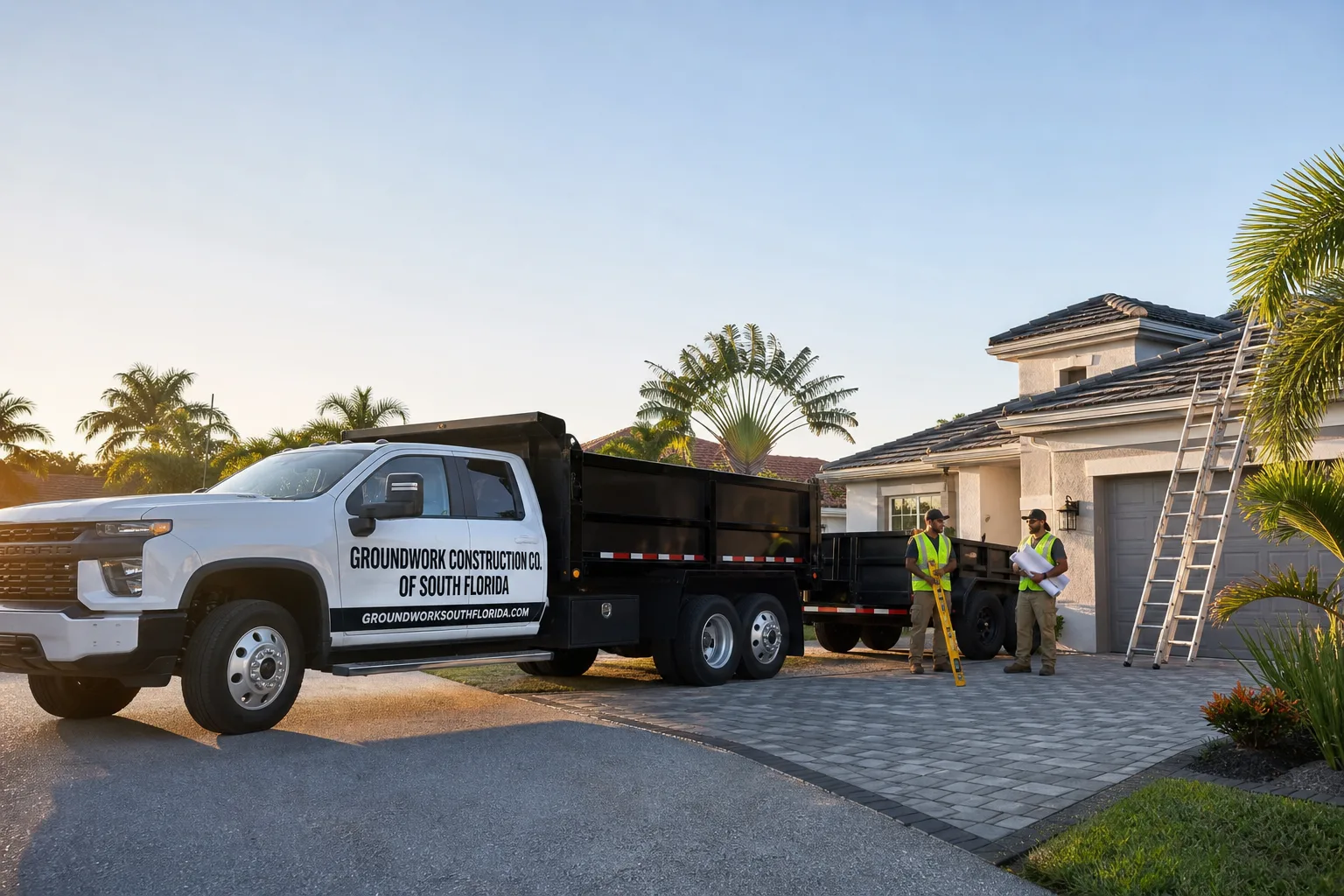
What Does Emergency & Storm Damage Repair Involve in Bryant, FL?
Emergency & Storm Damage repair in Bryant typically runs from $400 for targeted structural patching up to $18,000 for full roof and envelope restoration after a major weather event, with most residential jobs falling in the $2,500-$8,000 range depending on how far water or wind penetrated the structure. Most homeowners see us on-site within 24 hours of the initial call, with temporary stabilization completed same-day and permanent repairs starting once insurance documentation and any required permits are filed. Call (844) 665-0162 and we’ll send a crew to assess the damage and board or tarp what’s exposed.
Bryant’s position near Lake Okeechobee puts it directly in the path of tropical systems that don’t just strip shingles - they drive rain through soffit gaps, test every window seal, and exploit any existing settlement crack in the concrete-block walls common to this area. When the water table sits inches below grade for half the year, storm water that gets inside has nowhere to drain. That changes how we approach every emergency call here versus drier inland markets.
How We Handle Emergency & Storm Damage - Start to Finish
We’ve refined our response into five distinct stages after years of working the agricultural communities around Bryant, Canal Point, and Belle Glade. Each stage has a clear duration and a decision point for the homeowner.
Stage 1: Emergency Tarping and Securing (2-6 hours, same day)
The first crew arrives to stop active water intrusion. We tarp compromised roof sections, board broken windows or doors, and set up interior containment if ceilings have failed. You decide at this stage whether to file an insurance claim immediately or wait for our full damage assessment. We document everything with photos and moisture readings either way - you’ll need this record regardless of which path you choose.
Stage 2: Damage Assessment and Moisture Mapping (1-2 days)
Once the structure is secure, we bring in thermal imaging and pinless moisture meters to trace how far water traveled inside walls and across the roof deck. In Bryant’s mid-century CMU homes, water often migrates horizontally through block cavities rather than dripping straight down, so the visible stain is rarely the full story. You receive a written scope with line-item pricing and a recommended sequence: what must happen immediately versus what can be phased.
Stage 3: Structural Drying and Mold Prevention (3-7 days)
We deploy commercial dehumidification and air movement equipment sized for the humid South Florida climate. Standard drying calculations from drier regions don’t apply here - Bryant’s ambient humidity means we run equipment longer and monitor more frequently. You decide whether to add proactive antimicrobial treatment to wall cavities; we recommend it for any cavity that tested above 17% moisture content.
Stage 4: Structural Repair and Envelope Restoration (3 days-3 weeks)
This is where the scope diverges most. A localized repair might involve sistering rafters, replacing a section of roof deck, and matching existing siding or trim. Extensive damage can require reframing wall sections, replacing the full roof system, or addressing foundation settlement that the storm exposed or worsened. Because Roofing in Bryant often needs to be evaluated as part of a full envelope restoration, our Roofing crew coordinates directly with the structural team rather than handing off to a separate contractor.
Stage 5: Final Inspection and Documentation (1 day)
We walk the completed work with you, verify all moisture readings are back to baseline, and provide final documentation for insurance closeout or your records. If permits were pulled, we schedule the municipal inspection and meet the inspector on your behalf.
The Repair Decisions You’ll Face After Storm Damage
Every emergency & storm damage job in Bryant presents the same fork-in-the-road choices. Here’s what we see homeowners weighing, with the honest trade-offs:
- Spot repair versus full section replacement: Patching a damaged roof area costs less upfront but can create a visible elevation difference and potential leak point at the seam. Full section replacement costs 40-60% more but carries uniform material aging and a cleaner warranty. In Bryant’s salt-air environment, we generally recommend full sections on roofs older than 12 years because the adjacent material is already approaching end of life.
- Standard drywall versus moisture-resistant interior finish: Standard 1/2″ drywall runs roughly 30% less installed, but in Bryant’s high-humidity environment - especially in homes with the original block construction and minimal wall cavity ventilation - moisture-resistant purple board or cement board pays for itself if there’s any chance of future water exposure. We flag this choice explicitly in our estimates.
- Original window/door matching versus upgraded impact-rated replacement: If the storm damaged existing openings, Florida building code may require impact-rated replacements in certain wind-borne debris zones. Even where not code-mandated, upgrading to impact-rated products during the repair eliminates a separate future project and can reduce insurance premiums. The cost gap narrows significantly when you’re already paying for removal, reframing, and interior finish work.
- Standard shingle versus architectural or metal roofing on partial re-roofs: Matching existing three-tab shingles keeps the immediate cost down, but architectural shingles add wind resistance and typically carry longer manufacturer warranties. Metal roofing, while 2-3x the material cost, often makes sense if the damaged section connects to a flat or low-slope area where standing water is already a chronic problem.
- Antimicrobial treatment versus replace-to-dry: When cavity moisture is borderline, some contractors push full gutting. We present the drying data and let the numbers guide the decision. In our experience, properly dried CMU cavities with antimicrobial application perform as well as replacement at roughly half the cost - but only if drying was thorough and documented.
What Emergency & Storm Damage Costs in Bryant, FL
Most emergency & storm damage repairs we complete in Bryant fall between $2,500 and $8,000. Minor tarping, interior containment, and targeted drywall repair start around $400-$1,200. Moderate damage requiring partial roof deck replacement, wall reframing, and interior finish typically runs $4,500-$10,000. Major envelope restoration after significant wind or tree impact can reach $12,000-$18,000, especially when foundation settlement issues - common in Bryant’s muck-soil conditions - are discovered and must be addressed.
| Scope Level | Typical Range | What’s Usually Included |
|---|---|---|
| Emergency stabilization only | $400-$1,200 | Tarping, boarding, water extraction, initial dry-out |
| Moderate structural repair | $4,500-$10,000 | Partial roof/wall repair, reframing, insulation, drywall, paint |
| Major envelope restoration | $12,000-$18,000 | Full roof section, multiple wall rebuilds, window/door replacement, extended drying |
Five factors push any job up or down within these ranges:
- Extent of water travel: Damage confined to one room versus migration through block cavities to multiple spaces - we verify this with moisture mapping before pricing.
- Roof pitch and access: Bryant’s older agricultural-worker housing often has simple gable roofs, but any structure with low-slope sections or limited yard access for scaffolding adds labor hours.
- Material matching requirements: Discontinued siding profiles or custom trim on mid-century homes can require special-order materials with 2-4 week lead times.
- Foundation complications: The organic muck soils beneath Bryant homes mean storm damage frequently reveals or worsens differential settlement. If we find new cracking or floor heave during the repair, engineered fill or pier recommendations may add $3,000-$8,000 to the scope.
- Permit and inspection timing: Palm Beach County’s post-storm permit volume can extend the approval window by 5-10 business days. We file electronically and track status, but we don’t control the queue.
Our written estimates separate emergency stabilization (typically due on completion) from permanent repairs (structured with draws tied to inspection milestones). What’s not included: temporary relocation costs, personal property restoration, or tree removal beyond the trunk section directly contacting the structure.
What Bryant’s Land and Climate Do to Storm Damage Repair
Bryant presents a specific set of conditions that reshape how we approach emergency & storm damage work compared to our projects in sandy-soil communities like Loxahatchee or coastal Fort Lauderdale.
The housing stock here is predominantly concrete-block construction from the 1950s-1970s, built quickly and economically to house agricultural workers for the surrounding sugarcane and vegetable operations. These CMU walls have held up structurally against wind loads, but the mortar joints and original stucco coatings have seen decades of thermal cycling and salt-air exposure. When a storm drives rain against them, water finds the path of least resistance - often at settlement cracks that follow the shifting muck substrate beneath.
That substrate is the central challenge. Bryant sits atop organic peat and muck soils with extremely low bearing capacity. We’ve opened walls after storms to find that what looked like wind-driven water intrusion was actually foundation heave forcing the sill plate away from the block, creating a gap that any sideways rain exploits. The SFWMD drainage canals visible along Conners Highway and State Market Road keep the water table managed, but their setback easements can restrict where we place equipment or staging areas on canal-adjacent properties. We pull canal-proximity surveys before breaking ground on any significant repair to avoid mid-project surprises.
During the wet season - roughly June through October - the water table sits inches below grade. Any excavation for foundation repair, drainage correction, or below-grade waterproofing requires active dewatering and tight coordination with canal levels. We’ve learned to schedule permanent repairs in Bryant with a weather eye on the 10-day forecast; starting extensive excavation before a tropical wave is a recipe for a flooded trench and a stalled job.
Homeowners in this area often pair exterior envelope work with Custom Windows & Doors in Bryant upgrades, especially when insurance is already covering opening damage. Others take the opportunity to address perimeter security with Wood Fence in Bryant replacement if the storm took down existing fencing. We coordinate these additions within the same project timeline rather than treating them as separate, sequential jobs.
Serving Bryant, FL - Our Local Coverage Area
We’re based in the Bryant area and know this community well. Use the map below to see our service coverage - if you’re nearby, we can almost certainly help.
Frequently Asked - Emergency & Storm Damage in Bryant
We typically arrive within 24 hours for emergency tarping and securing, and same-day response is often possible for active water intrusion threatening interior finishes. Call (844) 665-0162 - our dispatch prioritizes Bryant calls based on active leak severity and structural safety risk, not just queue position.
Yes, Palm Beach County requires permits for any structural repair, roof replacement exceeding one square (100 sq ft), or electrical/plumbing work triggered by the damage. We handle permit filing as part of our scope and schedule required inspections; the only delay factor is county volume after widespread storm events, which can add 5-10 business days.
Most moderate repairs allow you to stay, though we may need to isolate work zones with dust containment and temporary plastic walls. If the damage compromised multiple rooms, the HVAC system, or the roof structure over sleeping areas, we recommend temporary relocation during the drying and reconstruction phases - typically 3-10 days depending on scope.
Coverage depends on your policy’s peril provisions, deductible, and whether the damage resulted from a covered event versus pre-existing maintenance issues. We document everything with photos, moisture readings, and detailed scopes written in insurance-adjuster terminology to support your claim. We’re not public adjusters, but our documentation has helped Bryant homeowners secure settlements that accurately reflect the full repair scope.
Our workmanship warranty covers labor and installation for two years on standard repairs and five years on full roof section replacements. Material warranties run separately through the manufacturer - GAF, CertainTeed, Owens Corning, and other brands we work with each carry their own terms, which we register on your behalf. The workmanship warranty is transferable if you sell within the coverage period.
Get a Free On-Site Estimate for Emergency & Storm Damage in Bryant
Call (844) 665-0162 to schedule a no-charge damage assessment. We’ll send a crew to your Bryant property, document the full extent of storm impact including hidden moisture migration, and deliver a written scope with line-item pricing within 48 hours. Raymond Estevez oversees every emergency & storm damage project personally - you’ll have one point of contact from tarping through final walkthrough, not a rotating cast of subcontractors.
Written by Raymond Estevez, Owner at Groundwork Construction Co., serving Bryant and South Florida’s agricultural communities.