
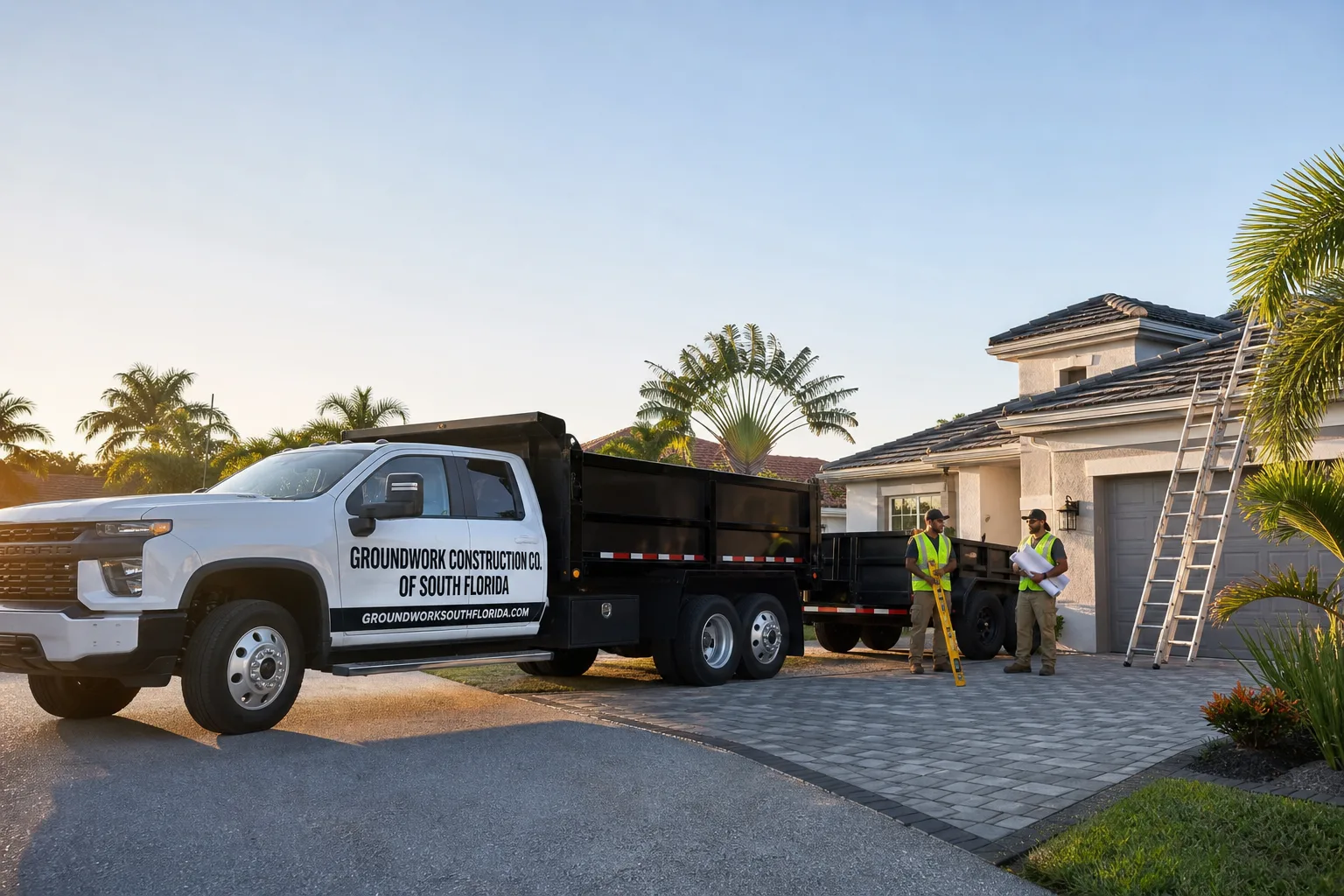
How Much Does a Paver Driveway Cost in Bryant, and How Soon Can We Start?
A paver driveway installation in Bryant typically runs $7,000-$18,000 for a standard residential project, with most jobs completed in 4-7 business days from permit approval. Because Bryant’s water table sits inches below grade through the wet season, we schedule excavation and base prep during drier windows and coordinate closely with South Florida Water Management District canal levels. Call (844) 665-0162 to check current scheduling and get a free on-site estimate.
How We Install Paver Driveways - Stage by Stage
Every paver driveway we build in Bryant follows the same sequence, though timing shifts with weather and soil conditions. Here’s what actually happens, and what you’ll need to decide at each point.
Stage 1: Site evaluation and measurement (Day 1)
We arrive with laser levels and probe the existing surface to map drainage patterns. In Bryant, this step includes checking proximity to SFWMD drainage canals - the easements along Conners Highway and State Market Road can restrict where your driveway edge can sit. We flag any conflict with canal setbacks before design proceeds. You’ll decide: exact driveway dimensions, whether to widen for parking, and if you want the surface pitched toward street drainage or a catch basin.
Stage 2: Demolition and excavation (Days 1-2)
Existing asphalt, concrete, or gravel comes out. Excavation depth runs 8-12 inches depending on expected load - standard passenger vehicles need less, work trucks or RV pads need more. During Bryant’s wet season (June-October), we often deploy portable dewatering pumps because the muck substrate here doesn’t drain on its own. This adds a half-day but prevents a soggy base that would fail within two years.
Stage 3: Base installation and compaction (Days 2-3)
We lay geotextile fabric over the native soil, then build the structural base in lifts - typically 6-8 inches of crushed limestone ( screenings or #57 stone, depending on load requirements). Each lift gets compacted with a plate compactor or vibratory roller until we hit 95% Proctor density. In Bryant’s organic soils, we sometimes need thicker base sections or geogrid reinforcement to bridge soft spots. You’ll approve the base depth before we proceed; this is the point where upgrading from standard to heavy-duty base adds $800-$1,500.
Stage 4: Edge restraint, bedding sand, and paver laying (Days 3-5)
Concrete or aluminum edge restraints lock the field in place. We screed 1 inch of coarse bedding sand, then lay pavers in your chosen pattern - herringbone handles vehicle loads best, running bond works for lighter use, basketweave suits formal entries. Our crew cuts pavers with wet saws for curves and fits around existing utility boxes. You’ll do a walkthrough here; once sand fills the joints, changes become expensive.
Stage 5: Compaction, joint sand, and final inspection (Day 5-6)
We vibrate the finished surface to settle pavers into the bedding layer, sweep polymeric sand into joints, and activate it with water to lock everything in place. Final grading checks ensure water runs away from your home’s foundation - critical in Bryant, where the high water table already pressures slab edges. We photograph the completed work and review maintenance with you before final sign-off.
The Paver Choices You’ll Actually Decide Between
Not all pavers suit driveway loads, and not every aesthetic holds up near Lake Okeechobee’s humidity and sun exposure. These are the real options we present Bryant homeowners:
- Concrete pavers (standard grade): The practical starting point. Pressed concrete in 4×8 or 6×6 formats, typically 60mm thick. Cost-effective, widely available in earth tones that hide Florida dust and pollen. Trade-off: surface color fades gradually; expect 10-15 years before noticeable wear on the driving lane. Best for: budget-conscious homeowners who want the paver look without premium pricing.
- Concrete pavers (tumbled/weathered finish): Same material, processed to look aged from day one. The textured surface masks minor staining from fertilizer, leaf tannins, and irrigation minerals - common in Bryant’s agricultural setting. Trade-off: the tumbling process weakens edges slightly; not ideal for sharp turning radiuses where tires scrub. Best for: ranch-style and older CMU homes where a crisp, modern paver would look out of place.
- Permeable pavers: Open-graded base and wider joints filled with small stone, allowing rainfall to percolate through. In Bryant, this matters: SFWMD and Palm Beach County increasingly favor permeable surfaces to reduce stormwater runoff into the canal system. Trade-off: requires more frequent joint maintenance; weeds and sediment accumulate faster. Best for: properties near drainage canals or with strict county stormwater conditions.
- Clay brick pavers: Genuine fired clay, not concrete dyed to look like brick. Harder surface, richer color that doesn’t fade, and classic aesthetic that suits the area’s mid-century housing stock. Trade-off: higher cost per square foot, and the brittle nature of clay requires a flawless base - any flex in Bryant’s shifting soils telegraphs through as cracked bricks. Best for: shorter drives, courtyard entries, or homeowners prioritizing longevity over initial cost.
- Thick-format porcelain pavers (60mm+): A newer category - through-body porcelain rated for vehicular loads. Impervious to staining, salt, and UV degradation. Trade-off: limited local inventory, longer lead times, and the slick surface demands careful grading for drainage. Best for: design-forward projects where interior and exterior materials need to coordinate.
We source our hardscape materials through Belgard, Unilock, Tremron, and Techo-Bloc - four manufacturers whose product lines span these categories at multiple price tiers. You choose the brand and grade; we handle spec compliance and installation.
What Paver Driveways Cost in Bryant, FL
| Project Scope | Typical Range |
|---|---|
| Standard paver driveway (single car, ~400 sq ft) | $7,000-$10,500 |
| Double-wide paver driveway (two car, ~600 sq ft) | $10,500-$14,000 |
| Large or curved driveway with premium materials | $14,000-$18,000 |
| Heavy-duty base upgrade (RV/work equipment) | Add $800-$1,500 |
| Permeable system with open-graded base | Add $1,200-$2,500 |
Five factors push your project to the high or low end of these ranges:
Existing surface condition: A gravel or thin asphalt driveway removes easily; thick concrete with rebar adds demolition cost and disposal fees.
Driveway size and shape: Rectangles are efficient; curves, radius turns, and integrated parking pads consume more material and labor.
Soil stability: Bryant’s organic muck soils sometimes require geogrid, thicker base, or soil replacement - we won’t know until we probe, but we flag risk during the estimate.
Material grade and pattern complexity: Standard running bond in gray concrete costs less than herringbone in tumbled clay with soldier-course borders.
Permit and survey requirements: Canal-proximity surveys and SFWMD coordination add $400-$800 when triggered, but skipping them risks mid-project shutdowns.
Our written estimates include demolition, base materials, pavers, edge restraint, bedding and joint sand, compaction, and final grading. What typically sits outside: permit fees (varies by scope), tree or vegetation removal, and utility relocation if your existing service runs through the driveway footprint.
What Bryant’s Conditions Specifically Do to Paver Driveway Work
Bryant isn’t a generic South Florida jobsite, and treating it like one produces failed driveways.
The organic muck and peat soils here - the same soils that make this region productive for sugarcane and vegetable farming - offer almost no structural bearing capacity. A paver driveway built directly on this material will settle differentially within two years, creating the washboard effect you see on older rural properties along Belle Glade Road. We address this with engineered base sections, sometimes importing crushed stone from outside the immediate area when local aggregate carries too much organic contamination.
The water table complicates timing. During the wet season, excavation fills with groundwater faster than it can be pumped. We monitor SFWMD canal levels - visible along Conners Highway - and schedule base prep for windows when district drainage keeps the local water table manageable. This isn’t conservative scheduling; it’s the difference between a compacted base and a mud pie that will telegraph through your pavers.
The housing stock matters too. Bryant’s mid-century concrete-block homes were built for agricultural workers, not for modern vehicle counts or aesthetic refinement. We frequently widen existing narrow drives to accommodate two vehicles, which sometimes conflicts with older setbacks or HOA rules in the few platted subdivisions near Glades Park. We pull the survey before we price, not after.
Finally, the agricultural surroundings affect maintenance expectations. Fertilizer runoff, pesticide drift, and the fine dust from nearby field operations all land on driveway surfaces. We specify sealers and surface finishes that resist these contaminants, and we set realistic expectations about cleaning frequency.
Serving Bryant, FL - Our Local Coverage Area
We’re based in the Bryant area and know this community well. Use the map below to see our service coverage - if you’re nearby, we can almost certainly help.
Frequently Asked - Paver Driveways in Bryant
Most paver driveway projects finish in 4-7 business days after permit approval, though Bryant’s wet season can extend this by 2-3 days for dewatering. We schedule excavation and base work around SFWMD canal levels to avoid waterlogged conditions. Call (844) 665-0162 to check current lead times and reserve a dry-weather window.
Yes - Palm Beach County requires a permit for any driveway replacement or new installation that changes the surface type or drainage pattern. If your property sits near SFWMD canals, a canal-proximity survey may also be required to verify setback compliance. We handle permit submission and survey coordination as part of our project management.
Often yes, if the utilities run at proper depth and location. We locate and mark all underground lines before excavation; shallow conduits or pipes crossing the driveway footprint may need relocation, which we price separately before work begins. During your estimate, we’ll map what’s in the ground and flag any conflicts.
Yes - paver driveways typically cost 30-50% more than equivalent concrete installations, with our concrete driveway range running $4,500-$12,000 versus $7,000-$18,000 for pavers. The premium buys repairability (individual pavers replace easily), design flexibility, and typically longer service life with proper maintenance. For homeowners considering the full exterior scope, paver driveways pair naturally with Driveway & Pavers in Bryant projects that include walkways or patio integration.
We warranty our installation workmanship, including base preparation, edge restraint, and surface grading. Paver manufacturers provide their own material warranties against defects, which vary by brand - Tremron and Belgard both offer residential material coverage we can review with you. The warranty does not cover settlement from unreported underground conditions or damage from heavy equipment exceeding the specified load rating.
Ready to Price Your Paver Driveway in Bryant?
We’ll walk your property, probe the soil conditions, check for canal setbacks, and deliver a written estimate with material options across multiple price tiers. No pressure, no deposit required to schedule. Call (844) 665-0162 or reach out through our Bryant service page to set up a free on-site consultation. Our Driveway & Pavers crew serves Bryant and nearby communities including Canal Point, Pahokee, and Belle Glade.
Homeowners expanding their property’s footprint sometimes pair hardscape work with ADU Design & Permitting in Bryant or Garage Conversion ADU in Bryant - we’re structured to coordinate both under one contract if your plans include adding livable space.
Written by Raymond Estevez, Owner at Groundwork Construction Co., serving Bryant and South Florida homeowners with full-scope residential construction.