
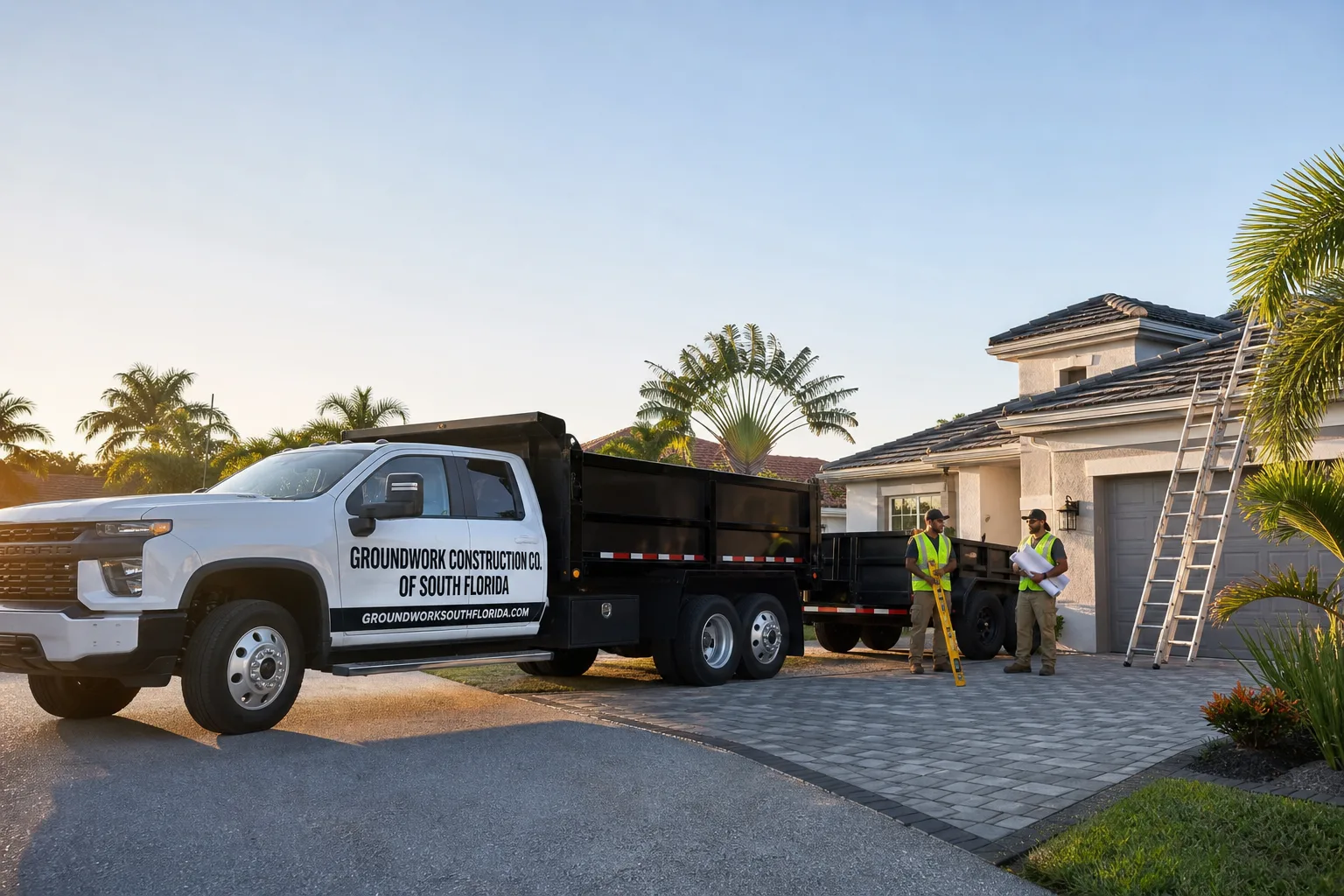
Patios, Walkways & Pool Decks in Miramar - Cost, Timeline & What to Expect
Patios, walkways and pool decks in Miramar typically run $3,500-$11,000 for paver installation, with most projects completed in 5-10 business days once permits clear. You’ll need to choose your material (concrete pavers, natural stone, or travertine), edge restraint style, and drainage approach before we break ground. Call (844) 665-0162 and we’ll walk through your specific layout, measure on-site, and deliver a written estimate within 48 hours.
How we build patios, walkways and pool decks - the real process
We’ve refined this into five clear stages after completing hardscape work across Broward County. Here’s exactly what happens, and what you’ll need to decide at each point.
Stage 1: Site evaluation and layout confirmation (Day 1)
We arrive with stakes, string lines, and a laser level. The crew maps your finished elevations, identifies where water currently pools, and marks utility paths we’ve called in. You’ll decide the exact footprint now - whether the patio stops at the roofline or extends past it, whether the walkway curves around existing landscaping or cuts straight. We photograph everything and note any sprinkler heads or shallow electrical that needs relocation. This takes 2-4 hours. You don’t need to be home the full time, but the first hour is critical for confirming layout.
Stage 2: Demolition and subsurface prep (Days 1-2)
Old concrete, degraded pavers, or that thin “contractor special” slab from the 1980s comes out. We excavate to 6-8 inches below finished grade, depending on your material choice and expected load. In Miramar’s 33023 corridor, we regularly hit sandy fill with inconsistent compaction - sometimes loose enough that we need to bring in ABC gravel and plate-compact in 4-inch lifts. You’ll decide here whether to add French drains or channel drains if your yard holds water during summer storms. This stage is noisy and dusty; we schedule it when you’re away if possible.
Stage 3: Base installation and grading (Days 2-3)
We lay geotextile fabric, then build your base with crushed concrete or limestone screenings, compacted to 95% Proctor density. Slope is engineered at 1/8 inch per foot away from structures, minimum. In Miramar, where the water table can sit within inches of grade from June through October, this step is where projects succeed or fail. A flat base with poor drainage means pavers heave within two wet seasons. We check compaction with a nuclear density gauge before moving on. You’ll sign off on the slope direction - confirm water flows where you want it.
Stage 4: Bedding, laying, and cutting (Days 3-6)
We screed 1 inch of concrete sand or polymeric sand bedding, then lay your chosen pattern. Soldier courses get cut on-site with wet saws. Pool decks require special attention: cantilevered edges over the beam, bullnose coping alignment, and expansion joints every 8-10 feet to accommodate thermal movement in South Florida’s sun. You’ll make final color and pattern decisions if samples looked different in natural light - we keep extra material on the truck for this reason. Cutting days generate slurry; we contain and dispose of it properly.
Stage 5: Compaction, joint fill, and seal (Days 6-8)
We vibrate the surface to seat pavers into the bedding layer, then sweep joint sand (or apply polymeric sand if you chose that upgrade). Sealer goes on last if you’ve opted for it - we use breathable, non-film-forming sealers that won’t trap efflorescence. You’ll do a walkthrough with the foreman, note any lippage or alignment concerns, and receive care instructions. Most pool decks need 24 hours before foot traffic, 72 hours before furniture.
The material and design choices you’ll actually make
- Concrete pavers (Belgard, Unilock, Tremron, Techo-Bloc): The standard for Miramar pool decks and patios. Interlocking, replaceable if one cracks, and available in permeable versions for drainage-sensitive yards. Cost sits in the middle of the range. The honest trade-off: color fades slightly over 5-7 years in full sun, and you’ll need to re-sand joints every 2-3 years.
- Travertine (French pattern, tumbled or honed): Stays cooler underfoot than concrete - a genuine consideration for pool decks in South Florida. Natural variation in tone hides water spots and leaf stains. Costs 30-50% more than concrete pavers. The trade-off: it’s softer, so heavy furniture leaves impressions, and it requires more careful sealing against our acidic soil and occasional salt-air exposure.
- Porcelain pavers (2cm outdoor-rated): Newer option, virtually non-porous, stain-proof, and available in large formats that minimize joints. Excellent for modern Miramar homes where interior tile extends to exterior living space. Premium price point. The trade-off: requires a stiffer base (concrete slab or reinforced sand-set), and cutting demands specialized equipment - not every crew handles these well.
- Natural stone (coral stone, shell stone, bluestone): Distinctive, locally appropriate aesthetic that ages well in coastal settings. Each piece is unique. The trade-off: irregular thicknesses mean longer install times and higher labor costs, and some varieties are porous enough to require annual sealing in our climate.
- Edge restraint and border treatment: Plastic edging with spikes is standard and functional. Upgraded options include poured concrete curbs, metal edging (aluminum or powder-coated steel), or soldier courses in contrasting color. Your call based on visual priority and whether lawn equipment regularly contacts the border.
- Joint fill - standard sand vs. polymeric: Standard sand is cheaper and easier to repair, but washes out during Miramar’s heavy summer rains. Polymeric sand hardens when wetted, resisting erosion and ants, but costs more and makes future repairs harder. We recommend polymeric for pool decks and walkways; standard sand is fine for low-traffic patios with good drainage.
What patios, walkways and pool decks cost in Miramar, FL
Most paver patio, walkway and pool deck projects we quote in Miramar fall between $3,500 and $11,000. Here’s what pushes you toward either end of that range:
| Cost Driver | Low-End Scenario | High-End Scenario |
|---|---|---|
| Square footage | 150-250 sq ft walkway | 600+ sq ft patio with pool surround |
| Existing conditions | Grass or dirt, no demo | Thick concrete slab removal, tree roots, buried debris |
| Material grade | Standard concrete pavers | Travertine or porcelain, imported stone |
| Drainage engineering | Natural slope, no added drains | French drains, channel drains, pump basin |
| Structural coordination | Standalone hardscape | Tie-in to existing slab, roofline extension, permit-triggered structural updates |
Our written estimates include: all demolition and haul-away, base material and compaction, bedding and laying labor, edge restraint, joint fill, and project cleanup. What’s typically separate: permit fees (Broward County’s vary by project scope), tree removal, irrigation relocation, electrical for landscape lighting or pool equipment, and any required soil correction if we hit organic fill or uncompacted debris. We flag these possibilities during evaluation so you’re not surprised.
If your project is part of a full exterior update, we coordinate with our Driveway & Pavers in Miramar team to sequence work and match materials across the property.
What Miramar homes specifically do to this job
The 33023 corridor changes how we approach patios, walkways and pool decks here. Those mid-century CBS homes built from the 1950s through the 1970s sit on flat lots with minimal original grading for stormwater management. When we excavate for a new patio, we regularly find that the “soil” beneath old concrete is actually loose builder’s fill from sixty years ago - sand, construction debris, occasionally organic material that never compacted properly. That means base prep takes longer and costs more than a homeowner might expect from watching online tutorials filmed on well-drained inland sites.
Miramar’s water table reality shapes our drainage specs. During the wet season, we’ve seen excavations hold standing water that requires dewatering before we can place base material. We don’t guess at this - we check soil conditions during evaluation and specify drains if the site needs them. Skipping that step to save $800 means pavers shift and settle within two years.
There’s also the permit overlay. Broward County’s current Florida Building Code requirements for hurricane straps and roof-to-wall connections get triggered more often than homeowners expect. If your patio ties into an existing roofline or if you’re enclosing any portion, the permit path can expand to include structural review. We’ve seen projects where pulling a simple patio permit revealed an unpermitted 1980s screen enclosure that must be brought to current wind-load standards before new work proceeds. We check permit history during our evaluation and flag these risks upfront - no one benefits from a mid-project stop-work order.
Our Miramar crews know these patterns. We’ve worked the neighborhoods from Miramar Parkway north to County Line Road, and we know which HOA communities have specific material or color restrictions we need to verify before ordering.
Serving Miramar, FL - Our Local Coverage Area
We’re based in the Miramar area and know this community well. Use the map below to see our service coverage - if you’re nearby, we can almost certainly help.
Frequently asked - patios, walkways and pool decks in Miramar
Most projects run 5-10 business days from breaking ground to final walkthrough, with permit approval adding 1-3 weeks beforehand. Weather delays in Miramar’s summer afternoon storm pattern can push the schedule by a day or two, but we build that contingency into our timeline. Call (844) 665-0162 for a start date based on current backlog.
You need a Broward County permit if the project exceeds 120 square feet, attaches to the house, includes electrical or plumbing, or changes drainage patterns. We handle permit drawings, submission, and inspection scheduling as part of our project management. Homeowners often pair hardscape permits with larger projects - if you’re also planning an addition, our ADU Site Prep & Utilities in Miramar team can coordinate the full scope under one permit strategy.
Yes, and we prefer to. Moving pool plumbing, electrical, or equipment pads adds $1,500-$4,500 to most projects. We design the layout to work around existing infrastructure unless it’s failing or poorly positioned. During evaluation, we map all visible lines and note any that show corrosion or leakage - Miramar’s older galvanized and early copper systems are reaching end of life.
Travertine stays 20-30 degrees cooler underfoot than concrete pavers in full sun, which matters for South Florida pool decks used midday. If your pool gets heavy family use June through September, the comfort difference is real. If it’s primarily an evening entertaining space, concrete pavers with lighter color selections perform well enough. We bring samples to your evaluation so you can test both in your actual light conditions.
Our workmanship warranty covers base failure, settlement, and installation defects for two years. Material defects fall to the manufacturer’s warranty - Belgard, Unilock, Tremron, and Techo-Bloc each carry their own terms, which we provide in writing. The most common post-install issue we see in Miramar is joint sand washout from poor drainage, which is preventable and covered if it traces to our grading. Call (844) 665-0162 to discuss specific warranty terms before signing.
Get your Miramar patio, walkway or pool deck estimate
We’ll send a foreman to measure your space, check subsurface conditions, and review material samples on-site. You’ll receive a written, line-item estimate within 48 hours - no deposit required to review. Call (844) 665-0162 or request a callback. We serve Miramar and surrounding areas including our driveway & pavers crew‘s full South Florida territory. Homeowners often pair hardscape work with interior updates - if you’re planning a kitchen renovation too, our Full Kitchen Remodeling in Miramar team works with the same project coordination system.
Written by Raymond Estevez, Owner at Groundwork Construction Co., serving Miramar and South Florida homeowners since our founding.