
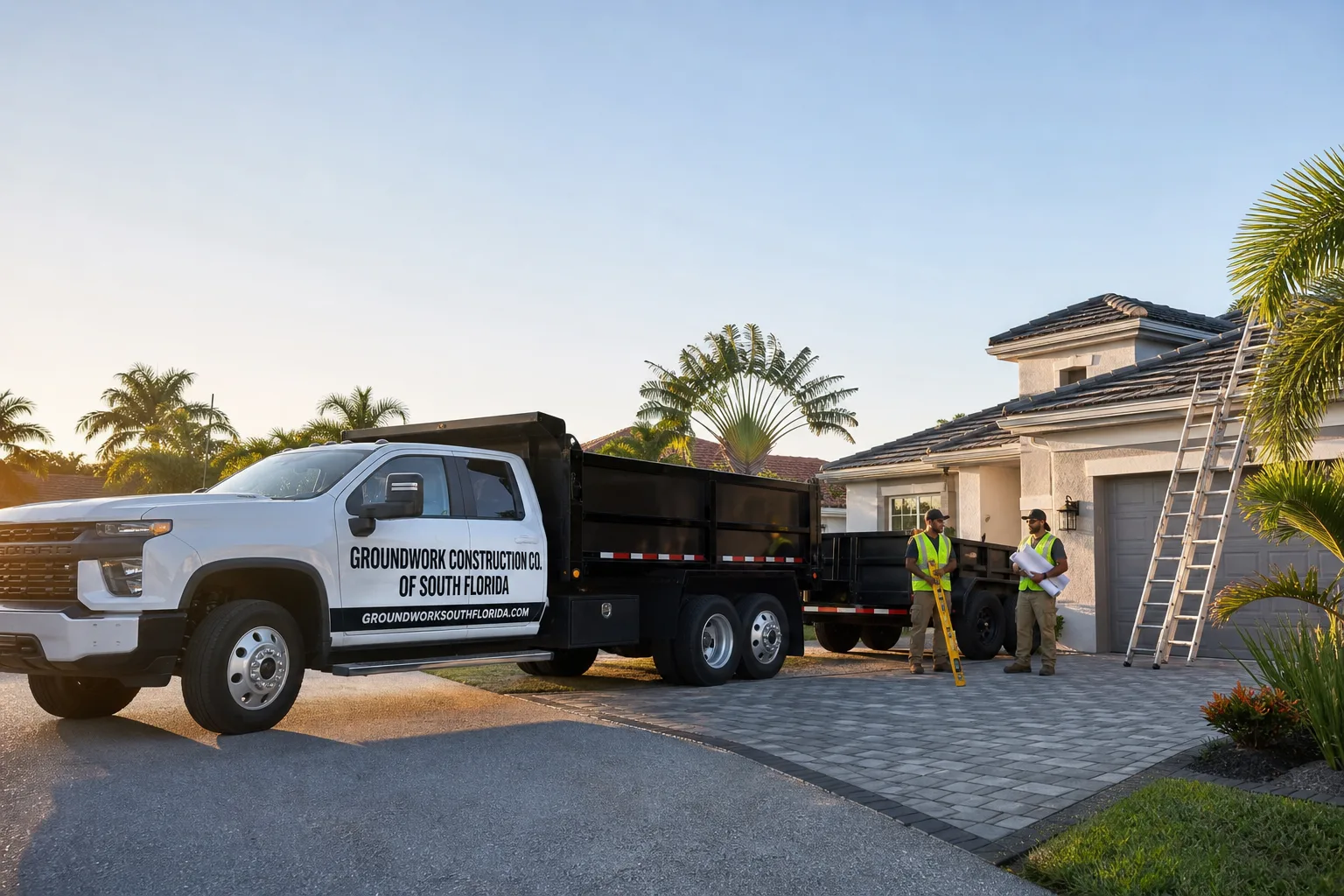
Specialty Roofing in The Crossings - What’s Involved, How Long It Takes, and What It Costs
Our Roofing services in The Crossings cover non-standard installations like flat-to-pitched conversions, built-up roofing (BUR) systems, modified bitumen, and TPO membranes for the low-slope roofs common on 1980s-era CBS homes here. Most projects run 3-7 business days and cost between $8,000 and $20,000 depending on whether we’re retrofitting over an existing deck or stripping to the trusses. Call (844) 665-0162 and we’ll walk you through which path matches your home’s condition and your insurance requirements.
How We Handle Specialty Roofing From First Call to Final Inspection
We’ve refined our process across dozens of projects in The Crossings, and it breaks into five clear stages. You’ll know what’s happening and what you need to decide at each point.
Stage 1: On-Site Assessment and Deck Evaluation (Day 1)
We walk the roof, probe the decking, and photograph every soft spot, ponding area, and failed seam. On the flat roofs we see most often in The Crossings, water travels laterally before it shows inside, so the damage pattern rarely matches the interior stain. You’ll get a written report with photos and two scoped options: recover (new membrane over sound decking) or tear-off (full strip to trusses with new sheathing). This decision point is the biggest cost driver, and we don’t push either direction without showing you the deck condition firsthand.
Stage 2: Material Selection and NOA Verification (Days 2-3)
Miami-Dade’s HVHZ requires every roofing component to carry a current Notice of Acceptance. We pull the NOA certificates for your selected membrane system - typically TPO, modified bitumen, or a hybrid BUR with reflective cap sheet - and confirm they match your roof’s slope and wind-load zone. You’ll choose between white reflective TPO (best for cooling loads, popular in The Crossings), granulated modified bitumen (tougher against foot traffic), or a multi-ply BUR system (longest track record, higher labor cost). We handle the NOA paperwork; you just sign off on the product spec.
Stage 3: Permit Pull and HOA Notification (Days 3-5)
We file with Miami-Dade Building directly and notify your HOA if required. The Crossings has multiple sub-associations with varying architectural review timelines, so we build 3-5 buffer days into the schedule here. If your project triggers a full re-roof permit rather than a repair classification, the inspection sequence expands to include mid-roof and final wind-mitigation checks. We coordinate every inspection so you’re not waiting on a truck.
Stage 4: Tear-Off or Prep and Membrane Installation (Days 6-10)
Crew strips old material, replaces compromised decking with 5/8″ CDX plywood, and installs the membrane system per manufacturer spec. TPO goes down in mechanically attached or fully adhered sheets; modified bitumen gets torched or cold-applied depending on the product. We pay particular attention to parapet walls and scupper drains, which are the failure points on nearly every flat roof we repair in this ZIP code. The slope correction, if needed, happens here with tapered insulation boards.
Stage 5: Inspection, Punch List, and Warranty Registration (Days 11-14)
Miami-Dade inspects for proper fastening patterns, membrane seam integrity, and flashing detail. We address any punch items same-day, register your material warranty with the manufacturer, and deliver final documentation including the wind mitigation form for your insurance agent. The whole sequence from signed contract to final walk averages 2-3 weeks in The Crossings, with weather and HOA review being the usual variables.
The Material Choices You’ll Actually Decide Between
Specialty roofing isn’t one product. Here’s what we present most often for The Crossings homes, with the honest trade-offs:
- TPO (Thermoplastic Polyolefin) - white reflective membrane. Best for energy performance in South Florida’s sun; reflects up to 87% of solar heat. Seams are heat-welded, which creates a monolithic surface. Lifespan runs 15-20 years with proper maintenance. The downside: TPO formulation varies by manufacturer, and only specific product lines carry Miami-Dade NOA approval. We specify GAF or Carlisle systems that meet the HVHZ listing.
- Modified Bitumen - APP or SBS rubberized asphalt. More puncture-resistant than TPO, better if your roof gets regular foot traffic for HVAC service or if you plan a future solar install. APP gets torched on; SBS can be cold-applied or heat-welded. Granulated cap sheets add UV protection. Slightly shorter reflective lifespan than TPO, but more forgiving of minor installer error.
- Built-Up Roofing (BUR) - multi-ply hot-mop system. The oldest flat-roof technology, still specified by some insurers for certain The Crossings HOA covenants. Multiple layers of felt and asphalt build redundancy; a good BUR outlasts single-ply systems if maintained. Higher labor cost, odor during install, and fewer contractors still do it well. We recommend BUR when the HOA or existing structure demands it, not as a default.
- Recover vs. Tear-Off. This isn’t a material but it’s the decision that shapes everything. Recover saves $2,000-$4,000 and a day of labor, but you’re betting the existing deck is sound everywhere. We only recommend recover after core cuts and moisture probing show dry decking throughout. In The Crossings, homes with original 1980s flat roofs usually need tear-off - decades of ponding have compromised the substrate.
What Specialty Roofing Costs in The Crossings, FL
Specialty roofing in The Crossings typically ranges from $8,000 to $20,000, with most flat-roof retrofits or low-slope membrane replacements falling between $10,500 and $16,000.
Five variables move you within that range:
- Existing deck condition. Sound decking means recover or minimal replacement. Saturated or delaminated plywood adds $1,500-$4,000 for full sheathing replacement.
- Roof size and complexity. A simple 1,200 sq ft rectangle costs less per square than a chopped-up roof with multiple HVAC curbs, parapet walls, or scupper drains to flash.
- Insulation and slope correction. Flat roofs in The Crossings often need tapered iso-board to eliminate ponding. This adds material and labor but prevents the standing water that kills membranes.
- Material tier. Entry TPO runs lower; premium fully-adhered systems with 20-year warranties run higher. Modified bitumen splits the difference.
- Permit scope and inspection sequence. A repair permit with one inspection costs less in fees and downtime than a full re-roof with mid-roof, final, and wind-mitigation inspections.
Our written estimates include material, labor, permit fees, dumpster, and warranty registration. What they don’t include: interior drywall repair from prior leaks, structural truss repair if found after tear-off, or HOA architectural review fees. We flag these contingencies during assessment so you’re not surprised.
Why The Crossings Changes How We Approach This Job
The Crossings sits in Miami-Dade’s High-Velocity Hurricane Zone, and that fact shapes every The Crossings Wood Fence and specialty roofing decision we make here. The community’s CBS homes were built between roughly 1978 and 1995, mostly under pre-Hurricane Andrew codes. Their original flat or low-slope roofs, often simple tar-and-gravel or early modified bitumen, weren’t designed for the wind-load standards that now govern re-roof permits. When we strip a roof on a home off Southwest 120th Street or near The Crossings’ central lake system, we’re not just replacing membrane - we’re frequently upgrading the roof-to-wall attachment, adding secondary water barriers where code now requires them, and specifying NOA-approved products that didn’t exist when the house was built.
This retrofit dynamic means our ADU Design & Permitting service in The Crossings and specialty roofing here almost always triggers full permitting rather than repair classification. Insurance carriers have become aggressive about documentation; we’ve seen policies non-renewed over undocumented roof age. The wind-mitigation inspection we include with every completed project often pays for itself in premium reductions. And because The Crossings’ homes are slab-on-grade with no basement or crawl space, any interior water damage from a failed flat roof hits finished living space directly - there’s no buffer. The stakes of getting the membrane right are higher here than in newer developments with pitched roofs and attics.
Homeowners in this ZIP code often pair roof work with other envelope upgrades. If you’re addressing the full exterior, our Roofing in The Crossings page covers how we coordinate roofing with window and door packages. For ground-level improvements, we’ve also completed Sliding & Patio Doors in The Crossings and Glass Railing Systems in The Crossings as part of whole-home exterior renovations.
Serving The Crossings, FL - Our Local Coverage Area
We’re based in the The Crossings area and know this community well. Use the map below to see our service coverage - if you’re nearby, we can almost certainly help.
Frequently Asked - Specialty Roofing in The Crossings
Most projects finish in 3-7 business days of actual construction, with 2-3 weeks total from signed contract to final inspection. HOA review and The Crossings ADU Site Prep & Utilities permit scheduling are the usual schedule variables here, not the roofing work itself. Call (844) 665-0162 and we can check current permit turnaround times.
Yes. Miami-Dade requires permits for any roof covering replacement, and The Crossings’ pre-1992 housing stock almost always triggers full re-roof permitting with wind-mitigation inspection. We pull the permit and coordinate all inspections; you just need to provide property access.
Sometimes, if core cuts prove the existing decking is dry and the structure can handle the added weight. In The Crossings, we find this is true for roughly one in four homes with original flat roofs - the other three need full tear-off due to moisture saturation. We won’t recommend recover without probing first.
Material warranties run 10-20 years depending on the membrane manufacturer and system thickness. We register these directly with GAF, Carlisle, or the specified brand. Our workmanship warranty covers installation detail for 5 years. Full documentation goes to you and your insurance agent.
Generally yes, by 15-30% for comparable roof area. Low-slope systems require different materials, more meticulous seam work, and often slope correction that pitched roofs don’t need. But for The Crossings homes with flat rooflines, it’s the only code-compliant path - and the energy savings of reflective TPO often offset the premium within 5-7 years.
Get an On-Site Assessment for Your The Crossings Roof
We’ll walk your roof, show you the deck condition, and scope exactly what specialty roofing means for your specific home. No generic quotes, no pressure to commit on the spot. Call (844) 665-0162 to schedule a free estimate in The Crossings - we typically book within 48 hours and bring sample membranes so you can see the material options firsthand.
Written by Raymond Estevez, Owner at Groundwork Construction Co., serving The Crossings and South Florida homeowners since 2014.