
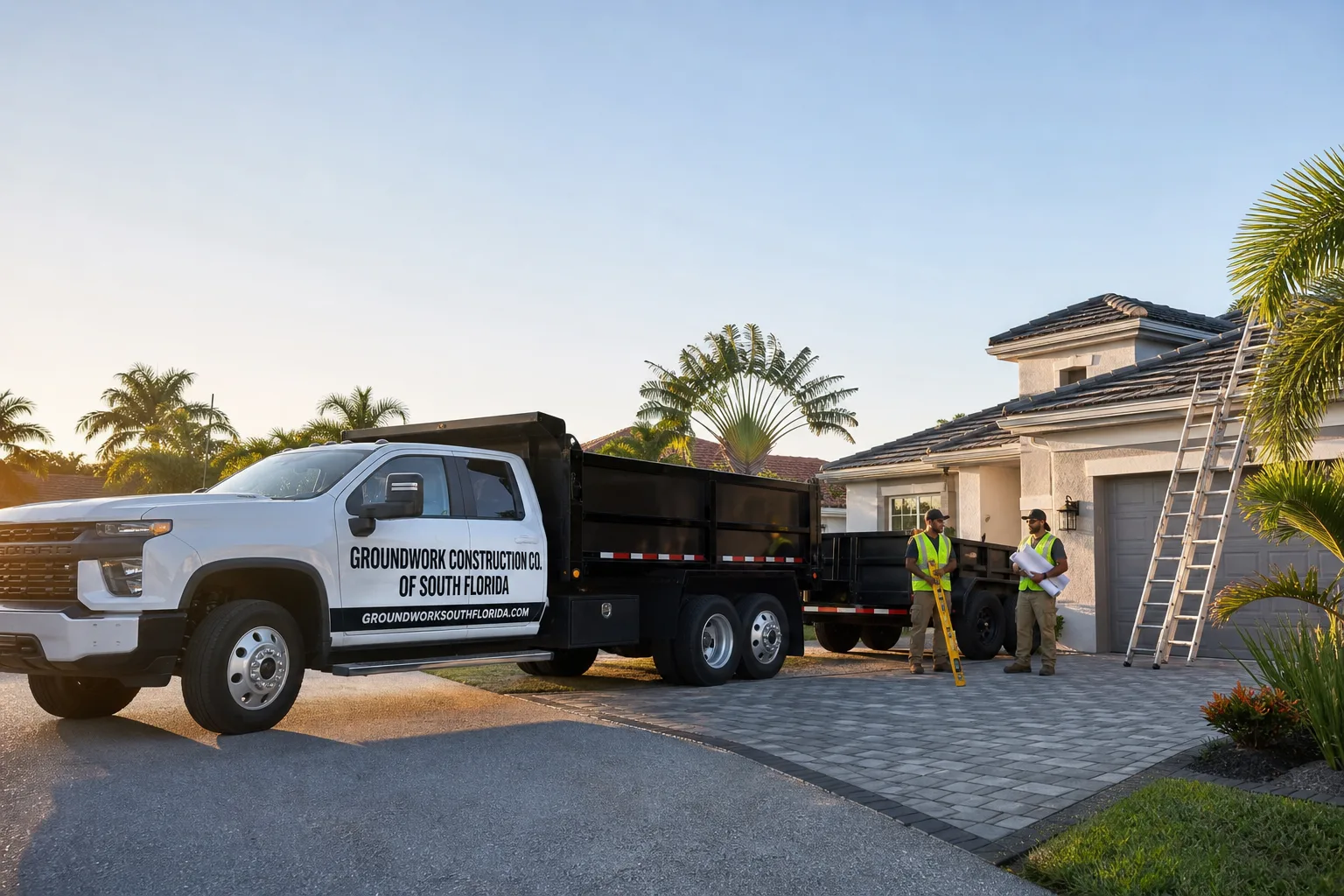
Specialty Roofing in Princeton, FL: Timeline, Scope, and What It Costs
Specialty roofing in Princeton, FL covers non-standard installations that fall outside conventional asphalt shingle replacement: flat or low-slope membrane systems, built-up roofing for additions and ADUs, architectural metal accents, and hurricane-rated tile configurations on complex rooflines. Most projects run 4-10 business days from permit pull to final inspection, with costs typically ranging $8,000-$20,000 for standard-scope work and $15,000-$40,000 for metal or multi-plane specialty systems. Call (844) 665-0162 for a free on-site estimate and written breakdown.
How We Handle Specialty Roofing Start to Finish
Every specialty roofing job in Princeton follows a five-stage sequence we’ve refined working with Miami-Dade’s HVHZ inspection cycle. Homeowners know exactly where we are, what we’re waiting on, and what decision they need to make next.
Stage 1: Site assessment and scope lock (Day 1)
We walk the roof with you, identify every plane, penetration, and drainage point, then photograph and measure. For Princeton’s post-Andrew CBS homes, we’re checking whether the existing roof deck is 5/8″ plywood (common on 1990s rebuilds) or the thicker 3/4″ required for tile or metal under HVHZ. You’ll decide at this stage whether we’re matching an existing material or switching systems, because that choice drives the engineering review. This takes 2-3 hours on site; the written estimate follows within 48 hours.
Stage 2: Engineering and permit submission (Days 2-10)
Miami-Dade requires structural calculations for any specialty roofing system that departs from the original permitted assembly. We submit through the county’s online portal, but we also know from experience which plans examiners flag flat-roof drainage details on low-slope conversions. If your property sits on former agricultural land in the active conversion zones west of SW 137th Avenue, we’ll note any slab settlement that’s affected roofline geometry. Homeowner decision here: material grade and color selection, which we need locked before fabrication orders.
Stage 3: Tear-off and deck prep (Days 11-13)
We strip to bare deck, replace any water-damaged plywood (common near Princeton’s older vent stacks and chimney flashings), and install hurricane straps or clips where the existing fastening doesn’t meet current HVHZ pull-out requirements. On homes rebuilt after 1992, the original strapping often needs supplementing for tile or standing-seam metal loads. This stage generates the most debris; we coordinate dumpster placement around Princeton’s tighter subdivision streets and HOA truck-route restrictions.
Stage 4: System installation and mid-roof inspection (Days 14-18)
The membrane, metal, or tile system goes down per manufacturer spec, with Miami-Dade’s required secondary water barrier on all slopes below 4:12. For flat or low-slope areas common on Princeton’s ranch-style additions and garage wings, we install tapered insulation to create positive drainage toward scuppers or internal drains. Miami-Dade inspectors require a mid-roof visit before final covering on specialty systems; we schedule around their availability, which typically adds 1-2 business days.
Stage 5: Final inspection and closeout (Days 19-22)
The county inspector verifies fastening patterns, flashing integration, and HVHZ compliance documentation. We register manufacturer warranties in your name (GAF, CertainTeed, Owens Corning, or the metal/tile supplier’s own program), walk the finished roof with you, and document condition with dated photos for your insurance file. Homeowner receives: permit closure letter, warranty registrations, and maintenance schedule.
The Material and Configuration Choices You’ll Make
Specialty roofing in Princeton isn’t one product. It’s a set of decisions about how your roof performs in HVHZ conditions, how it looks from the street, and how long you intend to own the home.
- Modified bitumen or TPO membrane for low slopes: TPO runs cooler and reflects Miami-Dade’s brutal summer heat, but modified bitumen handles foot traffic better if your HVAC equipment lives on the roof. TPO typically costs 15-20% more upfront but carries longer manufacturer coverage. Best for: flat-roof additions, garage wings, and ADU connectors where the main roof is shingle or tile.
- Standing-seam aluminum vs. steel: Aluminum won’t rust in Princeton’s salt-laden coastal air, but it’s softer and dents more easily from wind-borne debris. Steel with Kynar coating costs less and holds its finish longer, yet requires sacrificial edge treatment near the coast. Best for: modern architectural profiles, long-term ownership, homes where the roof is a visible design element.
- Concrete tile vs. clay barrel: Concrete tile is the HVHZ default in Miami-Dade; it’s heavier (requiring verified deck capacity) but withstands impact and UV degradation for 40+ years. Clay barrel runs 25-35% more, weathers to a softer patina, and demands more precise installation on complex valleys. Best for: Mediterranean or Spanish-influenced architecture common in Princeton’s 1990s-2000s subdivisions.
- Insulation and deck assembly: Adding rigid insulation above the deck (common on flat-roof retrofits) improves interior comfort but raises fascia and flashing heights, affecting window and door head clearances. We coordinate this with Sliding & Patio Doors in Princeton when the project scope includes exterior door replacement. Best for: conditioned attic conversions, energy-code compliance on additions.
What Specialty Roofing Costs in Princeton, FL
| Project Scope | Typical Range |
|---|---|
| Low-slope membrane replacement (1,200-2,000 sq ft) | $8,000-$14,000 |
| Standing-seam metal on complex roofline | $15,000-$28,000 |
| Concrete tile specialty installation with deck reinforcement | $12,000-$22,000 |
| Flat-roof ADU or addition with tapered insulation | $10,000-$18,000 |
| Multi-system hybrid (shingle + membrane + metal accents) | $18,000-$35,000 |
Five variables push any specialty roofing job in Princeton toward the high or low end of these ranges:
Existing deck condition: Post-Andrew rebuilds in 33032 used plywood that can delaminate after 30+ years of South Florida heat cycling. Full deck replacement adds $2,500-$5,000.
Structural verification requirements: Tile and metal need engineering confirmation that the CBS walls and tie-down system can handle the load. If original 1990s strapping is insufficient, supplemental fastening runs $1,500-$3,500.
Material grade and finish: Standard Kynar-coated metal vs. premium copper or zinc; standard-weight concrete tile vs. lightweight or coated profiles. The spread is 20-40% within each category.
Drainage reconfiguration: Princeton’s flat sites and high water table mean standing water is a real threat. Adding scuppers, internal drains, or crickets on low-slope areas adds $800-$2,500.
Permit scope and inspection cycle: Miami-Dade’s HVHZ process is thorough but not fast. Expedited plan review is available for a fee; we quote this separately when timing matters.
A written estimate from Groundwork includes: materials, labor, permit fees, dumpster and debris haul-off, and manufacturer warranty registration. It does not include: tree trimming for access (we’ll flag this during assessment), interior ceiling repair if water damage is found during tear-off, or structural engineering if the original plans aren’t available and must be recreated.
What Princeton Homes Specifically Do to This Job
Princeton sits at the Everglades’ eastern urban edge in South Miami-Dade, where Hurricane Andrew razed or severely damaged the bulk of the housing stock in 1992 and forced a wholesale rebuild under Miami-Dade’s newly enacted High-Velocity Hurricane Zone codes, the strictest residential building standards in the United States. Every specialty roofing project we take on in 33032 must demonstrate HVHZ compliance for impact-resistant assemblies, hurricane straps, and reinforced fastening that contractors in neighboring Broward or Palm Beach counties simply don’t encounter. This isn’t paperwork theater; inspectors physically pull fasteners and measure embedment depths.
The housing stock we work on most is post-1992 CBS construction, rebuilt on engineered slabs to address a water table that sits 12-24 inches below grade. These homes are structurally sound but their rooflines are often simpler than pre-Andrew architecture, which means specialty roofing here is frequently about adding visual interest or solving functional problems (flat additions, ADU connectors, covered walkways) rather than restoring historic complexity. When we do encounter the rare surviving wood-frame structure, we know immediately that deck reinforcement and potentially wall tie-down upgrades will be part of the scope.
The active agricultural-to-residential conversion west of SW 137th Avenue introduces another Princeton-specific variable: new construction on raw lots with fill dirt of inconsistent compaction and Miami oolite limestone bedrock just inches below surface grade. We’ve seen out-of-area roofing crews bid standard footer and tie-down work, then hit rock that requires carbide blades or jackhammer attachments, turning a routine detail into a change order. We price this reality in from the start.
For homeowners considering broader exterior upgrades, Roofing in Princeton covers the full vertical including standard replacement and repair, while Glass Railing Systems in Princeton pairs well with second-story additions where the roofline and balcony envelope are being rethought together. Our Roofing crew coordinates directly with our window, door, and hardscape teams when projects span multiple trades.
Serving Princeton, FL - Our Local Coverage Area
We’re based in the Princeton area and know this community well. Use the map below to see our service coverage - if you’re nearby, we can almost certainly help.
Frequently Asked - Specialty Roofing in Princeton
Most specialty roofing projects in Princeton take 4-10 business days of active work, plus 7-14 days for Miami-Dade permit review and inspection scheduling. Complex multi-system roofs or those requiring structural engineering can extend to 3-4 weeks total. Call (844) 665-0162 and we’ll give you a realistic timeline based on current county turnaround.
Yes, absolutely. Miami-Dade requires permits for all roofing work, and specialty systems trigger additional structural and HVHZ compliance reviews that standard shingle replacements don’t face. We handle the entire submission, including engineering stamps when required. Never proceed with unpermitted roofing in 33032; it voids insurance coverage and creates sale complications.
Often yes, depending on penetration locations. Flat and low-slope membrane systems actually accommodate vent stacks and electrical masts more easily than steep-slope tile because flashing details are simpler. We map every penetration during the Day 1 assessment and flag any that need relocation before we order materials. Moving a vent stack typically runs $400-$800 if a plumber is needed.
Generally yes, 30-60% more for equivalent square footage, because specialty materials cost more and the HVHZ installation requirements are more labor-intensive. However, specialty systems often last 25-40 years versus 15-20 for standard shingles in South Florida’s UV and wind exposure, so lifecycle cost can be lower. We run both numbers in your estimate so you can decide.
You receive two warranties: the manufacturer’s material warranty (typically 20-50 years depending on product tier) and our workmanship warranty covering installation quality. Manufacturer warranties require certified installer status, which we maintain with GAF, CertainTeed, Owens Corning, and our metal and membrane suppliers. We register both warranties in your name at project closeout; don’t let a contractor hand you a blank card to mail yourself.
Get Your Free On-Site Estimate for Specialty Roofing in Princeton
Call (844) 665-0162 to schedule a free, no-obligation assessment. Raymond Estevez or a senior member of our Princeton crew will walk your roof, explain the HVHZ requirements that apply to your specific home, and deliver a written estimate within 48 hours. We’ll also flag any coordination points with Roofing in Princeton if your project is part of a larger exterior renovation. No pressure, no deposit required to review the numbers.
Written by Raymond Estevez, Owner at Groundwork Construction Co., serving Princeton and South Miami-Dade since our founding.