
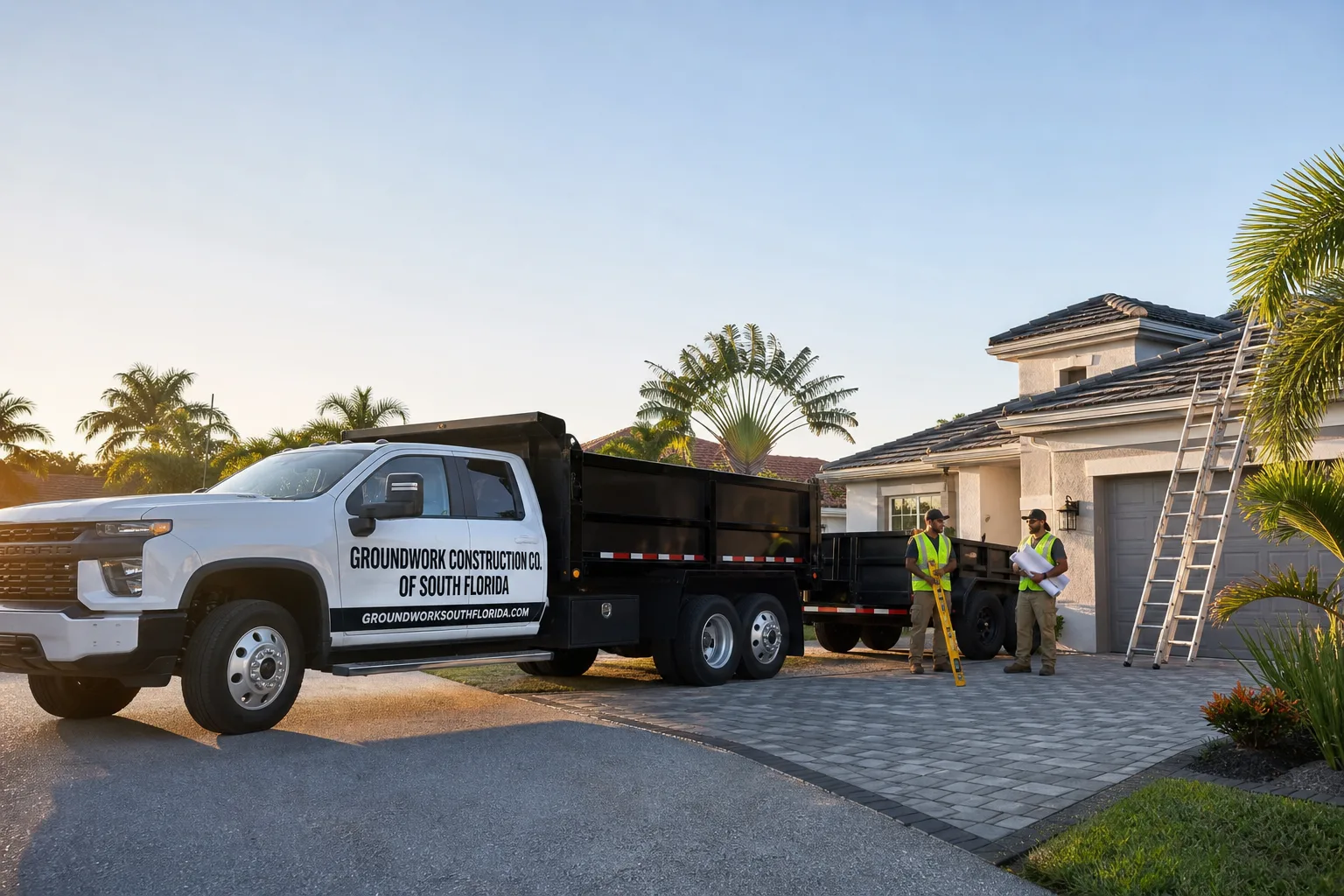
Junior ADU & Interior Conversion in Melrose Park, FL: Scope, Timeline, and Cost
A junior ADU & interior conversion in Melrose Park transforms an existing bedroom, den, or attached living space into a self-contained unit with its own kitchenette, full bathroom, and separate entrance, typically without expanding the home’s original footprint. Most projects we handle here run 8 to 14 weeks from permit approval to final inspection, with Broward County’s HVHZ compliance adding roughly 2 to 3 weeks to the permitting phase compared to non-hurricane-zone work. Budgets for this work in the Fort Lauderdale market generally fall between $45,000 and $130,000 depending on whether you’re reconfiguring plumbing, upgrading electrical service, or adding impact-rated openings. Call (844) 665-0162 and we’ll walk through your specific layout and give you a written, itemized estimate with no obligation.
How We Approach a Junior ADU & Interior Conversion in Melrose Park
Every junior ADU & interior conversion we build follows a five-stage sequence. We’ve refined this through projects across Broward County’s unincorporated areas, where the county’s inspection cadence and HVHZ requirements demand tighter coordination than city-permitted work.
Stage 1: Existing Conditions & Code Review (Days 1-5)
We start with a full walkthrough of your home’s original layout, photographing the existing slab, roof structure, electrical panel, and plumbing rough-ins. In Melrose Park’s 1950s-1970s housing stock, we regularly find original flat roofs with inadequate slope for drainage, 100-amp panels that won’t support a second kitchen, and cast-iron drain lines nearing end of life. You’ll decide at this stage whether to bring the entire electrical service up to current code or isolate the ADU on a sub-panel, and whether to replace original windows with HVHZ-compliant impact units now or defer that cost.
Stage 2: Design & Permit Submission (Weeks 2-5)
Our drafting team produces construction documents showing the new floor plan, structural modifications, MEP routing, and egress compliance. Because Melrose Park falls under Broward County’s jurisdiction rather than a municipal building department, we submit directly through the county’s online portal and coordinate with their plan review cycle. HVHZ engineering for impact-rated openings and wind-load connections adds a separate review track. You’ll finalize kitchenette dimensions, bathroom fixture locations, and whether the unit needs its own HVAC mini-split or ties into the existing central system.
Stage 3: Demolition & Rough Construction (Weeks 6-9)
We frame new interior partitions, open walls for the separate entrance, and run plumbing and electrical rough-ins. In slab-on-grade homes with the water table sitting 2-4 feet below grade, any trenching for new drain lines requires dewatering and same-day backfill to prevent slab heave. This is where we most often encounter surprises: original slab penetrations that aren’t where the as-builts suggest, or termite damage in the bottom plates of 60-year-old CBS walls. We document everything with photos and present options before proceeding.
Stage 4: Systems & Finish Installation (Weeks 10-12)
Insulation, drywall, flooring, cabinetry, and fixture installation happen here. For a junior ADU & interior conversion in Melrose Park, we typically specify moisture-resistant materials given the humidity load: vinyl plank or tile flooring rather than engineered hardwood, solid-surface countertops that won’t delaminate, and exhaust fans rated for continuous operation. You’ll do a pre-finish walkthrough to confirm paint colors, hardware selections, and appliance rough-in dimensions.
Stage 5: Inspections & Final Closeout (Weeks 13-14)
Broward County requires rough inspections for plumbing, electrical, and framing before insulation, plus a final building inspection and certificate of occupancy. We schedule these in sequence to avoid re-inspection fees. The county’s HVHZ compliance officer verifies impact-rated openings and continuous load path connections. Once cleared, we hand over keys, warranties, and maintenance documentation.
The Material and Configuration Choices You’ll Make
Every junior ADU & interior conversion in Melrose Park forces real trade-offs between first cost, durability, and daily livability. Here’s what we most often walk homeowners through:
- Kitchenette footprint: full galley vs. wet-bar mini. A 6-foot galley with full-size range and refrigerator runs $8,000-$15,000 in cabinetry and appliances but rents or houses a tenant comfortably. A wet-bar configuration with induction cooktop, under-counter fridge, and microwave drawer cuts that to $4,000-$7,000 but limits meal preparation. We see the full galley chosen when the ADU is for long-term family use; the wet-bar when it’s primarily for rental income.
- Bathroom layout: tub-shower combo vs. curbless walk-in. The combo preserves resale flexibility and costs less upfront ($3,500-$6,500). A curbless walk-in with linear drain adds $2,000-$4,000 but ages-in-place better and simplifies cleaning. In Melrose Park’s older CBS homes with 3-inch cast-iron drains, the curbless option often requires a pump-assisted drain or slab cutting, which pushes cost toward the high end.
- Flooring: luxury vinyl plank vs. porcelain tile. LVP runs $4-$8 per square foot installed, feels warmer underfoot, and forgiving on uneven slabs common in 1960s construction. Porcelain at $7-$14 per square foot handles flooding and humidity indefinitely but transmits more sound and requires a flatter substrate. With Broward’s water table and annual hurricane exposure, we lean toward porcelain for ground-floor ADUs and LVP only when the slab has been recently leveled.
- HVAC: ducted tie-in vs. dedicated mini-split. Extending existing ductwork costs $2,000-$4,500 but puts the ADU on the same thermostat as the main house, which creates zoning conflicts. A dedicated mini-split at $3,500-$6,000 gives independent climate control and better humidity management, critical for a space that may sit unoccupied between tenants. Most of our Melrose Park clients choose the mini-split.
- Separate entrance: retrofit existing window vs. new cut. Converting an existing window to a code-compliant egress door costs $3,000-$5,500 if the header can remain. Cutting a new opening in CBS block with HVHZ-rated impact door runs $6,000-$11,000 including structural reinforcement and stucco repair. The decision usually hinges on which wall faces the driveway or walkway and whether the home’s original layout allows a logical path to the street.
What Junior ADU & Interior Conversion Costs in Melrose Park, FL
| Component | Typical Range |
|---|---|
| Junior ADU & Interior Conversion (total project) | $45,000 - $130,000 |
| Kitchenette (cabinets, appliances, rough-in) | $4,000 - $15,000 |
| Full bathroom addition or remodel | $9,000 - $28,000 |
| Separate entrance (door, header, stucco) | $3,000 - $11,000 |
| Electrical service upgrade (if required) | $2,500 - $6,500 |
| Impact-rated window/door replacements | $8,000 - $25,000 |
| HVAC (mini-split or duct extension) | $2,000 - $6,000 |
Five factors move any junior ADU & interior conversion in Melrose Park toward the low or high end of that $45,000-$130,000 range:
Existing condition of core systems. A home with updated electrical, copper or PVC plumbing, and a sound roof deck starts lean. Original 100-amp service, cast-iron drains, and a flat roof needing replacement add $15,000-$35,000 before the ADU work begins.
Plumbing relocation distance. Keeping the new bathroom and kitchenette on the same wall as existing drains saves trenching and pumping costs. Routing across the slab to the opposite side of the house in a 1,400-square-foot footprint typically adds $4,000-$8,000.
Structural modifications. Removing a load-bearing wall to open the ADU to the main living area, or adding a header for the separate entrance, requires engineering and permit drawings. Pure interior partition builds without structural changes avoid this entirely.
Material grade and appliance tier. A wet-bar kitchenette with stock cabinetry and basic appliances runs roughly half the cost of a full galley with semi-custom cabinets and Bosch or KitchenAid appliances. We source from our full brand portfolio so you’re selecting across tiers, not locked into one line.
Permit scope and HVHZ compliance triggers. In Melrose Park, any project exceeding 50% of a dwelling’s assessed value or altering more than 75% of a room’s walls triggers full HVHZ compliance for the entire structure, not just the modified area. This can mean replacing all windows with impact-rated units and adding continuous roof-to-foundation strapping, a cost that surprises contractors unfamiliar with Broward County’s unincorporated rules.
Our written estimates itemize labor, materials, permit fees, and contingency. They do not include homeowner-selected finishes above the allowance, temporary relocation costs, or Broward County’s re-inspection fees if we’re held up by prior contractor work that needs correction.
What Melrose Park Homes Specifically Do to This Job
Melrose Park’s unincorporated status and its position squarely inside Florida’s High Velocity Hurricane Zone create a permitting reality that shapes every junior ADU & interior conversion we build here. Contractors accustomed to Oakland Park’s or Lauderdale Lakes’ municipal building offices must shift to Broward County’s centralized portal, separate plan review queues, and inspection scheduling that doesn’t offer the walk-in flexibility some city departments allow. We’ve seen out-of-area crews lose two to three weeks simply because they submitted to the wrong jurisdiction or didn’t account for the county’s HVHZ engineering review parallel to standard building plan review.
The housing stock itself is remarkably consistent: concrete block construction, slab-on-grade, no basements, built between the 1950s and 1970s when Broward’s development wave was at peak intensity. In the neighborhoods off Prospect Road and along the eastern edge near Davie, we regularly open walls to find original flat roofs with inadequate slope, electrical panels that predate grounded receptacle requirements, and window openings that were never designed for the impact-rated units HVHZ now mandates. When a junior ADU & interior conversion triggers a full permit because of scope or valuation, bringing those existing elements into compliance can equal or exceed the ADU-specific construction cost.
The water table, sitting just 2-4 feet below grade, means any slab cutting for new plumbing runs risks immediate water infiltration. We schedule that work in drier winter months when possible and always have dewatering equipment on standby. And the June-October hurricane season compresses our exterior work windows; we won’t leave a roof opening or unprotected wall cut during a named storm watch, which means building buffer into timelines for a junior ADU & interior conversion in Melrose Park that wouldn’t be necessary inland.
Homeowners here often pair this work with interior upgrades to the main house, and we’ve found that coordinating a Kitchen Design & Layout in Melrose Park or Small & Partial Kitchen Remodels in Melrose Park through the same project cycle reduces overall disruption and lets us sequence trades efficiently. When a junior ADU & interior conversion is part of a full Home Additions & ADU in Melrose Park scope, we handle the phasing so you’re not living around multiple contractors.
Our Home Additions & ADU crew serves Melrose Park from our Fort Lauderdale base, and we maintain active permits with Broward County specifically to avoid the jurisdictional delays that catch less familiar contractors.
Serving Melrose Park, FL - Our Local Coverage Area
We’re based in the Melrose Park area and know this community well. Use the map below to see our service coverage - if you’re nearby, we can almost certainly help.
Frequently Asked - Junior ADU & Interior Conversion in Melrose Park
Most projects take 8 to 14 weeks from permit approval to certificate of occupancy, with Broward County’s HVHZ plan review adding 2 to 3 weeks compared to non-hurricane-zone permitting. Call (844) 665-0162 and we’ll assess your specific layout and give you a realistic timeline based on current county review times.
Yes, all junior ADU & interior conversion work in Melrose Park requires permits through the Broward County Building Division because the community is unincorporated, and any project altering plumbing, electrical, or structural elements triggers mandatory inspection. We handle the full submission including HVHZ engineering documentation as part of our standard process.
Sometimes, if an existing bedroom or den already sits adjacent to a bathroom and kitchen wall with drain access, but most Melrose Park homes from the 1950s-1970s require at least electrical service upgrades and new plumbing rough-ins to meet current code for a separate dwelling unit. We’ll tell you honestly during the initial walkthrough whether your layout allows a minimal-intervention approach or needs full system work.
The lowest-cost path keeps the existing floor plan intact, uses a wet-bar kitchenette rather than full galley, retains the original bathroom location, avoids electrical service upgrades, and doesn’t trigger full HVHZ compliance by staying under the 50% assessed value threshold, typically landing near $45,000. We can evaluate your home’s assessed value and existing systems to see if this lean path is feasible for your property.
Our workmanship warranty covers installation and labor for one year, while manufacturer warranties on cabinets, fixtures, appliances, and impact-rated windows run independently from 5 years to lifetime depending on the specific product line you select. We register all warranties in your name and provide documentation at project closeout so you’re not chasing paperwork later.
Get a Free Estimate for Your Junior ADU & Interior Conversion in Melrose Park
Call (844) 665-0162 to schedule a free, on-site estimate for your junior ADU & interior conversion in Melrose Park. Raymond Estevez or a senior member of our team will walk your property, assess your existing systems against Broward County’s HVHZ requirements, and deliver a written, itemized proposal within 48 hours. No obligation, no pressure, and no surprises once work begins.
Written by Raymond Estevez, Owner at Groundwork Construction Co., serving Melrose Park since our founding in Fort Lauderdale.