
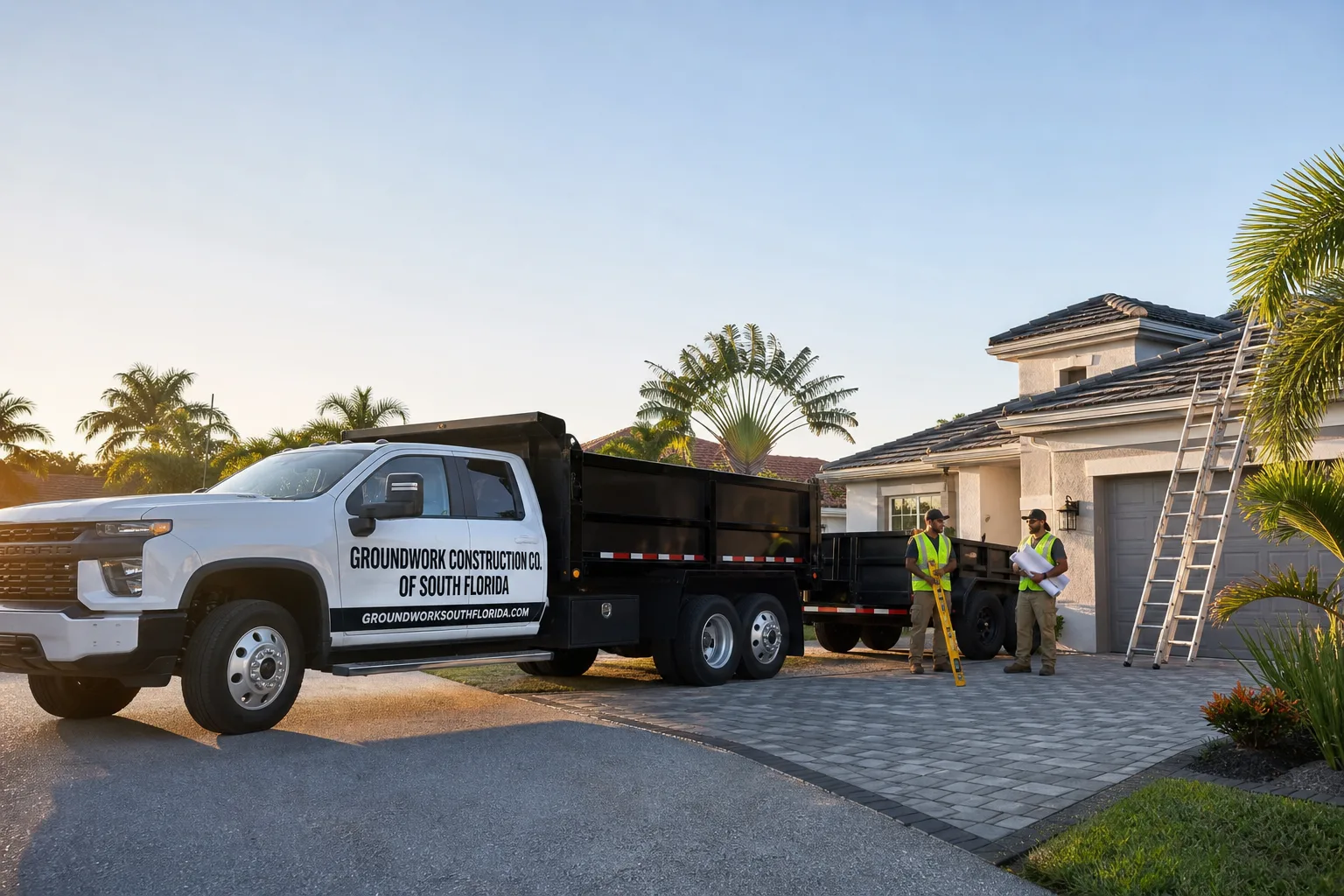
ADU Design & Permitting in Naranja, FL: Timeline, Cost, and What the County Requires
ADU design and permitting in Naranja typically takes 4 to 7 months from first site visit to issued permit, with construction adding another 3 to 6 months depending on foundation conditions. Most homeowners in the 33039 ZIP code should budget $45,000-$130,000 for the full design, engineering, and permitting phase through move-in ready completion. Call (844) 665-0162 to schedule a free site evaluation - we’ll walk your property, flag the HVHZ compliance items that Miami-Dade inspectors will look for, and give you a written estimate with real numbers.
How We Handle ADU Design & Permitting from First Sketch to Approved Plans
We’ve learned that rushing the front end of an ADU project in Naranja always costs more on the back end. Miami-Dade’s High Velocity Hurricane Zone doesn’t forgive shortcuts. Here’s how we move through design and permitting without surprises.
Stage 1: Site feasibility and zoning check (Week 1)
We visit your property, measure setbacks, and pull the existing home’s permit history from Miami-Dade County records. In Naranja, we’re often working on CBS homes built 1993-1997 with original impact windows that may or may not meet current HVHZ standards for the new structure’s exposure. You’ll decide at this stage whether you want a detached unit, garage conversion, or attached addition - each triggers different setback and fire-separation rules.
Stage 2: Conceptual design and budget alignment (Weeks 2-4)
Our architect drafts floor plans and elevations based on your priorities: rental income, aging-in-place, or family use. We simultaneously run a preliminary load analysis on your existing electrical panel and septic or sewer connection. Most Naranja lots in the 33039 area were platted with narrow side yards, so we often need to design vertically or optimize a compact footprint. You’ll approve the layout and select preliminary material grades before we move to engineering.
Stage 3: Structural engineering and HVHZ documentation (Weeks 5-10)
This is where Naranja projects diverge from standard Florida work. Every ADU here requires a Florida-registered engineer to stamp wind-load calculations, impact-rated opening schedules, and roof-to-wall connection details that satisfy HVHZ. We specify PGT or CGI impact windows and doors for most units, with Andersen or Pella architectural lines where the design demands larger spans. If we’re hitting the Miami oolitic limestone bedrock - common here within 12-18 inches of grade - the foundation plan gets a geotechnical note that adds dewatering and rock-cutting specs.
Stage 4: Permit submission and Miami-Dade plan review (Weeks 11-20)
We submit digitally through the Miami-Dade Permitting, Environment and Regulatory Affairs (PERA) portal. ADU plans typically cycle through structural, mechanical, plumbing, and electrical review desks. First-round comments are normal; we address them without charging change fees. The county may require a tree survey or drainage impact statement if your lot sits near the low-lying agricultural fringe west of Biscayne Bay. We handle resubmission and track the plan check daily.
Stage 5: Permit issuance and pre-construction handoff (Week 21+)
Once the permit is in hand, we schedule the pre-construction meeting where you’ll finalize cabinet selections from KraftMaid or Wellborn lines, countertop material from Cambria or Silestone, and any interior trim packages. We also confirm the construction schedule around Naranja’s June-October rainy season, when afternoon storms can compress foundation and exterior work into narrow morning windows.
The Build Choices That Shape Your ADU in Naranja
Every decision below affects your permit drawings, your final cost, and how the unit performs through hurricane season. We present the honest trade-offs so you’re not upgrading blindly or downgrading regretfully.
- Foundation type: stem wall on grade vs. elevated pile or slab. Stem walls on compacted fill work where we can trench without hitting bedrock; they’re faster and run $8,000-$15,000 less. Elevated designs suit flood-prone lots near the bay fringe but require deeper excavation, often triggering the jackhammer line item for limestone. We engineer for whichever the site demands.
- Wall assembly: standard CBS block vs. insulated concrete forms (ICF). CBS with stucco finish is the Naranja default, familiar to every Miami-Dade inspector, and cost-effective. ICF adds $12,000-$20,000 but delivers superior energy performance and wind resistance; we recommend it for two-story ADUs or rental units where long-term utility costs matter.
- Window and door package: HVHZ minimum vs. architectural grade. Code requires impact-rated products with specific design pressure ratings. PGT and CGI meet the standard at strong value. Andersen A-Series or Pella Architect Series cost 40-60% more but offer narrower sightlines and custom sizing that changes how the unit feels. We spec the minimum where the budget’s tight and upgrade selectively on street-facing elevations.
- Roofing: asphalt architectural shingles vs. metal standing seam. GAF or CertainTeed architectural shingles carry 30-50 year warranties and match most 1990s Naranja homes. Metal from Boral or local fabricators adds $6,000-$10,000, reflects heat aggressively, and outperforms in wind uplift - we push this for detached units with no attic buffer.
- Interior finish level: durable rental-grade vs. owner-quality. Rental ADUs in Naranja typically get luxury vinyl plank flooring, solid-surface countertops, and KraftMaid semi-custom cabinets - hard-wearing, easy to maintain, and quick to source. Owner-occupied units often step up to Wellborn full-custom cabinetry, Cambria quartz, and upgraded tile. The spread between these tiers is $15,000-$30,000.
What ADU Design & Permitting Costs in Naranja, FL
Most ADU design and permitting projects we complete in Naranja fall between $45,000 and $130,000 for the full scope from design through construction completion. The design and permitting phase alone typically represents $12,000-$28,000 of that total, with engineering and Miami-Dade plan review fees consuming a larger share than in Broward or Palm Beach counties due to HVHZ documentation requirements.
Five factors push your number up or down:
- Size and complexity: A 400-square-foot studio over an existing garage runs toward the low end. A 900-square-foot two-bedroom detached unit with full kitchen and independent utilities pushes toward the high end.
- Foundation conditions: Standard stem-wall pours on clean soil keep costs down. Hitting Miami oolitic limestone within the first foot, requiring hydraulic rock-cutters and dewatering, can add $8,000-$18,000.
- Utility extensions: Tapping into existing sewer and water lines nearby is straightforward. Extending 200+ feet across the property, upgrading an undersized septic system, or adding a separate electrical meter adds $5,000-$15,000.
- Material grade selections: The gap between rental-grade finishes and owner-occupied premium selections is $15,000-$30,000, as noted above.
- Permit scope and corrections: Straightforward plans with minimal Miami-Dade comments keep engineering costs predictable. Complex sites with drainage concerns or tree protection zones can extend plan review and add consultant fees.
Our written estimates itemize design fees, engineering, permit costs, and construction separately so you see where every dollar goes. What we don’t include: homeowner’s association application fees (common in newer Naranja plats), temporary relocation if you’re living in the main house during construction, or landscaping restoration beyond basic grading and sod.
Why Naranja Homes Make ADU Permitting Different
Naranja was ground zero for Hurricane Andrew’s catastrophic August 1992 landfall, which essentially leveled much of the community and directly triggered Miami-Dade County’s adoption of the High Velocity Hurricane Zone code - the strictest hurricane construction standard in the United States. Nearly every ADU design and permitting project here, from new builds to renovations, must comply with HVHZ impact-resistance and structural requirements that go well beyond what is demanded even in neighboring Broward County, making permitting, inspections, and material specifications uniquely rigorous.
The vast majority of Naranja’s residential stock was rebuilt in the years immediately following Andrew as concrete block and stucco construction under the newly tightened Miami-Dade codes, with impact-rated windows and reinforced roof-to-wall connections. When we design an ADU adjacent to one of these 1993-1997 homes, we often find the original impact glazing is still intact but the fastening schedule doesn’t match current HVHZ for the new exposure category. Inspectors flag this. We solve it in the design phase rather than during construction.
The scattered pre-Andrew wood-frame structures that survived are a different challenge. We’ve worked on homes near SW 264th Street where the original construction triggered hurricane-mitigation deficiencies that had to be resolved before the county would even accept ADU permit applications. That means sistering rafters, adding hurricane straps, or replacing non-impact glass - work that becomes part of the overall project scope and budget.
Naranja sits on the flat, low-lying southern edge of Miami-Dade County just west of Biscayne Bay’s agricultural fringe, where the water table can be just inches below grade. Foundation work, trenching, and slab pours routinely require dewatering even in the dry season. The June-October rainy season delivers standing water across worksites in this near-Everglades terrain, compressing outdoor construction schedules into narrow morning windows. We build this reality into every timeline we present.
And then there’s the rock. The Miami oolitic limestone bedrock of the Miami Rock Ridge runs directly beneath Naranja, meaning crews routinely hit solid rock within 12-18 inches of grade. Standard excavation equipment stalls out, and jackhammers or hydraulic rock-cutters are a routine line item for anything requiring footers, underground plumbing, or utility trenching. Out-of-area contractors consistently underestimate this on their first job here. We don’t.
If you’re considering this as part of a full property transformation, you may also want to explore Home Additions & ADU in Naranja for the broader scope, or see how Full Kitchen Remodeling in Naranja and Cabinets & Countertops in Naranja pair with ADU builds for a cohesive main-house update. Our Home Additions & ADU service hub covers the full range of expansion options we offer across South Florida, and our Naranja service area page details how we work throughout the 33039 ZIP code and nearby communities.
Serving Naranja, FL - Our Local Coverage Area
We’re based in the Naranja area and know this community well. Use the map below to see our service coverage - if you’re nearby, we can almost certainly help.
Frequently Asked - ADU Design & Permitting in Naranja
From first site visit to issued permit, expect 4 to 7 months. Miami-Dade’s HVHZ review adds 2-4 weeks compared to standard Florida jurisdictions, and limestone foundation conditions may extend engineering. Call (844) 665-0162 and we’ll give you a realistic timeline based on your specific lot conditions.
Yes - every ADU in Naranja requires a Miami-Dade building permit with HVHZ structural, electrical, plumbing, and mechanical approvals. There is no legal path to build without permits in this county. We handle the full submission and track plan review until approval.
Sometimes, but rarely for detached units. Most Naranja ADUs require a separate electrical meter and either a sewer tap extension or septic system evaluation. During our Week 1 feasibility check, we map your existing utilities and tell you exactly what can stay and what must be extended or upgraded.
The lowest-cost path is typically a garage conversion using existing foundation and roof structure, with rental-grade finishes and minimal utility extension. Even then, HVHZ compliance for windows, doors, and connections is non-negotiable. We don’t cut corners that fail inspection - we optimize where the code allows choice.
We warranty our workmanship and stand behind the engineering stamps we procure. Material warranties come directly from manufacturers - GAF, CertainTeed, Owens Corning for roofing; Andersen, Pella, PGT for windows and doors; KraftMaid, Wellborn for cabinetry. We register these warranties in your name at project closeout, not ours.
Ready to Start Your ADU Design & Permitting in Naranja?
Call (844) 665-0162 for a free on-site estimate. Raymond Estevez or a senior project lead will walk your property, explain how HVHZ and local ground conditions affect your specific build, and deliver a written estimate with itemized design, engineering, permit, and construction costs. No deposit required to get started - just a conversation about what you’re building and why.
Written by Raymond Estevez, Owner at Groundwork Construction Co., serving Naranja and South Florida homeowners since our founding.