
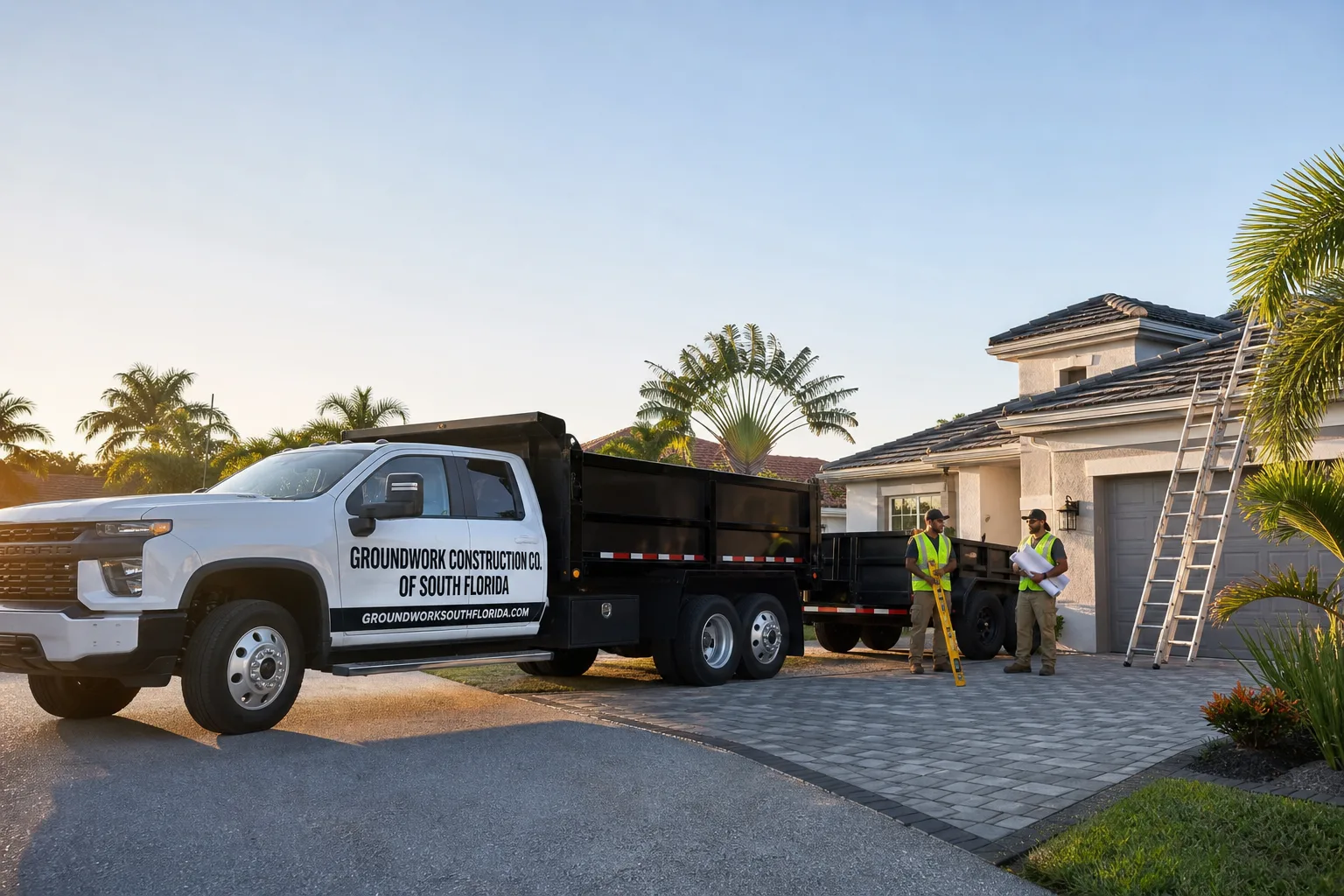
ADU Site Prep & Utilities in Clewiston, FL: What It Costs and How Long It Takes
ADU Site Prep & Utilities in Clewiston typically runs $45,000-$130,000 for the full groundwork package, with most projects taking 4-8 weeks before the structure ever arrives. That span covers soil stabilization, utility trenching and connections, foundation work, and the drainage systems that keep your unit dry through Florida’s wet season. Call (844) 665-0162 and we’ll walk your lot to give you a written estimate with line-item breakdowns.
Here’s the reality in Clewiston: the muck soils south of Lake Okeechobee don’t forgive shortcuts. We’ve seen homeowners skip proper site prep to save money upfront, only to watch their ADU slab tilt and crack within three years as organic soils oxidize and compress. The good news is that when you engineer for the ground you’re actually standing on, not the ground you wish you had, the result outlasts the mortgage.
How We Handle ADU Site Prep & Utilities from First Shovel to Final Inspection
We break this job into five distinct stages. Each has a clear deliverable, a realistic timeline, and a decision point where your input shapes what happens next.
Stage 1: Geotechnical evaluation and soil bearing report (5-10 business days)
Before we touch dirt, we bring in a soils engineer to drill test borings and confirm what we already suspect: the peat and muck beneath your lot will need stabilization. The report tells us whether we need lime treatment, compacted structural fill, or driven piles to reach bearing capacity. You’ll decide here between a standard stem-wall foundation on stabilized fill or an elevated pile system if your lot sits particularly low or close to the dike. The report itself costs $2,500-$5,000 and is mandatory for Hendry County permitting on any slab addition near the lake-side neighborhoods.
Stage 2: Site clearing and rough grading (3-5 days)
We strip topsoil, remove any existing outbuildings or concrete pads, and rough-grade to establish positive drainage away from the ADU footprint and your main house. In Clewiston’s older Sugarland-area neighborhoods, we regularly encounter abandoned septic tanks, undocumented utility lines, or old farm outbuildings that aren’t on any county map. We flag these surprises immediately rather than bury them in a change order later.
Stage 3: Soil stabilization and utility rough-in (2-3 weeks)
This is where Clewiston diverges from standard Florida site prep. We spread agricultural lime or cement kiln dust at the rate specified by the soils report, then mix and compact in lifts to create a stable subgrade. Simultaneously, we trench for water, sewer or septic, and electrical service from your main house or the utility tap. If you’re connecting to municipal sewer, we coordinate with the Clewiston Utility Department for tap and meter installation. Septic requires a separate Hendry County Health Department permit and perc test, which we handle as part of our permit package.
Stage 4: Foundation and slab pour (1-2 weeks, weather dependent)
We form and pour your foundation, whether that’s a monolithic slab on compacted fill, a stem-wall with elevated floor system, or a pile-supported platform for manufactured or prefab ADU units. Pouring in Clewiston’s wet season is gambling; we schedule around the forecast and maintain pumped dewatering if the water table rises within 24 inches of grade. You’ll choose your finish floor height relative to existing grade and the FEMA base flood elevation for your specific parcel.
Stage 5: Final grading, drainage, and utility trim-out (3-5 days)
We backfill trenches, install French drains or surface swales as engineered, set meter boxes and cleanouts to grade, and prep for your ADU structure delivery. The county inspects foundation, utilities, and drainage before we release the site for construction. We don’t hand off to a separate contractor; our crew stays accountable through final sign-off.
The Spec Choices That Shape Your ADU Site Prep & Utilities Project
Every decision below affects your final number and how the site performs over decades. We lay out the honest trade-offs so you’re choosing with eyes open.
- Foundation type: slab-on-grade vs. stem-wall vs. pile-supported. Slab-on-grade on stabilized fill is your most economical path, typically $12-$18 per square foot in Clewiston conditions. Stem-wall with elevated wood or concrete floor adds $8-$14 per square foot but gets you above the water table and any future subsidence. Pile-supported systems run $25-$40 per square foot but are non-negotiable on low-lying lots or where the soils report demands it. If you’re considering a prefab unit from Mighty Buildings or Boxabl, their foundation requirements are specific; we engineer to their spec, not force-fit a generic pad.
- Soil stabilization method: lime treatment vs. cement treatment vs. structural fill import. Lime treatment is standard for organic Clewiston soils, running $3-$6 per square foot of treated area. Cement treatment gains strength faster but costs 30-40% more. Importing compacted structural fill from an off-site quarry avoids chemical treatment entirely but requires thicker lifts and longer haul distances from Palm Beach or Collier County sources. We recommend lime for most residential ADU pads; cement only where the schedule is compressed.
- Utility connection path: direct tap vs. shared service from main house. Running independent water and sewer taps to the street adds $4,000-$8,000 in tap fees and trenching but simplifies metering and resale. Sharing utilities from your main house reduces upfront cost but requires upsizing your existing service panel and water heater, and complicates future property separation. Most Clewiston homeowners on municipal sewer choose independent taps; septic users often share the existing drainfield if it has capacity.
- Drainage system: perimeter French drain vs. surface grading only vs. pumped discharge. Surface grading alone works on lots with natural fall toward the street or swale. Perimeter French drain with daylighted outlet handles most Clewiston conditions at $2,500-$5,000. Pumped discharge systems are the last resort for truly flat lots during wet season, adding $3,500-$7,000 for sump, pump, and discharge piping to a permitted outfall.
- Pad finish: bare concrete vs. stamped/colored vs. paver-ready base. Your foundation slab can double as finished floor or serve as a structural base for flooring later. Bare concrete with control joints is standard. Stamped or integrally colored concrete adds $4-$8 per square foot if you’re using the slab as finished living space. If you’re laying tile, LVP, or carpet over the slab, we specify a vapor barrier and proper curing to prevent moisture issues in Clewiston’s humid climate.
What ADU Site Prep & Utilities Costs in Clewiston, FL
| Component | Typical Range |
|---|---|
| Soils report and engineering | $2,500 - $5,000 |
| Site clearing and rough grading | $3,000 - $8,000 |
| Soil stabilization (lime or cement) | $4,500 - $12,000 |
| Utility trenching and connections | $6,000 - $18,000 |
| Foundation/slab (varies by type) | $12,000 - $45,000 |
| Drainage systems | $2,500 - $7,000 |
| Permits and inspections (Hendry County) | $1,500 - $4,500 |
| Total ADU Site Prep & Utilities Package | $45,000 - $130,000 |
Five factors push you toward the high or low end of that range:
Lot size and ADU footprint. A 400-square-foot studio ADU on a compact lot needs minimal site work. A 1,200-square-foot two-bedroom with parking and walkway expands every cost category proportionally.
Existing conditions and surprises. Undocumented septic tanks, buried farm debris, or overhead power lines that must be undergrounded can add $5,000-$15,000 in unplanned remediation. We price a contingency line in every estimate.
Utility relocation distance. Trenching 20 feet to your house connection is straightforward. Running 150 feet to the street tap, boring under existing driveways, or upsizing undersized mains drives cost.
Foundation complexity. Slab-on-grade is simplest. Elevated floors, pile systems, or engineered fill deeper than 24 inches add material and labor exponentially.
Season and weather. Dry-season work (November-May) proceeds on schedule. Wet-season starts risk dewatering costs, delays, and re-work if rains hit before concrete cures. We discount dry-season scheduling when our calendar allows.
What’s included in our written estimate: all labor, materials, equipment, permits, and inspections described above. What’s typically separate: tree removal beyond small brush, hazardous material abatement, or landscaping restoration beyond basic sod or seed. We itemize both so there’s no ambiguity.
Why Clewiston’s Ground Demands Different Site Prep Than Anywhere Else in South Florida
The muck soils here are not a footnote. They’re the defining variable of every ADU Site Prep & Utilities project we build in Clewiston.
Sit on the south shore of Lake Okeechobee, behind the Herbert Hoover Dike, and you’re standing on drained Everglades peat that continues to oxidize and compress decade after decade. The modest concrete-block homes built from the 1950s through the 1980s for US Sugar Corporation’s agricultural workforce show the evidence: uneven slabs, cracked driveways, doors that bind in summer when soils swell and loosen in winter when they shrink. We’ve worked on Francis Avenue and near Sugarland Park where the original 1960s slabs have dropped three inches on one corner, pulling plumbing with them.
For ADU construction, this means a soil bearing report isn’t bureaucratic box-checking. It’s survival. We’ve watched slabs poured without lime stabilization or proper compacted fill tilt and crack within five years, sometimes within two wet seasons. The surface can feel firm enough in March; by August, standing water sits within inches of grade and that same surface has the load capacity of warm butter.
Hendry County permitting reflects this reality. Any slab addition or outbuilding near the lake-side neighborhoods triggers a soils report requirement, and your foundation design must account for FEMA base flood elevation tied to managed lake levels, not some static contour map. The wet season, roughly June through September, effectively pauses earthwork and foundation pours on low-lying lots. We schedule around it, or we budget for continuous dewatering that adds $800-$1,500 per week.
Many Home Additions & ADU in Clewiston projects we see also involve older HUD-code manufactured homes on the same parcel. Florida’s post-Hurricane Andrew tie-down and foundation retrofit rules apply if you’re adding conditioned space or reconfiguring the site. We coordinate that compliance as part of our single-source scope, not as a surprise subcontractor handoff.
Homeowners often pair their ADU groundwork with interior upgrades to the main house. If you’re expanding your footprint, you might also be updating the kitchen or adding a bathroom. We handle Small & Partial Kitchen Remodels in Clewiston and Full Bathroom Remodeling in Clewiston under the same contract, same crew accountability, same material specification discipline. Our Home Additions & ADU crew coordinates every phase so you’re not managing permits, inspections, and trade schedules yourself.
Serving Clewiston, FL - Our Local Coverage Area
We’re based in the Clewiston area and know this community well. Use the map below to see our service coverage - if you’re nearby, we can almost certainly help.
Frequently Asked Questions - ADU Site Prep & Utilities in Clewiston
Most projects run 4-8 weeks from geotechnical drilling to final county sign-off, assuming dry-season scheduling and no major utility surprises. Wet-season starts can stretch to 10-12 weeks if dewatering becomes necessary. Call (844) 665-0162 and we’ll assess your lot’s specific conditions for a tighter timeline.
Yes. Hendry County requires building permits for any foundation work, electrical and plumbing rough-in, and septic or sewer connections. A soil bearing report is mandatory for slab additions near lake-side neighborhoods. We pull and manage every permit as part of our standard scope; you don’t visit the county office.
Sometimes, but rarely without compromise. Shared utility connections from your main house avoid new tap fees but usually require upsizing your existing electrical panel and water heater. For most Clewiston homeowners planning a rental ADU, independent meters and taps simplify long-term management and resale. We’ll engineer both paths and show you the 10-year cost comparison.
The lowest first-cost path is a slab-on-grade foundation with lime-stabilized native soils, shared utilities from your main house, and surface grading without pumped drainage. That combination typically lands near $45,000-$60,000 for a compact footprint. The honest trade-off: you’re accepting higher long-term risk of slab movement and more complex utility billing. We don’t recommend it for rental units or properties you plan to hold more than 10 years.
Groundwork warrants our workmanship on foundations, utilities, and drainage systems against defects in materials and installation for a period specified in your written contract. Structural performance depends partly on factors outside our control, including your ongoing site drainage maintenance and natural soil behavior; we warranty what we build, not what nature does beneath it. Specific terms are detailed in every proposal, and we’re happy to walk through them before you sign.
Get Your Clewiston Lot Assessed for ADU Site Prep & Utilities
We’ll walk your property, review any existing surveys or permits, and deliver a written estimate with line-item pricing for ADU Site Prep & Utilities in Clewiston. No deposit required to schedule the site visit. Call (844) 665-0162 or request your appointment through our office in Fort Lauderdale. Raymond Estevez and our field team serve Hendry County homeowners from the lake to the cane fields, and we’ll tell you honestly whether your lot is ready for dry-season groundbreaking or needs to wait for stable conditions.
Written by Raymond Estevez, Owner at Groundwork Construction Co., serving Clewiston since our South Florida expansion.