
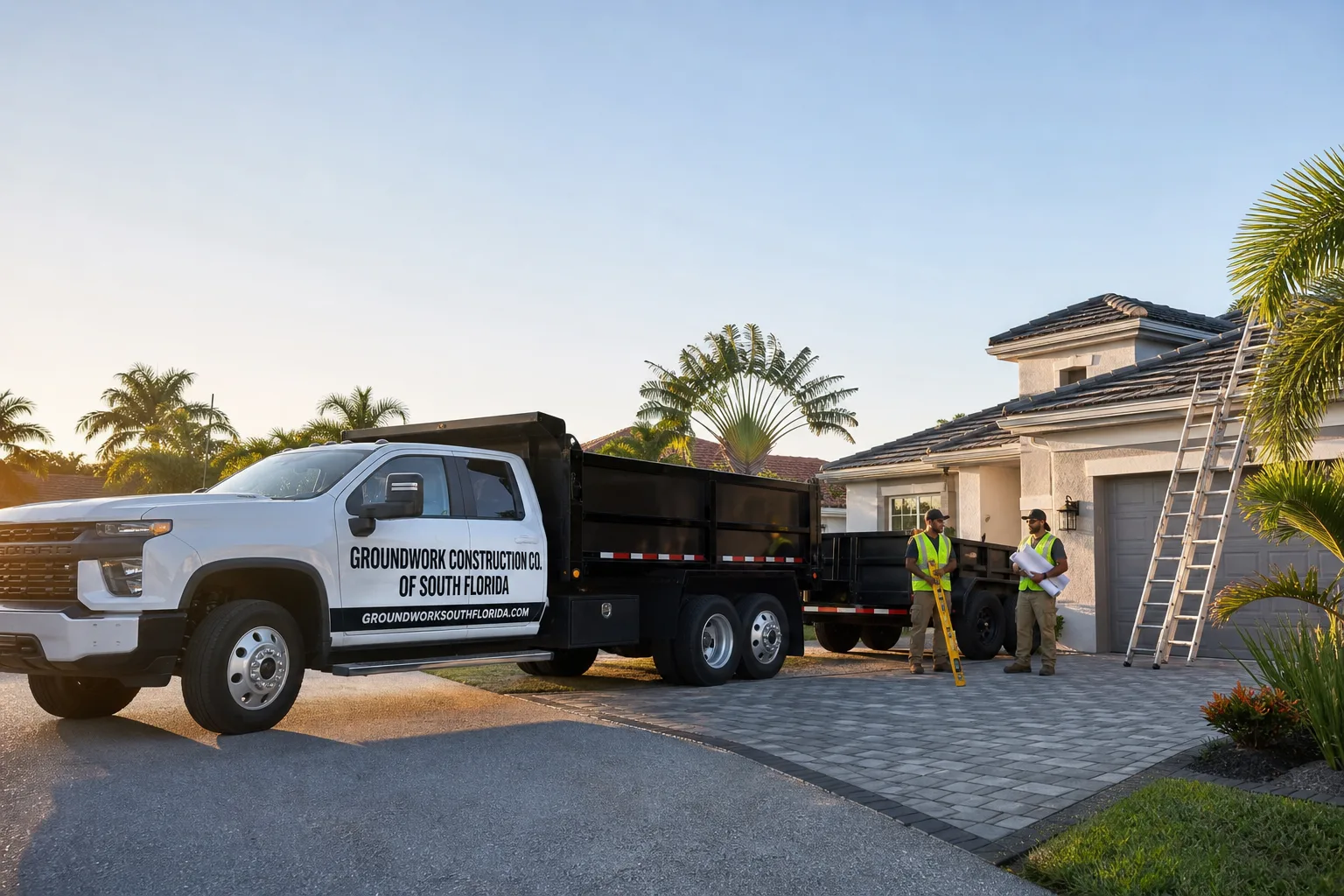
Asphalt Driveways & Resurfacing in Princeton, FL: Timeline, Cost, and What to Expect
Asphalt driveways & resurfacing in Princeton typically runs $3,500-$9,000 for a full paving job and $250-$700 for sealing, with most residential driveways completed in 2-4 days once prep work is finished. Resurfacing an existing asphalt driveway that’s structurally sound takes 1-2 days and costs roughly 40-60% less than full replacement. Call (844) 665-0162 for a free on-site estimate and we’ll walk your specific property with you.
How We Handle Asphalt Driveways & Resurfacing from Start to Finish
Every asphalt job in Princeton follows the same five-stage sequence, though the timeline stretches or compresses based on what we find once we break ground. Here’s exactly what happens and what you’ll need to decide at each point.
Stage 1: Site evaluation and scope lock (Day 1, 1-2 hours on-site)
We walk the driveway with you, measure square footage, check drainage patterns, and identify what’s underneath the existing surface. In Princeton, this means flagging whether your home sits on one of the area’s engineered post-Andrew slabs or on fill dirt from agricultural conversion, where inconsistent compaction changes how we prep the base. You’ll decide here: full removal and repave, or resurface over existing asphalt if the base is intact. We also confirm whether the job is standalone or part of a full Driveway & Pavers in Princeton overhaul.
Stage 2: Demolition and base exposure (Day 1-2, 4-8 hours)
For full replacements, we remove the existing asphalt and expose the aggregate base. This is where Princeton’s geology gets interesting. That Miami oolite limestone bedrock sitting just below the surface? It doesn’t always announce itself until the bucket bites in. When we hit rock, we shift to carbide-tooth attachments or saw cutting, which adds time but prevents the foundation failures that plague improperly prepped driveways here. Homeowners don’t need to be present for this stage, but we do ask that you confirm final grade direction, we want water shedding toward the street, not pooling against your CBS foundation.
Stage 3: Grading, drainage, and base compaction (Day 2, 6-10 hours)
We regrade the sub-base to a 1-2% slope minimum, install or verify drainage channels, and compact the base in lifts using a vibratory roller. In Princeton’s high water table environment, proper drainage isn’t a finishing detail, it’s what prevents the alligator cracking and potholes that ruin asphalt inside of five years. During this stage, you’ll make your material grade decision: standard asphalt mix, polymer-modified asphalt for heavier vehicle loads, or a surface treatment like a chip seal finish. Each choice affects both price and lifespan.
Stage 4: Asphalt placement and compaction (Day 3, 4-6 hours)
Hot mix asphalt arrives at 275-300°F and gets laid in two lifts for driveways over 2,500 square feet, one lift for smaller residential jobs. We roll it while hot to achieve 92-96% density, then edge it cleanly where the driveway meets existing concrete walkways or the garage slab. In Princeton’s flat terrain, we pay particular attention to the transition at your garage apron, that 6-foot section takes the most load and sees the most water intrusion if the seal isn’t clean.
Stage 5: Curing, striping, and final walk (Day 4, 30 minutes)
Asphalt cools to handling temperature within 24 hours in South Florida’s climate, though we ask you to keep vehicle traffic off for 48-72 hours for full binder curing. We do a final walk to confirm edge alignment, check that drainage performs as designed, and review maintenance timing with you. Sealcoating happens 6-12 months later, never immediately, the oils need to oxidize first.
The Material Choices That Actually Matter for Your Driveway
Not all asphalt is the same mix. Here are the real options our Driveway & Pavers crew presents on Princeton jobs, with the honest trade-offs:
- Standard hot-mix asphalt (HMA): The baseline for residential driveways. Good for typical two-vehicle households with standard passenger cars. Lifespan 15-20 years with proper maintenance. Lowest upfront cost but shows wear faster under heavy loads or Florida UV exposure.
- Polymer-modified asphalt (Superpave mixes): Added elastomers improve flexibility and rut resistance. Worth the 15-25% upcharge if you park heavy trucks, run a home business with delivery vehicles, or want the longest possible service life. Performs noticeably better in Princeton’s thermal cycles, where summer pavement temps hit 140°F+.
- Recycled asphalt pavement (RAP) base with virgin surface: Uses 20-40% recycled content in the base lift, virgin asphalt on top. Reduces material cost 10-15% and performs equivalently for most homeowners. We don’t recommend 100% RAP for surface courses, it degrades faster in wet climates.
- Chip seal / tar-and-chip surface: A budget alternative that sprays liquid asphalt and embeds stone chips. Rougher texture, shorter lifespan (7-12 years), but distinctive appearance and excellent traction. Some Princeton HOAs restrict this finish, so we verify before specifying.
- Sealcoat type (decided at 6-12 months, not install): Coal tar-based sealers offer maximum UV protection but have environmental handling restrictions. Asphalt-based sealers are easier to source and apply, with comparable performance for residential use. We quote both when the time comes.
What Asphalt Driveways & Resurfacing Costs in Princeton, FL
| Job Type | Typical Range | Most Common Price Point |
|---|---|---|
| New asphalt driveway (standard residential, 2-car) | $3,500-$6,500 | $4,800 |
| New asphalt driveway (large or extended, 3-car+) | $5,500-$9,000 | $7,200 |
| Resurface existing asphalt | $2,000-$4,500 | $3,100 |
| Driveway sealing (maintenance) | $250-$700 | $450 |
Five factors move your quote within these ranges:
1. Square footage and shape complexity. Straight rectangles are efficient. Curved edges, radius turns, or integration with existing paver borders add cutting labor.
2. Existing surface condition. Resurfacing requires a stable base. If your current driveway has base failure, alligator cracking, or subsidence from Princeton’s high water table, we must remove and rebuild, that 40-60% savings disappears.
3. Rock excavation requirements. When that Miami oolite limestone sits shallow, we price carbide cutting or jackhammer work upfront. Out-of-area contractors often miss this and hit you with change orders. We don’t.
4. Material grade and thickness. Standard 2-inch residential surface vs. 3-inch heavy-duty lift, or polymer modification, shifts cost predictably.
5. Permit and inspection scope. Miami-Dade County permitting for driveway work in unincorporated Princeton typically runs $150-$400 depending on whether we’re modifying drainage or just resurfacing in kind. We handle the application and inspection scheduling; this is included in our written estimate, not hidden.
What’s not included: irrigation relocation, decorative concrete borders you add later, or tree removal if roots have compromised the base. We flag these during evaluation so you’re not surprised.
Why Princeton’s Geography Rewrites the Standard Playbook
Princeton isn’t a place where you can copy-paste a Tampa or Orlando asphalt spec and call it done. The defining reality here is Miami-Dade’s High-Velocity Hurricane Zone code legacy, born from Andrew’s destruction in 1992. Every home we work on in Princeton sits in a regulatory environment that demands impact-resistant assemblies and reinforced construction, and while driveway paving doesn’t face the same wind-load requirements as roofing or windows, the code culture shapes everything around the job.
The post-1992 CBS construction that dominates 33032 means we’re almost always tying into engineered slabs with specific expansion joint requirements. We coordinate our saw cuts with your home’s original slab joints to prevent reflective cracking. The pre-Andrew wood-frame outliers, rare as they are, need even more careful base prep since their original footings weren’t designed for modern load standards.
Then there’s the water. Princeton’s flat, Everglades-adjacent terrain puts the water table 12-24 inches below grade through much of the area. A driveway base that drains adequately in Coral Gables ponds here. We design for it, sometimes adding French drain tie-ins or adjusting grade more aggressively than code minimum requires. The June-October rainy season can saturate active sites, so we watch weather windows and protect open work with geotextile covers when storms approach.
Finally, that limestone. We’ve hit bedrock six inches down on jobs near SW 288th Street and had to explain to homeowners why their “simple driveway” needed a day of rock cutting. Experienced Princeton contractors price this in from the start. Inexperienced ones eat the overrun or cut corners on base depth. Neither ends well.
Homeowners expanding their property footprint sometimes pair driveway work with a New Detached ADU in Princeton or a Junior ADU & Interior Conversion in Princeton, coordinating utility trenching and access improvements across both projects. It saves on mobilization and avoids tearing up fresh asphalt later.
Serving Princeton, FL - Our Local Coverage Area
We’re based in the Princeton area and know this community well. Use the map below to see our service coverage - if you’re nearby, we can almost certainly help.
Frequently Asked - Asphalt Driveways & Resurfacing in Princeton
Most residential jobs finish in 2-4 days from breaking ground, with resurfacing over sound existing asphalt taking 1-2 days. Weather delays from Princeton’s summer rainy season can push this by a day or two; we schedule around stable forecasts. Call (844) 665-0162 and we’ll give you a firm timeline after seeing your site.
Yes, Miami-Dade County requires a permit for any driveway modification that changes drainage, expands footprint, or involves new construction; simple in-kind resurfacing of existing asphalt sometimes qualifies for an expedited repair permit. We handle all permitting and inspection scheduling as part of our project management. The permit cost is included in your written estimate.
Only if the existing base is structurally sound with no alligator cracking, potholes, or subsidence. We verify this during evaluation; if the base has failed, resurfacing is a waste of money, it’ll crack through within two years. When the base is good, resurfacing saves 40-60% versus full replacement and performs equally well.
Asphalt installs faster and costs less upfront but requires sealcoating every 2-3 years and full replacement at 15-20 years. Pavers (Belgard, Unilock, Tremron, Techo-Bloc) handle Princeton’s high water table and thermal expansion better long-term, allow targeted repairs, and cost more initially. Many homeowners choose asphalt for budget and timeline, pavers for longevity and aesthetics.
We warranty workmanship, proper compaction, drainage performance, and edge integrity for two years. Material defects are covered by the asphalt producer’s own warranty. The real variable is maintenance, sealcoating at the right intervals in Princeton’s intense UV environment determines whether you get 12 years or 22 from your surface. We’ll show you the maintenance schedule before we finish.
Get Your Free On-Site Estimate for Asphalt Driveways & Resurfacing
We’ll walk your Princeton property, check base conditions and drainage, and give you a written estimate with real numbers, no placeholder ranges that balloon later. Call (844) 665-0162 to schedule. Most evaluations take 30-45 minutes, and you’ll know exactly what your driveway needs, what it costs, and when we can start.
Written by Raymond Estevez, Owner at Groundwork Construction Co., serving Princeton since our South Florida founding.