
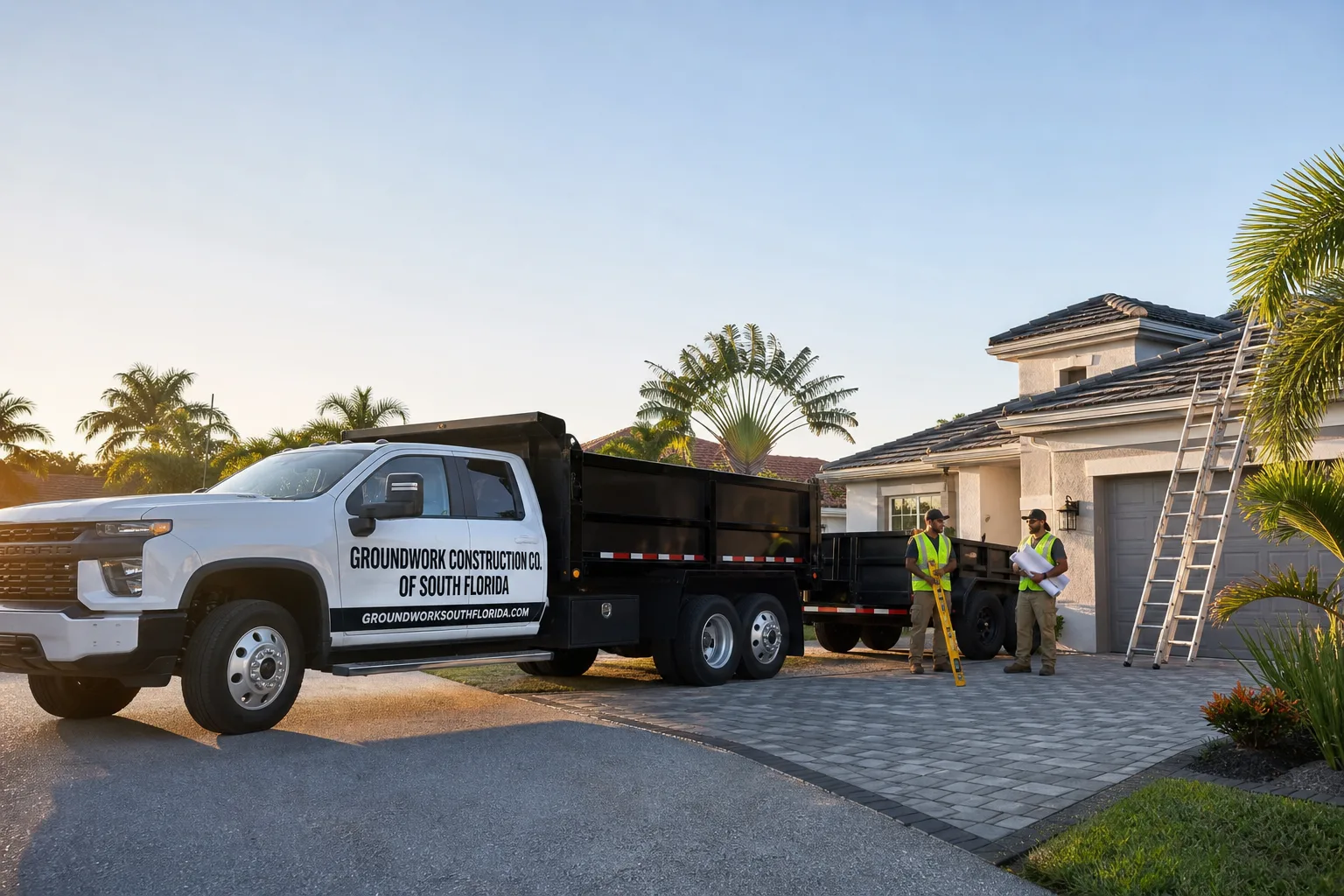
Backsplash, Tile & Flooring in Lighthouse Point: What It Costs and How Long It Takes
Backsplash, tile & flooring installation in Lighthouse Point typically runs $800-$2,500 for a standard kitchen backsplash, with full floor tile projects ranging higher depending on square footage and substrate condition. Most backsplash jobs finish in 2-3 days; floor tile spans 3-5 days once demo and prep are complete. Call (844) 665-0162 and we’ll walk through your exact layout, material choice, and timeline on a free on-site estimate.
How We Handle Backsplash, Tile & Flooring From First Measurement to Final Grout
We’ve learned that homeowners in Lighthouse Point want to know what happens when, especially when they’re living in the house during the work. Here’s the actual sequence we follow.
Day 1: Protection, Demo, and Substrate Inspection
We cover every surface that isn’t being touched, then remove existing tile, backsplashes, or flooring. In Lighthouse Point homes built during the canal-development era of the 1950s-1980s, this is where we often find the first surprise: original concrete slab floors with no moisture barrier, or drywall behind old backsplashes that has absorbed decades of salt-air infiltration. We test for slab moisture and wall integrity before anything new goes in. If the substrate fails, we stop and show you. This stage takes one day for backsplashes, sometimes two for full floor demo.
Day 2-3: Prep, Layout, and Your Final Material Call
We level floors, install cement board or appropriate underlayment, and snap chalk lines for tile layout. This is your last chance to adjust pattern direction, grout joint width, or accent strip placement. For backsplashes, we also finalize outlet and switch positioning, since tile thickness changes how plates sit. Most Lighthouse Point kitchens we work in need electrical box extenders or minor outlet relocation to accommodate new tile depth. We handle this in-house, not through a separate electrician you have to coordinate.
Day 3-4: Tile Setting
We spread thinset and set tile, working in sections to keep everything square and level. Large-format floor tiles (24×24 inches or larger) take longer to set properly because they demand perfectly flat substrates and careful leveling clips. Mosaic backsplashes move faster but require more grout lines and precise sheet alignment. We don’t rush this. A floor that looks flat in afternoon light but reads lumpy at breakfast is a call-back we won’t make.
Day 4-5: Grout, Caulk, and Seal
Once thinset cures, we grout joints, caulk perimeter movement joints, and apply penetrating sealer to natural stone or cement-based tiles. In Lighthouse Point’s salt-air environment, sealing isn’t optional for porous materials; unsealed travertine or cement tile will show efflorescence and staining within months. We show you the sealer product and explain reapplication intervals before we leave.
Final Walk and Punch
We inspect every joint, every transition, every edge with you. If something needs adjustment, we handle it then, not through a callback ticket that sits in a queue.
The Material Choices That Actually Matter for Your Job
- Ceramic wall tile ($3-$8/sq ft material): The standard for backsplashes. Easy to clean, infinite color and pattern options, and thin enough that it rarely conflicts with outlet depth. The trade-off: it’s not as durable as porcelain if you ever decide to extend it to a countertop-to-ceiling feature wall.
- Porcelain tile ($5-$12/sq ft material): Harder, denser, and lower porosity than ceramic. We recommend it for Lighthouse Point floors, especially in canal-side homes where slab moisture runs higher. Porcelain also works for backsplashes if you want a through-body color that won’t show chips. Costs more, lasts longer, harder to cut (which adds labor).
- Natural stone ($8-$20/sq ft material): Travertine, marble, slate. Looks unmistakably high-end. Requires sealing, shows etching from acids, and in our coastal climate needs more maintenance than most homeowners expect. We recommend it for clients who understand the upkeep commitment, not for “set it and forget it” households.
- Glass or mosaic sheets ($10-$25/sq ft material): Reflects light beautifully in smaller Lighthouse Point kitchens that don’t get direct south exposure. The mesh backing can create uneven planes if the installer rushes; we hand-flatten every sheet during set. Grout maintenance is higher because of more joints.
- Large-format porcelain planks ($6-$15/sq ft material): For floors, these mimic wood or stone with fewer grout lines. They demand laser-flat substrates; in older Lighthouse Point homes with settled slabs, we may need self-leveling compound that adds $2-$4/sq ft to prep costs.
- Grout: cementitious vs. epoxy vs. urethane: Standard cement grout is cheapest but stains. Epoxy is nearly stain-proof and what we recommend behind cooktops; it’s harder to work with and costs more in labor. Urethane grouts split the difference and work well for floors.
We don’t push one material over another. We ask how you cook, how you clean, whether you have kids or dogs, and whether you’re planning to sell in three years or stay for fifteen. Then we recommend based on that.
What Backsplash, Tile & Flooring Costs in Lighthouse Point, FL
| Project Scope | Typical Range |
|---|---|
| Kitchen backsplash (standard, ~30 sq ft) | $800-$2,500 |
| Kitchen backsplash with accent strip or niche | $1,500-$3,500 |
| Full kitchen floor tile (~150 sq ft) | $3,500-$8,000 |
| Kitchen floor + backsplash combined | $4,000-$10,500 |
| Bathroom floor tile (~50 sq ft) | $1,500-$4,000 |
Five factors push you toward the high or low end of these ranges:
- Substrate condition. Original 1960s concrete slabs in Lighthouse Point often need leveling compound, crack isolation membrane, or moisture mitigation before tile goes down. That prep layer can add 30-50% to labor.
- Tile size and pattern. Straight-stack 12×24 porcelain is fast. Herringbone mosaic with border accents is slow. The difference can be $500-$1,500 on the same square footage.
- Outlet and fixture relocation. If your new backsplash layout requires moving GFCI outlets, pot-filler plumbing, or under-cabinet lighting feeds, we coordinate that in-house but it adds to scope.
- Material grade and availability. We work with Silestone and Caesarstone for adjacent countertop projects, and we’ll coordinate tile selections to complement those surfaces. Imported or specialty-order tiles extend lead times and sometimes require higher waste allowances.
- Permit and inspection requirements. In Broward County, electrical or plumbing changes triggered by tile work may require permitting. We handle the paperwork, but permit fees and inspection scheduling add time and cost.
Our written estimates include demo, disposal, substrate prep, materials, labor, grout, sealant, and final walkthrough. What they don’t include: new baseboards or shoe molding (often needed after floor tile), appliance reconnection, or wall repair outside the immediate tile area. We flag these before you sign, not after.
What Lighthouse Point Homes Specifically Do to This Job
Lighthouse Point was built by dredging finger canals through coastal wetlands, and that geography shapes every renovation decision we make here. The housing stock is almost entirely concrete block and stucco single-family homes from the late 1950s through early 1980s, now undergoing the luxury renovation wave that brings full electrical upgrades, impact-rated window replacements, and roof replacements to meet current Florida Building Code wind-load standards.
For backsplash, tile & flooring work, three local factors stand out. First, the salt-laden air corrodes metal fasteners and aluminum framing inside concrete and stucco; we’ve opened walls behind kitchen backsplashes to find rusted corner bead and crumbling drywall that had to be rebuilt before tile could go up. Second, the near-zero elevation above the canal water table means slab moisture is a constant concern. We test every floor with a calcium chloride kit or relative humidity probe; if readings come back high, we specify moisture-barrier underlayment or epoxy moisture mitigation that adds cost but prevents future tile failure. Third, because nearly all construction here is renovation on aging waterfront properties, Broward County permitting sometimes triggers a mandatory seawall inspection when any construction permit is pulled. A straightforward kitchen backsplash and floor tile project won’t typically trigger this, but if you’re combining our work with a larger remodel that requires permitting, that seawall inspection obligation can surface a $30,000-$80,000 repair before your primary job begins. We review your permit scope upfront so this doesn’t arrive as a mid-project surprise.
Homeowners in Lighthouse Point often pair backsplash, tile & flooring with a full Kitchen Remodeling in Lighthouse Point that coordinates cabinets, countertops, and layout changes through our Kitchen Remodeling crew. Others extend the material continuity into bathrooms through Vanities, Tile & Fixtures in Lighthouse Point or convert an adjacent tub to a walk-in shower with Tub-to-Shower Conversion in Lighthouse Point. We cover Lighthouse Point directly from our Fort Lauderdale base, with crews who know the local inspection offices and the specific failure modes of canal-era construction.
Serving Lighthouse Point, FL - Our Local Coverage Area
We’re based in the Lighthouse Point area and know this community well. Use the map below to see our service coverage - if you’re nearby, we can almost certainly help.
Frequently Asked - Backsplash, Tile & Flooring in Lighthouse Point
Most kitchen backsplash installations take 2-3 days from demo to final grout, assuming standard substrate conditions. Add a day if we discover moisture-damaged drywall or corroded corner bead behind the existing surface, which is common in Lighthouse Point’s salt-air environment. Call (844) 665-0162 and we’ll assess your specific wall condition during the free estimate.
Purely cosmetic tile replacement with no electrical, plumbing, or structural changes typically does not require a permit in Broward County. If we’re moving outlets, adding under-cabinet lighting circuits, or altering plumbing for a pot filler, permitting is required and we handle the application and inspections as part of our scope. We’ll tell you definitively after seeing your layout.
Yes, and most of our Lighthouse Point backsplash jobs work around existing cabinets. We tile to the cabinet edge, install shoe molding or quarter-round at the floor transition, and leave your cabinet boxes undisturbed. If you want to replace cabinets later, we recommend doing so before the backsplash; tiling around new cabinets is cleaner than patching around old ones.
Porcelain tile with epoxy grout is the most resilient combination for salt-air, high-moisture conditions. Porcelain absorbs less than 0.5% moisture, won’t warp or swell, and handles the humidity spikes we see in waterfront homes. Pair it with a crack-isolation membrane over older concrete slabs and you’ve got a floor that outlasts the house’s next two renovations.
We warranty our installation workmanship against defects in setting, grouting, and sealing for the period specified in your written contract. Material warranties come from the tile manufacturer directly and vary by product; we register these on your behalf and pass through all documentation. The warranty doesn’t cover structural movement in the building, which is why we inspect substrates so carefully before we start.
Get Your Free On-Site Estimate for Backsplash, Tile & Flooring in Lighthouse Point
Call (844) 665-0162 to schedule a free estimate. Raymond Estevez or a senior member of our team will walk your space, measure, test substrate conditions if needed, and deliver a written scope with line-item pricing within 24 hours. No deposit required to book, and we schedule around your availability, not ours.
Written by Raymond Estevez, Owner at Groundwork Construction Co., serving Lighthouse Point since our founding.