
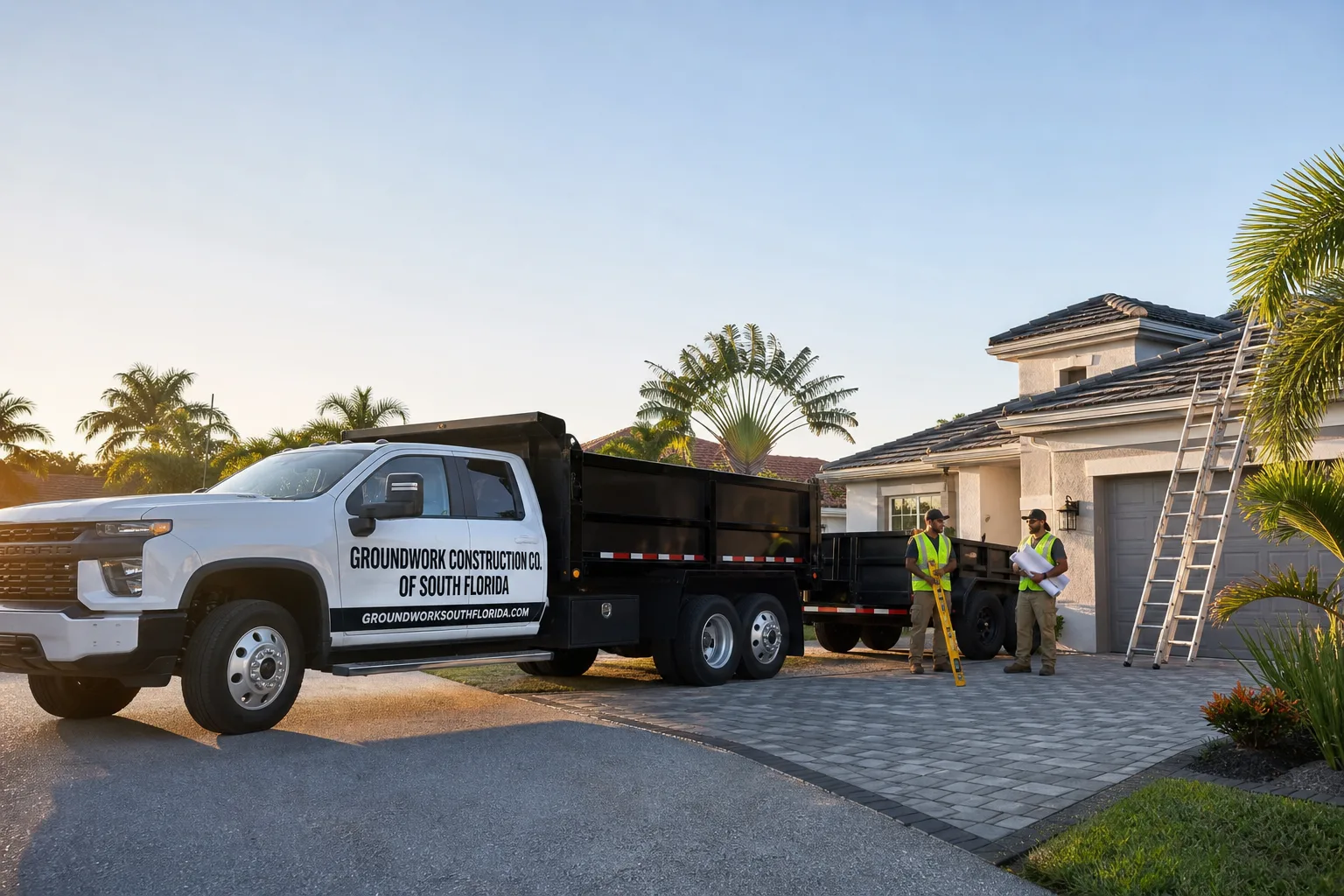
Chain Link Fence Installation in Country Club - Cost, Timeline & What to Expect
Chain link fence installation in Country Club, FL typically runs $3,500-$9,000 for residential properties, with most projects completed in 2-4 business days once permits clear. We handle the Miami-Dade permitting, HOA documentation, and full installation start to finish. Call (844) 665-0162 for a free on-site estimate and we’ll walk your property with you.
How We Build a Chain Link Fence - Start to Finish
Every chain link fence we install in Country Club follows a five-stage sequence. Homeowners who understand the flow make faster decisions, and faster decisions keep your project on schedule.
Stage 1: Site measure and line marking (Day 1, 1-2 hours)
We walk the boundary with you, verify property lines against your survey, and mark post locations with spray paint. This is when you decide gate placement, walk-gate versus double-drive gate width, and whether you need a bottom tension wire to keep pets from pushing through. We also flag sprinkler lines, shallow electrical, or drainage swales that could interfere with post holes. In Country Club’s older subdivisions near NW 186th Street and NW 67th Avenue, we’ve learned to expect irrigation systems installed in the late 1980s with shallow, unmapped lines - we probe by hand before augering.
Stage 2: Permitting and HOA submission (3-10 business days, concurrent)
We prepare the Miami-Dade building permit application with a site plan and fence detail sheet. If your subdivision has an active HOA - most Country Club tracts do - we simultaneously submit the architectural review packet with material samples and height specifications. HOA approval typically takes 5-7 days; the county permit moves in parallel. We don’t schedule installation until both are in hand. This dual-track requirement catches some homeowners by surprise if they’ve only dealt with unincorporated areas before.
Stage 3: Post setting and concrete cure (Day 1-2 of field work)
We auger post holes 24-30 inches deep depending on fence height, set steel posts in wet-mix concrete, and plumb each one before the concrete begins to set. Posts must cure 24 hours minimum before we hang fabric. During Country Club’s wet season - roughly May through October - we watch the water table closely; if we hit standing water in the hole, we switch to a deeper footer or a concrete collar to prevent frost-heave-style settling (yes, even in South Florida, saturated limestone shifts posts).
Stage 4: Fabric hanging and tensioning (Day 2-3)
We unroll the chain link mesh, attach it to terminal posts with tension bands, and stretch it tight using a fence puller to the manufacturer’s specified tension. Then we thread the top rail, install line posts with fittings, and tie the fabric every 12 inches. This is when the fence becomes a fence - and when any grade changes in your yard become visible. Steeper grades require stepped fabric or racked fabric; we decide this during measurement, but the visual reality hits now.
Stage 5: Gate hang and final walk (Day 3-4)
We hang gates, adjust self-closing hinges and latches, and walk the line with you. You sign off on post plumb, fabric tension, and gate swing clearance. We leave you with the permit completion card and HOA compliance letter if required.
The Chain Link Fence Options You’ll Actually Choose Between
Chain link isn’t one-size-fits-all. Here’s what moves the needle on performance and price for Country Club installations:
- Mesh gauge: 9-gauge is standard residential, 6-gauge is heavy-duty for security or large dogs. The thicker wire costs more but resists sagging and cutting. Most Country Club homeowners with acreage lots choose 9-gauge for perimeter fencing, 6-gauge only for kennel runs or equipment enclosures.
- Coating: Galvanized-only is cheapest and functional, but the zinc dulls to gray within a year. Vinyl-coated (black, green, or brown) adds 30-40% to material cost, blends better with landscaping, and buys you 5-7 extra years before rust appears at cuts or scratches. In Country Club’s sun intensity, we see vinyl coating outlast galvanized by a meaningful margin.
- Height: 4-foot for decorative boundary, 6-foot for privacy-adjacent security (often paired with privacy slats), 8-foot for commercial or pool equipment screening. Miami-Dade pool code has specific requirements if your fence encloses a pool - we verify during measurement.
- Framework pipe: Residential-grade 1 3/8-inch top rail and 1 5/8-inch posts versus commercial-grade 1 5/8-inch rail and 2 3/8-inch posts. The heavier pipe resists wind load better - relevant in HVHZ - but most single-family homes don’t need it unless the fence runs long uninterrupted spans.
- Privacy slats: Bottom-lock or top-lock slats in matching color insert through the mesh for 70-80% visual blockage. Adds $2-$4 per linear foot and turns chain link into a budget privacy solution. We source these from multiple manufacturers so you can match tone to your home’s trim.
- Bottom tension wire: A thin cable run through the bottom mesh edge, tensioned to prevent animals from lifting the fabric. Inexpensive add-on that pays for itself if you have dogs or wildlife pressure from the canal edges west of Country Club.
Our fence installation crew sources fabric and fittings from multiple domestic mills - we don’t lock you into a single supplier. You choose the spec, we handle the build.
What Chain Link Fence Costs in Country Club, FL
| Project Component | Typical Range |
|---|---|
| Standard residential chain link fence (4-6 ft, galvanized) | $3,500-$6,500 |
| Vinyl-coated upgrade | +30-40% on fabric |
| Privacy slats installed | +$2-$4 per linear foot |
| Double-drive gate (10-12 ft) | $800-$1,400 |
| Walk gate (4 ft) | $300-$550 |
| Removal of existing fence | $400-$1,200 |
| Rock or obstructions in post holes | $25-$75 per hole |
Five factors push your job to the high or low end of that $3,500-$9,000 range:
Linear footage and layout complexity. A straight 150-foot run on flat ground is efficient. A 200-foot perimeter with multiple corners, a gate, and a slope cut across the backyard takes more labor and more posts.
Existing fence removal and disposal. We haul away old chain link, wood, or vinyl fencing. If the old posts are set in concrete below grade, extraction adds time.
Material grade and coating. The jump from galvanized 9-gauge to vinyl-coated 6-gauge with privacy slats can nearly double material cost on longer runs.
Site conditions. Miami Limestone with shallow water table, buried irrigation, or rock layers west of the turnpike corridor can slow post setting. We price this after probing, not before.
Permit and HOA scope. Miami-Dade permit fees are standard, but some Country Club HOAs require bonded contractors, additional liability coverage endorsements, or pre-construction meetings that add administrative time.
Our written estimates include posts, concrete, fabric, hardware, gates, permits, and installation labor. They don’t include land surveying (if your lines are disputed), sprinkler relocation, or landscape repair - we flag these during measurement so there’s no surprise.
What Country Club Homes Specifically Do to This Job
Country Club isn’t a generic Miami suburb, and chain link fence here carries local complications you won’t hit in Palm Springs North or Broward County.
The HVHZ wind-load requirement is the big one. Miami-Dade’s hurricane code doesn’t exempt chain link fence - it specifies minimum post embedment, concrete footing depth, and fabric attachment hardware for any fence over 6 feet or within specific setback zones. We engineer every chain link fence installation in Country Club to current HVHZ standards, which means deeper posts and more concrete than a Broward contractor might use. This isn’t upselling; it’s compliance that protects your permit and your property.
The housing stock matters too. Most homes here are CBS tract construction from 1985-2005, built on former agricultural and wetland-edge land converted to planned subdivisions. These neighborhoods almost universally carry deed restrictions and architectural review boards. We’ve worked in communities off NW 186th Street where the HOA specifies black vinyl-coated chain link only, maximum 4-foot height on front setbacks, and prohibits exposed galvanized finish entirely. We pull the CC&Rs during our first call so your fence doesn’t get rejected after installation.
Then there’s the water table. Country Club sits on porous Miami Limestone adjacent to Everglades drainage canals. During wet season, that water table rises to within 18-24 inches of grade. Post holes can flood overnight. We schedule chain link fence work in Country Club with seasonal awareness - dry-season installs go faster, wet-season installs may need deeper footers or next-day returns after initial concrete set. We’ve learned not to fight the limestone; we plan for it.
The split between pre- and post-Andrew construction also shapes how we approach exterior work. Pre-1994 homes in Country Club often have original site drainage, irrigation, and utility routing that doesn’t match modern as-builts. We probe carefully around these properties. A fence line that looks straightforward on satellite view can hide a 1980s drainage stub or shallow electrical run to a long-removed shed.
Serving Country Club, FL - Our Local Coverage Area
We’re based in the Country Club area and know this community well. Use the map below to see our service coverage - if you’re nearby, we can almost certainly help.
Frequently Asked - Chain Link Fence in Country Club
Most residential chain link fence projects take 2-4 days of actual construction once permits and HOA approvals are in hand. The permitting phase typically adds 3-10 business days depending on Miami-Dade backlog and your HOA’s review schedule. Call (844) 665-0162 and we’ll check current turnaround times for your specific subdivision.
Yes. Miami-Dade County requires a building permit for any fence over 4 feet tall or any fence within a front setback. Most Country Club HOAs also require separate architectural review approval before construction begins. We handle both permit and HOA submission as part of our standard process.
Usually yes, if the fence line doesn’t cross sprinkler zones. We probe for lines during measurement and can often adjust post spacing by a foot or two to miss heads and lateral lines. If the fence must cross a main lateral, we coordinate with your irrigation company or handle minor relocation ourselves - we’ll flag this during estimate.
Chain link fence is typically the lowest-cost permanent fence option, running $3,500-$9,000 versus vinyl fence at $3,500-$9,000 for comparable footage (vinyl costs overlap but trend higher on shorter runs) and aluminum fence at $4,000-$10,000. Chain link wins on upfront cost; vinyl and aluminum win on aesthetics and maintenance. For a full comparison, see our Fence Installation in Country Club overview.
We warranty our installation labor against defects in workmanship. Fence fabric and fittings carry manufacturer material warranties that vary by product line - typically 10-15 years for galvanized, 15-20 years for vinyl-coated. We register your materials and provide warranty documentation at final walkthrough.
Ready for a Chain Link Fence Estimate in Country Club?
Call (844) 665-0162 to schedule a free on-site estimate. We’ll walk your property line, check for irrigation and drainage issues, review your HOA requirements if applicable, and deliver a written estimate with line-item pricing. Most Country Club homeowners who call Monday have their estimate by Wednesday and installation scheduled within two weeks of permit approval.
Many homeowners in Country Club pair their fence project with hardscape work - we also build Concrete Driveways & Concrete Work in Country Club and Asphalt Driveways & Resurfacing in Country Club if you’re addressing multiple exterior projects. As a Fence Installation company with full residential construction capability, we coordinate fence work with driveway, patio, or pool deck projects so you’re not sequencing multiple contractors yourself.
Written by Raymond Estevez, Owner at Groundwork Construction Co., serving Country Club and South Florida homeowners since our founding.