
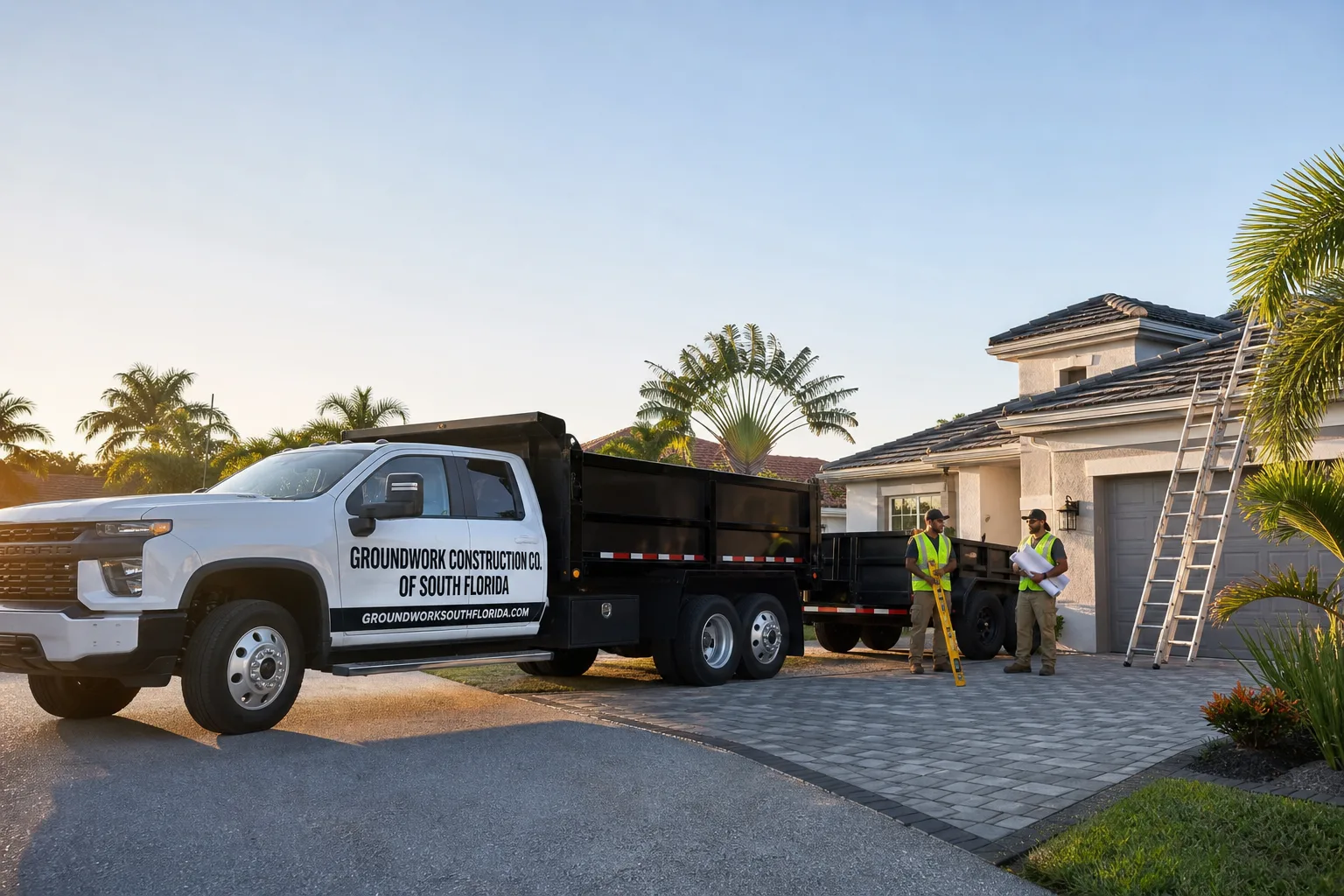
How Much Does Emergency & Storm Damage Repair Cost in Coral Springs?
Emergency and storm damage repair in Coral Springs typically runs from $400 for targeted fixes up to $18,000 for extensive structural restoration, with most homeowners seeing bills between $2,500 and $8,000 after a major weather event. We’re usually on-site within 24 hours for active leaks or compromised roof decking, and most stabilization work completes in 1-3 days. Call (844) 665-0162 for immediate response - estimates are free, and we bill insurance-direct where coverage applies.
What happens when we handle storm damage - start to finish
We’ve restored dozens of Coral Springs homes after hurricanes, tropical storms, and the sudden microburst damage that rolls off the Everglades without warning. Here’s how the process actually unfolds, and what you’ll need to decide at each point.
Stage 1: Emergency tarp and stabilization (same day)
Our crew arrives to stop active water intrusion. We document everything with photos for your insurance adjuster, install temporary tarps or membrane patches, and assess whether the structure is safe to occupy. You decide: file a claim now or pay out-of-pocket for repairs under your deductible. This stage takes 2-6 hours.
Stage 2: Interior protection and moisture mitigation (day 1-2)
We remove wet drywall, insulation, and ceiling sections before mold sets in - which in Coral Springs humidity means 48-72 hours, not weeks. Industrial dehumidifiers run continuously. You’ll choose whether to restore the original finish (matching 1970s-1980s popcorn texture, for instance) or upgrade to a modern smooth ceiling during reconstruction.
Stage 3: Structural assessment and code-compliance planning (day 2-5)
This is where Coral Springs’s unique building stock matters. We inspect roof decking, truss connections, and wall framing for hidden damage. Because so many homes here predate post-Andrew code changes, we often discover that the original construction lacks hurricane straps or adequate nail spacing on roof sheathing. Florida Building Code now mandates these upgrades on any permitted repair exceeding 25% of the roof area. You’ll receive a line-item decision: minimum repair to pass inspection, or full-code upgrade that strengthens the entire roof system. Planning and permit submission take 3-5 business days.
Stage 4: Permitted repair and reconstruction (1-3 weeks)
Once permits clear, we execute the structural work - replacing decking, sistering damaged trusses, installing proper strapping - then rebuild finishes to match. For homes in neighborhoods like Eagle Trace or Pine Ridge, where the Coral Springs Design Review Board maintains strict aesthetic standards, we submit exterior material samples for approval before final installation. Timeline here depends on material availability and inspection scheduling.
Stage 5: Final inspection and warranty documentation (1 day)
Broward County inspectors verify code compliance; we pass certificates to you and your insurer. Our workmanship warranty activates at this point. The entire process from first call to final sign-off typically spans 2-6 weeks for moderate damage, longer if your home requires full roof replacement as part of a larger roofing project in Coral Springs.
The repair options you’ll actually choose between
Storm damage isn’t one-size-fits-all. These are the real decisions Coral Springs homeowners face once the tarp goes up:
- Spot repair vs. section replacement: A few torn shingles or a single compromised membrane section runs $400-$1,800. But if wind lifted a 10×10 foot area, partial deck replacement at $2,500-$5,000 prevents the patched look and future leak points. We recommend section replacement when the damaged area exceeds 15% of any roof plane.
- Standard underlayment vs. self-adhered ice-and-water shield: Basic felt underlayment meets code minimum. Self-adhered membrane at roughly $1.20-$1.80 per square foot adds cost but seals around nail penetrations - worth it on low-slope garage roofs common in Ramblewood South and other 1970s-1980s neighborhoods where standing water lingers after heavy rain.
- Original material match vs. upgrade: Your insurer typically owes you “like kind and quality.” But many homeowners in Coral Springs use storm damage as the moment to upgrade from 3-tab asphalt to architectural shingles, or from old rolled roofing to TPO membrane on flat sections. You pay the difference above insurance proceeds. This also affects window and door decisions if openings were damaged - impact-rated upgrades cost more but satisfy current code and reduce future premiums.
- Interior restoration scope: Minimum means replacing exactly what was wet. Most homeowners opt to extend restoration slightly beyond visible damage to ensure full drying, or use the moment to repaint entire rooms for consistency. We price both paths in our estimate.
- Tree and debris removal coordination: Fallen limbs through a roof require arborist removal before we can seal the structure. We coordinate this directly or you can arrange separately - our pricing reflects either approach.
What Emergency & Storm Damage costs in Coral Springs, FL
| Repair type | Typical range |
|---|---|
| Emergency tarp and temporary seal | $250-$600 |
| Targeted roof repair (shingle/membrane) | $400-$1,800 |
| Decking and structural section repair | $2,500-$6,500 |
| Full roof replacement after major storm | $8,000-$20,000 |
| Interior water damage restoration (drywall, insulation, paint) | $1,200-$5,000 |
| Complete exterior envelope rebuild (roof + windows + siding) | $15,000-$35,000 |
Five factors push your number high or low:
1. Extent of hidden damage: What looks like a few missing shingles often reveals compromised decking once we remove them. Opening the roof surface is the only way to know - we build contingencies into our estimates.
2. Code-triggered upgrades: Any permitted repair exceeding 25% of roof area in Coral Springs activates Florida Building Code hurricane-strap and decking-nail requirements. This adds $800-$2,500 to otherwise straightforward jobs but isn’t optional.
3. Material grade and availability: Post-storm demand spikes prices and extends lead times. We maintain relationships with GAF, CertainTeed, and Owens Corning distributors to secure allocation, but premium architectural shingles or impact-rated tiles still command 20-40% above baseline.
4. Interior restoration complexity: Matching 1980s popcorn texture or custom trim profiles takes more labor than flat drywall and standard baseboard. Homes with custom woodwork or fencing often have similarly detailed interior finishes we preserve.
5. Design Review Board timing: Exterior changes in Coral Springs require city aesthetic approval separate from county building permits. We handle both, but the additional 1-2 week review period can extend project duration and temporary protection costs.
Our written estimates include all labor, materials, permits, and debris removal. What typically isn’t included: temporary relocation expenses, landscaping repair, or pool enclosure damage - though we can quote these as add-ons.
Why Coral Springs homes make storm damage a particular challenge
Coral Springs was master-planned and built out almost entirely between the late 1960s and early 1990s, meaning a massive cohort of CBS homes are now hitting 30-50 years old simultaneously. Nearly all pre-1994 construction predates Broward County’s post-Hurricane Andrew building code revisions, so any permitted re-roofing or structural repair triggers mandatory hurricane-strap and roof-deck upgrades under current Florida Building Code. What looks like a simple shingle replacement becomes a code-compliance project with structural implications.
The housing stock tells the story. Drive through neighborhoods like Ramblewood, Cypress Run, or the Polo Club area and you’ll see the same patterns: hip roofs with low-slope sections over garages, original flat membrane roofs on rear additions, and screened pool enclosures whose aluminum framing degrades rapidly in salt-laden, high-UV air. When Hurricane Irma’s feeder bands sat over western Broward in 2017, we saw dozens of homes where the garage roof failed first - those low-slope sections had exceeded their 20-year membrane lifespan by a decade or more.
The city’s own Design Review process adds a layer that catches out-of-area contractors off guard. Exterior construction changes must match original planned-community aesthetic standards. We’ve seen crews from Margate and Tamarac pull permits assuming standard Broward County rules apply, then stall for weeks when Coral Springs rejects their material samples. We build this timeline into every Coral Springs project from day one.
Geography matters too. Coral Springs sits on former Everglades flatland with a high water table. Even foundation work for load-bearing repairs encounters soft substrate requiring engineered fill or piering solutions uncommon further inland. And the June-November hurricane season compresses scheduling - we maintain emergency capacity through peak months, but material availability tightens and inspection backlogs grow after every named storm.
Our roofing crew coordinates directly with our window, door, and structural teams so a single contractor manages the full exterior envelope. One point of accountability matters when insurance adjusters, city inspectors, and HOA boards are all reviewing your documentation.
Serving Coral Springs, FL - Our Local Coverage Area
We’re based in the Coral Springs area and know this community well. Use the map below to see our service coverage - if you’re nearby, we can almost certainly help.
Frequently asked - Emergency & Storm Damage in Coral Springs
We typically arrive within 4-24 hours for active leaks or structural compromise, depending on storm severity and road conditions. Our emergency crew carries tarps, temporary membrane, and generator power for initial stabilization even when grid power is down. Call (844) 665-0162 - we answer emergency lines around the clock during hurricane season.
Most Coral Springs homeowners with standard HO-3 policies see structural repairs covered minus their deductible, though coverage limits and depreciation clauses vary. We document damage with photos and detailed scope notes that align with adjuster requirements, and we bill insurance direct when you assign benefits. Call us before you sign any insurance settlement - we often find overlooked damage that adjusters miss on initial inspection.
Yes - any structural repair, roof replacement exceeding one square (100 sq ft), or work affecting the roof deck requires a Broward County building permit. Additionally, Coral Springs’s Design Review Board must approve exterior material changes before final installation. We pull both permits and handle all submissions; starting work without permits risks fines and voids insurance coverage.
We match existing materials where possible, but many 1980s-1990s shingle profiles and colors are discontinued. We source the closest current equivalent and present samples for your approval before ordering. Some homeowners use this as the moment to upgrade the entire roof for consistent appearance - we price both paths.
Minor repairs finish in 1-3 days; moderate damage with interior restoration typically spans 2-4 weeks; extensive structural rebuilds with full roof replacement run 4-8 weeks. The Coral Springs Design Review process adds 1-2 weeks to any exterior work. We provide a detailed timeline with your written estimate and update you weekly. Call (844) 665-0162 to schedule your assessment - estimates are free.
Ready to restore your home?
Storm damage doesn’t wait, and neither should your repair. Call Groundwork Construction Co. at (844) 665-0162 for a free on-site assessment in Coral Springs. We’ll document the damage, explain your insurance and permit path, and give you a written estimate with a clear timeline - no pressure, no surprises. Raymond Estevez and our team handle every phase from emergency tarp to final inspection, so you’re not coordinating multiple contractors while your home is exposed.
Written by Raymond Estevez, Owner at Groundwork Construction Co., serving Coral Springs since our South Florida founding.