
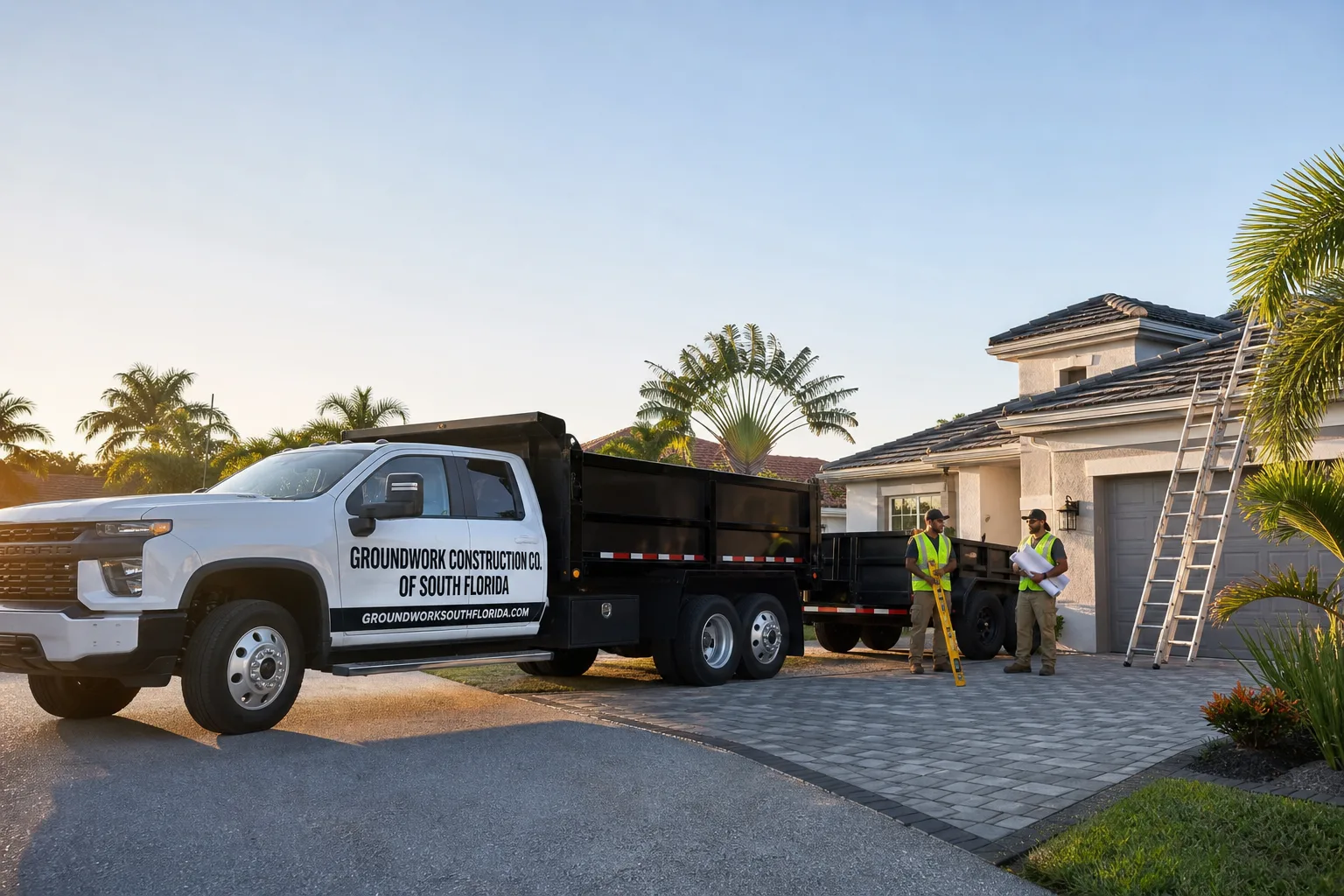
Emergency & Storm Damage Response in Miami Beach
Emergency and storm damage repair in Miami Beach typically involves structural stabilization, water intrusion mitigation, and code-compliant rebuilding, with most projects taking 2-8 weeks depending on severity and permit scope. Costs generally range from $4,000 for targeted structural repairs to $45,000+ for extensive envelope reconstruction after major hurricane impact. Call (844) 665-0162 for same-day assessment - we’ll tarp, board, and stabilize before the next tide cycle.
How We Handle Emergency & Storm Damage Start to Finish
Storm hits don’t wait for convenient timing, and neither do we. Here’s exactly how we move from your first call to a rebuilt, dried-in structure.
Stage 1: Emergency Stabilization (Hours 1-24)
Our crew arrives with marine-grade tarps, pressure-treated plywood, and temporary bracing lumber. We document everything photographically for your insurer, seal active water entry points, and install temporary power if the panel’s compromised. In Miami Beach, we always check tide schedules - a bay-side home with a compromised seawall or ground-floor envelope can’t wait for the next king tide. You’ll decide whether to file an insurance claim immediately or self-pay for faster mobilization.
Stage 2: Structural Assessment & Moisture Mapping (Days 2-5)
Once the structure is safe to enter, we bring in a structural engineer for load-path evaluation and deploy thermal imaging and capacitance meters to map moisture migration through concrete walls and floors. Miami Beach’s poured-concrete construction, especially in Art Deco and MiMo buildings, traps water differently than frame houses - surface dryness means nothing if chloride-laden moisture is wicking through rebar channels. This stage determines whether we’re patching spalled concrete, replacing corroded rebar, or rebuilding entire wall sections. You’ll receive the engineer’s report and our scope proposal simultaneously.
Stage 3: Permit & HOA Coordination (Days 3-14, overlapping)
We file for emergency repair permits with Miami Beach Building Department and, for properties in historic districts or condo associations, submit to the Miami Beach Historic Preservation Board or your HOA architecture committee. The city’s High Velocity Hurricane Zone status means every replacement window, door, and roofing component must carry Miami-Dade NOA certification - no exceptions, no substitutions. If your building sits below newly elevated street grades from the Rising Above program, we’ll flag grade-reconciliation requirements now so you’re not surprised mid-project. You approve material specs and finishes during this window.
Stage 4: Demolition, Drying & Repair (Days 10-35)
We remove compromised materials to established dry lines, deploy commercial desiccant dehumidification for concrete mass drying, and begin structural repairs. For concrete spalling, we hydro-demolish to sound substrate, treat rebar with corrosion inhibitors, and apply polymer-modified repair mortars rated for salt-air exposure. If the envelope’s compromised, we rebuild with impact-rated systems - this is where our partnerships with James Hardie for fiber-cement cladding and multiple window manufacturers become critical, since Miami Beach’s code narrows your options to HVHZ-tested products. You’ll inspect at pre-drywall or pre-closure milestones.
Stage 5: Final Inspection & Restoration (Days 30-56)
We coordinate city inspection, engineer sign-off, and any required flood-elevation compliance documentation. Final finishes match original profiles for historic properties or upgrade to your selected spec. We provide as-built drawings noting any elevation changes for future resale or insurance purposes.
The Repair Decisions You’ll Actually Face
- Spot repair vs. full envelope rebuild: Isolated spalling and localized roof damage runs $4,000-$12,000. If moisture has migrated through multiple wall planes or compromised the roof-to-wall connection, partial or full envelope reconstruction at $18,000-$45,000 prevents recurring failure. The honest test: how many directions did wind and water come from, and how long was the structure exposed?
- Original-profile restoration vs. upgraded impact systems: Historic Preservation Board requirements in South Beach often mandate maintaining original window geometries and stucco profiles, but HVHZ code demands impact-rated glass and anchorage. We specify NOA-certified products that satisfy both - typically laminated impact glass in replicated divided-light patterns, or concealed shutter systems. Upgraded systems add 15-25% over basic replacement but reduce insurance premiums and eliminate plywood-boarding forever.
- Standard repair mortar vs. cathodic protection: For moderate rebar corrosion, polymer-modified patch repairs suffice. Where chloride contamination exceeds 0.4% by concrete weight - common within three blocks of the ocean - we recommend impressed-current cathodic protection systems that halt corrosion electrically. This adds $3,500-$8,000 but extends service life from 10-15 years to 30+.
- Temporary accommodation vs. stay-in-place sequencing: Extensive envelope work on a single-family home may require temporary relocation. We phase repairs to maintain one functional bathroom and kitchen where structurally possible, but concrete cutting and drying operations create unavoidable disruption. We’ll map this explicitly in our proposal.
What Emergency & Storm Damage Costs in Miami Beach, FL
| Scope Level | Typical Range | What It Covers |
|---|---|---|
| Emergency stabilization only | $1,200-$3,500 | Tarping, boarding, temporary power, initial dry-out |
| Targeted structural repair | $4,000-$12,000 | Localized concrete repair, rebar treatment, small roof section |
| Partial envelope reconstruction | $15,000-$28,000 | Multiple wall planes, window/door replacement, roof section |
| Full envelope rebuild | $32,000-$45,000+ | Complete exterior reconstruction, impact systems, grade reconciliation |
Five factors push your number within these ranges. First, access difficulty - homes on Collins Avenue or narrow Mid-Beach lots with no alley access require crane and debris-hauling logistics that add 10-20%. Second, the Rising Above grade mismatch: if your entrance or garage slab now sits below street level, bringing utilities and drainage into compliance adds $2,000-$6,000. Third, Historic Preservation Board review extends timeline and may require custom fabrication. Fourth, material grade - standard NOA-compliant windows versus architectural-grade impact systems from Andersen or Pella spans a wide cost band. Fifth, moisture damage extent; thermal mapping often reveals hidden saturation that expands scope.
A written estimate from Groundwork includes all labor, materials, permits, engineer review, and debris disposal. It does not include temporary relocation costs, tree removal, or separate mold remediation if required beyond our drying protocol. Call (844) 665-0162 - estimates are free, and we’ll scope accurately so you’re not surprised mid-project.
Why Miami Beach Changes Everything About This Work
Miami Beach isn’t mainland Florida with better beaches. It’s a barrier island averaging four feet above sea level, surrounded by salt water, and built on concrete structures now entering their eighth or ninth decade.
The housing stock we encounter most runs from 1920s-40s Art Deco poured-concrete buildings in South Beach, many protected by the Historic Preservation Board, to 1950s-60s MiMo mid-rises in the 33140 and 33141 ZIP codes. These structures share one vulnerability: chloride-driven rebar corrosion that accelerates dramatically after any breach in the concrete envelope. A Category 1 hurricane with sustained wind-driven rain does more cumulative damage here than a stronger storm inland, because the salt air is already preconditioning the concrete to fail.
The operational reality is king-tide flooding. FEMA’s revised flood maps have pushed base flood elevations higher, and the city’s Rising Above program has elevated many streets in South Beach and Mid-Beach by one to two feet. We regularly arrive at jobs where the original 1940s entrance or 1960s garage slab sits below the new curb line. Reconciling that grade mismatch - bringing ADA ramps, drainage, and utility stubs into compliance - is standard work for us and a surprise for mainland contractors who don’t know to check.
Every opening replacement requires Miami-Dade NOA-certified products. We maintain active supplier relationships for impact-rated windows, doors, and roofing because generic hurricane products don’t pass inspection here. When we rebuild an envelope, we’re also coordinating with your flood insurer’s elevation documentation requirements, which mainland crews often overlook. This is why Roofing in Miami Beach and related exterior work demands local fluency, not just general competence.
Homeowners in Miami Beach often pair emergency envelope reconstruction with Custom Windows & Doors in Miami Beach to upgrade to full impact-rated systems, or with Wood Fence in Miami Beach for perimeter restoration after storm damage. Our Roofing crew coordinates directly with structural and envelope teams so you’re not managing multiple contractors during an already stressful recovery.
Serving Miami Beach, FL - Our Local Coverage Area
We’re based in the Miami Beach area and know this community well. Use the map below to see our service coverage - if you’re nearby, we can almost certainly help.
Frequently Asked - Emergency & Storm Damage in Miami Beach
Most projects run 2-8 weeks: emergency stabilization in 24 hours, structural assessment in 3-5 days, permitting 1-2 weeks, and active repair 2-5 weeks depending on scope. Historic Preservation Board review adds 2-4 weeks for South Beach properties. Call (844) 665-0162 - we’ll give you a timeline specific to your address and damage.
Yes. Miami Beach requires permits for all structural repairs, window and door replacements, and roofing work, with no “emergency exemption” that skips the process. We file emergency repair permits within 24 hours of engagement and coordinate expedited review. The permit scope depends on whether you’re matching original conditions or upgrading materials.
Often, yes - if the damage is localized to roof sections or wall areas away from openings. However, if wind pressure or water intrusion has compromised window frames or the surrounding concrete, partial replacement becomes impractical. We always attempt to isolate repairs, but HVHZ code may require upgrading undamaged adjacent units to maintain pressure continuity. We’ll show you exactly where the line falls.
Insurance typically covers direct physical damage from the storm event - torn roofing, broken windows, water-damaged interior finishes. They rarely cover pre-existing deterioration that the storm revealed, code-upgrade requirements (like elevating to current flood standards), or grade-reconciliation work from Rising Above street changes. We document both categories explicitly so you can negotiate from clarity. Call (844) 665-0162 and we’ll review your policy language with you.
Our workmanship warranty covers labor and installation for five years. Material warranties vary by manufacturer - James Hardie siding carries a 30-year non-prorated warranty, impact windows from major brands typically carry 10-20 year glass and 20 year frame coverage. Concrete repair with cathodic protection includes a 10-year performance guarantee. We provide all warranty documentation at project closeout, not a vague promise.
Start Your Recovery - Free Estimate in Miami Beach
Storm damage doesn’t fix itself, and waiting through another tide cycle only expands the scope. Call (844) 665-0162 for a free on-site assessment in Miami Beach. We’ll stabilize what needs stabilizing today, scope the full repair with line-item pricing, and coordinate permits and inspections so you’re not navigating the city’s HVHZ requirements alone. Raymond Estevez or a senior project manager will walk your property, answer specific questions about your building era and location, and get you a written estimate within 48 hours.
Written by Raymond Estevez, Owner at Groundwork Construction Co., serving Miami Beach since our South Florida founding.