
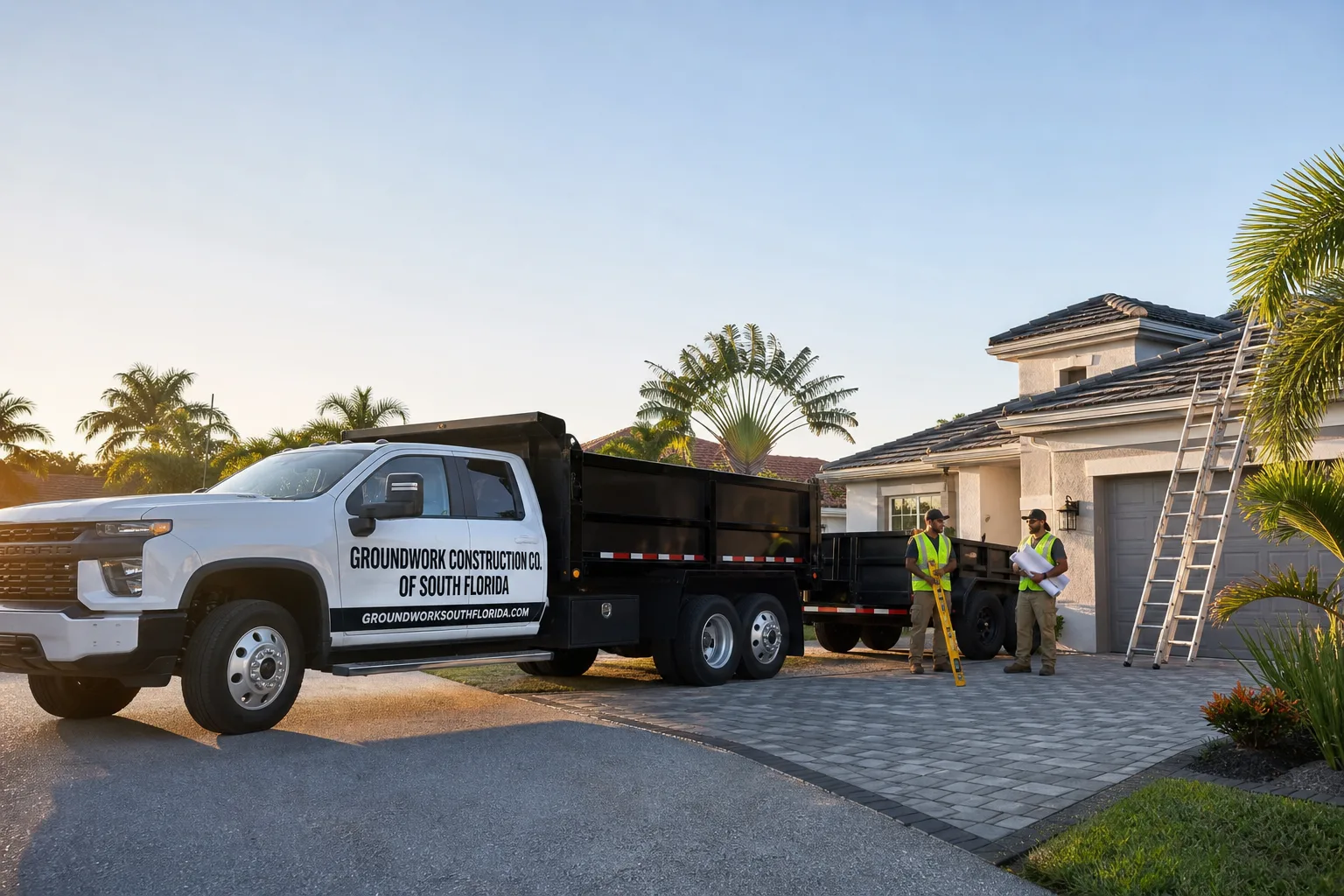
How Much Does Emergency & Storm Damage Repair Cost in North Miami Beach?
Emergency & Storm Damage repair in North Miami Beach typically runs $400-$2,500 for immediate stabilization and temporary weatherproofing, with full structural restoration ranging from $5,000-$18,000 depending on the extent of the damage and the building type. Most emergency calls in the 33160 corridor receive same-day response, and temporary protection is usually in place within 4-6 hours. Call (844) 665-0162 for immediate dispatch - estimates are free, and we coordinate directly with your insurance adjuster.
What happens from your first call to the final sign-off
Storm damage in North Miami Beach doesn’t follow a neat schedule, especially when a building’s envelope has been compromised during hurricane season. We’ve refined our process across dozens of emergency calls in the 33160 ZIP to keep homeowners safe and compliant with Miami-Dade’s strict HVHZ requirements.
Stage 1: Emergency call-out and site securement (0-4 hours). When water’s coming through a compromised roof or a wind-damaged facade, speed matters more than anything. Our crew arrives with temporary tarping, board-up materials, and moisture detection tools. We document everything photographically for your insurance claim, then stabilize the structure so no additional damage occurs overnight. Homeowner decision: whether to authorize emergency temporary repairs or wait for insurance adjuster arrival. We recommend authorizing immediately - delays here multiply costs fast.
Stage 2: Damage assessment and moisture mapping (Day 1-2). Once the structure is secure, we conduct a full inspection using thermal imaging and moisture meters to trace water migration paths. In North Miami Beach’s concrete condo towers, water travels differently than in wood-frame construction - it wicks through slab connections and follows rebar channels. This stage produces a detailed scope document separating emergency repairs from long-term restoration. Homeowner decision: approve the full assessment scope or limit to insurance-mandated minimums.
Stage 3: Temporary weatherproofing and dry-out (Day 2-5). We install engineered temporary roofing or facade protection rated for HVHZ wind loads, not standard blue tarps. Interior dehumidification runs continuously, with daily moisture readings. For condo buildings, we coordinate with building management on balcony access, parking restrictions, and crane scheduling if needed. Homeowner decision: material grade for permanent repairs - standard NOA-compliant products or upgraded impact-rated systems.
Stage 4: Structural repair and envelope restoration (Day 5-21). This is where the real work happens. Damaged concrete is removed to sound substrate, corroded rebar is treated or replaced, and the building envelope is rebuilt with Miami-Dade NOA-approved materials. Roofing repairs draw from our GAF, CertainTeed, and Owens Corning portfolios. Window and door replacements pull from Andersen, Pella, Marvin, or impact-rated PGT and CGI lines depending on your building’s requirements. Homeowner decision: finish selections, color matching with existing facade, and whether to upgrade adjacent areas while scaffolding is in place.
Stage 5: Final inspection, documentation, and warranty transfer (Day 21-28). We coordinate Miami-Dade inspections, produce as-built documentation for your building’s reserve study, and transfer manufacturer warranties to your name. For condo associations, we provide the structural recertification support documentation required under SB 4-D. Homeowner decision: schedule preventive maintenance program or close the project.
The repair options you’ll actually choose between
- Emergency tarping vs. engineered temporary roofing. Standard tarping costs less upfront but fails in sustained winds above 40 mph. Engineered temporary systems with anchored batten strips run higher but withstand hurricane-force gusts and satisfy most insurance policies’ “reasonable temporary repair” clauses. For North Miami Beach’s HVHZ exposure, we recommend engineered systems on any structure over one story.
- Spot repair vs. section replacement. Isolated damage to a few roofing squares or facade panels can be patched, but color matching aged materials is nearly impossible. Section replacement looks better and carries uniform warranty coverage, though it adds 30-50% to material costs. We see this choice most often on 1970s-era condo buildings where original materials are obsolete.
- Standard NOA-compliant materials vs. upgraded impact-rated systems. Miami-Dade requires NOA approval for all exterior products. Standard NOA products meet code; impact-rated upgrades (often required for newer buildings or certain insurance discounts) add 15-25% but reduce future premium costs. The payback calculation depends on your carrier and building age.
- Like-kind restoration vs. code-upgrade restoration. Insurance typically covers like-kind replacement, but Florida’s post-Hurricane Ian code changes may require upgraded fastening patterns, enhanced moisture barriers, or improved drainage as a condition of permit approval. The gap between insurance proceeds and code-required work ranges from $2,000-$8,000 on typical residential projects in North Miami Beach.
- Standalone emergency repair vs. bundled exterior envelope project. While we’re addressing storm damage, many homeowners in North Miami Beach choose to coordinate related work - Custom Windows & Doors in North Miami Beach or Wood Fence in North Miami Beach - to consolidate mobilization costs and minimize disruption. This isn’t required, but it can reduce per-project overhead by 10-15%.
What Emergency & Storm Damage costs in North Miami Beach, FL
| Repair type | Typical range |
|---|---|
| Emergency tarping / board-up | $400-$1,200 |
| Engineered temporary weatherproofing | $1,500-$3,500 |
| Roof repair (shingle/tile, localized) | $600-$2,500 |
| Facade / concrete spall repair (small area) | $2,000-$6,000 |
| Full envelope section restoration | $8,000-$18,000 |
| Condo association emergency assessment (per unit share) | $3,000-$12,000 |
Five factors push these numbers up or down. First, building access: condo towers requiring crane rental, street closure permits, or coordinated loading through alleyways add $800-$2,500 in logistics costs that single-family homes avoid. Second, material availability: post-storm demand spikes can extend lead times and trigger surge pricing, especially for Miami-Dade NOA products with limited approved suppliers. Third, the extent of hidden damage - water migration in concrete structures often reveals corroded rebar or compromised waterproofing membranes that aren’t visible in initial assessment. Fourth, insurance coordination complexity: policies with replacement cost value coverage versus actual cash value create $2,000-$5,000 swings in out-of-pocket costs for identical damage. Fifth, concurrent SB 4-D recertification requirements: if your building is already under milestone inspection, storm damage repairs must be documented in formats compatible with the county’s recertification process, adding engineering review fees of $500-$1,500.
A written estimate from Groundwork includes all labor, Miami-Dade NOA-compliant materials, permit fees, inspection coordination, and debris removal. It does not include your insurance deductible, temporary relocation costs if the unit is uninhabitable, or optional upgrades beyond like-kind replacement.
Why North Miami Beach buildings fail the way they do
The 33160 corridor presents a repair environment unlike anywhere else in South Florida. Those mid-century poured-concrete towers along the Intracoastal - many now facing SB 4-D recertification deadlines at 25 years instead of 30 because of their coastal proximity - suffer storm damage through mechanisms that wood-frame contractors rarely encounter. Salt-laden air accelerates concrete carbonation, and when wind-driven rain finds a breach in the envelope, it doesn’t just leak; it activates corrosion cells in rebar that expand and spall surrounding concrete from within.
We’ve responded to emergency calls on buildings where the visible damage was a few cracked balcony tiles, but thermal imaging revealed saturated slab edges extending six units horizontally. The mandatory recertification rush means many associations are discovering pre-existing structural deficits only when storm damage forces inspection. Contractors who understand both emergency stabilization and the documentation requirements for Miami-Dade’s recertification process are in sustained demand here - it’s not simply about patching a roof, it’s about producing repair scopes that satisfy two separate county review tracks simultaneously.
Single-family pockets inland, particularly the CBS homes from the 1950s-70s near Greynolds Park, present different challenges: original flat roofs with inadequate drainage, unpermitted additions that complicate insurance claims, and mature banyan trees that become projectiles in sustained winds. Roofing in North Miami Beach covers the broader project types we handle across both housing stocks, but emergency response requires distinct protocols for each.
The HVHZ designation itself shapes every material choice. That Miami-Dade Notice of Acceptance isn’t a rubber stamp - it’s a separate product approval layer that eliminates roughly 60% of nationally distributed building products from consideration. When we specify repair materials for a North Miami Beach job, we’re not choosing from catalogs; we’re choosing from the county’s approved products list, which is why our relationships with GAF, CertainTeed, Owens Corning, and other NOA-holding manufacturers matter for timeline and cost control.
North Miami Beach homeowners working with Roofing contractors unfamiliar with this dual compliance environment often face permit rejections or insurance disputes that extend projects by weeks. Our process is built around it from the first call.
Serving North Miami Beach, FL - Our Local Coverage Area
We’re based in the North Miami Beach area and know this community well. Use the map below to see our service coverage - if you’re nearby, we can almost certainly help.
Frequently asked - Emergency & Storm Damage in North Miami Beach
Most projects run 2-4 weeks from emergency call to final inspection, with the first 24-48 hours focused on stabilization and documentation. Condo buildings with crane requirements or pending SB 4-D recertification reviews can extend to 6-8 weeks. Call (844) 665-0162 - we’ll give you a realistic timeline based on your specific building and damage type.
Yes, virtually all structural repairs in Miami-Dade require permits, and HVHZ-rated materials must carry current NOA documentation. We handle permit submission, NOA verification, and inspection scheduling as part of our standard scope - it’s not an optional add-on. Permit fees typically run $150-$600 depending on project value.
Often yes, for roof and facade damage that hasn’t compromised interior systems. When water intrusion has reached electrical panels or plumbing risers - common in concrete spall scenarios - code requires inspection and potential relocation of affected components. We identify these conditions during Stage 2 assessment so you’re not surprised mid-project.
For damage exceeding roughly $3,000, insurance claims typically reduce out-of-pocket costs even after deductible payment. We document everything for your adjuster and can meet them on-site to ensure the scope captures all damage. Our estimates are formatted for direct insurance submission, which speeds approval.
Manufacturer warranties apply to materials - GAF, CertainTeed, and Owens Corning each offer tiered coverage from 10 years to lifetime depending on product line and installation method. Our workmanship warranty covers installation quality for the repair period. For condo buildings, we also provide the documentation package required for association reserve studies and SB 4-D recertification files.
Start with a free on-site assessment
Call (844) 665-0162 to schedule a free estimate for Emergency & Storm Damage repair in North Miami Beach. We’ll assess the damage, explain your options, and produce a written scope you can use with your insurance company or association board. Raymond Estevez and our team respond same-day for active leaks and structural compromise.
Written by Raymond Estevez, Owner at Groundwork Construction Co., serving North Miami Beach since our South Florida founding.