
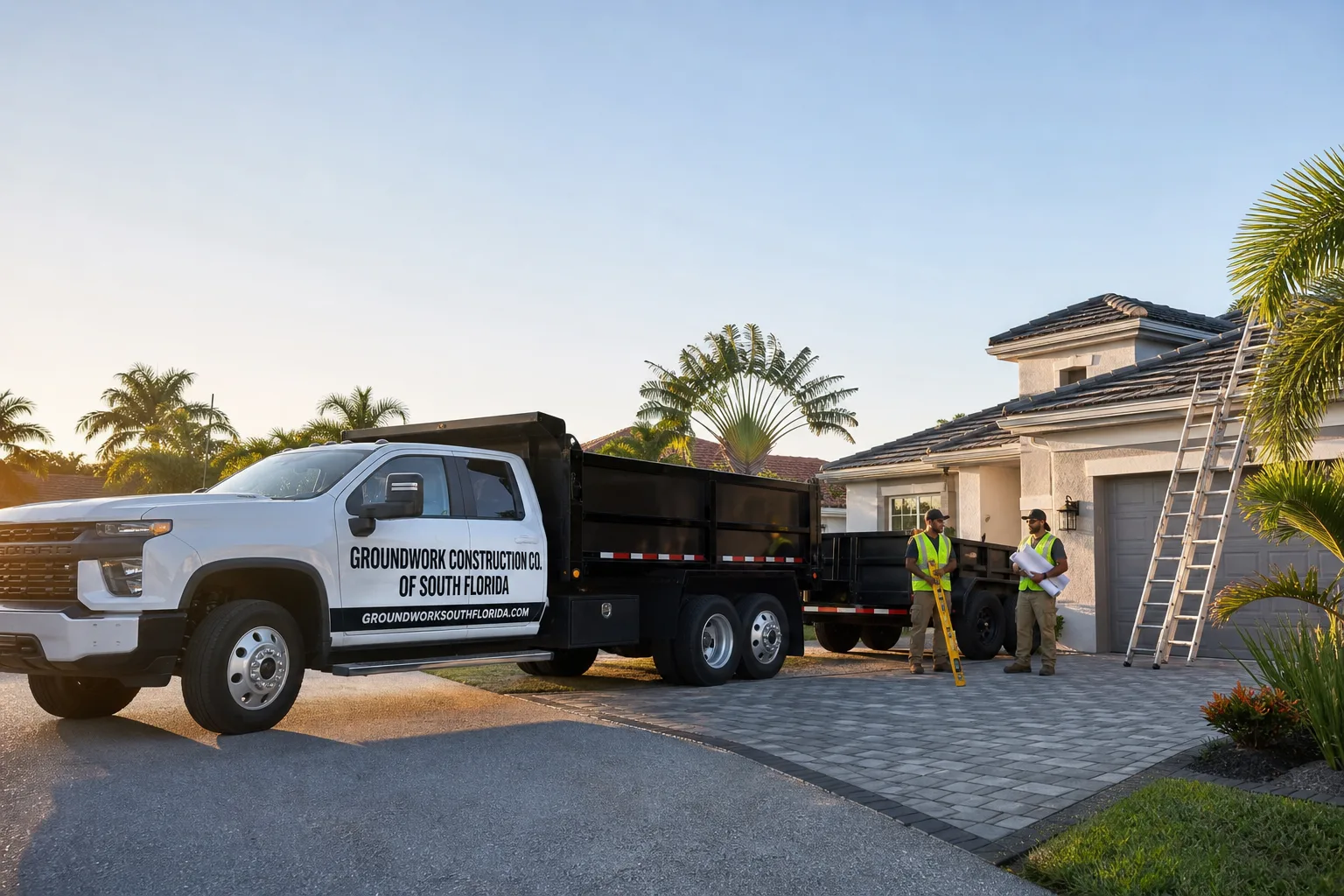
What Does Emergency & Storm Damage Repair Cost and Involve in South Miami?
Emergency & storm damage repair in South Miami typically runs $400-$1,800 for immediate stabilization and smaller repairs, while full restoration after major wind or water intrusion can reach $8,000-$20,000 depending on roof area and structural involvement. Most emergency calls in South Miami get same-day tarping and board-up, with permanent repairs starting within 48-72 hours once we assess the full scope. Call (844) 665-0162 and we’ll dispatch a crew to secure your home before the next rain band hits.
How We Handle Emergency & Storm Damage from First Call to Final Walkthrough
Storm damage doesn’t wait for convenient timing, and neither do we. Here’s exactly how Emergency & Storm Damage response unfolds for South Miami homeowners.
Stage 1: Emergency call-out and site secure (0-4 hours)
When you call, we ask three things: is the home habitable, is water actively entering, and are any openings exposed to wind? Based on your answers, we dispatch either a two-person stabilization crew or a full assessment team. In South Miami, we’re working within the High Velocity Hurricane Zone, so we carry Miami-Dade-approved impact-rated plywood, mechanical fasteners rated for 175 mph wind loads, and reinforced poly tarps with perimeter strapping, not the grommet-and-rope setups that fail in sustained gusts. The crew photographs everything, installs temporary weatherproofing, and leaves you with a written damage summary before they depart.
Stage 2: Structural and envelope assessment (24-48 hours)
Once the immediate threat is controlled, we return with moisture meters, thermal imaging, and ladder access to evaluate what the storm actually compromised. In South Miami’s post-WWII concrete block ranch homes, we’re especially watchful for tie-beam displacement, flat roof membrane separation at parapet walls, and water migration through the CBS cells that doesn’t show as interior staining for days. This is when you decide whether to file an insurance claim; we document with the photo and moisture-readout package carriers expect.
Stage 3: Scope finalization and permitting (2-10 days)
Here’s where South Miami’s unique municipal process matters. Because the city maintains its own building department separate from Miami-Dade County, we submit directly to South Miami’s plan review, not the county. For Emergency & Storm Damage that involves roof decking, structural members, or impact-rated opening replacement, we pull a building permit. If the work footprint encroaches on any protected tree root zone, and in South Miami it often does, we simultaneously trigger the required arborist report and tree survey. We’ve seen contractors from Kendall or Coral Gables lose two weeks here by not anticipating South Miami’s dual-track requirement. We build this buffer into your timeline from day one.
Stage 4: Repair and reconstruction execution (3 days-3 weeks)
The duration splits cleanly between smaller repairs and full restoration. A localized roof repair with matching shingles or membrane patch, plus interior drywall and paint, typically finishes in 3-5 working days. When the storm has compromised multiple roof planes, soffit, fascia, and interior finishes, we’re looking at 2-3 weeks. Throughout, you’re assigned one project manager who coordinates our roofing crew, carpenters, and interior trades. No handoffs to unknown subcontractors.
Stage 5: Inspection, closeout, and warranty registration (1-5 days)
South Miami’s building inspector verifies wind-load compliance and impact-rated opening documentation before final sign-off. We simultaneously register any manufacturer warranties on materials, from GAF or CertainTeed roofing to Andersen or PGT windows if those were part of the scope. You receive a closeout binder with permits, inspection records, material warranties, and our workmanship guarantee.
The Repair Decisions You’ll Actually Make After Storm Damage
Every Emergency & Storm Damage job presents choices that affect cost, resilience, and how your home performs in the next storm. Here’s what South Miami homeowners weigh:
- Roofing material: patch to match, or upgrade to HVHZ-rated system? Matching existing three-tab shingles or built-up roofing keeps the repair budget tight but leaves you with the same wind vulnerability. Upgrading to a complete HVHZ-rated system, say Owens Corning Duration Storm or GAF Timberline AS II with proper ring-shank fasteners and sealed deck seams, adds cost now but satisfies Miami-Dade’s strictest uplift requirements and often reduces insurance premiums.
- Window and door replacement: standard or impact-rated? If the storm breached any opening, South Miami code requires impact-rated replacement for anything within the HVHZ. The real decision is brand and performance tier: PGT WinGuard or CGI Sentinel for cost-effective Miami-Dade approval; Andersen A-Series or Marvin Coastal for architectural matching with full impact certification. Higher-tier products carry better hardware warranties and tighter sightlines, but the price gap is substantial.
- Interior restoration: like-for-like, or address pre-existing issues? Storm damage often exposes problems the homeowner already knew about, undersized electrical panels common in 1950s-1970s South Miami ranch homes, inadequate insulation, or failing drywall from prior leaks. We flag these during assessment so you decide whether to fold upgrades into the insurance-funded restoration or keep the scope narrow.
- Drainage and grading: minimal repair, or proactive correction? South Miami’s chronic lot-level flooding during wet-season downpours means storm damage frequently includes saturated perimeter foundations and water-stained soffits from gutter overflow. We can reinstall what failed, or we can regrade, add catch basins, and hardscape with permeable pavers from Belgard or Tremron that shed water properly. The latter prevents repeat damage but extends timeline and budget.
- Siding and exterior envelope: repair isolated sections, or full James Hardie replacement? Where wind-driven rain has penetrated stucco or damaged soffit and fascia, spot repairs blend for a season or two but rarely match aging material exactly. Full HardiePanel or HardiePlank replacement with proper rain-screen detailing gives you a uniform exterior and a 30-year substrate warranty, though it’s a bigger upfront decision.
What Emergency & Storm Damage Costs in South Miami, FL
| Scope | Price Range |
|---|---|
| Emergency tarping and board-up | $400-$900 |
| Localized roof repair (patch, flashing, small deck) | $600-$2,500 |
| Moderate structural and interior restoration | $4,000-$12,000 |
| Full roof and envelope restoration | $8,000-$20,000 |
| Impact window/door replacement (per opening) | $800-$4,500 |
Five factors push any Emergency & Storm Damage job toward the high or low end of these ranges. Roof area and pitch matter most; a 1,200-square-foot flat roof on a 1960s ranch is faster to repair than a multi-plane hip roof with steep pitches and valleys. Structural involvement changes everything, if tie-beams, rafters, or the top course of CBS block need replacement, we’re into engineered drawings and longer permit review. Material grade separates a functional repair from a resilient upgrade; standard HVHZ compliance versus full wind-rated system with premium underlayment and extended warranties. Interior finish scope, drywall, paint, flooring, cabinetry, if water traveled far, restoration compounds quickly. And permit complexity, specifically whether South Miami’s tree survey and arborist report get triggered, which can add $800-$2,500 in direct fees and several weeks to the calendar.
A written estimate from Groundwork itemizes labor, materials with brand names, permit fees, and projected timeline. It does not include your insurance deductible, temporary relocation costs if the home is uninhabitable, or tree removal by a licensed arborist, that’s a separate trade and permit in South Miami.
Why South Miami’s Building Environment Changes Every Emergency & Storm Damage Job
South Miami occupies just 2.3 square miles, yet its municipal independence from Miami-Dade County creates a permitting landscape that surprises even experienced contractors. The city enforces its own building code amendments and, distinctively, one of the region’s most aggressive urban tree-canopy protection ordinances. What this means practically: virtually every Emergency & Storm Damage repair that touches the roofline, exterior walls, or foundation perimeter requires a tree survey and arborist report before permit issuance.
The mature live oaks along Sunset Drive and the royal poincianas shading Old Cutler Road adjacent neighborhoods root extensively across lot lines. We’ve seen modest roof repairs on SW 60th Street properties trigger mitigation fund payments because the staging area encroached on a protected root zone. Contractors working from Coral Gables or Kendall assumptions show up unprepared, submit to the wrong jurisdiction, or miss the arborist requirement entirely. We don’t. Our permits go to South Miami’s building department directly, and we coordinate arborist reports in parallel with structural assessments.
The housing stock reinforces why this matters. Most South Miami homes are concrete block ranches built between the late 1940s and early 1970s, many with original flat roofs, aging tie-beams, and electrical panels that won’t pass current HVHZ code without upgrade. When storm damage exposes any of these, the repair scope expands beyond what visible damage suggests. The low inland elevation and limited stormwater infrastructure mean we also evaluate grading and drainage as standard practice, not an upsell. A roof repair that ignores water pooling against the foundation simply fails again at the next summer deluge.
Serving South Miami, FL - Our Local Coverage Area
We’re based in the South Miami area and know this community well. Use the map below to see our service coverage - if you’re nearby, we can almost certainly help.
Frequently Asked - Emergency & Storm Damage in South Miami
We typically arrive for emergency stabilization within 2-4 hours of your call, and we prioritize active water intrusion and exposed openings. Call (844) 665-0162 for immediate dispatch, estimates are free.
Yes, for any structural, roofing, or impact-opening work, South Miami requires its own building permit separate from Miami-Dade County. We handle submission and coordinate the city’s mandatory tree survey if your property has protected canopy coverage.
We can often match shingles or membrane for localized repairs, though exact color matching with aged material has limitations. If your roof is near end of life, we recommend a full HVHZ-rated system upgrade, which we can scope as part of a full Roofing in South Miami project.
Coverage depends on your policy terms, damage cause, and deductible. We document thoroughly for claims, provide itemized estimates carriers accept, and can meet adjusters on-site. Call (844) 665-0162 and we’ll review your situation.
South Miami’s location in the High Velocity Hurricane Zone requires impact-rated replacement for any breached opening. Many homeowners use this as an opportunity to upgrade their entire home’s envelope, and they often pair this with Custom Windows & Doors in South Miami for consistent protection and aesthetics.
Wind and falling trees frequently damage perimeter fencing and pavers along with the structure itself. As a single-source contractor, we restore Wood Fence in South Miami and hardscape elements under the same project management, so you’re not coordinating separate crews.
Get Your South Miami Home Assessed and Secured
Storm damage doesn’t fix itself, and waiting through South Miami’s wet season only multiplies the repair cost. Call (844) 665-0162 for a free on-site estimate. We’ll assess the damage, explain what South Miami’s permit process means for your timeline, and get your home weatherproof today and rebuilt right. South Miami homeowners work with Groundwork because one contractor handles every phase, from emergency board-up to final inspection.
Written by Raymond Estevez, Owner at Groundwork Construction Co., serving South Miami and South Florida homeowners since establishing our Fort Lauderdale headquarters.