
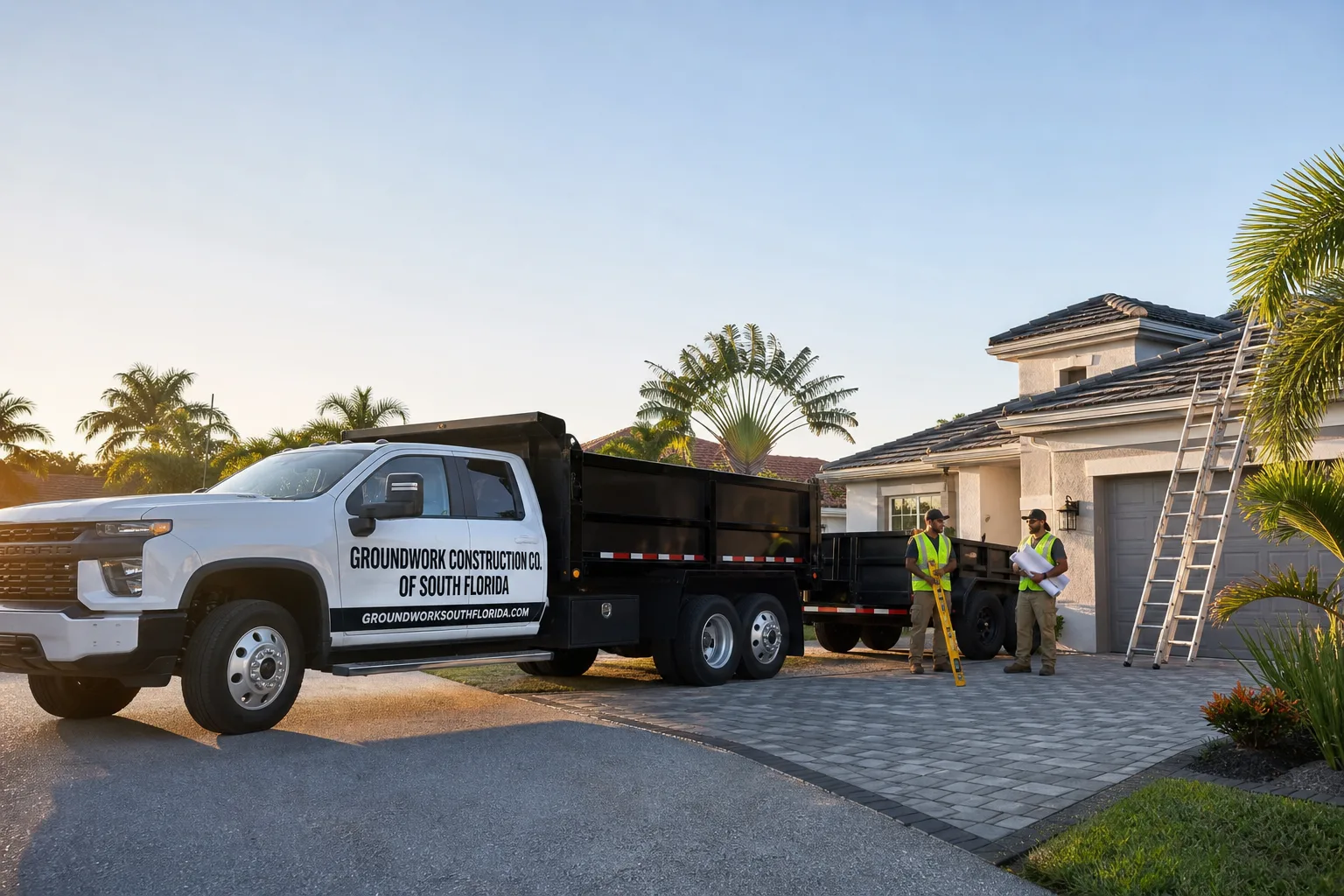
Garage Conversion ADU in Miami Gardens: What It Costs and How Long It Takes
A garage conversion ADU in Miami Gardens turns your existing attached or detached garage into a permitted accessory dwelling unit with a kitchenette, full bath, sleeping area, and separate entrance. Most projects we handle in the 33056 area take 10 to 16 weeks from permit approval to final inspection, with the permit phase itself adding 6 to 10 weeks given Miami-Dade’s HVHZ review requirements. Budget $30,000 to $80,000 for a complete conversion, though the final number depends heavily on whether your garage slab needs structural reinforcement, your roof needs wind-mitigation upgrades, and how far we’re moving plumbing and electrical. Call (844) 665-0162 and we’ll walk your specific garage on a free estimate.
How We Convert a Garage to an ADU in Miami Gardens
We’ve done enough of these in Carol City-era homes to know where the surprises hide. Here’s the actual sequence, what you’re deciding at each stage, and how long each phase runs.
Stage 1: Feasibility and Measure (Week 1)
We visit your property, measure the garage footprint, check setback lines against Miami-Dade zoning, and photograph the existing slab, roof structure, and electrical panel. You’ll decide right then whether you want a full ADU with kitchenette or a simpler studio without cooking facilities, since that choice changes the permit path and plumbing scope. We also flag early whether your main electrical service can handle the added load or if a panel upgrade is in your future.
Stage 2: Design and Permit Documents (Weeks 2-5)
Our drafting team produces plans showing the new layout, structural connections, and HVHZ-compliant window and door specifications. In Miami Gardens, this means every opening gets an impact-rated product with Miami-Dade NOA approval, not just any impact window off a shelf. You’re choosing floor plan, fixture locations, and material grades during this window. We submit to Miami-Dade Building Department and coordinate any HOA architectural review if your neighborhood requires it.
Stage 3: Structural Prep and Wind Mitigation (Weeks 6-8)
Permit in hand, we start with the unglamorous work that determines whether your ADU passes inspection. On 1950s-1970s CBS ranch homes in Miami Gardens, we almost always find original roof-to-wall connections that don’t meet current strap requirements. We install hurricane straps, upgrade the roof deck nailing pattern if needed, and reinforce the garage slab if it wasn’t poured to residential living-load specs. You’ll see us but we won’t need much from you beyond garage access.
Stage 4: Rough Construction (Weeks 9-13)
Framing, plumbing rough-in, electrical, HVAC, and insulation happen in sequence with inspections between each trade. We run dedicated lines for the kitchenette and bath rather than tapping off your main house circuits, which Miami-Dade typically requires for ADU metering. You’re selecting finishes now: flooring, tile, cabinetry, countertops, fixtures. This is where cabinets and countertops in Miami Gardens come into the conversation, and many homeowners pair this phase with backsplash, tile, and flooring in Miami Gardens selections that flow into the main house later.
Stage 5: Finish and Final Inspection (Weeks 14-16)
Drywall, paint, flooring installation, fixture set, appliance connection, and final cleanup. Miami-Dade conducts a thorough final inspection covering fire separation between ADU and main house, egress window operation, and HVAC capacity. We don’t call you to sign off until it passes.
The Build Choices You’ll Actually Make
Every garage conversion ADU in Miami Gardens forces real decisions with real trade-offs. These are the ones that move your budget and your daily experience:
- Slab strategy: build on existing or pour new? Many Miami Gardens garages were poured as un-reinforced floating slabs without footings. If we can engineer a stem-wall retrofit and prove load capacity, you save $8,000-$15,000. If the slab is cracked, uneven, or too thin, a partial tear-out and repour adds time but eliminates future floor failure.
- Roof line: keep flat or pitch for drainage? Original flat roofs on Carol City-era homes collect water and leak. A low-slope modified bitumen or TPO membrane replacement runs $4,000-$7,000. Raising to a shallow pitch with shingles or metal improves drainage and matches some neighborhoods better, but adds structural load that may require truss reinforcement.
- Kitchenette scale: wet bar, efficiency kitchen, or full cooking? A wet bar with mini-fridge and microwave needs no grease duct and minimal permitting. A full range with oven requires commercial-grade ventilation, larger electrical service, and more square footage dedicated to cooking. Most Miami Gardens ADUs we build land in the middle: two-burner cooktop, under-counter fridge, single-bowl sink.
- Plumbing path: tie into existing main or run new lateral? If your garage sits within 25 feet of your main house sewer line and the slope works, we can tie in directly. If the garage is detached across a driveway or the slope fights us, a sewage ejector pump system adds $2,500-$4,500 but solves the problem without trenching through your concrete.
- Entry and privacy: shared driveway or separate path? Miami Gardens’ dense lot coverage often means the garage opens to a shared driveway. We can install a secondary pedestrian door on a side wall for ADU privacy, but that wall may be your property line, requiring setback variance review.
What Garage Conversion ADU Costs in Miami Gardens, FL
Garage conversion ADU projects in Miami Gardens typically run $30,000 to $80,000, with most of our completed builds clustering between $45,000 and $65,000.
| Cost Driver | Low-End Scenario | High-End Scenario |
|---|---|---|
| Garage size and condition | 400 sq ft, sound slab, attached | 600+ sq ft, detached, failing slab |
| Structural/wind mitigation | Minimal strap additions needed | Full roof deck upgrade, truss work |
| Plumbing/electrical relocation | Tie into existing nearby lines | New lateral, panel upgrade, ejector pump |
| Material and fixture grade | Stock cabinetry, vinyl flooring, basic fixtures | Custom layout, Silestone or Caesarstone counters, Kohler or Moen fixtures |
| Permit and inspection scope | Standard ADU, no variances | HOA review, setback variance, multiple re-inspections |
What’s included in our written estimate: all labor, rough and finish materials, permit fees, inspection coordination, and project management. What’s typically not included: separate utility meter installation if you want one (FPL coordinates this), appliance purchases beyond basic range and refrigerator, and any main house electrical panel upgrade if your existing service is already maxed out. We flag these during feasibility so you’re not surprised.
Jobs push toward the high end when we’re working with original 1960s construction in the Scott Lake or Lake Lucerne areas where roof-to-wall connections are minimal and the slab was never intended for living loads. They stay lower when the garage was a 1980s addition with better original construction.
What Miami Gardens Homes Specifically Do to This Job
Miami Gardens is built almost entirely on a dense grid of 1950s-1970s concrete block and stucco ranch homes from the Carol City suburban development era - homes that predate Miami-Dade’s post-Hurricane Andrew High Velocity Hurricane Zone code overhaul. Construction here is overwhelmingly defined by retrofitting this aging stock to comply with what are effectively the strictest residential wind-resistance codes in the United States, making HVHZ-credentialed contractors and product approvals non-negotiable on virtually every permitted job.
The residential fabric of Miami Gardens is dominated by single-story CBS ranch homes built between the early 1950s and late 1970s, most with flat or low-slope roofs and minimal original roof-to-wall connections. These structures routinely require roof deck upgrades, hurricane strap installation, and impact-rated window and door replacements just to pass a modern Miami-Dade permit inspection. A re-roof permit pulled in Miami Gardens almost always triggers a mandatory Miami-Dade wind mitigation inspection of the existing roof-to-wall connections - and on Carol City-era homes with original tie-beam construction but no embedded straps, contractors who don’t price in the strap retrofitting and inspector coordination routinely blow their budgets, a mistake common among crews who primarily work Broward County where the same trigger doesn’t apply.
For garage conversion ADU work specifically, this means we almost never walk into a garage that can simply be drywalled and plumbed. The slab, the roof structure, and the wall-to-foundation connections all get scrutinized. Miami Gardens’ flat, low-elevation terrain also sits atop a very shallow water table, which doesn’t affect most garage conversions directly but becomes relevant fast if we need to trench for new sewer laterals or if your garage slab has been settling due to seasonal water intrusion. We’ve learned to probe for these conditions in the feasibility walkthrough, not discover them mid-demo.
This is precisely why Miami Gardens garage conversion ADU work should be handled by a home additions & ADU crew that knows Miami-Dade’s inspection rhythm, not a remodeling contractor who’s used to lighter permitting in neighboring counties. Our home additions & ADU in Miami Gardens team coordinates directly with Miami-Dade Building Department and schedules inspections to avoid the common two-week delays we see when out-of-area crews miss the inspection window.
Serving Miami Gardens, FL - Our Local Coverage Area
We’re based in the Miami Gardens area and know this community well. Use the map below to see our service coverage - if you’re nearby, we can almost certainly help.
Frequently Asked - Garage Conversion ADU in Miami Gardens
From permit approval to move-in ready, expect 10 to 16 weeks. Add 6 to 10 weeks upfront for Miami-Dade permit review, longer if your property needs a zoning variance or HOA architectural approval. Call (844) 665-0162 and we can check your specific address for any red flags that extend that timeline.
Yes, absolutely. Miami-Dade requires full building permits for any garage conversion ADU, including structural, electrical, plumbing, and mechanical permits. Because Miami Gardens falls within the High Velocity Hurricane Zone, your plans must also show HVHZ-compliant windows, doors, and structural connections. We handle all permit drawings and submission as part of our standard process.
Only if your garage already has the necessary service capacity and drainage slope, which is rare in Miami Gardens’ 1950s-1970s housing stock. Most conversions require at least a new electrical subpanel or dedicated circuits, and plumbing for a kitchenette and bath almost always needs new supply and waste lines. We design to minimize trenching and disruption, but some infrastructure extension is nearly always necessary.
A garage conversion ADU in Miami Gardens typically costs 30% to 50% less than a new detached ADU because you’re working within existing walls and foundation. New detached ADU construction in this market runs $90,000 to $220,000, while garage conversions cluster between $30,000 and $80,000. The savings disappear if your garage needs extensive structural remediation, which is why our feasibility visit matters.
We warranty our workmanship for one year from final inspection, and all materials carry their manufacturer warranties, which range from 10 years on cabinetry to lifetime on some fixture lines. Because we work with name-brand products from Kohler, Moen, and others, you’re dealing with established warranty networks, not a contractor’s promise alone. We provide all warranty documentation at project closeout.
Ready to See What Your Garage Can Become?
We’ll walk your property, measure your garage, check the slab and roof structure, and give you a written estimate with real numbers for your specific situation. No pressure, no generic pricing. Call (844) 665-0162 to schedule your free on-site consultation for garage conversion ADU in Miami Gardens.
Written by Raymond Estevez, Owner at Groundwork Construction Co., serving Miami Gardens and South Florida.