
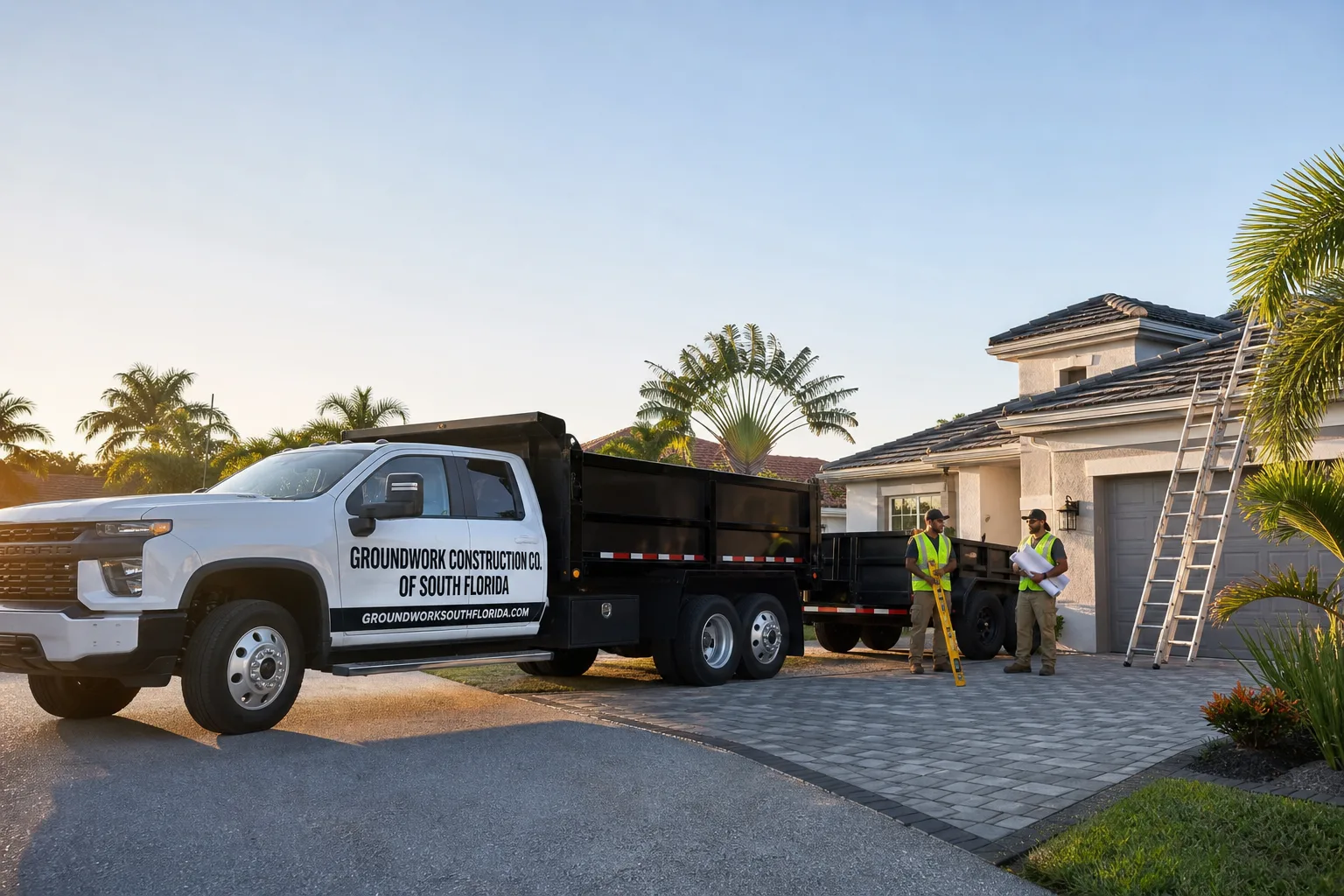
Glass Railing Systems in East Perrine, FL - What to Expect
Glass railing systems in East Perrine, FL typically run $4,500-$12,000 for a standard residential installation, with most projects completed in 3-5 business days once permits clear. Because East Perrine sits in Miami-Dade County’s High-Velocity Hurricane Zone, every glass panel, post, and anchoring system must carry the county’s Notice of Acceptance (NOA), which adds a material-vetting step you won’t find in Broward or Palm Beach projects. Call (844) 665-0162 and we’ll walk you through whether your existing structure can accept a frameless system or needs a more robust semi-frameless or post-supported configuration.
How We Install Glass Railing Systems - Start to Finish
We’ve learned that glass railing systems in East Perrine go smoother when homeowners know exactly when they’re needed on-site and what decisions are locked in. Here’s how we sequence it.
Day 1: Site measure and structural assessment. We arrive with laser measures and a structural checklist. The critical question for East Perrine homes: what’s the substrate? Pre-1992 CBS construction often has thinner slab edges and older anchor embedment patterns that won’t accept modern point-loaded glass posts without supplemental blocking. Post-Andrew rebuilds usually have the beefier footings and hurricane straps that make frameless installs straightforward. We mark every post location, note any electrical or plumbing that runs through the slab near the railing line, and photograph the existing conditions. You’ll get a marked-up drawing within 24 hours. This stage takes 2-3 hours.
Day 2-10: Permit submission and NOA verification. Because East Perrine is unincorporated Miami-Dade County, we file directly with the county Building Department, not a city office. Every glass panel, aluminum or stainless post, base shoe, and anchoring adhesive must appear on Miami-Dade’s NOA list - not just Florida’s statewide approved-products database. We’ve seen out-of-area crews get red-tagged here because they assumed statewide approval was enough. We handle the NOA cross-check ourselves; if your preferred glass finish or post color isn’t on the list, we flag substitutions before ordering, not after delivery. Typical permit turnaround is 5-8 business days for a straightforward residential railing. Complex jobs with structural modifications can stretch to two weeks.
Day 11: Material delivery and staging. Tempered or laminated glass panels arrive crated; we inspect for edge chips and optical distortion before accepting. Posts, base shoes, and hardware are matched to the approved NOA submittal. For second-story installations, we coordinate a small boom or ladder setup - East Perrine’s lot sizes vary, and some streets near East Perrine‘s older sections have limited setback room. We confirm access the day before.
Day 12-14: Installation and structural connection. Demo of existing railings (if any) takes a half-day. We core-drill or surface-mount posts depending on the structural engineer’s anchorage plan, set posts with epoxy anchors rated for the HVHZ wind loads, then install glass panels with gaskets and structural silicone. A typical 40-linear-foot balcony takes two full days. If we’re tying into an existing Windows & Doors in East Perrine project - say, a new sliding door system opening onto a balcony - we coordinate the threshold and railing interface so water sheds properly and the door warranty stays intact.
Day 15: Final inspection and touch-up. Miami-Dade County inspects for proper anchorage torque, glass labeling (tempered or laminated markings must be visible), and deflection under load. We address any punch-list items immediately. You get a photo documentation packet and care instructions. Most glass manufacturers recommend avoiding pressure washers on the gaskets and using only pH-neutral cleaners to prevent silicone degradation.
Homeowners often pair new exterior railings with hardscape upgrades - we’ve coordinated glass installations alongside Paver Driveways in East Perrine projects to unify the exterior aesthetic, and with Fence Repair in East Perrine when the full property perimeter needs refreshing.
The Glass Railing Options You’ll Actually Choose Between
- Frameless glass with base shoe: The cleanest sight line - glass panels slot into a low-profile aluminum shoe anchored to the slab or deck edge. Best for modern homes and waterfront views. Trade-off: requires the stiffest substrate; on older East Perrine slabs with edge cracking or insufficient depth, we may need to pour a supplemental curb. Cost lands in the upper half of our range.
- Semi-frameless with minimal posts: Slim stainless or aluminum posts at 4-6 foot intervals, glass clamped between them. More forgiving of imperfect substrates. The posts break the view slightly but add structural redundancy that inspectors like in the HVHZ. Mid-range pricing; the most common choice we see in East Perrine’s post-Andrew rebuilds.
- Post-supported full frame: Heavier posts with glass captured in a full perimeter frame. Highest wind-load capacity, lowest substrate demand. Older pre-1992 homes in East Perrine often need this route unless we’re doing significant structural prep. Most economical on a per-linear-foot basis, though the visual weight is higher.
- Glass type: tempered vs. laminated: Tempered is standard - breaks into small granules, strong against impact. Laminated (two glass layers with interlayer) stays in place if broken and provides sound dampening; required by some East Perrine HOAs near golf courses or for second-story applications where falling glass is a hazard. Adds 15-25% to material cost.
- Surface finish: Clear low-iron glass minimizes the green tint at edges; frosted or tinted options add privacy but reduce light transmission. Low-iron is worth the upcharge if your railing faces east or south into direct morning sun, which is common on East Perrine’s older homes with their original orientation.
What Glass Railing Systems Cost in East Perrine, FL
For glass railing systems in East Perrine, expect $4,500-$12,000 installed, with most residential balconies and pool enclosures falling in the $6,500-$9,000 range.
Five variables push you toward the high or low end:
- Linear footage and height: A 30-foot first-floor pool fence runs lower per foot than a 20-foot second-story balcony with 42-inch code height and handrail requirements.
- Existing substrate condition: Sound post-Andrew concrete with proper edge depth keeps labor minimal. Pre-1992 slabs needing curb additions or epoxy injection add $800-$2,500.
- Glass specification: Standard tempered clear glass is baseline. Low-iron, laminated, or custom-tinted panels add 15-30% to material cost.
- Permit complexity: Straight replacement of an existing railing on a single-family home is permit-simple. New construction, multi-family, or anything requiring structural engineering stamps for wind-load calculations adds $400-$1,200 in professional fees and longer review times.
- Access and staging: Tight lots, second-story work without crane access, or coordination with active Windows & Doors crews on the same project can extend labor hours.
Our written estimates include: all NOA-approved materials, permit fees, installation labor, and final inspection coordination. What typically isn’t included: repair of underlying substrate defects discovered during demo (we flag likely issues during the initial assessment), electrical relocation if your old railing had integrated lighting, or HOA application fees if your community requires architectural review.
What East Perrine Homes Specifically Do to This Job
East Perrine’s split housing stock creates two distinct glass railing realities on the same block. The pre-1992 CBS homes that survived Hurricane Andrew - many of them ranch-style with flat or low-slope roofs and original slab-on-grade construction - often have edge spalling, insufficient rebar cover, or hairline cracking that makes frameless base-shoe installations structurally questionable without remediation. We’ve cored into slabs on SW 176th Street and found original pour quality that wouldn’t meet today’s HVHZ anchorage requirements. The fix is usually a reinforced curb or embedded steel plate, which adds a day and $1,000-$2,000 but prevents a red-tag or worse, a post failure in a named storm.
The post-Andrew rebuilds, common in the neighborhood’s eastern sections, were built with hip roofs, continuous footings, and hurricane straps as standard. Their slabs and elevated decks typically accept modern glass railing systems without structural prep. But they also tend to have smaller setbacks and tighter access, so staging and glass panel maneuvering become the logistical constraint rather than substrate strength.
The permitting reality is non-negotiable: because East Perrine is unincorporated, Miami-Dade County’s Building Department handles everything. Their inspectors know the HVHZ requirements cold and will check NOA numbers against the physical product labels. We’ve seen crews from Broward get caught out assuming Florida Product Approval was sufficient. It isn’t here. We build that verification into our ordering process so we’re not scrambling for substitutions at inspection.
Year-round humidity and the seasonal water table spike from June through October also matter for exterior glass railing systems. Any wood or composite cap rail will swell, check, or mold without proper drainage gaps and ventilation. We spec aluminum or stainless caps with weep holes as standard for East Perrine installations, not as an upgrade.
Serving East Perrine, FL - Our Local Coverage Area
We’re based in the East Perrine area and know this community well. Use the map below to see our service coverage - if you’re nearby, we can almost certainly help.
Frequently Asked - Glass Railing Systems in East Perrine
Most glass railing systems in East Perrine are fully installed within two weeks of contract signing, with 5-8 of those days spent in Miami-Dade County permit review. The actual on-site work is 3-5 days. Call (844) 665-0162 for a timeline based on your specific project - estimates are free.
Yes. Because East Perrine is unincorporated Miami-Dade County, all glass railing work requires a county building permit and passes through HVHZ inspection. The permit verifies that your glass, posts, and anchoring systems all carry Miami-Dade’s Notice of Acceptance. We handle the filing and NOA verification as part of our standard process.
Usually, yes. Most residential glass railing systems are surface-mounted or core-drilled into existing slabs and don’t interfere with below-slab utilities. If your project includes integrated lighting, heated floors near the railing line, or a new drainage system, we’ll map utilities during the Day 1 assessment and flag any conflicts before ordering materials.
A basic post-supported system with standard tempered glass on sound substrate starts around $4,500 for a small balcony. Premium frameless low-iron laminated glass with custom hardware on a project needing structural prep can reach $12,000 or more. The biggest cost drivers are glass specification and substrate condition, not brand name. Call (844) 665-0162 for an exact quote - estimates are free.
We warranty our installation workmanship for two years, covering anchorage, alignment, and gasket performance. The glass itself carries a manufacturer’s warranty against spontaneous breakage and seal failure, typically 5-10 years depending on the supplier. Because we work with NOA-approved products only, warranty claims don’t get voided by code-compliance issues down the road.
Ready to Move Forward?
Call (844) 665-0162 to schedule a free on-site estimate for glass railing systems in East Perrine. We’ll assess your substrate, confirm NOA-compliant material options, and give you a written estimate with a clear timeline. No pressure, no generic pitch - just the specifics your project needs.
Written by Raymond Estevez, Owner at Groundwork Construction Co., serving East Perrine and South Florida.