
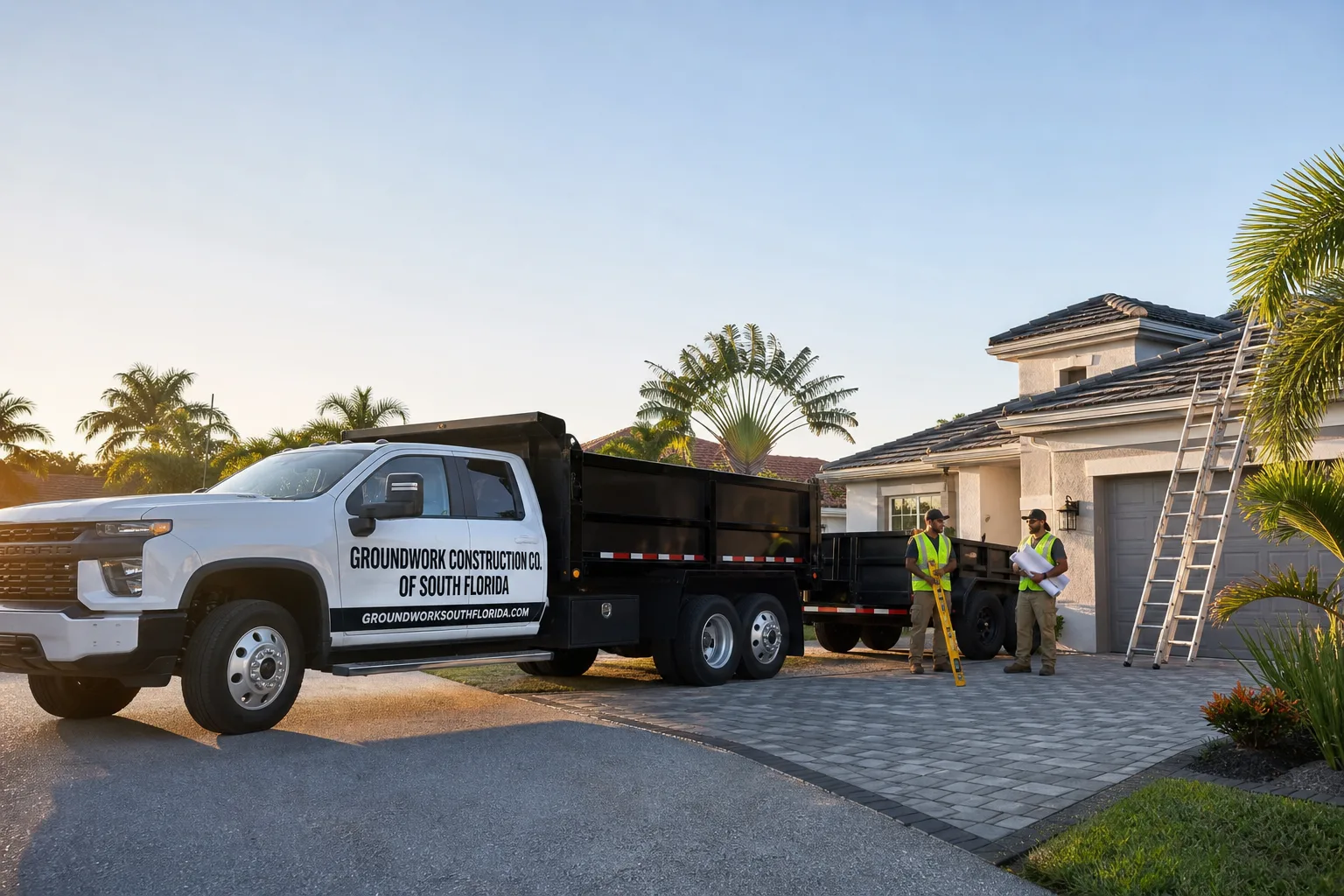
Glass Railing Systems in Lighthouse Point, FL: Cost, Timeline & What to Expect
Glass railing systems in Lighthouse Point, FL typically run $8,500-$22,000 installed, depending on linear footage, mounting surface, and whether we’re working with new construction or retrofitting a 1960s-era canal home. Most residential jobs take 3-5 business days from template to final inspection, though Broward County permit timing can add 2-3 weeks upfront. Call (844) 665-0162 and we’ll walk your property, measure the run, and deliver a written estimate with line-item pricing.
How We Build Glass Railing Systems - Stage by Stage
We’ve installed glass railings across Lighthouse Point’s canal-front homes long enough to know where the surprises hide. Here’s how the job actually unfolds.
Stage 1: Site measure and structural assessment (Day 1, 2-3 hours)
We template every linear foot and, more importantly, check what we’re anchoring into. On Lighthouse Point’s 1950s-1980s CBS homes, the concrete shell is solid but the original pour quality varies block by block. If you’re replacing corroded metal railings on a second-story balcony overlooking the canal, we core-test the substrate. Spalled concrete or compromised rebar from decades of salt exposure means we repair before we mount. You’ll decide at this stage: surface mount (faster, visible base plates) or core-drilled anchors (cleaner look, requires sound concrete). We photograph everything and flag any seawall-adjacent work that might trigger Broward County’s mandatory inspection protocol.
Stage 2: Glass spec and hardware selection (1-2 days after measure)
You choose tempered or laminated glass, thickness (typically 1/2″ or 3/4″ for residential), tint level, and edge treatment. Hardware runs from 316 marine-grade stainless (non-negotiable on canal homes) to powder-coated aluminum for protected interior runs. You’ll also pick post style: slim-profile stainless spigots, squared aluminum posts, or a structural glass system with minimal metal. We source from our windows and doors supplier network, which includes marine-rated hardware lines that most interior-focused vendors don’t stock.
Stage 3: Permitting and engineering (2-3 weeks, concurrent with fabrication)
Broward County requires structural drawings for any guardrail replacement that alters the original system. On waterfront lots, the coastal setback review can add a layer. We handle the submittal, but you’ll need to sign off on drawings and, if your home sits on a finger canal, possibly authorize a seawall condition survey if the permit reviewer flags it. Fabrication runs parallel, typically 10-14 days from approved drawings.
Stage 4: Demo and prep (Day 1 of install, 4-6 hours)
We remove existing railings, grind back corroded fasteners, and patch spalled concrete. If we’re tying into a new paver surface or a deck rebuild, this is when we coordinate with that crew. Homeowners often pair glass railing installs with Paver Driveways in Lighthouse Point or pool deck resets to unify the hardscape. We protect the canal-side seawall cap during this phase, Broward County’s setback rules make any disturbance there a permit violation.
Stage 5: Install, seal, and final inspection (Days 2-4)
Posts go in first, leveled to a laser string line. Glass panels drop into gaskets or clamp hardware, depending on system type. We use Sika or Tremco marine-rated sealants at every penetration. Final inspection checks deflection under load, fastener torque, and code height (42″ minimum for residential guards, 36″ for non-habitable platforms). We leave you with maintenance notes: rinse salt spray monthly, inspect gaskets annually, and call us if you see efflorescence bleeding through the concrete at post bases.
The Glass Railing Options You’ll Actually Choose Between
- Framed vs. frameless: Framed systems use metal posts at 4-6 foot intervals with glass captured in channels. Costs less, tolerates more substrate irregularity, and meets code on older homes with less-than-perfect concrete. Frameless systems rely on thicker glass and heavier base shoes or spigots. Cleaner sightlines over the canal, but every post base must hit sound substrate. Price gap: roughly 30-40% more for frameless.
- Tempered vs. laminated glass: Tempered shatters into granules on impact, laminated cracks but stays in the frame. For second-story and balcony applications in Lighthouse Point’s wind zone, we typically spec laminated. It’s not required by code for guards, but we’ve seen too many 60-mph gusts carry debris off the Intracoastal.
- Surface mount vs. core-drilled posts: Surface mount bolts to your existing slab or deck with visible base plates. Faster, reversible, and the only option if we hit hollow block or compromised concrete. Core-drilled anchors sink into sound concrete for a floating look. On 1960s canal homes with variable pour quality, we sometimes mix: core-drill where the concrete tests sound, surface mount where it doesn’t.
- 316 stainless vs. aluminum hardware: 316 marine-grade stainless survives within sight of the Atlantic without pitting. Essential for canal-front and pool-chemical exposure. Aluminum with a quality powder coat works for interior stairs or protected loggias, but we won’t spec it for salt-air balconies. The hardware cost difference is real, about 15-20% of total material.
- Clear vs. tinted vs. frosted: Clear maximizes the canal view, which is why most Lighthouse Point homeowners go this route. Grey or bronze tint cuts glare and heat gain on west-facing balconies. Frosted or acid-etched gives privacy where neighbors are close across a narrow finger canal. Tint adds roughly 10% to glass cost; etched or frosted, 20-25%.
What Glass Railing Systems Cost in Lighthouse Point, FL
| Component | Typical Range |
|---|---|
| Standard framed system (tempered, surface mount) | $8,500 - $14,000 |
| Frameless system (laminated, core-drilled) | $14,000 - $22,000 |
| Stair railings (additional, per flight) | $3,500 - $7,500 |
| Structural engineering & permitting | $800 - $2,200 |
| Concrete repair/prep (if needed) | $1,200 - $4,500 |
Five factors push your number up or down. First, linear footage: a 40-foot canal balcony costs roughly double a 20-foot pool surround. Second, substrate condition. Sound 1980s concrete takes anchors cleanly; spalled 1960s block needs rebuild before we mount. Third, glass type and thickness. Laminated 3/4″ runs about 40% above standard 1/2″ tempered. Fourth, access. Second-story installs over seawall caps require scaffolding or boom lifts that ground-level jobs don’t. Fifth, permit scope. A straightforward replacement with no coastal review is faster and cheaper than a job that triggers the seawall inspection pathway.
Our written estimates include templating, fabrication, hardware, installation, sealants, and final inspection coordination. What they don’t include: seawall repair if the county mandates it, electrical relocation for integrated lighting, or demolition of non-railing structures. We’ll flag those possibilities during the site visit so you’re not surprised.
What Lighthouse Point Homes Specifically Do to This Job
Lighthouse Point was dredged into existence in the 1950s and 60s, finger canals cut through coastal wetlands so every lot got boat access. The housing stock is almost entirely CBS construction from that era, concrete block and stucco shells that are structurally sound but showing their age in the details. We see three local conditions that change how we approach glass railing systems here.
The salt air is relentless. Sitting on the Southeast Florida coast with full Atlantic exposure, Lighthouse Point’s atmosphere corrodes rebar, fasteners, and aluminum framing inside concrete and stucco. On canal homes, tidal fluctuation keeps the soil saturated, accelerating the cycle. We spec 316 stainless hardware as baseline, not upgrade, and we inspect post-base concrete for chloride contamination before we anchor. A railing that lasts twenty years in Coral Springs might show pitting in eight here.
The permitting pathway is layered. Broward County’s coastal setback rules apply to virtually every lot in Lighthouse Point, and the county commonly triggers a mandatory seawall inspection when any construction permit is pulled on a canal property. We’ve seen homeowners discover $40,000 seawall repairs during what started as a simple railing replacement. We can’t predict when the reviewer will flag it, but we always warn you upfront and build contingency language into our contracts.
The housing era drives the retrofit challenge. These 1960s-70s homes were built before modern wind-load standards. If your glass railing is part of a broader renovation, you’re likely also dealing with impact-rated window and door replacements and electrical panel upgrades. Our Windows & Doors in Lighthouse Point crew coordinates with the railing install so you’re not sequencing trades twice. One contractor, every phase.
Finally, the water table is inches below grade. Any ground-level post that penetrates the slab needs proper drainage detail or you’ll get capillary wicking and efflorescence staining. We detail for it; not every installer does.
Serving Lighthouse Point, FL - Our Local Coverage Area
We’re based in the Lighthouse Point area and know this community well. Use the map below to see our service coverage - if you’re nearby, we can almost certainly help.
Frequently Asked - Glass Railing Systems in Lighthouse Point
Most residential installs take 3-5 business days once materials are on-site. Add 2-3 weeks for permitting and 10-14 days for fabrication after template approval. Call (844) 665-0162 and we can check current Broward County review times.
Yes, Broward County requires a permit for any guardrail replacement that changes the original system. On canal lots, coastal setback review may add a layer, and the county sometimes mandates a seawall condition survey. We handle the submittal and drawings.
Usually yes, since railings are structural, not utility-dependent. Integrated lighting or heated glass would require electrical coordination, but a standard system doesn’t touch plumbing. We’ll verify during the site measure if your layout involves any surprises.
Repairing severely corroded metal railings on a Lighthouse Point canal home is rarely cost-effective long-term. You’ll spend 40-60% of replacement cost for a fix that lasts 3-5 years in the salt air. Glass with marine-grade hardware is the better lifecycle value.
We warranty our installation workmanship. The glass itself carries a manufacturer’s defect warranty, and 316 stainless hardware typically includes a 10-20 year corrosion-resistance warranty depending on the line. Specific terms vary by product tier and we’ll detail them in your estimate.
Get Your Glass Railing Estimate in Lighthouse Point
We’ll walk your property, measure the run, test the substrate, and deliver a written estimate with line-item pricing for your glass railing system. No deposit required to schedule the site visit. Call (844) 665-0162 or reach out through our Lighthouse Point service page. If you’re also considering Fence Repair in Lighthouse Point or other exterior work, our Windows & Doors team can scope the full project. Built to spec, not to convenience.
Written by Raymond Estevez, Owner at Groundwork Construction Co., serving Lighthouse Point since our founding.