
Glass Railing Systems in Richmond Heights, FL - What to Expect
Glass railing systems in Richmond Heights typically run $4,500-$12,000 for a standard residential installation, with most projects completed in 3-5 business days once materials arrive. We handle the Miami-Dade permitting, HVHZ product approval documentation, and final inspection coordination as part of our scope. Call (844) 665-0162 and we’ll walk through your layout and give you a written estimate with no obligation.
How We Install Glass Railing Systems Step by Step
Every glass railing job we do in Richmond Heights follows the same five-stage sequence. Homeowners know exactly where we are, what’s happening next, and what decision they need to make before we move forward.
Stage 1: Site measure and structural assessment - 1-2 hours on-site. We show up, photograph the existing conditions, and check what the railing will anchor to. On Richmond Heights’ original 1948-1970 CBS homes, we’re often fastening into concrete block walls or slab edges that weren’t designed for point-loaded glass railings. If the substrate can’t handle the lateral load, we’ll tell you then - not after materials are ordered. You decide at this stage whether to proceed with the base-build structural upgrade or modify the railing design to reduce load concentration.
Stage 2: Design confirmation and material order - 2-5 days lead time. You pick your glass thickness (typically ½-inch tempered or ⅜-inch laminated for HVHZ compliance), hardware finish (brushed stainless, powder-coated aluminum, or marine-grade 316 stainless for salt-air exposure), and mounting style (base-shoe, standoff, or post-and-clamp). We submit the Miami-Dade NOA documentation with your permit application. Glass with etched or tinted treatments adds 7-10 days to fabrication. You sign off on shop drawings before anything gets cut.
Stage 3: Permit issuance and prep - 5-15 business days. Miami-Dade’s HVHZ review means glass railing systems don’t slide through on a simple mechanical permit. The product needs either a Miami-Dade Notice of Acceptance or a Florida Product Approval. We handle this paperwork, but the timeline is county-dependent, not ours. While we wait, we schedule any demo - old wrought-iron railings, wood balusters, or failing aluminum systems come out. We protect the slab edge or deck framing during this phase.
Stage 4: Installation - 1-3 days depending on linear footage. The glass panels arrive crated; we inspect every piece for edge chips or coating flaws before uncrating. Base-shoe systems get set in a continuous aluminum channel, leveled, and anchored with epoxy-set stainless pins into the concrete or block. Standoff systems require precise hole placement - one misdrilled hole in a tempered panel means a full replacement. We don’t rush this. If your project is part of a full Windows & Doors in Richmond Heights renovation, we sequence the railing install after the door or window rough openings are complete but before final trim.
Stage 5: Inspection and walkthrough - same day. Miami-Dade requires a structural inspection for guardrail replacements on elevated surfaces. We meet the inspector, demonstrate code-compliant height (42 inches minimum for residential, 34 inches if it’s a stair handrail), spacing, and load capacity. You walk the finished railing with us, we document any punch-list items, and we close the permit. Most Richmond Heights homeowners are hosting on their new balcony or pool deck the following weekend.
The Glass Railing Options You’ll Actually Choose Between
Glass railing systems aren’t one-size-fits-all. Here’s what our Windows & Doors crew sees Richmond Heights homeowners weighing:
- ½-inch tempered monolithic vs. ⅜-inch laminated. Tempered is cheaper, clearer, and meets HVHZ if the system has a Miami-Dade NOA. Laminated stays in place if shattered - better for balconies over hard surfaces, but costs 20-30% more and has slight green edge tint. Most pool decks go tempered; second-story balconies often go laminated.
- Base-shoe (channel) mounting vs. standoff hardware. Base-shoe gives the cleanest, most minimalist look - glass appears to rise from the floor with minimal metal showing. But it demands a dead-level substrate; on older Richmond Heights slabs with settlement or pitch for drainage, standoffs or post systems forgive more imperfection. Standoffs cost more in hardware but less in substrate prep.
- Clear vs. low-iron vs. tinted glass. Standard clear glass has a green edge that gets obvious at ½-inch thickness. Low-iron (Starphire or equivalent) eliminates that, costs 35-50% more, and is worth it if your railing is a focal point against white or light finishes. Gray or bronze tints reduce glare and heat gain on west-facing Richmond Heights balconies but darken the view.
- Stainless steel 304 vs. 316 hardware. 304 is standard inland; 316 holds up to salt air if you’re near the coast or the railing gets sprinkler overspray. For Richmond Heights, 304 is typically sufficient, but we stock 316 for homeowners who want the upgrade.
- Top rail or frameless. A slim aluminum or stainless cap rail gives hands a natural grip surface and hides the panel top edge. Frameless is purer visually but means touching glass every time. Families with kids usually want a top rail; design-forward installations often don’t.
What Glass Railing Systems Cost in Richmond Heights, FL
In the Richmond Heights market, residential glass railing systems typically range from $4,500 to $12,000 installed, with most landing between $6,500 and $9,000 for 30-50 linear feet of standard-height railing on a prepared substrate.
| Cost Driver | Low-End Impact | High-End Impact |
|---|---|---|
| Linear footage | 20-30 ft (small balcony) | 80+ ft (wraparound deck, multi-level) |
| Glass type | ½-inch tempered, clear | Low-iron laminated with custom tint |
| Substrate condition | New concrete, level, clean | Old CBS block, requires core drilling, epoxy repair, or sister framing |
| Mounting hardware grade | 304 stainless base-shoe | 316 stainless standoffs with custom machining |
| Permit scope | Simple mechanical, no structural | HVHZ structural review, engineer letter, tie-beam verification |
What’s included in our written estimate: all glass and hardware, Miami-Dade permit fees, HVHZ product approval documentation, installation labor, and final inspection coordination. What’s typically not included: structural repairs to the anchoring substrate (we flag this during measure), electrical relocation if your old railing had integrated lighting, and any HOA architectural review fees. If you’re also updating your exterior hardscape, many homeowners pair this work with Paver Driveways in Richmond Heights to coordinate the full outdoor living scope under one timeline.
What Richmond Heights Homes Specifically Do to This Job
Richmond Heights is one of South Florida’s earliest planned communities for Black residents, and its dense core of late-1940s to 1960s CBS homes creates conditions for glass railing systems that don’t exist just across the county line in Broward. Every permitted project here triggers Miami-Dade’s High-Velocity Hurricane Zone requirements - widely considered the strictest residential construction code in the United States. Your glass railing system needs either a Miami-Dade Notice of Acceptance or a Florida Product Approval with HVHZ rating; generic “impact-resistant” labeling from out-of-state suppliers often fails inspection.
The neighborhood’s original housing stock sits on slab foundations with concrete block walls that weren’t engineered for modern point loads. When we anchor a base-shoe channel into a 1952 CBS wall, we’re often hitting hollow cells or shallow cover over rebar. Core drilling into the Miami Limestone bedrock that lies just inches below many Richmond Heights lots becomes necessary for footings or post bases - standard digging equipment won’t touch it. We’ve learned to bring core rigs on initial site visits when the project involves anything beyond a surface-mounted retrofit.
That same shallow bedrock and high seasonal water table means moisture management matters. Glass railing base shoes sealed to a slab without proper drainage detailing trap water against the block. In Richmond Heights’ intense summer rainfall pattern, that trapped water finds its way inside. We specify weep slots and membrane integration as standard, not upgrades.
Local contractors also know that pulling a permit in this neighborhood often means a Miami-Dade inspector will flag original mid-century roof decks as non-compliant the moment a re-roofing job opens the permit. While that’s a roofing issue, it affects glass railing timing if your railing install is tied to a broader exterior renovation. We coordinate our inspection schedule to avoid conflict with roofing or structural corrections that can delay the whole project. If you’re addressing multiple exterior elements, some homeowners also bundle Fence Repair in Richmond Heights to synchronize the full perimeter upgrade.
Serving Richmond Heights, FL - Our Local Coverage Area
We’re based in the Richmond Heights area and know this community well. Use the map below to see our service coverage - if you’re nearby, we can almost certainly help.
Frequently Asked - Glass Railing Systems in Richmond Heights
Most glass railing systems in Richmond Heights take 3-5 weeks total, with actual installation consuming only 1-3 days. The longer timeline is permitting and glass fabrication - Miami-Dade HVHZ review adds 5-15 business days, and custom glass runs 2-3 weeks from shop drawing approval. Call (844) 665-0162 and we’ll give you a realistic schedule based on current county turnaround.
Yes - any guardrail replacement on an elevated surface in Miami-Dade requires a permit, and Richmond Heights falls under the High-Velocity Hurricane Zone. The glass and hardware must carry Miami-Dade NOA or Florida Product Approval with HVHZ rating. We handle the application and inspection scheduling; the permit fee is included in our estimate.
Usually, yes - glass railing systems are surface-mounted or anchored into structural elements, so they rarely conflict with embedded utilities. The exception is integrated lighting or outlet circuits in an existing railing; we’ll identify those during the initial measure and coordinate any relocation if needed. Most Richmond Heights homes don’t have powered railings from this era.
A 25-30 linear foot balcony with ½-inch tempered glass, base-shoe mounting, and 304 stainless hardware typically runs $4,500-$6,500 in this market. Low-iron glass, laminated panels, or standoff mounting push that toward $8,000+. Call (844) 665-0162 for an exact quote - estimates are free and include the full permit package.
We warranty our installation workmanship for two years, and the glass and hardware carry manufacturer warranties ranging from 5 years to lifetime depending on the specific product line specified. Tempered glass defects are rare but covered under the fabricator’s policy. We document all warranty terms in your final project packet before final payment.
Get Your Richmond Heights Glass Railing Estimate
We’re Richmond Heights homeowners’ single-source contractor for glass railing systems that meet Miami-Dade’s strictest-in-the-nation code requirements. Call (844) 665-0162 to schedule a free on-site measure. Raymond Estevez or a senior member of our team will walk your space, photograph the existing conditions, and email you a written estimate with full scope, timeline, and permit detail within 48 hours. No deposit required to review.
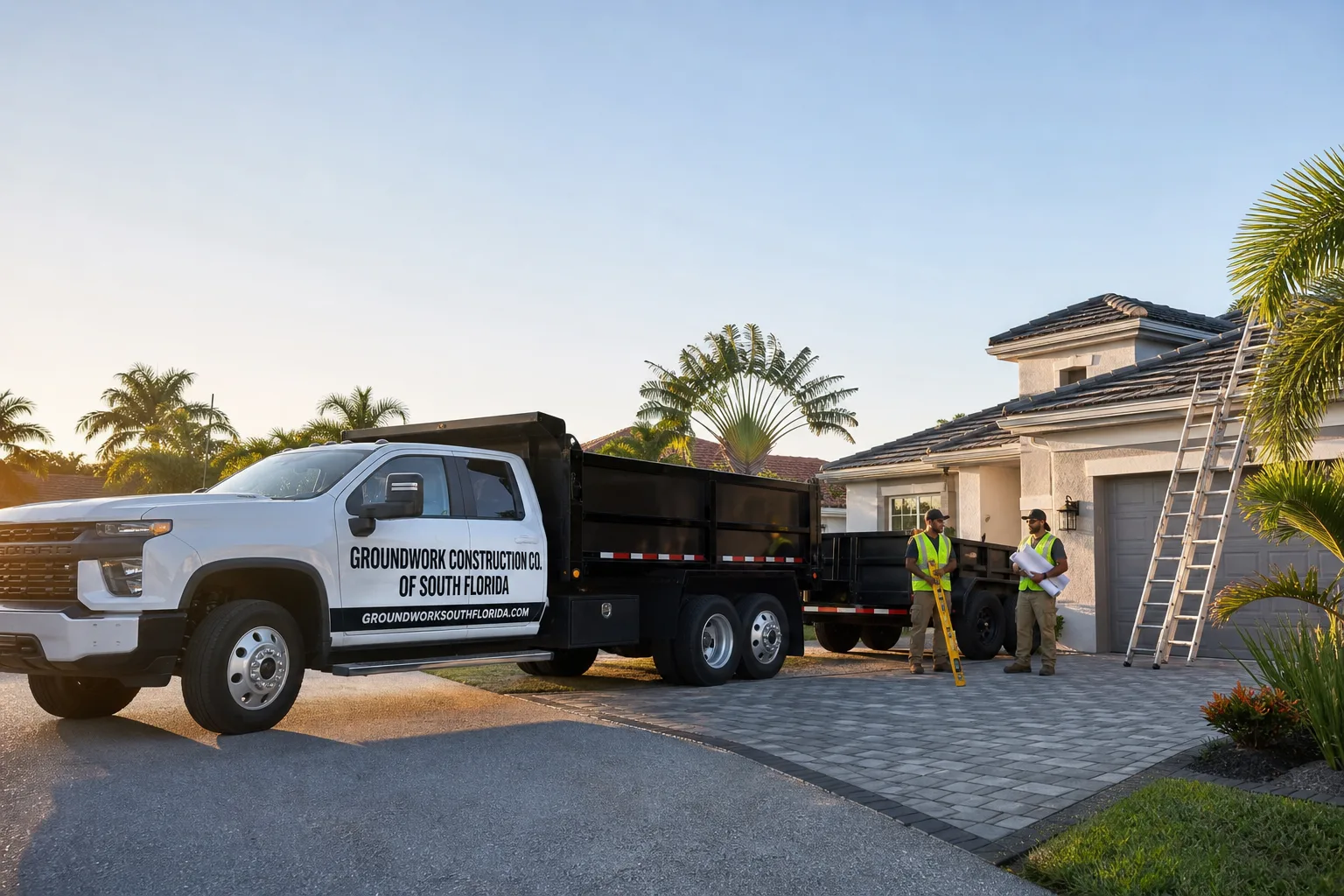
Written by Raymond Estevez, Owner at Groundwork Construction Co., serving Richmond Heights since our South Florida founding.