
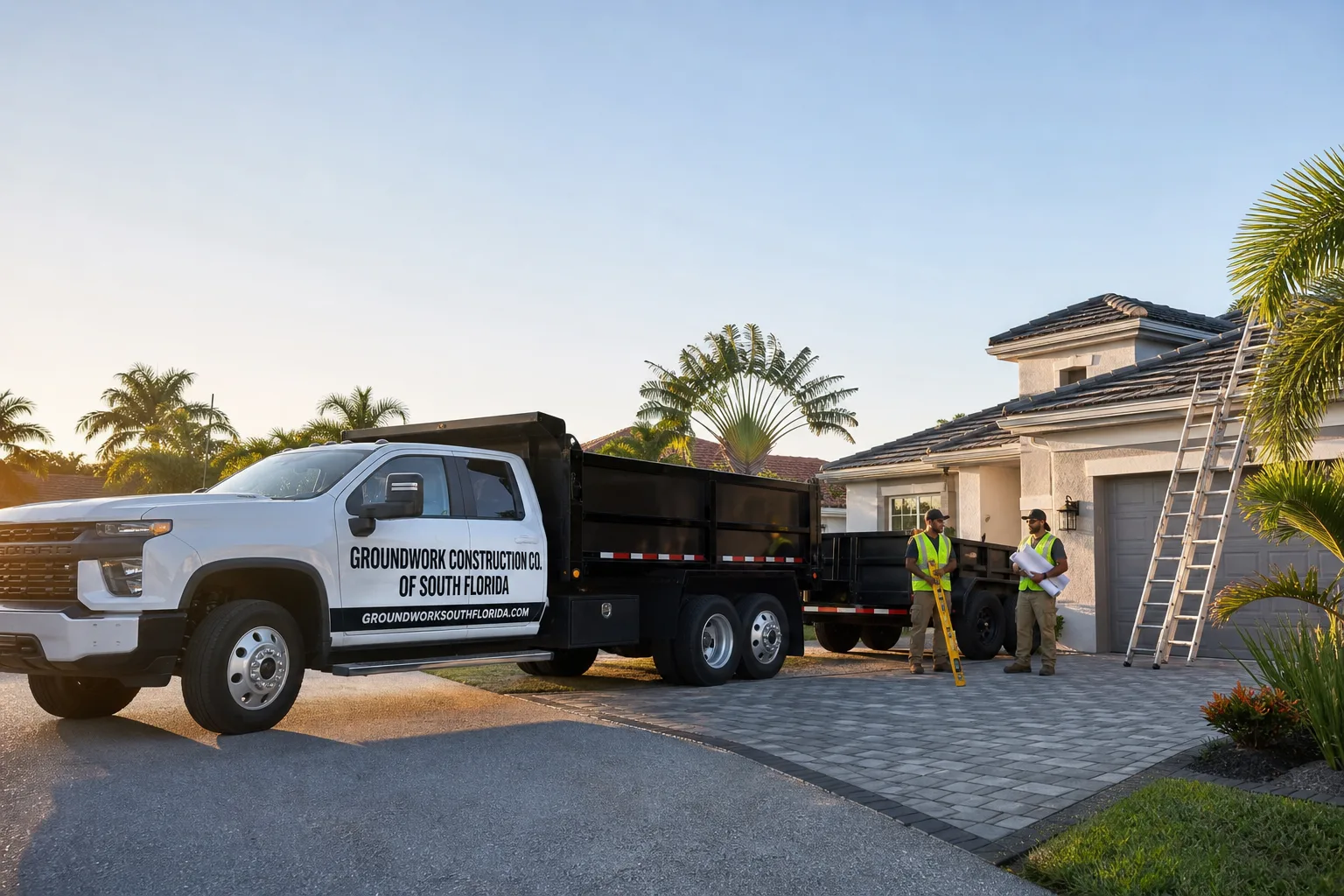
Junior ADU & Interior Conversion in South Miami Heights: Scope, Timeline, and Cost
A Junior ADU & Interior Conversion in South Miami Heights transforms an existing bedroom or underutilized interior space into a self-contained living unit with its own kitchenette, full bathroom, and separate entrance, typically adding 300-600 square feet of functional living area without expanding the home’s footprint. Most projects we run in the 33177 ZIP take 10-14 weeks from permit approval to final county sign-off, including the Miami-Dade inspection queue. Budget realistically: $45,000-$130,000 depending on how much of the existing structure needs reworking and whether you’re bringing plumbing and electrical up to current HVHZ standards. Call (844) 665-0162 and we’ll walk your specific floor plan.
How We Approach a Junior ADU & Interior Conversion
Every Junior ADU & Interior Conversion we build in South Miami Heights follows a five-stage sequence. Homeowners know what’s coming, what they need to decide, and where the project typically pauses.
Stage 1: Existing Conditions & Feasibility (Days 1-5)
We open walls, assess the original galvanized or cast-iron plumbing, and map the electrical panel’s spare capacity. In the 1960s-1980s CBS homes common here, we often find undersized service panels and plumbing routed through slab-on-grade that complicates bathroom relocation. You’ll decide at this stage whether to keep the ADU’s kitchenette and bath in their current footprint or move them, which is the single biggest cost driver. We deliver a fixed-price estimate with both options spelled out.
Stage 2: Design, Permitting & Material Selection (Weeks 2-5)
Because South Miami Heights is unincorporated, we pull all permits through Miami-Dade County’s building department, not a city office. We submit simultaneously for building, plumbing, and electrical, plus fire separation details between the ADU and main dwelling. While permits process, you choose your finishes: cabinetry grade (KraftMaid or Wellborn for painted options), countertop material (Cambria quartz runs higher than laminate but survives tenant turnover), flooring that meets the NOA impact-rating if it’s on an exterior-access path, and whether the separate entrance gets a standard or impact-rated door assembly. This is where the budget locks in.
Stage 3: Rough Construction & MEP (Weeks 6-9)
Demolition is surgical, not wholesale. We preserve the CBS shell, cut new door openings with lintel reinforcement per HVHZ structural requirements, and run new electrical circuits, water supply, and drain lines. If the home’s on septic, we verify the existing tank and drainfield capacity against the added bedroom count, county requirement. Rough inspections for structural, plumbing, and electrical typically queue 3-5 business days each in Miami-Dade’s system; we build this buffer into the schedule rather than promising back-to-back passes.
Stage 4: Finish Installation (Weeks 10-12)
Cabinets go in first, then countertops templated and installed, then flooring, then fixtures and appliances. We coordinate appliance delivery to avoid the job sitting idle. Paint and trim close out this phase. You’ll do a walkthrough with our project lead to flag any punch-list items before we call for final.
Stage 5: Final Inspection & Closeout (Week 13-14)
Miami-Dade final inspection covers life safety, egress, fire separation, and code compliance for the ADU as a distinct dwelling unit. Once passed, we hand over manuals, warranty paperwork, and a set of as-built photos. The permit closure letter goes to you and the county; this documentation matters if you ever sell or refinance.
The Material and Layout Choices That Shape Your Build
- Kitchenette configuration: galley vs. L-shape. A galley kitchenette along one wall saves floor space and keeps the ADU feeling open, but limits counter prep area to about 8 linear feet. An L-shape steals more square footage from the living/sleeping zone but adds cabinet storage and separates cooking from entry traffic. For rental ADUs in South Miami Heights, we see galley layouts win; for aging-parent setups, the L-shape gets picked more often.
- Cabinetry: stock vs. semi-custom. Stock cabinets deliver faster and cost less, but door styles are limited and box sizes may force awkward filler strips in tight ADU kitchens. Semi-custom from KraftMaid or Wellborn lets you specify exact widths, soft-close hardware, and painted finishes that hold up to humidity without peeling, a real factor in south Miami-Dade’s year-round moisture.
- Countertops: laminate, solid surface, or engineered quartz. Laminate keeps initial cost down but shows wear within five years of tenant use. Solid surface repairs cleanly but scratches more easily than quartz. Cambria and similar engineered quartz brands resist staining, don’t need sealing, and survive the thermal shock of hot pans set down by less careful occupants. The upgrade pays back on rental units.
- Bathroom: tub-shower combo vs. curbless walk-in. A tub combo preserves resale flexibility for families with young children. A curbless walk-in with proper drainage slope works better for accessibility and reads more modern, but demands precise floor recessing in existing slab construction, something we see complicate roughly one in three South Miami Heights conversions where bedrock sits shallow.
- Separate entrance: standard door vs. impact-rated assembly. Miami-Dade HVHZ code requires impact-rated openings on any new exterior door in this zone. The cost gap has narrowed enough that we rarely recommend standard doors even where a creative reading might allow them; the insurance and resale benefits of a proper NOA-rated assembly outweigh the savings.
What Junior ADU & Interior Conversion Costs in South Miami Heights, FL
Junior ADU & Interior Conversion projects in South Miami Heights typically run $45,000-$130,000. Here’s what pushes a job toward the low or high end of that range:
- Keeping vs. moving plumbing and electrical. Working within existing wet walls can hold a project near $50,000. Relocating a bathroom or kitchenette across slab-on-grade with shallow limestone bedrock adds trenching, rock-cutting, and repiping that can push $20,000-$35,000 alone.
- Existing condition of CBS shell and roofline. Flat or low-slope roofs common in 33177 homes often need reworking where we cut in the separate entrance or add ventilation for the new bathroom. If the roof membrane is already at end of life, we bundle replacement rather than patch around it.
- Material grade across finishes. A rental-oriented build with laminate counters, vinyl plank flooring, and stock cabinets sits at the lower third. Owner-occupied or premium rental builds with Cambria countertops, tile flooring, and semi-custom painted cabinetry climb toward the upper range.
- Septic vs. sewer connection. Homes on septic may need tank upsizing or drainfield evaluation per Miami-Dade environmental health, an added line item sewer-connected homes avoid.
- Inspection complexity and re-inspections. Miami-Dade’s county-wide queue means any failed inspection costs days, not hours. We price for first-pass quality; cut-rate competitors often don’t.
A written estimate from Groundwork Construction Co. includes demolition, rough and finish carpentry, plumbing and electrical rough-to-finish, insulation, drywall, paint, flooring, cabinets, countertops, fixtures, and permit fees. It does not include appliance packages, window treatments, or landscaping repair from the separate entrance excavation, those are homeowner selections we can source and install as add-ons.
What South Miami Heights Homes Specifically Do to This Job
The housing stock in South Miami Heights shapes every Junior ADU & Interior Conversion we price. The 33177 ZIP sits on the shallow Miami oolitic limestone formation, bedrock can appear just inches below grade, so trenching for drainage, footings, or utility reroutes routinely requires rock-cutting equipment rather than standard excavation. Contractors who price from inland Florida norms hit homeowners with change orders here.
The dominant single-story CBS homes built from the 1960s through the 1980s carry original galvanized or cast-iron plumbing now well past service life. We replace it proactively during conversion rather than bury new finishes over failing drains. Many lots remain on septic systems, which directly constrains ADU square footage and bedroom count under county environmental rules, a constraint that doesn’t exist in sewer-connected neighborhoods just north.
Because South Miami Heights was in Hurricane Andrew’s direct path in 1992, the area now operates under Miami-Dade’s High Velocity Hurricane Zone code, one of the strictest building regimes in the country. Every material and assembly must carry a Miami-Dade Notice of Acceptance (NOA). Inspectors work from the county building department queue, not a local municipal office, so rough, structural, and final inspections stack against county-wide demand. Experienced local GCs build an extra week of inspection buffer into every schedule. We do. Homeowners who’ve worked with out-of-area contractors on previous projects often mention the schedule shock; we set expectations upfront.
Homeowners pursuing a full Home Additions & ADU in South Miami Heights sometimes start with a Junior ADU & Interior Conversion to test rental demand before committing to a detached unit. Our Home Additions & ADU crew handles both, so the path stays open without switching contractors. We cover South Miami Heights and nearby Richmond West, East Perrine, Palmetto Estates, and West Perrine from our Fort Lauderdale base. Many clients pair their ADU conversion with interior updates elsewhere in the home; we also do Kitchen Design & Layout in South Miami Heights and Small & Partial Kitchen Remodels in South Miami Heights if the main house needs refreshing too.
Serving South Miami Heights, FL - Our Local Coverage Area
We’re based in the South Miami Heights area and know this community well. Use the map below to see our service coverage - if you’re nearby, we can almost certainly help.
Frequently Asked - Junior ADU & Interior Conversion in South Miami Heights
Most projects take 10-14 weeks from permit approval to final county sign-off, with 3-5 days built in for each Miami-Dade inspection queue. Call (844) 665-0162 and we’ll review your specific floor plan for a tighter estimate.
Yes, and because South Miami Heights is unincorporated, all permits route through Miami-Dade County’s building department, not a city hall. You’ll need building, plumbing, electrical, and potentially environmental health approval if your lot’s on septic. We handle the full submission as part of our scope.
Sometimes, if an existing bedroom sits adjacent to a bathroom and kitchen wet wall. More often, the original layout doesn’t align, and we need to relocate drains or cut new door openings with structural reinforcement. The feasibility walk determines which path applies; we price both scenarios before you commit.
The lowest-cost path keeps the existing bathroom and kitchenette locations, uses stock cabinetry and laminate countertops, and avoids rock-cutting or septic upgrades. That combination typically lands near $45,000. Moving plumbing across slab or upgrading to impact-rated assemblies pushes the number up. Call (844) 665-0162 for a fixed quote on your specific home.
Groundwork Construction Co. warranties our workmanship on the conversion structure, MEP rough-in, and finish installation. Manufacturer warranties apply to cabinets, countertops, fixtures, and appliances per their specific terms. We provide all warranty documentation at closeout; keep it with your permit records for future sale or refinance.
Start With a Free On-Site Estimate for Your Junior ADU & Interior Conversion
Call (844) 665-0162 to schedule a walkthrough of your South Miami Heights home. We’ll assess existing conditions, flag the structural and utility constraints specific to your property, and deliver a fixed-price estimate with two material tiers so you can decide what fits. No deposit required to get the number.
Written by Raymond Estevez, Owner at Groundwork Construction Co., serving South Miami Heights since our Fort Lauderdale founding.