
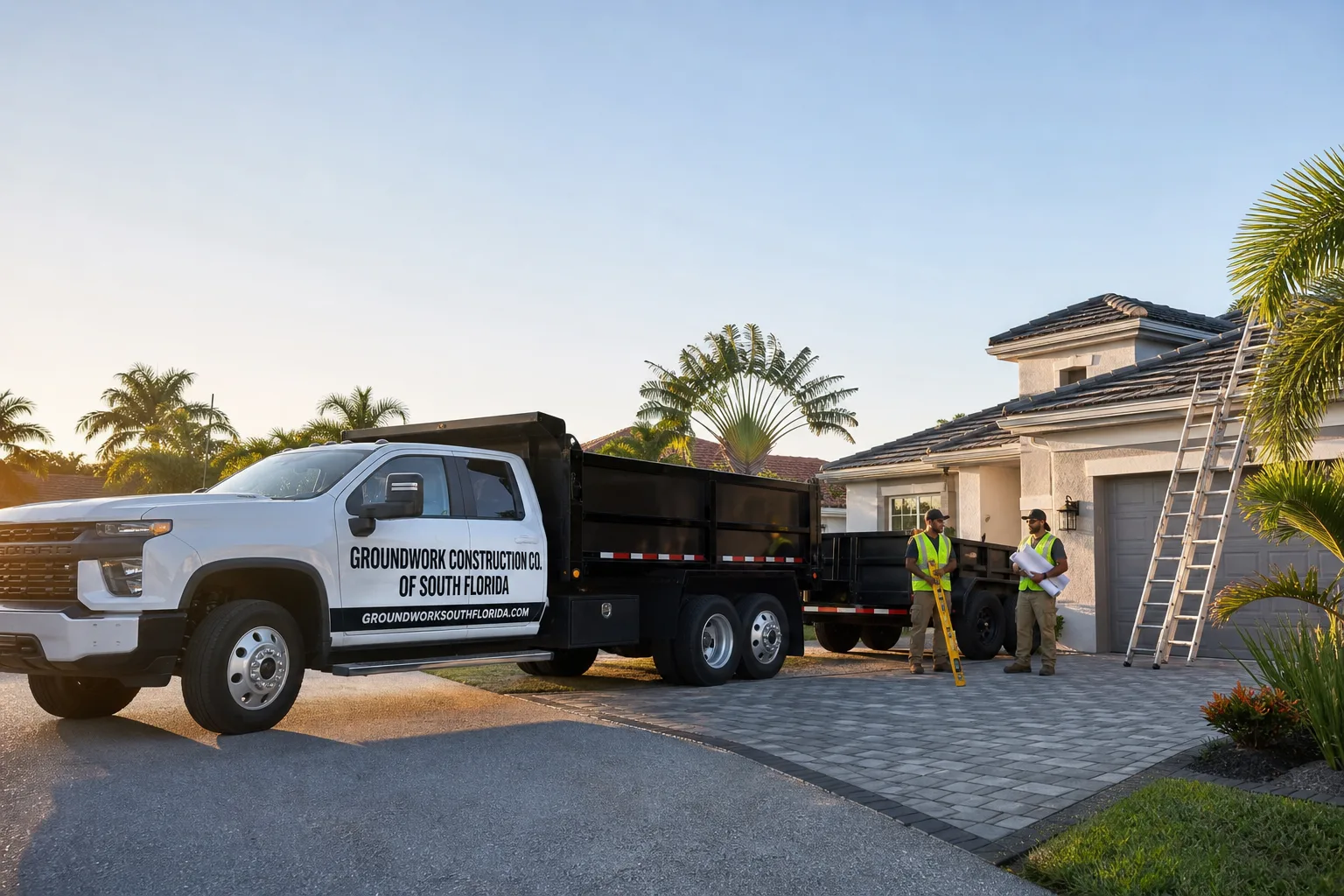
Metal Roofing in Sweetwater: What It Costs and How Long It Takes
Metal roofing in Sweetwater typically runs $15,000-$40,000 for a full installation, with most residential jobs wrapping in 5-10 business days once materials arrive. Because Sweetwater sits inside Miami-Dade County’s High Velocity Hurricane Zone, every panel, fastener, and flashing detail must meet HVHZ product approval standards that are stricter than what Broward County requires just up the road. Call (844) 665-0162 and we’ll walk your roof, confirm jurisdiction, and give you a written estimate with line-item pricing.
How We Handle a Metal Roof Installation from Start to Finish
We’ve learned that homeowners in Sweetwater want to know exactly when crews will be on their roof and when they can stop worrying about the next storm. Here’s how a typical metal roofing job moves through our shop.
Stage 1: On-site assessment and scope lock (Day 1)
We walk the roof with a ladder and moisture meter, not just binoculars from the driveway. On Sweetwater’s 1970s-1990s CBS homes, we’re checking for soft decking around original vent penetrations, rusted fasteners in any existing metal, and whether the fascia boards can handle the clip load of a new standing seam system. You’ll decide at this stage whether you want to recover over existing shingles or tear off to the deck. Tear-off adds a day and $2,000-$5,000 but lets us inspect and replace compromised plywood. We photograph everything and send you a written scope within 24 hours.
Stage 2: Material selection and permit pull (Days 2-5)
This is where you choose your metal, gauge, and finish. We’ll have samples on your kitchen table, not just a website link. Once you sign off, we pull permits through Sweetwater’s building department or Miami-Dade County, depending on your parcel’s exact jurisdiction. For properties near the Doral border or unincorporated county pockets, we verify this ourselves. It’s a detail that trips up out-of-area crews regularly. Permit turnaround in Sweetwater is typically 3-5 business days for re-roofing; we don’t start demo until it’s in hand.
Stage 3: Tear-off and deck prep (Days 6-7)
Crews arrive with a roll-off dumpster positioned to avoid blocking Sweetwater’s tight residential streets. We strip to the deck, replace any water-damaged plywood (common around original chimney crickets on these older homes), and install synthetic underlayment rated for HVHZ uplift pressures. If your home still has the original jalousie windows we see everywhere in Sweetwater, we’ll note any roof-to-wall flashing that needs reworking to integrate with future Window Replacement in Sweetwater work.
Stage 4: Panel installation and fastening (Days 8-11)
Metal panels arrive pre-cut from the roll-former to minimize on-site cutting. We use concealed fasteners on standing seam systems, or properly gasketed exposed fasteners on screw-down profiles, both with Miami-Dade NOA (Notice of Acceptance) numbers. Clip spacing, seam height, and fastener torque all get documented for the final inspection. Summer thunderstorms can interrupt this stage. We’ll tarp same-day if weather cuts us off.
Stage 5: Final inspection and closeout (Day 12)
Sweetwater’s building inspector checks uplift resistance, fastening patterns, and flashing integration. We pass the certificate to you, along with manufacturer warranty paperwork and photos of the completed work. Most homeowners receive this packet before the final invoice is due.
The Metal Roofing Options You’ll Actually Pick Between
- Standing seam (concealed fastener): The premium choice for Sweetwater’s HVHZ requirements. Panels interlock with hidden clips, so no screw holes penetrate the metal surface. Costs more upfront, lasts 40-70 years, and handles thermal expansion without leaking. Best for homeowners planning to stay long-term or who want the cleanest aesthetic.
- Screw-down panel (exposed fastener): Lower material cost, faster install. The trade-off is that every fastener is a potential leak point after 15-20 years of thermal cycling in South Florida’s sun. We use only EPDM-washered screws with Miami-Dade approval, and we tell buyers honestly: budget for fastener replacement and re-sealing around year 15.
- 24-gauge vs. 26-gauge steel: Thicker 24-gauge resists denting from wind-borne debris and feels more solid underfoot during installation. Twenty-six-gauge saves roughly 15-20% on material but dents more easily. For Sweetwater’s wind exposure, we typically recommend 24-gauge on exposed fastener systems and accept either on standing seam where the clip system adds rigidity.
- Galvalume vs. painted finish: Bare galvalume (aluminum-zinc coated) reflects heat well and costs less, but chalks and fades to a dull gray. Kynar 500 painted finishes (PVDF) hold color for 30+ years and come in profiles that mimic tile or shake. In Sweetwater’s intense UV, the paint premium usually pays for itself in curb appeal if you sell within two decades.
- Recovery vs. tear-off: Installing over one layer of asphalt shingles is code-permitted in Miami-Dade and saves $2,000-$5,000, but it hides deck damage and adds weight. On Sweetwater’s older CBS homes with original roofs, we push for tear-off. The extra cost is insurance against surprises.
What Metal Roofing Costs in Sweetwater, FL
| Project Component | Typical Range |
|---|---|
| Metal roof installation (full) | $15,000-$40,000 |
| Tear-off and disposal | $2,000-$5,000 |
| Deck repair/replacement (per sheet) | $75-$150 |
| Standing seam premium over screw-down | +25-40% |
| 24-gauge upgrade from 26-gauge | +15-20% |
Five factors push your job toward the high or low end of that $15,000-$40,000 band:
Roof size and complexity: A simple gable on a 1,200-square-foot Sweetwater ranch runs toward the bottom. Multiple valleys, dormers, or a 3,000-square-foot two-story with chimney crickets push toward the top.
Existing condition: Rotten fascia, sagging rafter tails, or saturated decking from years of shingle leaks all require carpentry before metal goes down. We find this more often on pre-Andrew homes that have never been re-roofed.
Material grade and profile: Standing seam in 24-gauge with a Kynar finish hits the upper third. Screw-down galvalume in 26-gauge keeps costs controlled.
Permit scope and jurisdiction: Sweetwater proper vs. Miami-Dade County permitting affects fees slightly, but the bigger variable is whether your job triggers a full roof-to-wall inspection requiring access to attic spaces or soffit removal.
Flashing and penetration work: Skylights, solar tube additions, or relocating vents adds labor and material. We price these separately so you’re not paying for what you don’t need.
Our written estimates include all labor, materials, permit fees, dumpster rental, and final inspection coordination. They don’t include tree trimming for access, interior drywall repair if we find deck leaks, or any Impact Windows & Doors in Sweetwater work you may want to bundle. Call (844) 665-0162 for an exact quote. Estimates are free.
Why Sweetwater’s Building Environment Changes This Job
Sweetwater’s unique position shapes every metal roofing decision we make here. The entire city falls within Miami-Dade’s High Velocity Hurricane Zone, meaning the wind-load standards we design to are measurably stricter than what contractors in Fort Lauderdale or Boca Raton face. A metal roof in Sweetwater isn’t just about keeping water out. It’s about holding the envelope together when a Category 4 approaches.
The housing stock tells the story. Most Sweetwater homes are modest CBS structures built between the late 1960s and early 1990s, many still carrying their original shingle or early metal roofs. These predate the post-Andrew code overhaul, so we routinely encounter decking fastened with ringshank nails spaced too far apart, or fascia boards that have rotted behind stucco where roof runoff has been dumping for thirty years. In Tamiami and Fountainebleau, just west and north, we see similar vintage stock. But Sweetwater’s tighter lot lines and the city’s tiny 1.1-square-mile footprint mean crane access and dumpster placement require more logistical planning.
The water table matters too. Sweetwater sits on flat limestone just east of the Everglades, and during wet season the groundwater can rise to within two or three feet of grade. This doesn’t directly affect the roof, but it means any interior water damage we discover during tear-off may have been wicking up from slab level as much as leaking from above. We flag this for homeowners because the fix isn’t always at the roofline.
Permitting jurisdiction trips up crews who don’t know the boundary. Sweetwater is surrounded by unincorporated Miami-Dade and the City of Doral. A parcel on Fontainebleau Boulevard might look like Sweetwater on Google Maps but fall under county jurisdiction with different inspection windows and fee structures. We verify every address through the Miami-Dade Property Appraiser before pulling permits. It’s a fifteen-minute step that prevents two-week delays.
Finally, summer scheduling is real. Afternoon thunderstorms from June through October can shut down a roofing crew by 2 PM. We build this into our timelines rather than promising impossible consecutive days.
Serving Sweetwater, FL - Our Local Coverage Area
We’re based in the Sweetwater area and know this community well. Use the map below to see our service coverage - if you’re nearby, we can almost certainly help.
Frequently Asked - Metal Roofing in Sweetwater
Most residential metal roofing jobs in Sweetwater take 5-10 business days from tear-off to final inspection, plus 3-5 days for permit approval before we start. Material availability and summer thunderstorms are the main variables that extend this. Call (844) 665-0162 and we’ll give you a firm schedule based on current lead times.
Yes. Every re-roofing project in Sweetwater requires a building permit, and because the city sits in Miami-Dade’s High Velocity Hurricane Zone, the roof must use HVHZ-approved products with Miami-Dade NOA numbers. We handle the permit application, product approval documentation, and inspection scheduling as part of our standard scope.
Usually, yes. Existing vents and penetrations can be reflashed and integrated into a new metal roof without relocation. We only recommend moving plumbing stacks or HVAC curbs if they’re improperly positioned for the new panel layout or show deterioration. You’ll know before we start. Call (844) 665-0162 for an assessment.
Metal roofing costs roughly 2-3 times more upfront than asphalt shingles, with Sweetwater installations running $15,000-$40,000 versus $8,000-$20,000 for a standard shingle replacement. The trade-off is lifespan. A properly installed metal roof lasts 40-70 years in South Florida’s climate, compared to 15-25 years for architectural shingles. For homeowners planning to stay, metal often costs less per year of service.
You’ll receive two warranties: a manufacturer’s material warranty covering finish fade, chalking, and panel integrity (typically 20-40 years depending on the product line), and our workmanship warranty covering installation quality, flashing integrity, and leak protection. We don’t bundle these into vague “lifetime” language. You’ll see the exact terms in writing before you sign.
Ready to Talk Metal Roofing for Your Sweetwater Home?
We’ll walk your roof, confirm whether your parcel falls under Sweetwater or Miami-Dade permitting, and deliver a written estimate with line-item pricing for your metal roofing project. No deposit required to schedule. Call (844) 665-0162 or request your free estimate through our Roofing in Sweetwater page. For a broader view of our full exterior envelope work, see what our Roofing crew handles across South Florida, or explore how we serve homeowners in Sweetwater and surrounding areas.
Written by Raymond Estevez, Owner at Groundwork Construction Co., serving Sweetwater and South Florida homeowners since our founding.