
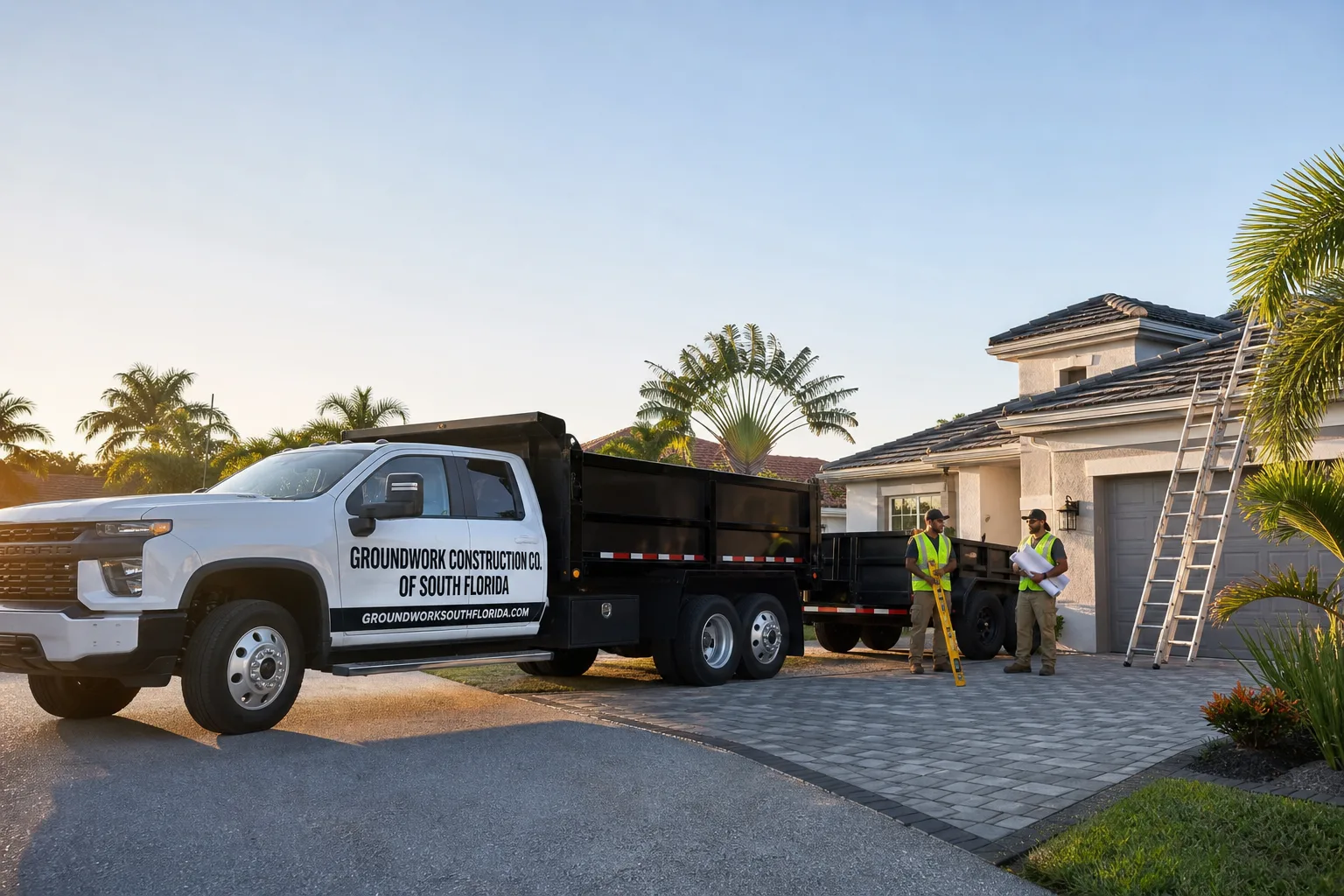
Metal Roofing in West Miami, FL - Cost, Timeline, and What to Expect
Metal roofing in West Miami typically runs $15,000-$40,000 for a full installation, with most residential jobs completed in 5-10 business days once materials arrive. Every system we install must carry a Miami-Dade Notice of Acceptance (NOA) to satisfy High-Velocity Hurricane Zone (HVHZ) standards, the strictest roofing code in the nation. Call (844) 665-0162 for a free on-site estimate and written quote.
How We Install a Metal Roof - Stage by Stage
Metal roofing isn’t a single-day swap. The job moves through five distinct phases, and knowing the sequence helps you plan around noise, access, and the decisions you’ll need to make.
Stage 1: Tear-off and deck inspection (1-2 days)
We strip the existing roof to the decking - often original built-up roofing on West Miami’s 1950s-1970s CBS homes that has simply aged past recovery. This is where we find what the estimate couldn’t predict: soft or delaminated plywood, corroded fasteners, or in some cases, the need to sister rafters that weren’t designed for the dead load of a metal system. You’ll decide here whether to replace the full deck or spot-repair. Full replacement adds $2,000-$5,000 but eliminates future callbacks.
Stage 2: Dry-in and HVHZ sheathing prep (1 day)
Miami-Dade’s HVHZ rules require specific ring-shank nail patterns, plywood thickness minimums, and often secondary water barriers depending on your roof pitch. We don’t proceed past this point until the dry-in passes inspection. In West Miami, that means coordinating with a small building department that knows the neighborhood but runs lean on inspector availability. We’ve learned to book inspection slots the moment tear-off begins.
Stage 3: Underlayment and flashing (1 day)
Your underlayment choice - synthetic vs. self-adhering ice-and-water - depends on roof complexity and whether you have valleys or penetrations. Flashing details around chimneys, vents, and wall intersections get the most attention; this is where cheap metal roof jobs fail first. We fabricate custom flashings on-site rather than using pre-formed pieces that rarely fit West Miami’s varied roof geometries.
Stage 4: Panel installation (2-4 days)
This is the visible progress. Standing seam panels run from eave to ridge in continuous lengths, mechanically seamed on-site. You’ll have chosen your panel profile, color, and gauge during material selection. We work section by section, leaving no exposed fasteners that could back out in hurricane-force wind. The rhythm of this stage depends on crew size and roof complexity - a simple gable roof moves fast; a hipped roof with multiple dormers does not.
Stage 5: Final inspection and punch list (1 day)
West Miami requires a final roofing inspection before we issue your completion packet. We walk the roof with you, check fastener torque on any exposed hardware, and verify gutter integration. Your NOA documentation gets filed with the permit closure. Most homeowners receive their final invoice only after this sign-off.
The Metal Roofing Options You’ll Actually Choose Between
Metal roofing isn’t one product. These are the real decisions that move your price and performance:
- Panel gauge: 26 vs. 29 - 26-gauge is thicker, stiffer, and quieter under rain impact. It costs 15-20% more but resists oil-canning (the visible waviness that cheap metal roofs develop). For West Miami’s flat terrain and full sun exposure, we typically recommend 26-gauge on any roof visible from the street.
- Standing seam vs. screw-down exposed fastener - Standing seam hides all fasteners in the seam joint; screw-down panels have visible fasteners every 2-3 feet. Exposed fastener systems cost 30-40% less upfront but require fastener replacement every 10-15 years as thermal expansion works them loose. In HVHZ territory, we only recommend standing seam for primary residences.
- Paint finish: SMP vs. PVDF (Kynar 500) - SMP (silicone-modified polyester) is the budget option, good for 20-30 years of color stability. PVDF carries a 30-40 year chalk-and-fade warranty and holds up better to South Florida’s UV intensity. If you’re staying in the home long-term, PVDF pays for itself in avoided repaint or premature replacement.
- Underlayment upgrade: standard synthetic vs. self-adhering membrane - Standard synthetic underlayment is code-minimum and adequate for most pitches. Self-adhering membrane seals around every fastener penetration and provides a secondary waterproof barrier if wind-driven rain gets past the metal. We spec it on any roof below 4:12 pitch or within a mile of the coast.
- Insulation and thermal break - Metal conducts heat. Without a proper thermal break and adequate attic ventilation, your cooling load jumps. We evaluate your existing soffit and ridge venting during estimation and quote any needed modifications. This isn’t upsell; it’s preventing a $200/month summer electric bill surprise.
What Metal Roofing Costs in West Miami, FL
| Component | Price Range |
|---|---|
| Metal roof installation (full system) | $15,000 - $40,000 |
| Deck replacement (if needed) | $2,000 - $5,000 |
| Standing seam panel upgrade from screw-down | +30% - 40% |
| PVDF paint finish upgrade from SMP | +10% - 15% |
| Self-adhering underlayment upgrade | +$800 - $1,500 |
Five factors push your job toward the high or low end of that $15,000-$40,000 range:
Roof size and complexity - A 1,500 square foot simple gable sits near the bottom. A 3,500 square foot hipped roof with multiple valleys and dormers pushes toward the top. We measure precisely; never estimate from satellite imagery alone.
Existing roof condition - Two layers of old built-up roofing, rotted decking, or rafter spacing that doesn’t meet current span tables all add labor and material. We can’t know the full story until tear-off, which is why we include a deck-replacement allowance in every estimate with clear trigger pricing.
Material grade and finish - 26-gauge standing seam with PVDF finish costs substantially more than 29-gauge screw-down with SMP. Both are legitimate products; the right choice depends on your hold period and aesthetic priorities.
Penetrations and detailing - Skylights, solar tube installations, chimney crickets, and complex wall flashings each require custom fabrication and additional labor. A roof with clean lines moves faster and cheaper.
Permit and inspection scope - West Miami’s independent building department charges its own permit fees, and the HVHZ inspection sequence requires multiple visits. These are fixed costs we pass through at actual; we don’t mark up municipal fees.
A written estimate from Groundwork Construction Co. includes tear-off, disposal, deck repair up to the quoted allowance, underlayment, metal panels, flashings, fasteners, trim, and permit fees. It does not include gutter replacement (though we evaluate and quote it separately), structural rafter modifications beyond sistering, or interior ceiling repair if water damage is discovered during tear-off.
What West Miami Homes Specifically Do to This Job
West Miami’s housing stock shapes every metal roofing decision we make here. The city is one of Florida’s smallest independent municipalities - roughly 0.4 square miles - with its own building department entirely separate from Miami-Dade County. Yet every roofing system must still satisfy the county’s HVHZ product-approval standards, the strictest in the nation. Contractors who don’t regularly work South Florida often arrive with products that lack Miami-Dade NOAs and face immediate rejection at permit.
The homes themselves are almost entirely post-WWII concrete block construction built from the late 1940s through the 1970s, many with original flat or low-slope built-up roofs now well past service life. These aging structures frequently present galvanized plumbing vents, outdated electrical service masts, and unreinforced masonry details that must be addressed when the roof is opened up. We build contingency into every West Miami estimate because we’ve learned what hides beneath these old roofs.
Inspection scheduling is its own local variable. West Miami’s building department serves roughly 6,000 residents with limited staff. Inspectors know the neighborhood block by block, but capacity constraints mean HVHZ-mandated dry-in and sheathing inspections can bottleneck a job more than in larger neighboring cities. We sequence our work around realistic inspection availability rather than promising unrealistic timelines.
Homeowners in West Miami often discover that a metal roof project becomes part of a full exterior envelope update. If you’re already addressing the roofline, it makes sense to evaluate Roofing in West Miami as a complete system rather than a single component. Many clients pair this work with Window Replacement in West Miami or Impact Windows & Doors in West Miami to satisfy HVHZ requirements across the entire building envelope in one coordinated project. Our Roofing crew coordinates directly with window and door specialists to maintain the inspection sequence without gaps.
Serving West Miami, FL - Our Local Coverage Area
We’re based in the West Miami area and know this community well. Use the map below to see our service coverage - if you’re nearby, we can almost certainly help.
Frequently Asked - Metal Roofing in West Miami
Most residential metal roofing installations take 5-10 business days from tear-off to final inspection, plus 1-2 weeks for material delivery. West Miami’s small building department can add 2-3 days to inspection scheduling compared to larger neighboring cities, so we build that into our project timeline upfront. Call (844) 665-0162 and we’ll walk you through the realistic calendar for your specific roof.
Yes, absolutely. West Miami requires its own roofing permit, and every product must carry a Miami-Dade Notice of Acceptance (NOA) for High-Velocity Hurricane Zone compliance. We handle permit application, HVHZ documentation, and all inspections as part of our standard process. The permit fee is passed through at actual cost with no markup.
Usually, yes. Most West Miami metal roofing projects don’t require relocating plumbing vents or electrical service masts. If your existing penetrations are properly flashed and meet current code height requirements, we work around them. The exception is galvanized plumbing vents that have deteriorated below the roofline; we flag these during deck inspection and quote replacement before proceeding.
Metal roofing costs roughly 2-3 times more upfront than asphalt shingle replacement, which typically runs $8,000-$20,000 in this market. The trade-off is lifespan: a properly installed standing seam metal roof lasts 40-60 years versus 15-25 for architectural shingles in South Florida’s UV and salt-air environment. For homeowners planning to stay 15+ years, metal often yields lower lifecycle cost.
You receive two warranties: a manufacturer’s material warranty on the panels and finish (typically 20-40 years depending on paint system), and our workmanship warranty covering installation quality. The material warranty is only as good as the contractor’s installation, which is why we document every fastener pattern and seam detail with photos during construction. Ask us for specific warranty terms when we present your written estimate.
Ready for a Written Estimate on Metal Roofing in West Miami?
We’ll visit your property, measure your roof, assess existing conditions, and deliver a detailed written quote with line-item pricing and realistic timeline. No pressure, no deposit required to review. Call Groundwork Construction Co. at (844) 665-0162 to schedule your free on-site estimate for metal roofing in West Miami.
Written by Raymond Estevez, Owner at Groundwork Construction Co., serving West Miami and South Florida.