
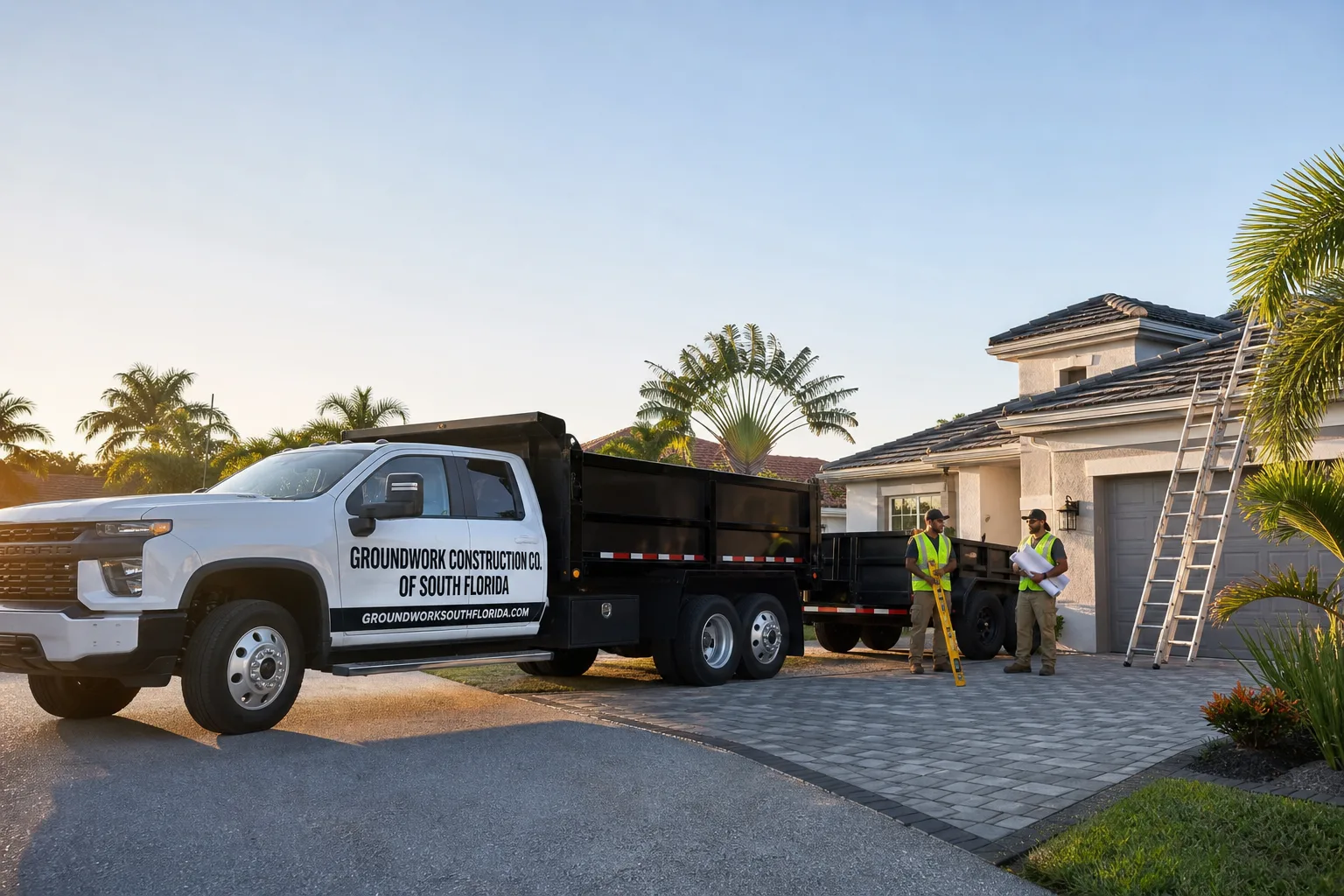
How Much Does a New Detached ADU Cost in Hallandale, FL?
A new detached ADU in Hallandale typically runs $90,000-$220,000 and takes 4-7 months from permit to final inspection, depending on whether you choose prefab delivery or traditional stick-built construction. Most Hallandale homeowners we work with are adding these units behind existing CBS ranch homes on low-lying lots near the Intracoastal, where space is tight and every square foot has to earn its keep. Call (844) 665-0162 and we’ll walk your property to see what’s actually feasible.
Hallandale’s housing reality is unusual for South Florida. The city is dominated by 1960s-1980s high-rise condominiums facing mandatory structural inspections under Florida’s post-Surfside safety laws, but the small single-family pockets, mostly concrete block stucco ranches from the same era, are where new detached ADUs actually get built. These lots sit within feet of sea level, sandwiched between the Atlantic and the Intracoastal Waterway, which means salt-laden air, aggressive soil conditions, and drainage that can’t be taken for granted. A new detached ADU here isn’t just a box in the backyard; it’s a small building that has to survive the same marine microclimate that’s currently forcing millions in concrete restoration on the condo towers nearby.
How We Build a New Detached ADU in Hallandale
We’ve refined this into five distinct stages, each with a clear decision point for the homeowner.
Stage 1: Site evaluation and feasibility (1-2 weeks). We walk your lot with a surveyor to confirm setbacks, check for fill soil or organic deposits that affect foundation design, and identify where utilities can tie in. Most Hallandale single-family lots in the 33009 ZIP are compact, so we often need creative placement to meet the 5-foot side and rear setbacks common here. You’ll decide at this stage: prefab unit or stick-built? Prefab through partners like Abodu, Dvele, or Mighty Buildings can shrink total timeline by 8-12 weeks but requires crane access and precise foundation prep. Stick-built gives more design flexibility on tight or irregular lots.
Stage 2: Design and permitting (4-10 weeks). Hallandale falls under Broward County’s building department for most ADU permits, and the process moves faster when drawings are complete upfront. We handle structural plans, MEP layouts, and Florida Product Approval documentation for impact-rated windows and doors, which are required in this wind-borne debris region. Your decision here: finish level and fixture package. We spec Kohler and Moen plumbing fixtures across multiple tiers, so you’re choosing between a solid mid-grade guest setup or a premium rental-ready unit with higher-end finishes.
Stage 3: Site prep and foundation (2-3 weeks). Hallandale’s flat, low-lying lots often need engineered fill or stem walls to get above the flood plain. We pour a monolithic slab with post-tensioned cable or a raised floor system depending on soil conditions. Salt air means we specify epoxy-coated rebar and higher-grade concrete mixes than inland projects. You’ll sign off on foundation type and any drainage corrections at this point.
Stage 4: Structure and envelope (4-6 weeks). Walls go up, roof goes on, windows and doors get installed. For stick-built ADUs, we use impact-rated products from Andersen, Pella, or CGI that meet Broward’s strict wind codes. For prefab units, the shell arrives weather-tight and we handle utility connections and finish work. Your material decisions here: siding (stucco to match the main house, James Hardie fiber cement for lower maintenance, or metal panel for modern prefab aesthetics), roofing (shingle, metal, or flat membrane depending on unit style), and exterior trim details.
Stage 5: Interior finish and final inspection (3-4 weeks). Flooring, cabinets, countertops, paint, fixtures, appliances. We install Silestone or Caesarstone countertops in kitchenettes, run final electrical and plumbing tests, and schedule Broward County’s inspection sequence. The ADU can’t be occupied until Certificate of Occupancy is issued, which typically takes 1-2 weeks after final walkthrough. Your final decisions: paint colors, hardware, and any smart home or security pre-wiring.
Throughout the build, our Home Additions & ADU crew coordinates directly with our roofing, window, and hardscape teams. One contractor, every phase. No handoffs to trades you’ve never met.
The Build Choices That Actually Change Your New Detached ADU
These are the forks in the road that move your price and your long-term satisfaction:
- Prefab shell vs. stick-built frame: Prefab units from Abodu or Boxabl arrive 80% complete, cutting on-site labor and weather delays. Best for straightforward rectangular footprints with crane access. Stick-built handles odd lot shapes, custom ceiling heights, and integration with existing landscaping or pool decks. Prefab typically lands in the $110-$160 per square foot range installed; stick-built runs $140-$220 depending on finish level.
- Foundation type: Monolithic slab on grade is cheapest and fastest where soil allows. Raised stem wall or pier foundation adds $8,000-$15,000 but solves drainage on Hallandale’s flood-prone lots and gives you mechanical space underneath.
- Impact rating level: All new construction in Hallandale needs impact-rated openings, but you choose the aesthetic: standard white vinyl-impact windows from PGT or CGI, or architectural-grade aluminum from Andersen or Marvin with custom finishes. The performance is similar; the look and price aren’t.
- Kitchenette scope: Wet bar with mini-fridge and microwave, or full cooking with range and dishwasher? This determines your electrical service size, plumbing complexity, and whether you need a grease trap. Most rental ADUs we build in Hallandale get the full kitchenette; guest units for family often don’t.
- Utility tie-in vs. separate meters: Tying into the main house’s electrical panel and water service costs less upfront but complicates billing if you rent. Separate meters add $4,000-$8,000 but give clean accounting. Hallandale’s water utility has specific tap requirements we navigate during permitting.
Homeowners often pair a new detached ADU with interior upgrades to the main house. If you’re already expanding your footprint, Kitchen Design & Layout in Hallandale is a natural next project to consider, or Backsplash, Tile & Flooring in Hallandale to refresh the spaces you use every day.
What New Detached ADU Costs in Hallandale, FL
| ADU Type & Size | Typical Range in Hallandale |
|---|---|
| Prefab studio/1-bed, 400-550 sq ft | $90,000-$140,000 |
| Stick-built 1-bed, 500-650 sq ft | $120,000-$175,000 |
| Stick-built 2-bed, 700-900 sq ft | $160,000-$220,000 |
| High-end custom with premium finishes | $200,000-$250,000+ |
Five factors push you toward the high or low end of these ranges:
1. Size and complexity. Every square foot matters, but so does roofline complexity. A simple rectangular box is cheaper than an L-shape with covered porch.
2. Site conditions. Fill soil, poor drainage, or mature trees that can’t be removed add foundation and protection costs. We’ve seen Hallandale lots where the only buildable corner required a helical pier foundation that added $12,000.
3. Utility distance. Running new electrical and water lines 80 feet across a backyard is different from 15 feet. Trenching under existing concrete or pool plumbing gets expensive fast.
4. Finish grade. LVP flooring and solid-surface counters keep costs controlled. Tile, hardwood, quartz waterfall islands, and custom cabinetry move you up. We spec Caesarstone and Silestone in mid-to-high packages; both handle Hallandale’s humidity better than natural stone.
5. Permit and HOA complexity. Some Hallandale neighborhoods have active associations with design review boards that add weeks and revision cycles. We identify this upfront during feasibility.
A written estimate from us includes structural plans, permit fees, foundation, framing, MEP rough-in, insulation, drywall, flooring, cabinets, counters, fixtures, paint, and final cleanup. It does not include appliance packages, window coverings, landscaping restoration, or separate meter installation, those are line-itemed if you want them.
Why Hallandale’s Conditions Shape Every New Detached ADU We Build
The single-family homes where new detached ADUs are possible in Hallandale share DNA with the condo towers dominating the skyline: most were built 1965-1985, CBS construction, on flat lots that flood in heavy rain. The difference is scale, not exposure. That same salt air eating rebar in high-rise balconies is attacking any exterior steel on your property, from fence posts to old utility brackets.
We design foundations and exterior finishes specifically for this. Epoxy-coated rebar in the slab. Stucco or fiber cement siding that breathes and doesn’t trap chloride-laden moisture. Impact-rated windows with marine-grade hardware. Drainage swales or French drains where the lot sits below street grade, which is common in the single-family pockets west of Federal Highway.
Permitting through Broward County is straightforward for ADUs that meet state accessory dwelling unit law, but Hallandale’s site conditions often trigger additional review: flood zone verification, potential tree protection, and utility connection permits that cross into city jurisdiction. We handle this coordination; most homeowners don’t realize how many agencies touch even a small backyard build until they’re deep in paperwork.
If you’re considering a new detached ADU as part of a full Home Additions & ADU in Hallandale strategy, we’ll map how the projects sequence together for least disruption.
Serving Hallandale, FL - Our Local Coverage Area
We’re based in the Hallandale area and know this community well. Use the map below to see our service coverage - if you’re nearby, we can almost certainly help.
Frequently Asked - New Detached ADU in Hallandale
Most new detached ADU projects in Hallandale take 4-7 months from signed contract to Certificate of Occupancy, with prefab units on the shorter end and custom stick-built units on the longer end. Permitting through Broward County typically accounts for 4-10 weeks of that timeline. Call (844) 665-0162 and we can give you a realistic schedule based on your lot and chosen build path.
Yes, every new detached ADU requires building permits through Broward County, plus electrical, plumbing, and possibly mechanical permits depending on your unit’s systems. Florida state law limits local governments from outright prohibiting ADUs, but setback, height, and parking requirements still apply. We prepare and submit all permit documents as part of our standard process.
Sometimes, but rarely for a full kitchenette and HVAC. Most Hallandale homes from the 1960s-1980s have 150-amp service; a comfortable ADU typically needs 60-100 amps dedicated. If your main panel has capacity, we can subfeed. If not, a service upgrade adds $3,500-$7,500. We assess this during Stage 1 feasibility so you’re not surprised mid-project.
Prefab units from our partners like Mighty Buildings or Dvele often cost 15-25% less for the structure itself, but total project savings shrink once you factor in crane rental, precise foundation requirements, and site access challenges. On tight Hallandale lots with mature trees or pool proximity, stick-built sometimes ends up more economical because it doesn’t need a 40-foot crane swing radius.
We warranty our workmanship for one year from Certificate of Occupancy, with manufacturer warranties on materials, roofing, windows, and fixtures passing through to you. Prefab shell warranties vary by manufacturer, typically 10 years on structural elements. Everything is documented in writing before construction starts; no handshake promises.
Ready to Add a New Detached ADU to Your Hallandale Property?
Call (844) 665-0162 to schedule a free on-site estimate. We’ll walk your lot, confirm setbacks and utility access, and give you a written breakdown of what’s possible, what it costs, and how long it takes. Raymond Estevez and our Home Additions & ADU team build every project to spec, not to convenience.
Written by Raymond Estevez, Owner at Groundwork Construction Co., serving Hallandale and South Florida.