
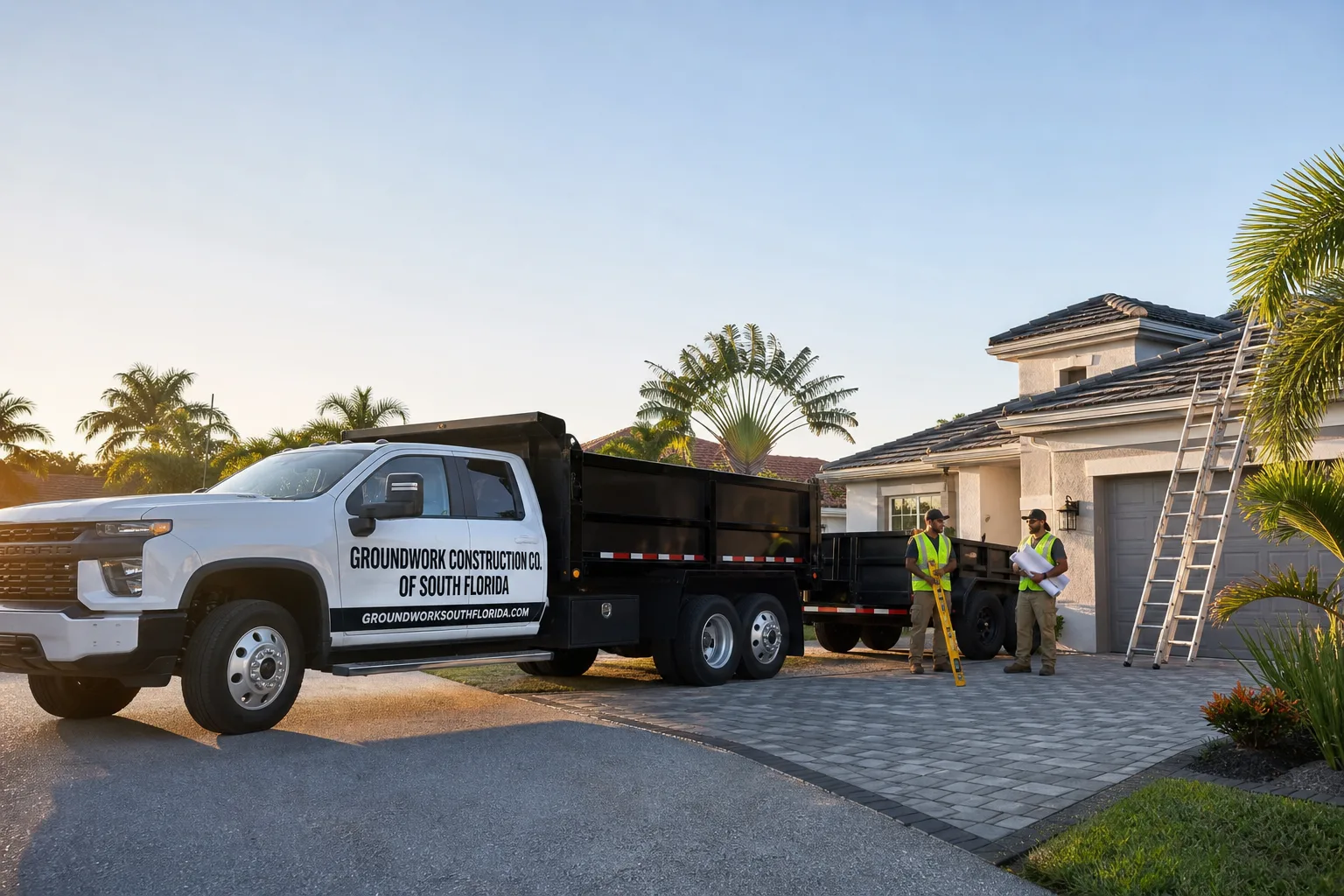
How Much Does a New Detached ADU Cost in Miami Beach?
A new detached ADU in Miami Beach typically runs $90,000-$220,000 and takes 4-7 months from permit approval to final inspection, depending on whether you choose prefab delivery or traditional stick-built construction. Most homeowners in Miami Beach who call us at (844) 665-0162 are weighing a backyard cottage against selling and buying larger, and the ADU usually wins on monthly cost once rental income is factored. We’ll walk you through the build path that fits your lot, your budget, and the specific code pressures this island faces.
How We Build a New Detached ADU in Miami Beach - Start to Finish
We’ve learned that homeowners stay sane during an ADU project when they know exactly what’s happening and what they need to decide. Here’s how we sequence it.
Stage 1: Site survey and feasibility (Week 1-2)
We measure your lot coverage, check setbacks against Miami Beach’s zoning code, and verify utility access points. You’ll decide whether your priority is maximizing square footage or preserving yard space. We also pull a soil probe to confirm water table depth, which in Miami Beach often sits just 3-4 feet below grade and determines whether we can include any below-slab mechanicals.
Stage 2: Design development and permit package (Week 3-8)
You’ll choose between prefab delivery from partners like Abodu, Dvele, Mighty Buildings, or Boxabl, versus stick-built framed on-site. Prefab shortens this stage; stick-built gives more layout flexibility. We finalize structural drawings, MEP plans, and the HVHZ (High Velocity Hurricane Zone) opening schedule, every window and door must carry Miami-Dade NOA certification. Your decisions here: floor plan, exterior finish (stucco, James Hardie siding, or hybrid), and whether to match your main house or differentiate architecturally.
Stage 3: Foundation and rough construction (Week 9-16)
We pour an elevated slab or stem-wall foundation per current FEMA base flood elevation, which in Miami Beach often means building higher than your original home’s grade thanks to recent flood map revisions. Framing, roofing, and HVHZ-rated window/door installation follow. You’ll do a mid-rough walkthrough to confirm electrical outlet locations and any plumbing fixture placements before insulation and drywall close the walls.
Stage 4: Systems, finishes, and fixtures (Week 17-22)
HVAC mini-split placement, kitchenette or full kitchen build, bathroom rough-to-finish, and flooring. If you’re pairing this Home Additions & ADU in Miami Beach with interior work on the main house, our Home Additions & ADU crew coordinates the scheduling so you’re not living around two separate job sites. Many homeowners at this stage also ask about Kitchen Design & Layout in Miami Beach or Backsplash, Tile & Flooring in Miami Beach to unify the aesthetic between structures.
Stage 5: Final inspection and certificate of occupancy (Week 23-26)
Miami Beach building inspectors verify elevation compliance, HVHZ product documentation, and life safety systems. We don’t hand over keys until CO is issued. Total timeline from permit submission: typically 6-9 months, with prefab units landing on the shorter end.
The Build Choices That Actually Move Your Price
Every new detached ADU in Miami Beach forces a handful of real decisions. These aren’t upsells; they’re forks in the road that determine cost, durability, and how the space lives.
- Prefab unit vs. stick-built: Prefab from Abodu, Dvele, or Mighty Buildings runs faster and often lands in the $90,000-$140,000 range delivered and set, but you’re choosing from predetermined floor plans. Stick-built starts around $110,000 and climbs based on custom square footage and finish level, yet it lets you match existing architecture or squeeze onto an irregular lot.
- Foundation type: Elevated stem-wall on fill is standard for flood compliance and adds $8,000-$15,000 over a basic mainland slab, but it’s non-negotiable in most Miami Beach zones. Some South Beach lots with the water table inches below grade require additional dewatering during pour.
- Exterior finish system: Traditional stucco with acrylic finish matches most Miami Beach housing stock and handles salt air reasonably well with proper sealing. James Hardie fiber-cement siding resists chloride-driven spalling better long-term but costs 15-20% more installed. We’ve seen both fail when specified cheaply; the difference is in the detail work at penetrations and flashings.
- Kitchen and bath scope: Wet bar with mini-fridge and microwave keeps the ADU under $10,000 for the kitchen zone. Full kitchen with KraftMaid or Wellborn cabinetry, quartz counters, and standard appliances pushes that to $18,000-$28,000. Same spread for bathrooms: 3-piece wet bath versus walk-in shower with vanity and storage.
- Utility connections vs. independent systems: Tying into your main house’s electrical panel and sewer lateral is cheaper upfront but may trigger a service upgrade. Separate meter and septic or packaged treatment unit adds $12,000-$20,000 but enables true rental independence.
What New Detached ADU Costs in Miami Beach, FL
In the Miami Beach market, a new detached ADU typically costs between $90,000 and $220,000. That’s a wide span because the job changes dramatically based on five factors:
Size and footprint: A 400-square-foot studio cottage with a kitchenette sits at the low end. A 900-square-foot two-bedroom with full kitchen, laundry, and covered entry pushes toward the top. Miami Beach’s lot coverage limits often cap you before your budget does, so maximum legal size is usually the first constraint we hit.
Existing site conditions: Flat, dry lots in North Beach (33141) with clear utility access are straightforward. Properties in South Beach where the original grade now sits 1-2 feet below the raised street level require regrading, new ADA-compliant ramps, and sometimes revised utility stub-ins. That reconciliation work can add $10,000-$25,000 before the first wall goes up.
Structural and MEP complexity: Relocating or extending electrical service, adding a separate water meter, or running sewer lines across an established yard each carry real cost. If your main panel is already maxed, a service upgrade runs $4,000-$8,000.
Material and fixture grade: Builder-grade LVP flooring, stock cabinets, and standard appliances keep finishes tight. Stepping up to Cambria quartz counters, impact-rated PGT windows, or a standing-seam metal roof moves the needle proportionally. We quote three finish tiers so you’re choosing, not guessing.
Permit scope and review cycles: Miami Beach’s building department is thorough, especially for detached structures in flood zones. Plan review for a new detached ADU typically takes 6-10 weeks, and any revision restarts the clock. We front-load drawing quality to avoid this, but it’s a timeline reality that affects carrying costs.
Our written estimates include architectural plans, structural engineering, permit fees, foundation, framing, MEP rough-in, insulation, drywall, flooring, kitchen and bath fixtures, interior and exterior finishes, and final cleanup. What typically isn’t included: separate utility connection fees charged by the city or utility directly, landscape restoration beyond basic grading, and furniture or window treatments.
What Miami Beach Specifically Does to This Job
Miami Beach is a barrier island averaging roughly 4 feet above sea level, flanked by salt water on both the Atlantic and Biscayne Bay sides. That geography creates a construction environment no mainland Miami contractor automatically understands. Every new detached ADU here operates at the intersection of three pressures.
First, the High Velocity Hurricane Zone. Miami-Dade County mandates NOA-certified products for every opening, window, door, and skylight. We specify Andersen, Pella, or PGT impact-rated lines as standard; non-certified products fail inspection and get red-tagged. Second, chronic chloride-driven concrete spalling from omnidirectional salt air means rebar protection and concrete mix design matter more than on the mainland. We’ve opened foundations on Mid-Beach MiMo-era properties where rebar was actively corroding within 15 years of original pour. Third, the city’s ongoing “Miami Beach Rising Above” program has raised road grades 1-2 feet across South Beach and parts of Mid-Beach, leaving original building entrances and utility stubs below new street level. Contractors doing exterior work routinely discover they must reconcile as-built elevations against a streetscape that no longer matches permitted drawings. That reconciliation is now standard in our site survey protocol for any new detached ADU in Miami Beach.
The housing stock we most often work alongside runs from pre-WWII Art Deco structures in South Beach, many protected by the Miami Beach Historic Preservation Board, to 1950s-60s MiMo buildings in the 33140 and 33141 ZIP codes. If your main house is a designated historic structure, the board may require that your ADU’s exterior finish, window proportions, or roofline harmonize with the primary building. We handle that submittal as part of our permit package, but it adds 3-4 weeks to approval time.
Water table reality also shapes what we can build. Excavation for utilities or foundation work quickly encounters groundwater, ruling out basements, crawl spaces with below-grade mechanicals, or any slab work that depends on staying dry. We design accordingly, elevating mechanicals into the conditioned space or using pier foundations where soil conditions warrant.
Serving Miami Beach, FL - Our Local Coverage Area
We’re based in the Miami Beach area and know this community well. Use the map below to see our service coverage - if you’re nearby, we can almost certainly help.
Frequently Asked - New Detached ADU in Miami Beach
From permit approval to certificate of occupancy, expect 4-7 months for prefab delivery and 6-9 months for stick-built construction. Miami Beach’s plan review typically adds 6-10 weeks before we can break ground, and historic district or HOA approvals may extend that. Call (844) 665-0162 and we’ll check your property’s specific timeline based on zoning and any overlay districts.
Yes, absolutely. Miami Beach requires full building permits, structural engineering stamps, and flood elevation compliance for every new detached ADU. You’ll also need Miami-Dade NOA-certified impact-rated openings and, if your property is in a historic district, Preservation Board approval for exterior design. We manage the entire permit package as part of our scope.
Often yes, but it depends on your existing service capacity. Many Miami Beach homes have 150-amp panels that can’t handle an additional dwelling load without an upgrade. We assess this during our initial site survey and quote any necessary electrical work separately so you’re not surprised mid-project.
The lowest-cost path is typically a compact prefab unit, around 400 square feet, with a kitchenette rather than full kitchen, tied into your existing utilities without a separate meter. That configuration usually lands near $90,000. Cutting below that requires compromising on HVHZ compliance or flood elevation, neither of which is legal or advisable here. Call (844) 665-0162 for a free estimate on your specific lot.
Groundwork provides a workmanship warranty on all construction, and the materials we install carry their own manufacturer warranties, one year on labor is standard, with extended structural coverage available. Specific terms depend on finish selections and build method; we’ll detail this in your written proposal before any work begins.
Ready to Talk Through Your Lot?
A new detached ADU in Miami Beach is a significant investment, but it’s also one of the few ways to add real square footage and rental income on a barrier island where land isn’t getting any cheaper. Call Groundwork Construction Co. at (844) 665-0162 to schedule a free on-site estimate. Raymond Estevez or a senior project manager will walk your property, confirm feasibility, and deliver a written proposal with real numbers, real timelines, and the specific build path that fits your situation.
Written by Raymond Estevez, Owner at Groundwork Construction Co., serving Miami Beach and South Florida.