
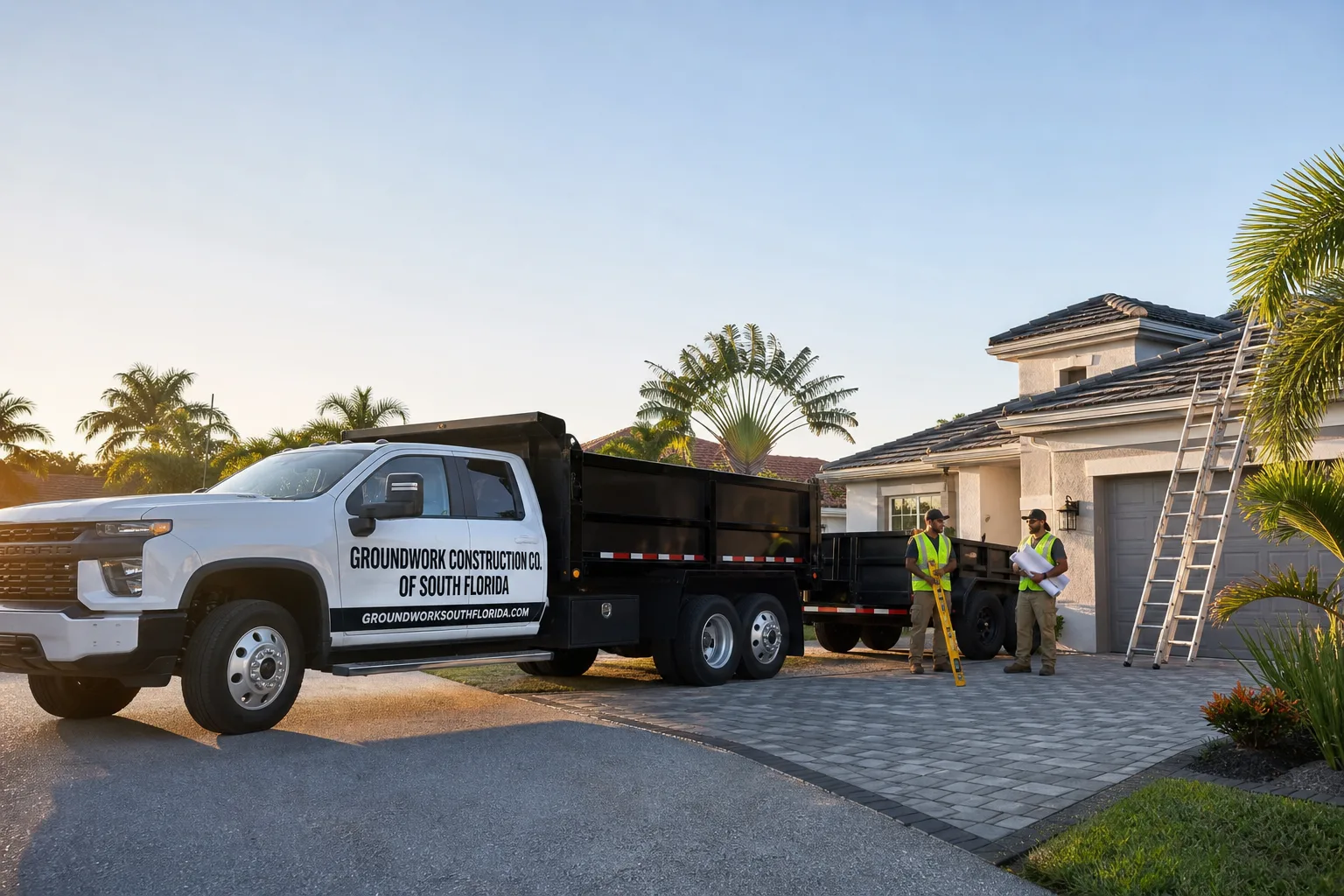
How Much Do Paver Driveways Cost in The Acreage, and How Long Does Installation Take?
Paver driveway installation in The Acreage typically runs $7,000-$18,000 for a standard residential project, with most installations completed in 4 to 7 business days from permit approval. You’ll choose between concrete pavers in different thicknesses, textures, and edge styles, and the job includes full removal of your existing surface, graded base preparation, and sand-set finishing. Call (844) 665-0162 to schedule a free on-site estimate and we’ll measure your exact driveway dimensions, check access for our equipment, and give you a written quote with line-item pricing.
How We Install Paver Driveways - Start to Finish
We’ve built paver driveways across The Acreage’s 1.25-acre lots long enough to know that the rural access, private well locations, and seasonal water table all affect how we stage materials and sequence the work. Here’s what actually happens:
Day 1: Layout and utility verification. We mark the driveway perimeter with spray paint and stakes, then verify the location of your well head, septic drain field, and any buried electrical runs to outbuildings. In The Acreage, well casings often sit within 15 feet of the driveway edge, so we confirm setback distances before the first shovel hits dirt. You’ll decide at this stage whether to keep your existing driveway footprint or expand toward the property line.
Day 1-2: Demolition and haul-off. We break out existing concrete, asphalt, or shell and load it into dump trailers. Because The Acreage properties have long driveways - often 80 to 150 linear feet from road to house - this phase can take a full day or two depending on material thickness and whether we need to protect mature oak or palm root systems along the edges.
Day 2-3: Excavation and base prep. We cut to 8-10 inches below finished grade, then bring in crushed concrete or limerock base in lifts, compacting each layer with a plate compactor or roller. The Acreage’s high water table during wet season means we sometimes hit saturated soil; if that happens, we’ll bring in additional fill to raise the working plane and ensure stable bearing. You’ll approve the base depth and material type before we proceed.
Day 3-5: Bedding sand, paver laying, and edge restraint. We screed a 1-inch bedding sand layer, then lay pavers in your chosen pattern - herringbone for the strongest interlock, running bond for a cleaner linear look, or basketweave for traditional estates. Edge restraint goes in with steel or concrete spiking. You’ll walk the pattern with us before we cut border pieces, since this is your last chance to adjust.
Day 5-7: Compaction, joint sand, and final cleanup. We vibrate the pavers into the bedding layer, sweep polymeric joint sand into the gaps, and compact again to lock everything. Then we wash down, remove all staging materials, and do a final grade check for drainage away from your home’s slab and your septic drain field. We schedule your Palm Beach County inspection if required, though many paver-over-dirt replacements in unincorporated areas fall under maintenance thresholds.
This process is part of a full Driveway & Pavers in The Acreage project scope when homeowners want to coordinate walkways, patios, or parking pads at the same time.
The Paver Options You’ll Actually Choose Between
Not all pavers suit The Acreage’s rural estate character and the heavy loads from farm equipment, RVs, and work trucks that many homeowners park here. These are the real decisions:
- Thickness: 60mm vs. 80mm concrete pavers. Standard 60mm pavers handle passenger vehicles fine and cost less per square foot. If you’re parking a one-ton truck, tractor, or equipment trailer regularly, 80mm pavers with a deeper base are worth the upgrade. We stock both through our Belgard, Unilock, and Tremron partnerships.
- Texture: smooth, tumbled, or slate-face. Smooth finishes clean easily but show oil stains from work vehicles. Tumbled pavers have rounded edges that hide wear and suit older CBS homes built in the 1980s and 1990s. Slate-face or beveled-edge styles read more formal and pair well with stucco exteriors that have been updated.
- Color: warm tones vs. cool greys. The Acreage’s limestone and sandy soils make warm tan, buff, and terracotta pavers look established faster. Cool greys and charcoals work if your home has a modern repaint or metal roof, but they show dust and pollen more visibly during dry season.
- Pattern: herringbone vs. running bond vs. random. Herringbone distributes point loads best - ideal if you turn heavy trailers. Running bond is faster to lay and costs slightly less in labor. Random three-piece patterns look high-end but require more cutting waste, adding 8-12% to material quantities.
- Edge treatment: soldier course vs. permeable border. A contrasting soldier course (single border row) frames the driveway formally. Permeable paver borders or open-graded stone strips help with drainage on properties where water pools near the garage apron during summer storms.
Our Driveway & Pavers crew brings sample boards to your property so you can see colors against your home’s stucco and roof in actual daylight, not a showroom’s LEDs.
What Paver Driveways Cost in The Acreage, FL
| Cost Factor | Low-End Range | High-End Range |
|---|---|---|
| Basic paver driveway (1,000 sq ft, 60mm, standard base) | $7,000 | $10,500 |
| Mid-grade driveway (1,200 sq ft, 80mm, decorative border) | $10,500 | $14,000 |
| Premium installation (1,500+ sq ft, permeable base, custom pattern) | $14,000 | $18,000 |
Five variables push your number up or down:
Existing surface condition. Thick concrete with rebar costs more to break out than thin asphalt or shell. If your current driveway was poured as part of the home’s original 1980s or 1990s construction, it’s often 6 inches of steel-reinforced concrete that takes a full extra day to remove.
Driveway size and geometry. Straight rectangles are efficient. Curves, radius turns, and multiple parking bays add cutting labor and waste. The Acreage’s large lots sometimes tempt homeowners to oversize; we help you find the footprint that serves your actual use without inflating cost.
Base requirements. Standard 8-inch base works for most properties. If we hit organic peat or saturated soil near the Loxahatchee Slough’s influence zone, we may need geotextile fabric and additional fill, adding $800-$2,200.
Material grade and brand. Entry-level concrete pavers from regional manufacturers run $3-$5 per square foot material-only. Premium Belgard or Techo-Bloc products with lifetime warranties run $6-$9. The difference is colorfastness, structural warranty terms, and available sizes.
Access and staging. Long driveways mean more base material to transport and more paver pallets to position. If we can’t get our skid-steer within 50 feet of the work area, labor hours increase for hand-wheelbarrow work.
A written estimate from Groundwork includes demolition, base material and compaction, pavers and edge restraint, joint sand, and cleanup. It does not include permit fees (if required), tree or root removal outside the driveway footprint, or electrical work for relocated landscape lighting.
What The Acreage’s Lots and Rules Mean for Your Driveway
The Acreage isn’t like Royal Palm Beach or Wellington, and your paver project will hit constraints those cities don’t have. Because every lot here sits on 1.25 acres with private wells and septic systems, Palm Beach County enforces strict setbacks between structures, well casings, and drain fields. We’ve seen homeowners who wanted to widen their driveway toward the property line discover their septic drain field runs closer to the surface than expected, forcing a redesign or - in one case on 43rd Street - a drain field relocation that added three weeks and significant cost.
The unincorporated status means all permits pull through Palm Beach County’s West Palm Beach office, not a local municipality. Inspectors cover the full rural grid from Loxahatchee to the western county line, and drive times between scattered properties are long. Locals know to schedule inspections for Monday or Tuesday; a Thursday or Friday inspection request often gets pushed to the following week, stalling your project by days. We build this scheduling reality into our timeline so you’re not surprised.
The housing stock matters too. Most homes in The Acreage are CBS construction from the mid-1980s through early 2000s, now hitting the age where original driveways are cracked, settled, or poorly drained. We regularly see driveways poured without expansion joints or with inadequate base prep that has heaved after 20-30 Florida wet seasons. The good news: these homes have the setback space and lot width for generous paver layouts that newer subdivisions can’t match.
Homeowners often pair a new driveway with Garage Conversion ADU in The Acreage projects, since the same equipment access and staging area serves both jobs. Others coordinate with ADU Design & Permitting in The Acreage to ensure the driveway footprint accounts for future additional dwelling unit parking requirements.
Serving The Acreage, FL - Our Local Coverage Area
We’re based in the The Acreage area and know this community well. Use the map below to see our service coverage - if you’re nearby, we can almost certainly help.
Frequently Asked - Paver Driveways in The Acreage
Most paver driveway installations take 4 to 7 business days after permit approval, assuming normal weather and access. Longer driveways on 1.25-acre lots, or jobs requiring drain field protection, can extend to 10 days. Call (844) 665-0162 and we’ll give you a specific timeline after seeing your property.
Replacement of an existing driveway surface with pavers typically does not require a permit in unincorporated Palm Beach County, but expansion of the footprint or changes to drainage discharge may. We verify your specific scope against county requirements before starting and pull any needed permits ourselves. For an exact answer on your property, call (844) 665-0162 - estimates are free.
In nearly all cases, yes. We design the driveway layout to maintain required setbacks from well casings and septic drain fields, which is standard practice on The Acreage’s 1.25-acre lots. If your existing driveway already violates setbacks from a newer well installation, we’ll flag that during measurement and propose alternatives. Call (844) 665-0162 for a site evaluation.
Resurfacing with asphalt or a thin concrete overlay costs less upfront - typically $3,500-$9,000 for asphalt - but pavers last 25-40 years with proper base prep, while asphalt needs resealing every 3-5 years and replacement in 15-20. For homeowners planning to stay in their Acreage home long-term, pavers usually yield lower lifetime cost. We can quote both options so you can compare.
Our installation workmanship is warranted against settling, rutting, and joint sand loss for a period we specify in your written contract. The pavers themselves carry manufacturer warranties ranging from limited lifetime to 50 years depending on brand and product line - Belgard, Unilock, Tremron, and Techo-Bloc each have their own terms, which we explain when you select your material. We do not warranty against staining from vehicle fluids or damage from heavy equipment operated off the paved surface.
Get Your Free Paver Driveway Estimate in The Acreage
Call (844) 665-0162 to schedule a free on-site estimate for your paver driveway in The Acreage. Raymond Estevez or a member of our team will measure your existing surface, check access and setback constraints, bring paver samples matched to your home’s exterior, and deliver a written quote with line-item pricing within 48 hours. No deposit required to book, and we’ll work with your timeline - whether you’re ready to start next week or planning for dry season.
Written by Raymond Estevez, Owner at Groundwork Construction Co., serving The Acreage and Palm Beach County from our Fort Lauderdale headquarters.