
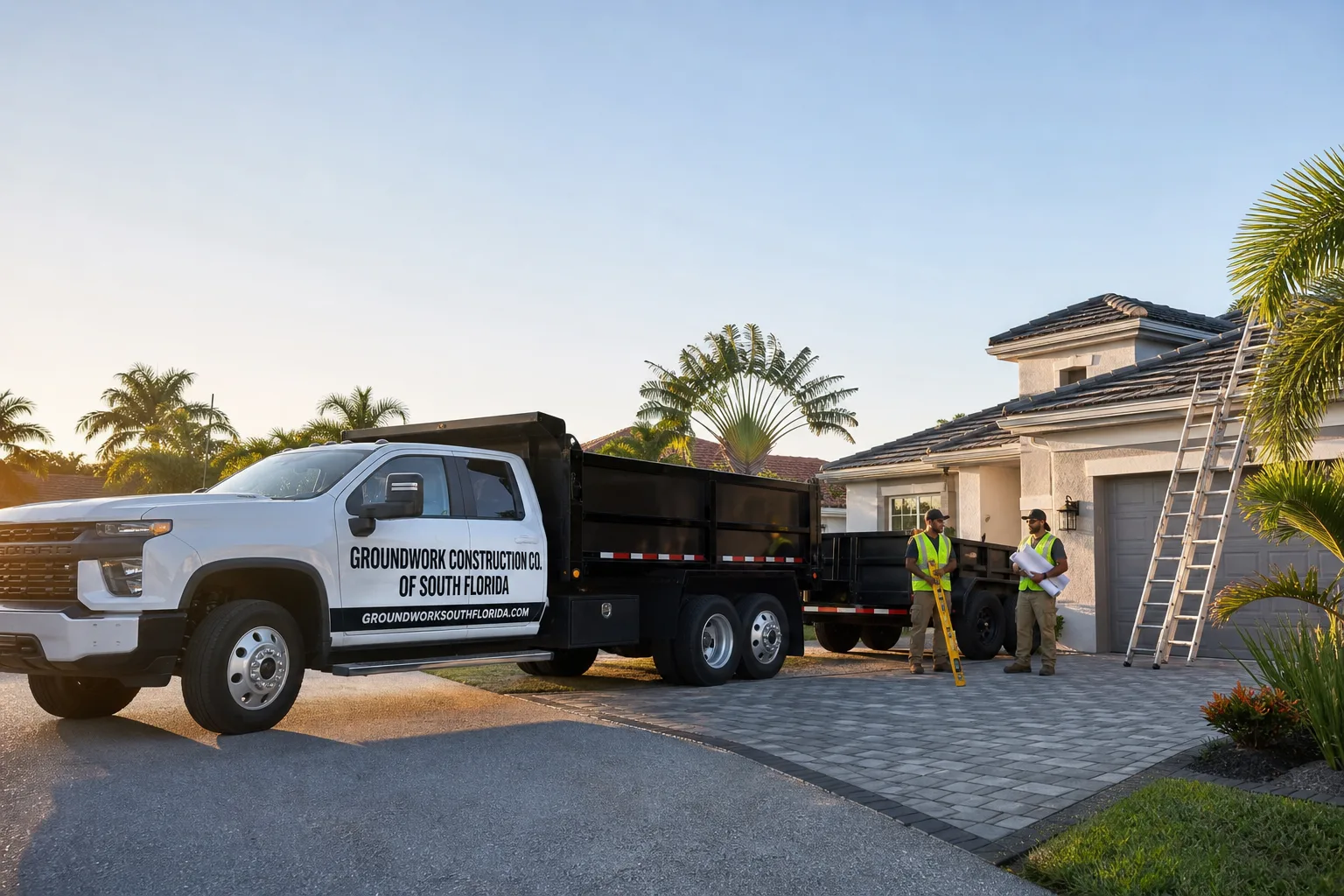
Roof Repair in Isle of Normandy: What It Costs and How Long It Takes
Roof repair in Isle of Normandy typically runs $400-$1,800 for most residential fixes, with same-week scheduling once we complete the on-site assessment. Most repairs our crew handles here are finished in one to three days, depending on how far the salt-driven deterioration has spread beneath the surface. Call (844) 665-0162 and we’ll walk your roof the same day you call, no obligation.
How We Handle Roof Repair From First Call to Final Nail
We’ve repaired enough roofs on this island to know the process is never identical, but the sequence stays predictable. Here’s what actually happens, and what you’ll need to decide at each point.
Stage 1: On-site assessment (Day 1, 45-90 minutes)
We walk the roof with you, photograph every compromised area, and probe beneath shingles or tiles where we suspect hidden moisture. On Isle of Normandy, we’re specifically checking for chloride corrosion at fasteners and anchor points, since the salt exposure here attacks metal from every direction, not just the bay-facing slope. You decide at this stage whether you want us to open up suspect areas for a deeper look, which adds $150-$300 to the diagnostic but eliminates surprises later.
Stage 2: Scope confirmation and material selection (Day 1-2)
We send you a written estimate with line-item breakdowns: demolition, decking repair if needed, underlayment, finish material, and flashing. You’ll choose between matching existing materials for a seamless patch or upgrading to a more resilient grade, particularly at valleys and penetrations where most Isle of Normandy leaks originate. If your home dates to the 1950s-1970s, we’ll flag whether the repair triggers Miami-Dade’s requirement to bring roof-deck connections up to post-Andrew wind standards.
Stage 3: Material staging (Day before work begins)
Because the Normandy Drive Causeway is the island’s only vehicle access, we pre-stage all materials on your property the afternoon before work starts. A stalled concrete truck or crane rig on that single bridge can kill an entire day with no alternate route. This discipline costs us nothing extra but saves you from weather exposure if a delivery gets stranded off-island.
Stage 4: Tear-off, repair, and dry-in (Day 1-2 of construction)
We remove damaged sections to solid substrate, replace any rotted or delaminated decking, install ice-and-water shield at critical valleys, and lay underlayment. On older CBS homes here, we often find the original roof was fastened directly to concrete block parapets with corroded anchors; we replace these with stainless or hot-dip galvanized hardware rated for salt-air exposure. The roof stays watertight each night before finish materials go on.
Stage 5: Finish installation and inspection (Final day)
We install your chosen shingles, tiles, or metal panels, reset or replace flashing, and seal all penetrations. If the repair exceeds 25% of the roof area, Miami-Dade requires a final inspection, which we schedule and meet on your behalf. You do a walk-through with our foreman, we photograph the completed work for your records, and the job is closed out with warranty documentation.
The Repair Decisions That Actually Matter
- Patch versus section replacement: A localized patch runs $400-$800 and works when damage is confined to one slope or a few square feet. Section replacement, typically $1,200-$1,800, is the smarter call when we find multiple failure points or degraded underlayment beneath - common on Isle of Normandy roofs where salt has been working at seams for decades.
- Underlayment grade: Standard felt paper is code-minimum and costs less upfront. Synthetic underlayment adds $200-$400 to a typical repair but outlasts felt in our humid, salt-laden environment and doesn’t tear during installation the way felt does in afternoon thunderstorms.
- Fastener material: Galvanized nails meet code; stainless steel or copper fasteners add 15-20% to hardware costs but won’t corrode out from under your repair in five years the way standard fasteners can on this island.
- Flashing approach: Step flashing at walls and chimneys can be reused if intact, but on homes from the 1960s and earlier we usually recommend replacement with new copper or coated steel - the original flashing is often paper-thin and fatigued from thermal cycling.
- Decking substrate if exposed: CDX plywood is standard; OSB costs slightly less but swells at edges when moisture gets in. On a roof surrounded by tidal water with chronic humidity, we typically steer clients toward real plywood.
What Roof Repair Costs in Isle of Normandy, FL
| Repair Scope | Typical Range |
|---|---|
| Minor leak repair / flashing fix | $400-$700 |
| Shingle patch, 1-2 squares | $600-$1,100 |
| Section replacement with decking repair | $1,200-$1,800 |
| Tile repair with underlayment replacement | $800-$2,500 |
Five factors push your job toward the low or high end:
1. Accessible versus concealed damage. What shows as a small ceiling stain often masks saturated decking or corroded fasteners. We can’t price the hidden scope until we open it up, which is why our estimates include a “probable range” with a not-to-exceed cap.
2. Roof pitch and height. Steeper roofs require additional safety rigging and slow the crew down. Single-story homes on Isle of Normandy’s flat terrain are straightforward; two-story builds with parapet walls common in the 1950s-60s stock add labor hours.
3. Material matching requirements. Discontinued tile profiles or custom-color shingles from decades past may require sourcing from salvage yards or accepting a visible contrast patch. We discuss this openly before you commit.
4. Code-triggered upgrades. If your repair crosses the 25% threshold, Miami-Dade requires current wind-connection standards, which can add $300-$800 in hardware and labor but protects your structure and satisfies your insurer.
5. Timing and weather holds. Summer afternoon thunderstorms can pause work; we build this into scheduling but won’t rush a dry-in. The estimate reflects realistic calendar days, not just labor hours.
Our written estimates include all labor, materials, dumpster or debris hauling, and permit fees if triggered. They do not include interior drywall or paint repair, gutter realignment, or unrelated issues discovered during the repair, though we’ll photograph and flag anything we see.
Why Isle of Normandy Roofs Fail Differently Than Mainland Miami
The housing stock here is almost entirely concrete block and stucco homes built between the late 1940s and 1970s, long before Hurricane Andrew rewrote Miami-Dade’s building codes. We regularly open roofs on Normandy Shores and the interior streets to find no hurricane straps, minimal roof-to-wall connections, and original fasteners that have been breathing salt air for fifty-plus years. The chloride-driven corrosion attacks rebar in the block, metal connectors, and even the galvanized nails holding your shingles, from every side, because Indian Creek and Biscayne Bay surround the entire island.
The water table sits essentially at grade year-round, so any moisture that gets past your roofing layer finds nowhere to dissipate. We see more accelerated sheathing decay here than in North Bay Village or Miami Shores, where at least some lots have modest elevation relief. And the single-point access via Normandy Drive means every repair job requires logistics planning that mainland crews rarely consider, pre-staging materials to avoid stranding a crew mid-job.
Homeowners often pair exterior envelope work with Window Installation in Isle of Normandy or Door Installation in Isle of Normandy to bring the whole structure up to current standards in one coordinated project. If you’re considering a broader scope, we can discuss how Roofing in Isle of Normandy fits into a full exterior upgrade.
Serving Isle of Normandy, FL - Our Local Coverage Area
We’re based in the Isle of Normandy area and know this community well. Use the map below to see our service coverage - if you’re nearby, we can almost certainly help.
Frequently Asked - Roof Repair in Isle of Normandy
Most repairs we complete in one to three working days, with the first day dedicated to assessment and material staging. Jobs requiring decking replacement or code-triggered wind-connection upgrades add a day. Call (844) 665-0162 for a timeline based on your specific damage.
Permits are required when the repair exceeds 25% of the total roof area within any twelve-month period, per Miami-Dade County rules. Smaller patches and flashing repairs typically do not trigger permitting, but we verify threshold status during assessment and handle all paperwork if required. For questions about permitting on your specific street, contact us and we’ll confirm.
In most cases, yes, we work around existing penetrations. Relocation is only necessary when the penetration itself has failed or when a code upgrade requires repositioning for proper flashing geometry. We’ll tell you definitively during the assessment, not midway through the job.
Repair is the economical choice when damage is localized and the remaining roof has solid structural life, typically under fifteen years of age. If your Isle of Normandy home has widespread granular loss, multiple previous patches, or original underlayment from the 1970s or earlier, replacement becomes the better long-term investment. We give honest guidance either way, no pressure. Call (844) 665-0162 and we’ll assess which path makes sense for your budget and timeline.
Our workmanship warranty covers the repaired area against installation defects, with material warranties passing through from the manufacturer, GAF, CertainTeed, Owens Corning, or whichever brand we install. The exact term depends on the material grade you select; we document this clearly in your estimate before you sign.
Get an On-Site Assessment for Your Isle of Normandy Roof
We’ll walk your roof, show you what we’re seeing, and give you a written estimate with real numbers, no deposit required to get started. Call (844) 665-0162 to schedule. Raymond Estevez or a member of our Roofing crew will meet you on-site, typically within 24 hours for Isle of Normandy properties.
Written by Raymond Estevez, Owner at Groundwork Construction Co., serving Isle of Normandy and South Florida.