
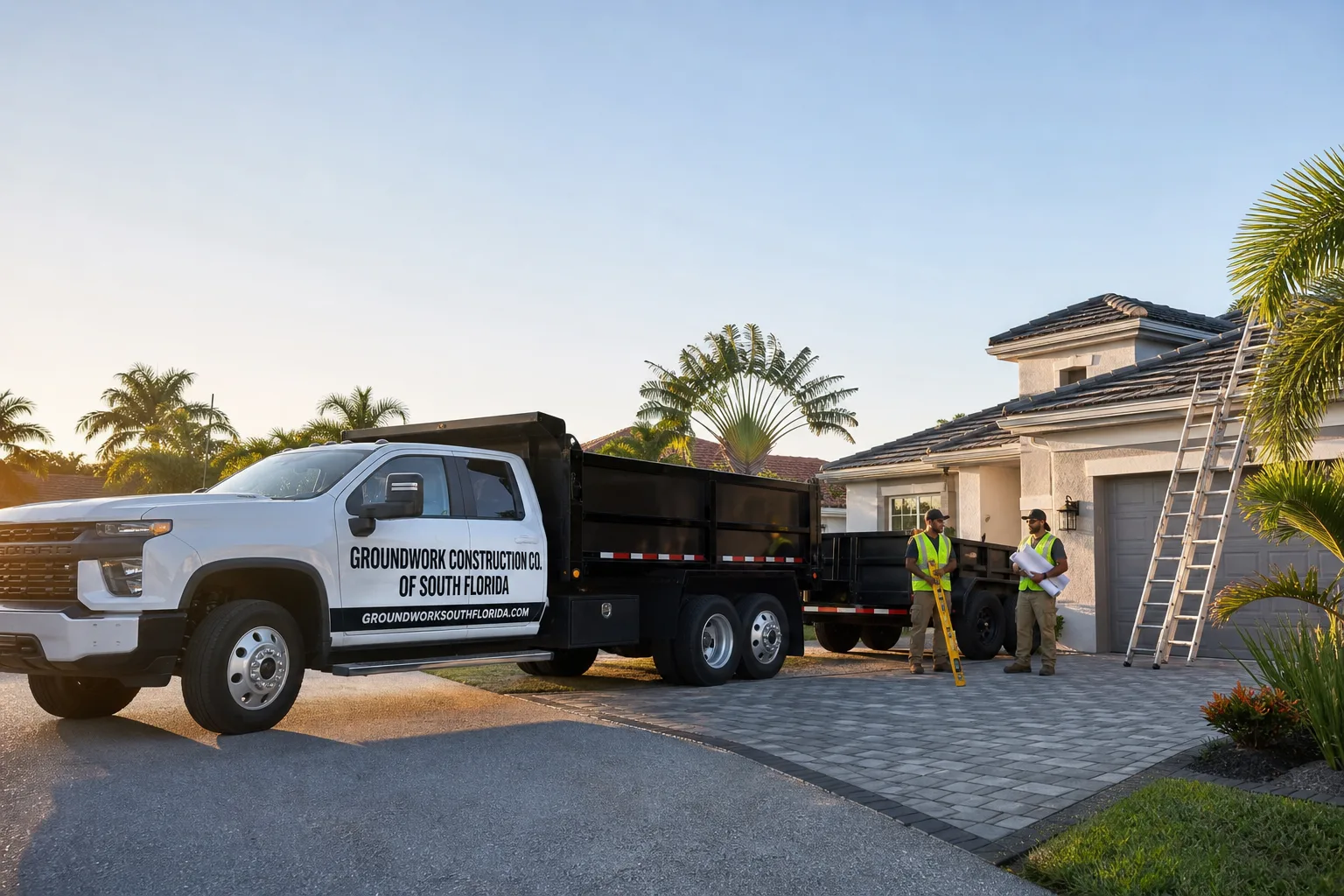
Specialty Roofing in Richmond West, FL - What’s Involved, What It Costs, and How Soon We Can Start
Specialty roofing in Richmond West covers wind-rated and impact-resistant systems engineered for Miami-Dade’s High Velocity Hurricane Zone, typically completed in 3 to 5 days for residential retrofits and running $8,000-$20,000 depending on scope and existing deck condition. Because we’re working within HVHZ code requirements, every product must carry a Miami-Dade Notice of Acceptance - no exceptions, no shortcuts. Call (844) 665-0162 and we’ll walk through your roof’s current wind-mitigation status and schedule a free on-site estimate, usually within 48 hours.
How We Approach Specialty Roofing from First Call to Final Inspection
We’ve refined our process across hundreds of HVHZ projects, and specialty roofing in Richmond West demands tighter sequencing than standard re-roofs because of the NOA documentation and third-party inspection requirements.
Stage 1: On-site assessment and wind-mitigation audit (Day 1, 2-3 hours)
We climb, we photograph, we measure. Our crew documents existing roof-deck fastening patterns, clip or strap types, and whether your home is pre- or post-Andrew construction. You’ll receive a written assessment of what needs upgrading to meet current HVHZ standards, not just what looks worn. This is where you decide whether to pursue a full wind-mitigation retrofit or address only the roof cover itself.
Stage 2: Product selection and NOA verification (Days 2-4, homeowner-led)
We pull Miami-Dade NOA certificates for every product under consideration - underlayment, fasteners, edge metal, and the primary roof cover. For specialty roofing in Richmond West, we typically present options across GAF, CertainTeed, Owens Corning, and Atlas lines, each with their own HVHZ-approved assemblies. You choose the aesthetic and performance tier; we verify the paperwork.
Stage 3: Permit submission and scheduling (Days 5-10, weather-dependent)
We file with Miami-Dade Building Department using the specific NOA numbers matched to your selections. Specialty roofing permits here trigger a mandatory roofing affidavit and often a truss/structural inspection if we’re upgrading fasteners. We don’t start demo until permit approval and a weather window align - June through October rains make this a real constraint.
Stage 4: Tear-off, deck prep, and installation (Days 11-14 for most homes)
Removal exposes what estimates can’t predict: soft decking, insufficient fastening, or prior layers that violate code. We repair or replace plywood, install enhanced fasteners at 6-inch centers in the field and 4-inch at perimeters per HVHZ, then lay the approved assembly. A Miami-Dade inspector visits at dry-in and at final.
Stage 5: Final inspection, documentation, and wind-mitigation form (Day 15+)
We don’t consider the job closed until you hold the inspection passed sticker and a completed Uniform Mitigation Verification form for your insurance carrier. Many Richmond West homeowners see premium reductions of 20-40% with proper documentation.
The Material and System Choices You’ll Actually Decide Between
Specialty roofing in Richmond West isn’t about picking a color. You’re selecting an engineered assembly tested to survive 170+ mph wind gusts. Here’s what the decision tree looks like:
- Impact-rated shingle vs. standing seam metal vs. tile assembly: Shingle systems (GAF Timberline ArmorShield II, CertainTeed NorthGate) run lower in material cost and install faster, but carry shorter design lives in South Florida’s UV exposure. Standing seam metal (26- or 24-gauge, Kynar 500 finish) costs more upfront, reflects heat aggressively, and sheds rain during our torrential summer cells - but requires precise thermal expansion detailing. Tile assemblies (S-shape or flat profile, concrete or clay) offer the longest service life and strongest resale association in Miami-Dade architecture, yet add significant dead load your structure must be verified to carry.
- Self-adhered vs. mechanically attached underlayment: Peel-and-stick membranes (Grace Ice & Water Shield, Owens Corning WeatherLock) seal around every fastener penetration and are required by many insurers for full wind-mitigation credit. Mechanically attached synthetics cost less and install faster, but depend on proper overlap and cap nail density - a detail we see failed by less meticulous crews.
- Standard vs. enhanced edge metal and flashing: HVHZ requires minimum 26-gauge edge metal with specific fastening patterns. Upgrading to continuous cleat systems and custom-formed valleys adds labor cost but eliminates the most common leak points we find in 33177 homes after five years of monsoon cycling.
- Fastener density and pattern: This isn’t optional - it’s code - but some assemblies allow reduced fastening in specific zones while others require maximum density everywhere. We specify the conservative pattern unless your structural engineer signs off otherwise.
Homeowners often pair specialty roofing with Sliding & Patio Doors in Richmond West to complete their wind-mitigation envelope under one contractor relationship.
What Specialty Roofing Costs in Richmond West, FL
| Scope Level | Typical Range | What Drives It |
|---|---|---|
| Specialty roofing, standard HVHZ shingle assembly | $8,000 - $14,000 | 1,500-2,500 sq ft, sound decking, no structural upgrades |
| Specialty roofing, impact metal or tile assembly | $14,000 - $20,000 | Premium materials, enhanced fastening, complex geometry |
| Deck replacement or structural reinforcement | Add $2,000 - $6,000 | Rot, insufficient nailing, pre-Andrew clip absence |
Five variables push your number up or down:
Existing roof layers and deck condition: Two layers of old shingles add tear-off labor and disposal. Soft or improperly fastened plywood requires replacement - common in 1970s-1980s Richmond West stock where 3/8-inch decking was standard.
Roof geometry and access: Hips and valleys multiply cutting and flashing time. Steep pitches require additional safety rigging. Homes with limited dumpster placement or mature oak canopy (common near SW 152nd Street corridors) add logistical complexity.
Wind-mitigation retrofit scope: Adding hurricane straps, upgrading clips, or sistering rafter tails extends timeline and labor but pays back in insurance savings and resale value.
Material tier and availability: Kynar-finished metal and imported clay tile carry longer lead times and higher per-square costs. We stock common HVHZ assemblies to avoid delay.
Seasonal timing: Dry-season scheduling (November through May) allows predictable progress. Rainy-season starts require built-in weather days and active site protection - real costs we price transparently.
A written estimate from Groundwork includes tear-off, disposal, deck repair as specified, approved assembly installation, permit fees, and final inspection coordination. It does not include interior drywall repair if water damage is discovered, gutter replacement (though we can quote it), or tree trimming for access - those are separate line items we identify during assessment.
Why Richmond West Specifically Changes How We Build Your Roof
Specialty roofing in Richmond West operates under constraints no inland Florida market faces. This community sits in Miami-Dade’s High Velocity Hurricane Zone, the most stringent wind-resistance jurisdiction in the United States, where every roofing product must carry a Miami-Dade Notice of Acceptance - a county-specific approval that layers on top of Florida’s statewide Miami-Dade or Florida Product Approval system. Contractors who arrive with products holding only statewide approval face immediate permit rejection. We’ve seen it happen to out-of-area crews who estimated based on Orlando or Tampa assumptions.
The housing stock here tells its own story. Most 33177 homes were built between the late 1970s and early 1990s, meaning a significant share either fell to Hurricane Andrew and were rebuilt to the post-1992 code, or are surviving pre-Andrew structures now due for wind-mitigation retrofits. When we inspect attics in Richmond West, we regularly find original three-nail shingles, 3/8-inch roof decking, and missing hurricane straps - assemblies that won’t pass current inspection and won’t qualify for insurance discounts.
The limestone reality matters too. Miami oolite sits inches below grade across this area, which doesn’t directly affect the roof but signals the construction culture: this is a market where code evolved through catastrophe, where every detail is load-tested, and where “good enough” failed catastrophically in 1992. We build accordingly.
Our Roofing in Richmond West page covers the full scope of what our Roofing crew handles across this Richmond West service area, from standard repairs to full replacements. Many homeowners pursuing specialty roofing are also considering Glass Railing Systems in Richmond West for balcony and stair upgrades as part of a comprehensive exterior renovation.
Serving Richmond West, FL - Our Local Coverage Area
We’re based in the Richmond West area and know this community well. Use the map below to see our service coverage - if you’re nearby, we can almost certainly help.
Frequently Asked - Specialty Roofing in Richmond West
Most residential specialty roofing projects in Richmond West take 3 to 5 days of active construction, with permit approval adding 5 to 10 business days beforehand. Timeline extends if we discover deck damage requiring replacement, or if Miami-Dade inspection scheduling hits backlog during post-storm periods. Call (844) 665-0162 - we can assess your specific roof and give you a firm schedule.
Yes, absolutely. Miami-Dade County requires a roofing permit for any roof cover replacement, and specialty roofing in the HVHZ triggers additional documentation: Miami-Dade NOA certificates for every product, a roofing contractor affidavit, and often a structural inspection if we’re upgrading fasteners or clips. We handle all permit filing and inspection scheduling as part of our scope.
In nearly all cases, yes. Specialty roofing is a roof-cover replacement that doesn’t penetrate interior systems. The exception is if your home has solar thermal panels, antenna mounts, or through-roof venting that needs rerouting - we’ll flag this during assessment and coordinate any necessary trades without you managing multiple contractors.
Specialty roofing in Richmond West typically runs $8,000-$20,000 compared to $5,000-$12,000 for basic re-roofing using non-HVHZ products. The gap covers NOA-compliant materials, enhanced fastening patterns, additional inspections, and the documentation your insurer requires for wind-mitigation credits. Many homeowners recover the difference within 3-5 years through reduced premiums.
Manufacturer material warranties range from 25 years to lifetime depending on the product tier you select - GAF, CertainTeed, Owens Corning, and Atlas each offer tiered coverage. Our workmanship warranty covers installation-specific issues for a period we specify in writing. The critical warranty document for Richmond West homeowners, though, is the passed inspection sticker and completed wind-mitigation form - that’s what your insurer values.
Ready to Talk Through Your Roof?
Specialty roofing in Richmond West is too code-intensive to leave to guesswork. We’ll come out, climb up, and show you exactly what your roof needs to meet HVHZ standards and qualify for insurance savings. The estimate is free, the advice is specific to your home, and there’s no pressure to move forward until you’re ready. Call (844) 665-0162 to schedule.
Written by Raymond Estevez, Owner at Groundwork Construction Co., serving Richmond West and South Florida homeowners with full-scope residential construction since establishing our Fort Lauderdale base.