
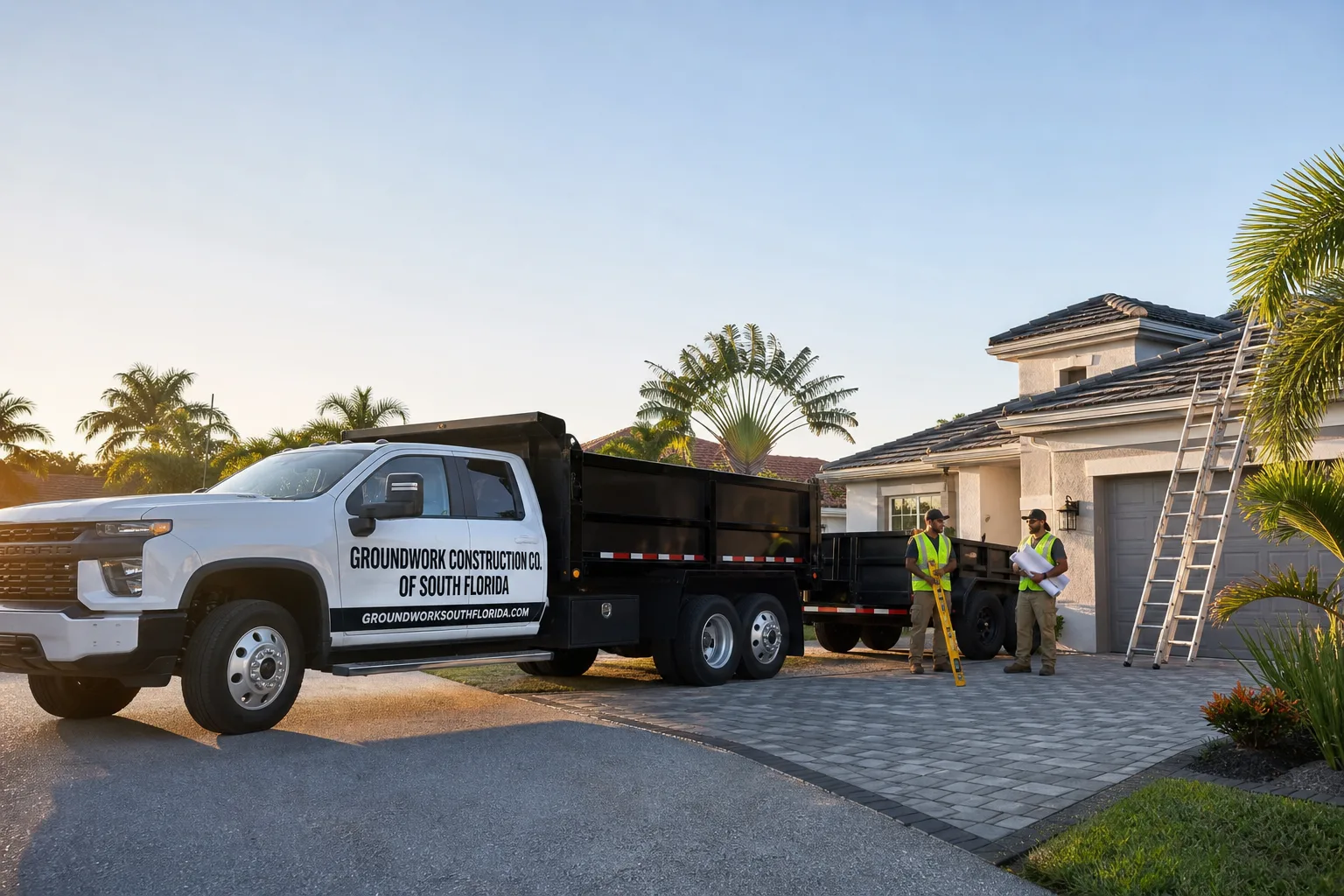
Specialty Roofing in West Little River - Scope, Timeline, and Cost
Specialty roofing in West Little River covers non-standard roof systems: flat and low-slope built-up roofs, modified bitumen, TPO and PVC single-ply membranes, and custom metal architectural installations on homes that don’t fit conventional shingle profiles. Most projects we handle in the 33147 ZIP take 3 to 7 working days from tear-off to final county inspection, depending on substrate condition and whether we’re bringing an aging CBS ranch up to current Miami-Dade HVHZ code. Budgets typically run $12,000-$35,000 for residential specialty systems in this market, with the final number driven by membrane grade, insulation depth, and how much of the original decking needs replacement after decades of Florida humidity. Call (844) 665-0162 and we’ll walk your roof with you, same week.
How We Handle a Specialty Roofing Job from Start to Finish
We’ve learned that specialty roofing in West Little River goes smoother when homeowners know what’s coming and when they need to make a decision. Here’s how we stage it.
Day 1: Tear-off and substrate inspection
We strip to the deck on flat and low-slope systems, which is most of what we see on 1950s-1970s CBS ranches around West Little River. The plywood or plank decking beneath a built-up roof that’s been patched three times is almost always the real story. We map every soft spot, measure actual deflection, and photograph the condition. You decide here: spot-replace rotted sections or re-deck entirely. Spot work saves $1,500-$3,000 but leaves seams between old and new wood; full re-decking adds a day and gives you a uniform substrate with full manufacturer warranty coverage. We need your call by end of day so we can order material for day 3.
Day 2: Structural prep and HVHZ detailing
This is where West Little River’s unincorporated status matters. Miami-Dade County inspectors will check that new roof-to-wall connections meet current hurricane strap requirements, even on a re-roof. We install continuous load-path hardware where the existing 1960s framing has nothing or only toe-nails. If your fascia boards are punky from years of salt-laden humidity and backed-up scuppers, we replace them now. You don’t make a material choice today; you confirm whether we’re proceeding with the insulation upgrade we discussed in our estimate. Rigid ISO board over an unconditioned attic in a 1,000 sq ft ranch runs $2,000-$4,500 depending on R-value, and it’s the single biggest efficiency move you can make on these old slabs.
Days 3-5: Membrane or panel installation
For TPO and PVC single-ply, we mechanically fasten or fully adhere depending on wind-zone calculations and your preference. Mechanically attached goes faster and costs less; fully adhered handles higher wind uplift and gives cleaner aesthetics if you have parapet walls visible from the street. Modified bitumen gets torched down in two plies with granulated cap sheet. Custom standing seam or architectural metal gets field-measured, cut, and seamed. You made your material choice at contract; now you’re confirming color and any custom flashing details around existing vents or new penetrations.
Day 6: Detailing, edge metal, and water management
Flat roofs in West Little River fail at the edges and penetrations, never the field. We spend a full day on scupper boxes, overflow drains, counterflashing, and proper termination into existing gutters - or we add them if your 1960s install never had adequate drainage. The Miami Canal corridor’s near-sea-level drainage means standing water finds every gap. You review the work with our crew lead before we call for inspection.
Day 7: Miami-Dade County inspection and closeout
We schedule the county inspector through EPERMITS. They verify NOA documentation on every product we used, check strap and fastener patterns, and sign off or flag corrections. We’ve never had a specialty roofing job in West Little River fail inspection, but we’ve seen plenty of contractors get red-tagged on their first visit because they brought products without current Miami-Dade Notice of Acceptance paperwork. We handle the documentation; you get the passed inspection card and manufacturer warranty registrations.
The Material Options You’ll Actually Choose Between
- TPO white membrane (60 or 80 mil): The standard for residential flat re-roofs in South Florida. Reflective surface cuts cooling load on uninsulated CBS slabs. 60 mil runs thinner and cheaper; 80 mil gives longer warranty terms and better puncture resistance from foot traffic or fallen branches. Best for: homeowners who want predictable cost and strong manufacturer backing from GAF or Carlisle.
- PVC membrane: More flexible than TPO in cold snaps, better chemical resistance if your roof sees grease or solvent exposure from nearby mechanical equipment. Costs 15-25% more. Best for: properties with commercial-adjacent use or where the roof doubles as occasional workspace.
- Modified bitumen (SBS, torch-applied): The old-school reliable. Two plies, granulated surface, proven on thousands of 33147 ZIP homes since the 1970s. Doesn’t carry the same cool-roof reflectivity rating as TPO/PVC. Best for: homeowners replacing an existing mod-bit system who know it and trust it, or where building height restrictions make added insulation depth impossible.
- Standing seam aluminum or steel: Architectural-grade option for low-slope applications where visible roof planes matter. We fabricate panels on-site to exact lengths, eliminating end-laps. Kynar 500 finishes hold color against UV degradation better than standard polyester. Best for: custom homes or additions where the roof is a design element, not just weatherproofing.
- Insulation upgrade (polyiso board, tapered crickets): Not the visible surface, but the decision that most affects long-term performance. Tapered crickets redirect standing water to drains on dead-flat 1950s slabs. R-20 to R-30 polyiso adds $2,000-$5,000 but transforms thermal performance on homes that originally had none. Best for: anyone planning to stay 10+ years or who has fought moisture intrusion at the slab edge.
What Specialty Roofing Costs in West Little River, FL
For the homes we most often work on in West Little River - 800-1,400 sq ft single-story CBS ranches with flat or low-slope roofs - specialty roofing typically runs $12,000-$35,000. Here’s what pushes a job toward the low end or the high end.
| Cost Factor | Low-End Scenario | High-End Scenario |
|---|---|---|
| Roof size and complexity | 800 sq ft, simple rectangle, no penetrations | 1,400+ sq ft with multiple levels, parapets, or skylights |
| Deck condition | Spot replacement of 2-3 plywood sheets | Full re-deck, sistered rafters, or sag correction |
| Material grade | 60 mil TPO, standard fasteners | 80 mil PVC or standing seam aluminum, fully adhered |
| Insulation and drainage | Minimal R-value, existing drains reused | R-30 polyiso, new scuppers, tapered crickets, overflow drains |
| Code compliance scope | Re-roof with existing straps accepted | Full hurricane strap retrofit, fascia replacement, NOA documentation for all components |
A written estimate from us includes: tear-off and disposal, deck repair as specified, membrane or panel system with fasteners/adhesive, base flashings, edge metal, permit fees, and Miami-Dade County inspection scheduling. What typically isn’t included: structural engineering if we discover compromised trusses, replacement of rotted soffit or fascia beyond the roof edge line, or interior drywall repair if leaks have already damaged ceilings. We flag these possibilities during our initial walk so you’re not surprised.
This work often connects to a full exterior envelope update. If you’re weighing whether to tackle Roofing in West Little River as part of a broader project, we can sequence windows, doors, and the roof system so you’re not paying for scaffolding or protection twice.
What West Little River Homes Specifically Do to This Job
West Little River’s housing stock shapes every specialty roofing decision we make here. The 33147 ZIP is dense with small CBS ranches from the 1950s-1970s, many still sitting on original flat built-up roofs that predate Hurricane Andrew and the code revolution that followed. When we open these roofs, we find three layers of asphalt and gravel, plank decking with gaps you can see through, and zero insulation above the slab. The salt-laden humidity and intense UV this close to the coast means the top layer is always more deteriorated than the homeowner expects; the bottom layer is often fused to the wood.
Because West Little River is unincorporated, there’s no city building department to interpret code loosely. Every permit routes through Miami-Dade County EPERMITS, and every product on the roof needs current NOA documentation proving it passed HVHZ testing. Contractors who work mostly in incorporated municipalities sometimes show up with perfectly good materials that lack Miami-Dade approval. That stops the job cold. We spec from our roofing roster - GAF, CertainTeed, Owens Corning, IKO, Atlas, Tamko, and Boral - specifically checking that each SKU carries current county acceptance before we ever load the truck.
The drainage situation is equally local. These flat slabs were poured before modern scupper and overflow requirements. After a summer thunderstorm, water pools against parapet walls and finds any seam weakness. We regularly see homes near the Miami Canal corridor where slab moisture intrusion has already damaged interior terrazzo at the perimeter. A specialty roof here isn’t just about the membrane; it’s about redesigning how water leaves the roof and where it goes once it hits the ground.
Serving West Little River, FL - Our Local Coverage Area
We’re based in the West Little River area and know this community well. Use the map below to see our service coverage - if you’re nearby, we can almost certainly help.
Frequently Asked - Specialty Roofing in West Little River
Most residential specialty roofing projects in West Little River take 3 to 7 working days, with the timeline stretching if we find extensive deck rot or if Miami-Dade County inspection scheduling runs into a busy period. We build a day of buffer into every schedule for the substrate surprises these 1960s roofs always hold. Call (844) 665-0162 and we’ll give you a firm timeline after walking your specific roof.
Yes, every re-roof requires a Miami-Dade County permit through the EPERMITS system because West Little River is unincorporated, and the county enforces HVHZ standards on all roofing work. We pull the permit, submit the NOA documentation for your chosen materials, and schedule inspections. You don’t interact with the county directly unless you want to.
In most cases, yes. Flat and low-slope specialty roofing doesn’t require the same structural penetration as steep-slope shingle work. Existing vent stacks, electrical masts, and mechanical curbs stay in place; we flash around them. If your old roof leaked and damaged wiring in the attic, that’s a separate electrical repair we’d flag during inspection, not a roofing requirement.
Typically yes, by 20-40% for comparable square footage, because flat and low-slope systems require more labor-intensive installation, better drainage detailing, and often insulation upgrades that shingle roofs on pitched homes don’t need. The trade-off is longevity in our climate: a properly installed TPO or modified bitumen system outlasts shingles in high-UV, high-humidity conditions, and the cool-roof reflectivity cuts cooling costs on these uninsulated CBS slabs.
Manufacturer material warranties range from 10 years on standard modified bitumen to 20-30 years on premium TPO, PVC, or standing seam systems, with enhanced coverage available when installed by a contractor meeting factory requirements. Our workmanship warranty covers installation labor and flashing integrity. The exact terms depend on material choice and whether you opt for full-system coverage; we’ll detail this in your written estimate.
Homeowners updating their exterior envelope often pair this work with Sliding & Patio Doors in West Little River or Glass Railing Systems in West Little River to complete the transition to impact-rated, code-current finishes. Our Roofing crew coordinates with our window and door teams so the flashing sequence is correct at every transition.
We cover West Little River and surrounding unincorporated Miami-Dade communities from our Fort Lauderdale base, with crew availability typically within a week for estimates.
Get a Free On-Site Estimate for Your Roof
Call (844) 665-0162 to schedule a free, no-obligation walk of your roof in West Little River. Raymond Estevez or a senior member of our team will meet you on-site, measure the actual conditions, explain what your deck and drainage situation looks like, and deliver a written estimate with material options from our verified brand roster. No pressure, no deposit required to get the numbers.
Written by Raymond Estevez, Owner at Groundwork Construction Co., serving West Little River and South Florida.