
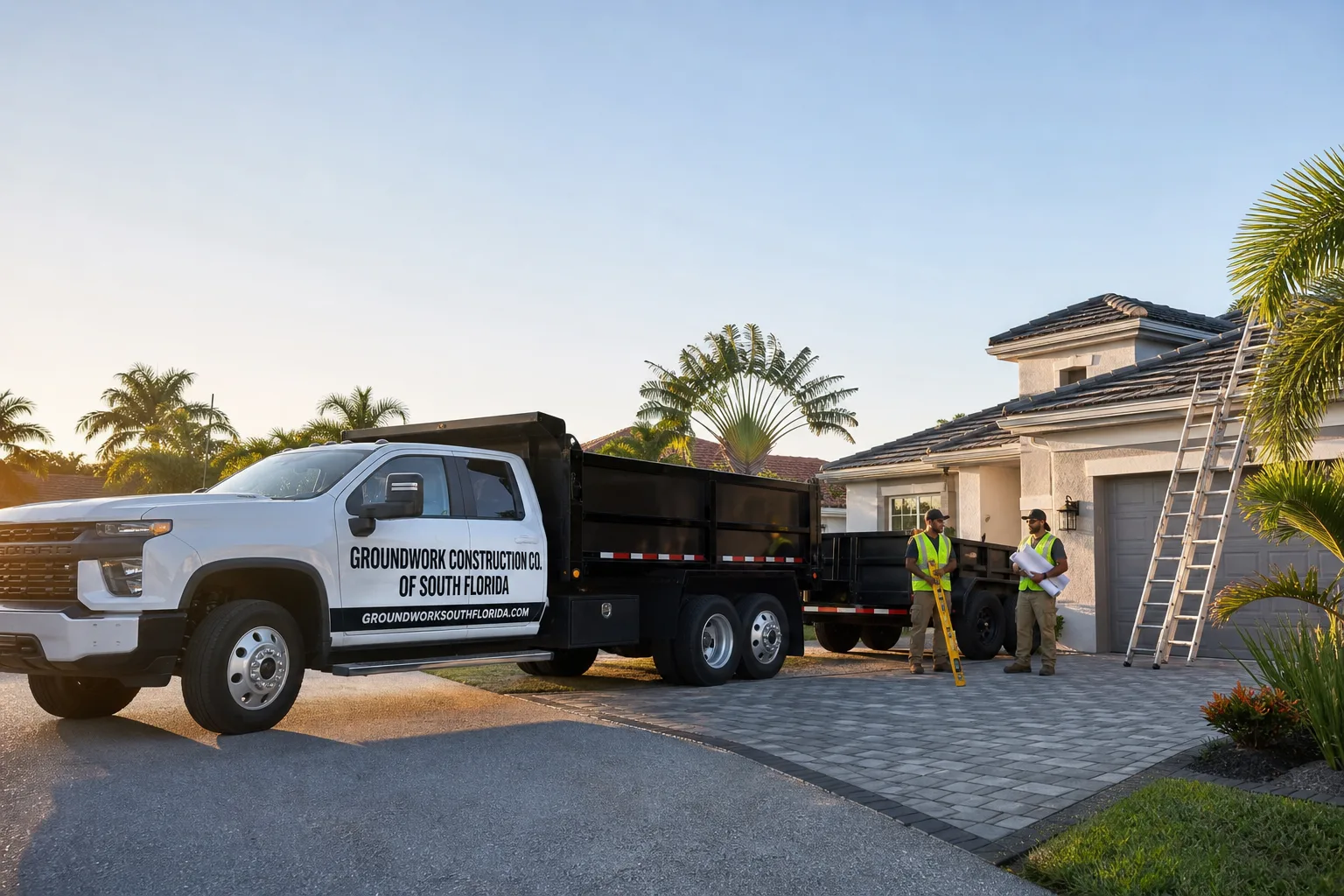
Tile Roofing in Homestead, FL: What It Costs and How Long It Takes
Roofing in Homestead typically runs $8,000-$20,000 for a full replacement and takes 5-10 business days from permit approval to final inspection, though jobs on larger hip-roof homes common in the 33033 and 33034 ZIPs often stretch toward two weeks. We pull permits through Miami-Dade County, use only High-Velocity Hurricane Zone (HVHZ) approved materials, and schedule our crews to stay on your job until it’s weather-tight. Call (844) 665-0162 for a free on-site estimate with line-item pricing.
How We Handle a Tile Roof From Tear-Off to Final Walk
Day one is protection and strip-down. We tarp the perimeter, protect landscaping, and remove existing tiles, felt, and fasteners down to the roof deck. Our crew inspects every sheet of plywood for delamination or soft spots, especially around valleys and penetrations where Homestead’s wet-season driven rain finds its way in. If we find compromised decking, we flag it immediately rather than bury it under new material. Most Homestead homes built in the 1993-2010 post-Andrew wave have solid OSB or plywood decks, but we’ve replaced entire sections in older Redland-area farmhouses where the original roof outlasted the substrate.
Days two through four cover structural prep and dry-in. We install ice-and-water shield in valleys and along eaves, then synthetic underlayment across the field. In Homestead, this layer matters more than in most U.S. markets because HVHZ requirements mandate specific fastening patterns and sealed seams that standard felt won’t pass. We photograph every stage for the roofing inspector. The homeowner’s decision point here is whether to upgrade to a premium self-adhered membrane in valleys, which adds roughly $400-$800 but eliminates the most common leak path we see in tile callbacks.
Days five through seven are tile layout and installation. We snap chalk lines, install battens if the profile requires them, and begin setting tiles from the eave up. Concrete barrel tiles and flat S-tiles each demand different batten spacing and overlap ratios. This is where material choice becomes visible, and where we ask the homeowner to walk the perimeter and confirm the pattern before we get above the waterline. Changes after 30 percent coverage mean pulling tiles and resetting, which burns labor hours.
Days eight and nine cover ridge, hip, and penetration flashings. We use pre-formed ridge caps for uniform exposure and custom-cut flashings around skylights, vents, and chimney saddles. Every fastener gets a matching color cap or is set in polyurethane sealant. The crew runs a magnetic sweep of the grounds daily, but especially after this stage, because tile fragments and fastener clips in planter beds are a headache we don’t pass to the homeowner-just as we wouldn’t leave debris after an Aluminum Fence - Homestead installation.
Day ten is inspection and closeout. Miami-Dade roofing inspectors verify HVHZ compliance, fastener density, and dry-in integrity. We don’t call for inspection until we’ve done our own punch list. After sign-off, we deliver the warranty packet, the manufacturer product registration, and photos of the completed system. The homeowner keeps these for insurance renewals, which in Homestead’s market often trigger requests for roof documentation after the 2020s reinsurance crunch.
The Tile Options You’ll Actually Pick Between
- Concrete barrel tile (Spanish/S-profile): The default across Homestead’s master-planned subdivisions. Heavier than clay at roughly 950-1,100 pounds per square, which means your trusses need to handle the load without modification on most post-1992 homes. Runs 20-40 percent less than clay, lasts 40-50 years in South Florida’s UV exposure, and holds color reasonably well through factory-applied surface pigments. The trade-off is surface wear; after 25 years the color softens and some homeowners opt for a roof coating rather than replacement.
- Clay barrel tile: Lighter than concrete despite the density paradox, running 600-900 pounds per square. Fires harder, absorbs less moisture, and weathers to a softer patina rather than surface erosion. Costs more upfront and requires a larger material order because breakage during shipping and installation runs higher. For homeowners in gated Homestead communities with strict architectural review boards, clay often satisfies the “traditional Mediterranean” requirement where concrete gets rejected.
- Flat S-tile or flat shake profile: Lower profile than barrel, which matters on homes with eave height restrictions or where the HOA limits visual mass. Sheds water faster in Homestead’s sheet-flow downpours but requires tighter headlap and more fasteners per square. Some profiles qualify for enhanced wind warranties up to 150 mph when installed with foam adhesive sets rather than mechanical fasteners alone.
- Foam adhesive vs. mechanical fastening: Miami-Dade approves both for HVHZ, but the choice affects your wind warranty tier. Foam-set systems use polyurethane adhesive in addition to nails or screws, adding $1,200-$2,500 to a typical job. We recommend foam-set for homes within three miles of Biscayne Bay or any property with a recorded wind-loss claim, which describes a significant slice of Homestead’s housing stock post-Irma.
- Underlayment grade: Standard synthetic underlayment carries a 10-year manufacturer’s warranty. Upgraded self-adhered membranes or double-layer systems extend that to 30 years and create a secondary waterproof plane if a tile cracks or shifts. On homes with complex roof geometry, multiple valleys, or mature tree canopy that drops debris, the upgrade pays for itself in leak prevention.
What Tile Roofing Costs in Homestead, FL
Tile roof replacement in Homestead typically falls between $8,000 and $20,000. Roof repair for isolated tile damage, valley leaks, or ridge cap failure runs $600-$2,500.
Five factors push any quote toward the high or low end of that range:
- Roof size and complexity: A simple hip roof on a 1,800-square-foot home in the Keys Gate area stays near the bottom. A 3,500-square-foot home with multiple dormers, turrets, or intersecting roof planes in Coral Lakes pushes labor hours and waste factors up significantly.
- Deck condition: If tear-off reveals plywood that failed around nails or shows delamination from prior leaks, deck replacement adds $45-$75 per sheet plus labor. We inspect attic-side from the ridge vent before quoting, but hidden damage only reveals during strip-down.
- Material tier and profile: Standard-weight concrete barrel tile from a regional manufacturer sits at one price point; imported clay or designer flat profiles from Boral or certain specialty lines can double material cost per square.
- Access and protection requirements: Homes with zero-lot-line setbacks, pool enclosures that can’t be disassembled, or mature oak canopies requiring limb protection add labor and equipment rental. The Redland’s larger lots with agricultural outbuildings sometimes simplify access; dense subdivisions near Campbell Drive complicate it.
- Permit scope and inspection timing: Miami-Dade’s roofing permit for tile includes two inspections minimum: dry-in and final. If the inspector flags a fastening pattern or requests a product data sheet we don’t have on-site, the re-inspection fee and delay hit the schedule. We pull all NOA documentation before the first truck arrives.
A written estimate from Groundwork Construction Co. includes tear-off and disposal, deck repair up to a stated square footage, underlayment and fasteners, tile material with specified manufacturer and profile, all flashings and vent replacements, permit fees, and cleanup. It does not include gutter replacement, skylight upgrades, or solar conduit rerouting, though we can price those as line items if they’re part of your project.
What Homestead Specifically Does to a Tile Roof Job
Homestead’s identity as Hurricane Andrew’s ground zero shapes every roofing decision here. The city rebuilt under Miami-Dade’s High-Velocity Hurricane Zone code, the strictest wind-load standard in the continental United States. That means every tile, every underlayment, every tube of adhesive must carry a Miami-Dade Notice of Acceptance (NOA). Contractors who work Broward or Palm Beach counties regularly but rarely cross the county line often don’t stock NOA-approved products or understand the documentation requirements. We’ve seen jobs stalled three weeks because a crew installed a perfectly good tile that simply lacked the right Florida product approval.
The housing stock reinforces this compliance layer. Most homes we roof in Homestead sit in master-planned communities built between 1993 and 2010, CBS construction with hip roofs and hurricane-strapped trusses designed for tile loads. These roofs are straightforward structurally but unforgiving on installation detail because the building department knows exactly what to look for. West of Krome Avenue, the Redland corridor shifts to older agricultural buildings and farmhouses with pre-Andrew framing, shallower pitches, and sometimes no original tile load path at all-exactly why Homestead ADU Design & Permitting expertise matters when adapting these structures. Those jobs require engineering review and often structural reinforcement before tile goes back on.
Homestead’s climate adds its own specifications. The wet season brings sheet-flow flooding and sustained humidity that tests underlayment seals. Proximity to the Everglades means afternoon convection cells that drop horizontal rain. And the city’s position at the southern tip of Miami-Dade creates a contractor coordination challenge: many crews running Homestead jobs also service Monroe County down US-1, where the building department, permit fees, and FEMA flood zone requirements are entirely separate. We keep our Homestead crews on Homestead schedules to avoid the jurisdictional confusion that delays other contractors.
Homeowners in communities like Oasis, Silver Palm, or the newer sections of Keys Gate should also verify HOA architectural review timelines. Some associations require color samples and manufacturer cut sheets before work begins, a 10-14 day process that runs parallel to permit application. We build that lead time into our project schedules so neither approval becomes the critical path.
Serving Homestead, FL - Our Local Coverage Area
We’re based in the Homestead area and know this community well. Use the map below to see our service coverage - if you’re nearby, we can almost certainly help.
Frequently Asked - Tile Roofing in Homestead
Most tile roofing projects in Homestead take 5-10 business days after permit issuance, with complex roofs or larger homes extending toward two weeks. Weather holds and Miami-Dade inspection scheduling can add 2-4 days. We don’t start tear-down until materials are on-site and the permit is active, so your roof isn’t exposed overnight. Call (844) 665-0162 and we’ll confirm current lead times for your ZIP code.
Yes, all tile roofing in Homestead requires a Miami-Dade County building permit with HVHZ product approval documentation. The permit process typically takes 5-10 business days for straightforward reroofs on single-family homes. We handle the application, the NOA verification, and the scheduling of both dry-in and final inspections. The permit fee is included in our written estimate.
We can if the existing deck passes inspection during tear-off, which most post-1992 Homestead homes do. We examine every sheet from the attic side before quoting and again during strip-down. If we find soft plywood, delamination, or prior leak damage, we replace only those sections rather than recommending unnecessary full-deck work. You’ll know the deck condition before we set the first tile.
Tile roofing sits between asphalt shingle and standing seam metal on upfront cost, but its lifespan often makes it the lower lifetime expense. In Homestead’s climate, concrete tile lasts 40-50 years versus 15-25 for architectural shingle. Metal runs higher initially but comparable over decades. For homeowners planning to stay 15-plus years, tile’s durability and insurance discounts in HVHZ zones often offset the premium.
Our tile roofing installations carry a workmanship warranty on installation labor, and the manufacturer provides a material warranty on the tile itself, typically 50 years for concrete and 75 years for clay. Wind warranty coverage depends on the installation method, with foam-adhesive systems qualifying for higher mph ratings. We register every product and deliver the warranty packet at final walkthrough, which your insurance company will want to see at renewal.
Get a Free Estimate for Tile Roofing in Homestead
We’ll walk your roof, check attic ventilation and deck condition, and deliver a written estimate with material options from our roofing brand roster. No deposit required to schedule. Call (844) 665-0162 or request a visit online. For homeowners considering a full exterior update, we also install Impact Windows & Doors in Homestead and Sliding & Patio Doors in Homestead, often as part of a single coordinated project with one permit pull and one crew sequence. Raymond Estevez and our team at Groundwork Construction Co. serve Homestead from our Fort Lauderdale base, and we know the Miami-Dade product approval system because we work it every week.
Written by Raymond Estevez, Owner at Groundwork Construction Co., serving Homestead since our founding.