
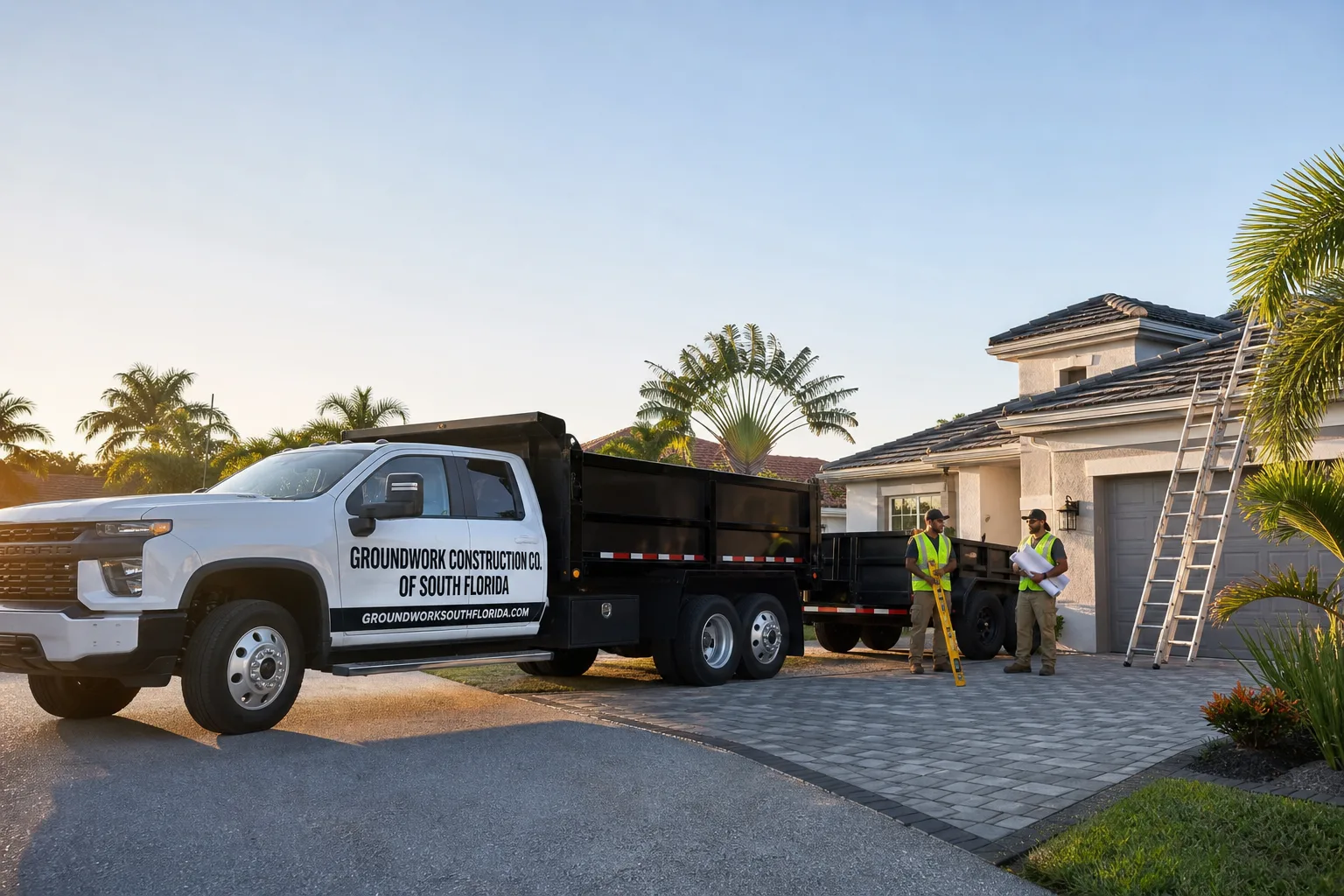
Tile Roofing in Jupiter, FL - What It Costs and How Long It Takes
Tile roofing in Jupiter, FL typically runs $8,000-$20,000 for a full replacement and $600-$2,500 for targeted repairs, with most residential projects taking 5 to 10 working days from tear-off to final inspection. Clay and concrete tile systems are the dominant choice in Jupiter’s coastal neighborhoods because they carry a Class A fire rating and withstand wind speeds up to 150 mph when installed to Florida Building Code standards, critical for homes within the Jupiter Inlet storm surge zone. Call (844) 665-0162 and we’ll walk your roof, check your existing deck condition, and deliver a written estimate with line-item pricing.
How We Handle a Tile Roof from First Nail to Final Walkthrough
Every tile roofing project in Jupiter follows a five-stage sequence. Homeowners who understand the timeline make better decisions about material grades and whether to bundle exterior work.
Stage 1: Deck inspection and tear-off (Day 1)
We strip existing tile and underlayment down to the wood deck. In Jupiter’s 1960s-70s concrete block ranch homes, we often find plywood that’s never been exposed since original construction, sometimes with soft spots from decades of 62-inch annual rainfall working past compromised flashing. We mark every area needing sistering or replacement. You decide at this stage whether to upgrade to a synthetic underlayment like GAF FeltBuster or stick with traditional #30 felt. The synthetic adds roughly 15% to material cost but carries a 25-year warranty versus 10 years for felt.
Stage 2: Dry-in and waterproofing (Days 2-3)
We install ice and water shield at valleys, penetrations, and eaves, then roll the field underlayment. For homes near the Jupiter Inlet or Loxahatchee River, we specify corrosion-resistant fasteners and stainless steel valley metal because salt air attacks standard galvanized hardware within 8-12 years. This is when you confirm tile profile and color. Flat concrete S-tiles suit the clean lines of Abacoa’s new urbanist architecture, while traditional barrel profiles match the Mediterranean-influenced waterfront builds in eastern ZIP codes 33469 and 33477.
Stage 3: Tile installation (Days 4-7)
Crews lay tile in a bonded pattern, typically 17-19 tiles per roofing square for standard profiles. We pay particular attention to hip and ridge termination because Jupiter’s afternoon thunderstorms test every weak point. Homes in western 33478, where agricultural-to-residential conversions often involve simpler roof geometries, sometimes finish faster than the complex intersecting planes common on Intracoastal custom homes. You don’t need to be home for this stage, but we text photo updates at mid-day.
Stage 4: Penetration sealing and ventilation check (Day 8)
Every vent pipe, chimney, and skylight gets custom-cut tile and sealed flashing. We verify attic ventilation meets the 1:150 ratio required by current Florida Building Code, which matters more in Jupiter’s humidity than in drier inland counties. Older homes without ridge vents often benefit from adding them now rather than cutting tile later.
Stage 5: Municipality inspection and final walkthrough (Day 9-10)
Jupiter Building Department inspects for nailing pattern, deck attachment, and flashing detail. We schedule this; you don’t call. After sign-off, we walk the property with you, check gutters for debris, and confirm your material warranty registration with the manufacturer. GAF, CertainTeed, Owens Corning, IKO, Atlas, Tamko, and Boral each have different registration windows and coverage terms, and we handle the paperwork so nothing voids.
The Tile Options You’ll Actually Choose Between
- Standard-weight concrete S-tile: The practical default for most Jupiter reroofs. Runs 950-1,100 pounds per square, fits standard structural framing without engineering review, and costs at the lower end of our range. Color-through concrete fades gradually; expect to see some variation after 15 years near the Inlet’s salt exposure. Best for homeowners who want 30-40 year performance without structural upgrades.
- Lightweight concrete flat tile: 600-750 pounds per square, allows installation on truss systems that can’t take standard weight. The trade-off is slightly lower impact resistance. We specify this for 1970s ranch homes in Tequesta-adjacent neighborhoods where the original roof was built to minimal load standards. Costs sit mid-range.
- Natural clay barrel tile: The premium choice for waterfront and custom homes in eastern Jupiter. Authentic two-piece clay runs 1,200+ pounds per square and requires structural verification, but carries 75+ year life expectancy and develops the patina that Abacoa’s Architectural Review Board often requires for style consistency. Pushes projects toward the high end of pricing.
- Composite tile (synthetic): Newer entrants at roughly half the weight of concrete, with Class 4 impact ratings that matter for wind-borne debris zones. Some HOAs in Jupiter’s gated communities still restrict these as “non-traditional,” so we verify covenants before specifying. Warranty terms vary significantly by manufacturer.
- Underlayment grade: The hidden decision that affects longevity more than most homeowners realize. Standard felt costs less upfront but requires earlier replacement if tile is ever disturbed. Synthetic underlayments from major manufacturers integrate with their system warranties. For Jupiter’s rainfall volume, we rarely recommend felt on homes where we expect the tile to stay 25+ years.
What Tile Roofing Costs in Jupiter, FL
| Scope | Price Range |
|---|---|
| Tile roof repair (localized) | $600-$2,500 |
| Partial re-tile (one slope/section) | $3,500-$8,000 |
| Full tile roof replacement | $8,000-$20,000 |
| Structural reinforcement (if needed) | $1,500-$5,000 |
| Synthetic underlayment upgrade | $800-$2,000 |
Five variables push your number within these ranges. Roof size and complexity matter most: a simple hipped roof on a 1,800-square-foot ranch in western 33478 runs toward the low end, while a 4,500-square-foot waterfront custom with multiple dormers and turrets in 33477 hits the top. Existing deck condition is the surprise factor; we can’t assess this until tear-off, but soft plywood adds $3-$5 per square foot. Material grade separates mid-weight concrete from imported clay by 40-60%. Structural upgrades trigger engineering and permit amendments, common on pre-2002 construction. Coastal permitting for eastern Jupiter homes near the FDEP Coastal Construction Control Line adds review time but not always direct cost.
A written estimate from Groundwork includes tile, underlayment, fasteners, flashing, dump fees, and municipal permit. It does not include gutter replacement, soffit repair, or interior drywall touch-up from prior leaks. We flag these separately so you’re not surprised.
What Jupiter Specifically Does to a Tile Roof Project
Jupiter’s construction market splits sharply across its ZIP codes, and tile roofing here means navigating two different worlds. In eastern 33469 and 33477, the Intracoastal and Loxahatchee River waterfront homes often sit on elevated pile foundations with finished floor heights 18-24 inches above grade due to FEMA Base Flood Elevations. The roof systems on these builds are engineered for higher wind loads, and the tile must integrate with continuous soffit ventilation and custom fascia profiles that standard suburban crews rarely encounter. We’ve coordinated with Army Corps of Engineers on enough of these properties to know the documentation requirements before we submit.
Western 33478 presents the opposite challenge: agricultural-to-residential lot conversions with private wells and septic systems, where the home may be the first major construction on a parcel and the original well house or pump shed roof needs matching tile to satisfy Palm Beach County zoning consistency. The salt air corrosion from Jupiter Inlet still reaches these western parcels on prevailing southeast winds, so we specify the same corrosion-resistant hardware we use on the water.
The Abacoa factor catches contractors who don’t work Jupiter regularly. That development’s Architectural Review Board requires style-matched materials and design approval for nearly any exterior change, including re-roofs. Contractors accustomed to Palm Beach Gardens or Port St. Lucie permitting timelines routinely underestimate this parallel approval process, which can delay project starts by three to six weeks. We build ARB submission into our schedule from day one, and we know which tile profiles the board has previously approved for each Abacoa village. Skip this step and your contract timeline falls apart.
Older CBS homes in Tequesta-adjacent neighborhoods, built before modern hurricane strapping, are our most common retrofit target. These often need tie-down hardware upgrades that intersect with the roof replacement, and we coordinate that structural work rather than handing it off. That’s the difference between a full roofing project in Jupiter handled by one accountable team versus juggling separate trades.
Our roofing crew works across South Florida, but Jupiter demands specific local knowledge. Homeowners here often pair exterior envelope work, and we regularly coordinate Impact Windows & Doors in Jupiter and Sliding & Patio Doors in Jupiter as part of the same project phase, using Andersen, Pella, Marvin, Milgard, Jeld-Wen, Simonton, PGT, and CGI product lines depending on the exposure rating and HOA requirements.
Serving Jupiter, FL - Our Local Coverage Area
We’re based in the Jupiter area and know this community well. Use the map below to see our service coverage - if you’re nearby, we can almost certainly help.
Frequently Asked - Tile Roofing in Jupiter
Most full replacements take 5 to 10 working days, with eastern waterfront homes often running longer due to complex roof geometry and ARB coordination. Repairs typically finish in 1 to 2 days. Call (844) 665-0162 and we’ll give you a specific timeline after seeing your roof.
Yes, Jupiter Building Department requires a roofing permit for any tile work beyond minor repairs, and homes in Abacoa need separate Architectural Review Board approval before permit submission. We handle both processes. The permit typically takes 5 to 10 business days after ARB clearance.
Existing penetrations usually stay in place; we work around them with custom-cut tile and new flashing. Relocation only happens if the current placement violates code or if you’re simultaneously remodeling the space below. We’ll flag this during the initial walkthrough.
Clay barrel tile typically adds 40-60% over standard concrete S-tile for material cost, plus potential structural engineering if your truss system can’t handle the 1,200+ pounds per square. For most Jupiter homeowners, concrete delivers comparable wind resistance at lower cost; clay makes sense when ARB requirements or long-term patina value justify the investment.
Material warranties run 25 to 50 years depending on manufacturer and product line, with GAF, CertainTeed, Owens Corning, IKO, Atlas, Tamko, and Boral each offering different terms. Our workmanship warranty covers installation quality. We register your materials at completion so coverage doesn’t lapse. Call (844) 665-0162 for specifics on the tile you’re considering.
Ready for a Written Estimate on Your Jupiter Tile Roof?
Call (844) 665-0162 to schedule a free on-site evaluation. We’ll walk your roof, photograph the deck condition, check your ventilation and flashing, and deliver a written estimate with line-item pricing within 48 hours. No deposit required to get on our schedule; we start when you’re ready and the permits clear.
Written by Raymond Estevez, Owner at Groundwork Construction Co., serving Jupiter and South Florida homeowners.