
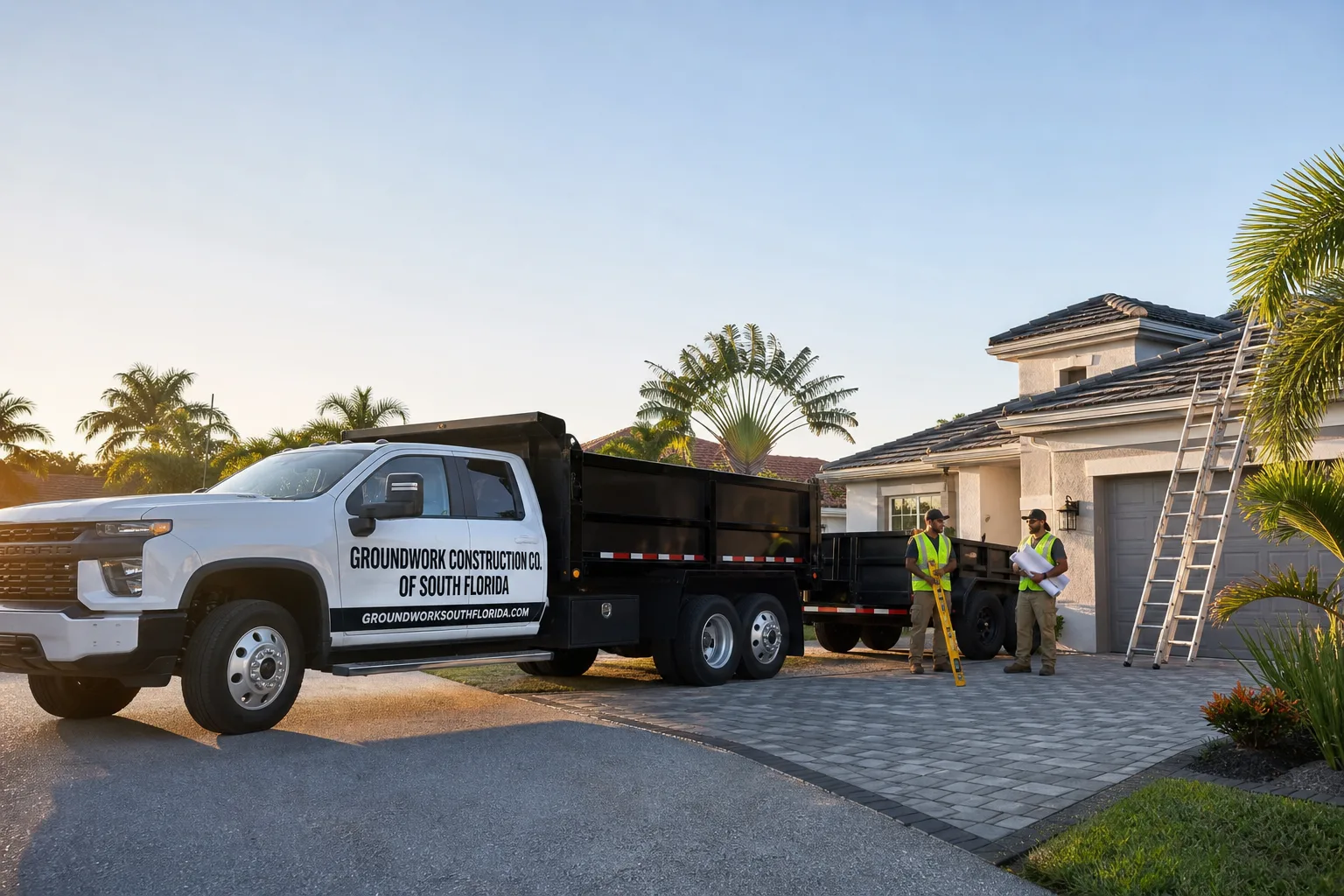
Tile Roofing in Miami Beach: Scope, Timeline, and Cost
Tile roofing in Miami Beach involves removing the existing roof system, inspecting and repairing the underlying deck for salt-air corrosion, and installing a new clay or concrete tile assembly that meets Miami-Dade HVHZ code. Most residential tile roof projects here take 7 to 14 working days from permit approval to final inspection, depending on deck condition and whether we’re working around an occupied home. In this market, you’re typically looking at $15,000 to $40,000 for a full tile roof installation. Call (844) 665-0162 and we’ll walk through your specific roof geometry and give you a written estimate.
How We Handle a Tile Roof from Tear-Off to Final Walk
We’ve learned that homeowners stay sane during a roof project when they know what’s happening while they’re making coffee and hearing nails overhead. Here’s how tile roofing in Miami Beach actually unfolds, stage by stage.
Stage 1: Deck and structural inspection (Day 1)
We don’t touch a tile until we’ve pulled back enough existing material to assess what’s underneath. In Miami Beach, this means checking for chloride-driven rebar corrosion in concrete decks, or for plywood that’s degraded from years of salt-laden moisture cycling. We photograph everything and show you before we spec repairs. If your home is one of the 1950s MiMo structures in Mid-Beach, we often find active concrete delamination that needs forensic patching before any underlayment goes down. This stage takes a half day to full day. Your decision point: whether to address deck repairs now or defer them (we’ll explain why deferral usually costs more later).
Stage 2: Tear-off and substrate prep (Days 2-3)
We strip to bare deck, haul off all debris, and install any required structural repairs. For homes near the water in Sunset Harbour or the Venetian Islands, we sometimes discover that original construction didn’t include adequate nail base for modern HVHZ fastening patterns. We resolve that now, not when tiles start sliding. This is also when we address any soffit or fascia damage that’s been hidden. Homeowner decision: material for replacement trim (we typically recommend composite or PVC in this environment over wood, which salts destroy within a few years).
Stage 3: Underlayment and flashing system (Days 4-5)
This is the waterproofing layer that actually keeps your home dry. We install a high-temp, self-adhered underlayment appropriate for tile’s thermal mass, with fully integrated flashings at all penetrations, valleys, and wall transitions. In Miami Beach’s wind-driven rain environment, this layer matters more than the tile itself. We pay particular attention to the “Miami Beach Rising Above” elevation issue: if your street has been raised and your home’s grade relationship has changed, we adjust drainage planes and scuppers accordingly. Your decision: standard or upgraded underlayment warranty length.
Stage 4: Tile installation and fastening (Days 6-10)
We lay tile to manufacturer spec with HVHZ-compliant fastening, typically foam adhesive plus mechanical fasteners in the field, and full mortar bed at hips, ridges, and perimeters. Clay tile runs heavier than concrete, so we confirm structural capacity before we commit. For historic district properties in South Beach (33139), we may be working with the Miami Beach Historic Preservation Board’s material and profile requirements, which can extend this stage if we’re matching original profiles. Your decision: final tile selection from our samples, including color blend and any custom trim pieces.
Stage 5: Inspection, cleanup, and documentation (Days 11-14)
Miami-Dade requires a roofing inspection for tile installation. We schedule, meet the inspector, address any punch items same-day, and hand you your permit closure, manufacturer warranty registration, and our workmanship documentation. We also walk the property with you for final approval. In flood-prone areas where the water table sits just feet below grade, we confirm that our drainage detailing accounts for your specific site conditions.
Throughout the project, you have one project manager and one crew. No handoffs to subcontractors you’ve never met. That’s the Roofing process we run at Groundwork.
The Tile Options You’ll Actually Decide Between
Tile roofing in Miami Beach isn’t one product. The choice you make affects weight, longevity, color stability, and how your roof performs in a hurricane. Here’s what we most often quote:
- Clay S-tile or Spanish tile: The classic barrel profile, fired at high temperature for density. Lighter color options reflect heat well in Miami Beach’s intense sun. Weight runs 850-1,000 pounds per square (100 sq ft), so we verify structural capacity. Lifespan routinely exceeds 50 years. Higher upfront cost, but often the best lifecycle value for owners planning to hold the property. Best for: homeowners who want traditional aesthetics and maximum longevity.
- Concrete flat or low-profile tile: More affordable, more color options, heavier at 900-1,200 pounds per square. Modern concrete tiles use surface coatings for color; in salt-air environments like Miami Beach, we see some gradual chalking after 15-20 years on darker colors. Still a 30-40 year product. Best for: budget-conscious projects where the structural deck can handle the load and color refresh in two decades is acceptable.
- Lightweight composite or synthetic tile: Under 600 pounds per square, which matters if your 1960s MiMo building has limited structural reserve. Some products carry Miami-Dade NOA approval for HVHZ. Color-through rather than surface-coated, so fading is minimal. Shorter track record than clay, but improving rapidly. Best for: retrofit projects where structural upgrade is cost-prohibitive.
- Cool-roof rated vs. standard: Tile’s thermal mass already outperforms asphalt, but reflective pigments can drop surface temperature another 20-30°F. In Miami Beach’s cooling-dominated climate, this translates to measurable load reduction. Best for: properties with marginal HVAC capacity or owners prioritizing energy performance.
- Mortar-set vs. foam-adhesive fastening: Mortar is traditional and inspectable; foam-adhesive systems are faster, lighter, and increasingly specified for HVHZ. We use both, matching the method to tile type, roof pitch, and exposure. Best for: mortar where historic accuracy matters; foam where speed and weight reduction help.
What Tile Roofing Costs in Miami Beach, FL
| Component | Typical Range |
|---|---|
| Tile roof installation (full replacement) | $15,000 - $40,000 |
| Tile roof repair (localized) | $600 - $2,500 |
| Structural deck repair (per section) | $800 - $3,500 |
| Historic Preservation Board compliance documentation | $400 - $1,200 |
Five factors move your number within these ranges:
1. Roof size and complexity. A simple gable on a 1,500-square-foot home in North Beach runs toward the lower end. Multiple hips, valleys, dormers, or a 4,000-square-foot estate on La Gorce Island push labor and material quantities up significantly.
2. Existing deck condition. Salt-air corrosion in concrete decks or plywood delamination is common in Miami Beach’s older housing stock. Forensic investigation, rebar treatment, and patch-and-seal restoration add cost but aren’t optional if you want the new tile to last.
3. Material grade and origin. Import clay tile from Europe runs 40-60% above domestic concrete. The performance difference is real but not always proportional; we show you samples and explain where your money goes.
4. Permitting and compliance scope. Properties in the South Beach Historic District or within a design review board jurisdiction require additional documentation and often material approval delays. We handle this, but it adds administrative cost and sometimes extends timeline.
5. Access and protection requirements. Tight lots, zero-lot-line conditions, or homes where we can’t stage materials on the ground require crane rental and more labor for hand-carrying. Waterfront properties with seawalls or mangrove setbacks often trigger additional environmental protection measures.
A written estimate from Groundwork includes tile, underlayment, flashings, fasteners, permits, inspections, and debris removal. It does not include interior repairs if we discover latent damage, tree trimming for access, or structural engineering if your deck needs redesign. We flag these possibilities during inspection so you’re not surprised.
Homeowners often pair a tile roof project with Impact Windows & Doors in Miami Beach or Sliding & Patio Doors in Miami Beach to synchronize HVHZ compliance work under one permit cycle and one contractor relationship.
What Miami Beach Specifically Does to a Tile Roof Project
Tile roofing in Miami Beach exists at a convergence of pressures you won’t find on the mainland. The barrier island sits roughly 4 feet above sea level with salt water on both sides, so every material choice is filtered through chloride exposure and flood risk. We regularly see concrete spalling and rebar corrosion in roof decks that would be unusual inland, especially in the 1950s-60s MiMo buildings concentrated in Mid-Beach and North Beach (33141). That means our inspections start with a hammer test and a moisture meter, not just a visual scan.
The High Velocity Hurricane Zone designation is non-negotiable. Every tile, every underlayment, every adhesive must carry Miami-Dade NOA certification. We don’t speculate; we document NOA numbers on your estimate. For properties in the 33139 Historic District, the Miami Beach Historic Preservation Board adds a layer: exterior alterations require board approval, and we’ve had projects where matching original stucco profiles and window geometries delayed tile selection until we sourced period-appropriate trim details. We build that contingency into our timeline.
Then there’s the elevation problem. The city’s “Rising Above” infrastructure program has lifted street grades 1-2 feet in parts of South Beach and Mid-Beach. We’ve arrived at jobs where the permitted as-builts show a front entrance at street level, but the actual street is now 18 inches higher, leaving scuppers, drains, and ADA ramps in a configuration that no longer drains properly. Our tile installations account for this new grade relationship, because a roof that drains into a swamped perimeter is a roof that fails prematurely. This is why a mainland contractor’s standard detail often doesn’t transfer to Miami Beach without modification.
Even routine site work here encounters the water table within a few feet of grade, so any excavation for drainage improvement or structural footing quickly becomes a dewatering operation. We plan for it. Most mainland crews don’t.
Serving Miami Beach, FL - Our Local Coverage Area
We’re based in the Miami Beach area and know this community well. Use the map below to see our service coverage - if you’re nearby, we can almost certainly help.
Frequently Asked - Tile Roofing in Miami Beach
Most residential tile roofing projects in Miami Beach take 7 to 14 working days after permit approval. Historic district properties or homes requiring extensive deck repair can extend to 3 weeks. Call (844) 665-0162 and we’ll give you a timeline based on your roof’s specific conditions.
Yes. Miami-Dade County requires a roofing permit for all tile roof installations, and Miami Beach enforces additional flood-plain and historic-preservation compliance where applicable. Groundwork pulls permits, schedules inspections, and handles documentation as part of our standard process.
Usually, yes. We work around existing penetrations and reflash them properly. If your electrical mast is deteriorated or improperly located for current code, we’ll flag it during inspection and quote relocation separately rather than burying the issue under new tile.
Tile roofing typically costs more upfront than asphalt shingle and sits in a similar range to mid-tier metal. The lifecycle cost often favors tile in this climate: 30-50+ year lifespan versus 15-25 for shingle, better thermal performance, and no rust concerns in salt air. We’ll run the numbers for your specific roof so you can compare honestly.
Manufacturer warranties on clay and concrete tile typically run 50 years limited on material. Underlayment warranties vary from 10 to 30 years depending on product tier. Groundwork documents all warranty registrations and provides our own workmanship coverage on installation. We don’t make vague promises; we hand you the paperwork.
Get a Written Estimate for Tile Roofing in Miami Beach
We’ll send Raymond Estevez or a senior project manager to your property, walk the roof, and deliver a written estimate with material options, timeline, and line-item pricing. No deposit required to get the number. Call (844) 665-0162 or request a visit through our site. For a broader look at everything we handle here, see Roofing in Miami Beach.
Written by Raymond Estevez, Owner at Groundwork Construction Co., serving Miami Beach and South Florida.