
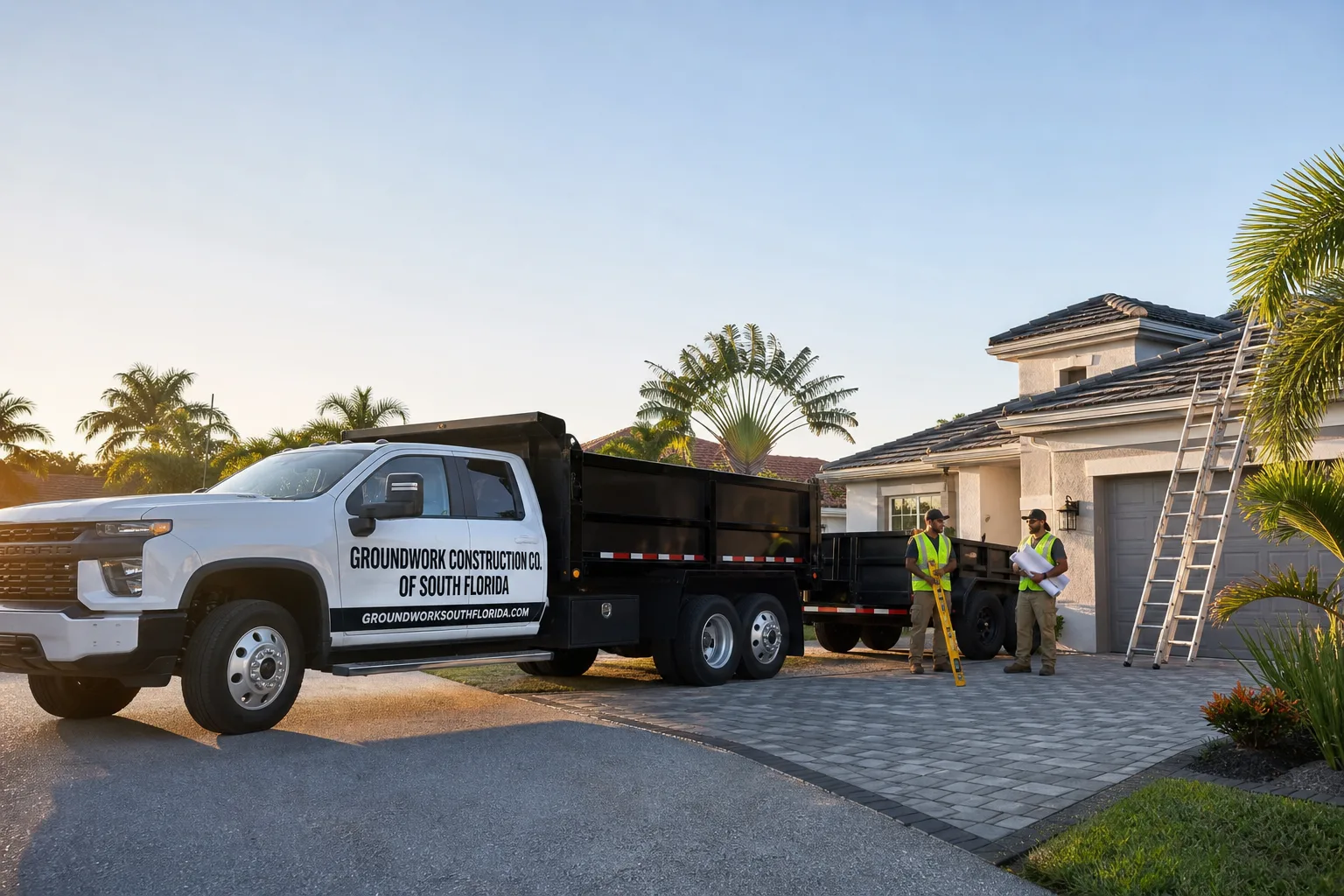
Tile Roofing in Ojus, FL - Timeline, Cost, and What the HVHZ Rules Mean
Tile roofing in Ojus, FL typically runs $8,000-$20,000 for a full replacement and $600-$2,500 for targeted repairs, with most residential projects taking 5-10 working days from tear-off to final inspection. Because Ojus sits inside Miami-Dade County’s High-Velocity Hurricane Zone, every tile, underlayment, and fastener must carry a Miami-Dade Notice of Acceptance - a county-specific certification that out-of-area contractors often miss. Call (844) 665-0162 and we’ll confirm whether your existing roof substrate and framing can carry the weight of a modern tile system, or whether engineered truss reinforcement is needed first.
How We Handle a Tile Roof from First Shingle to Final Walk
We’ve learned that homeowners in Ojus want to know what day they need to be home, what day the dumpster arrives, and when they can stop worrying about rain getting in. Here’s how we sequence a typical tile roofing job in this market.
Stage 1: Structural assessment and material selection (Day 1, 2-3 hours on site)
We start by pulling a section of the existing roof covering to inspect the decking, truss spacing, and any prior water damage. Ojus homes built in the 1950s-1970s often have 2×4 or 2×6 rafters on 24-inch centers, which may need sistering or additional bracing before clay or concrete tile goes on - those materials run 850-1,200 pounds per square, versus 250 for asphalt shingles. You’ll decide at this stage between clay barrel tile, flat concrete tile, or a lightweight composite alternative, and whether you want a traditional mortar-set bed or a foam-adhesive system that sheds wind uplift better under HVHZ standards. We photograph everything and send you the structural report same day.
Stage 2: Permits and material procurement (3-10 business days, homeowner not needed)
Because Ojus is unincorporated Miami-Dade County, we file directly with the county Building Department, not a city office. The permit queue moves on county-wide staffing, not local priority, and we’ve learned exactly which plan reviewers handle tile roof overlays versus full tear-offs. We also submit your material cut sheets for every tile profile, underlayment roll, and fastening pattern to confirm NOA compliance. This is the stage where out-of-area contractors stall - they file for a standard Florida approval and get rejected. We don’t.
Stage 3: Tear-off and deck repair (Days 2-3 of construction)
The existing roof comes off, plywood decking gets inspected plank by plank, and we replace anything soft or delaminated. In Ojus we regularly find original built-up roofing or early modified bitumen directly on plank decking with no underlayment - fine in 1965, not code-compliant now. We install a self-adhered high-temp underlayment (peel-and-stick ice-and-water shield) over the entire deck, then a secondary synthetic layer, because tile roofs leak at the underlayment, rarely at the tile itself. If your home has a low-slope section integrated with the pitched tile area, we address that transition with a TPO or modified bitumen cricket - a detail we see botched on older Ojus ranches.
Stage 4: Tile installation and fastening (Days 4-7)
Tile goes on in courses, with HVHZ-mandated fastening patterns: screws or ring-shank nails at specified intervals, often with foam adhesive backup at the perimeter and ridge. We don’t guess at this - the NOA for your specific tile profile dictates every fastener type, spacing, and adhesive bead pattern. The mortar-set versus foam-adhesive choice you made in Stage 1 shows up here. Mortar looks traditional and costs less upfront; foam adhesive installs faster, reduces weight, and performs better in wind-driven rain. Most Ojus homeowners who plan to stay in the home long-term choose foam.
Stage 5: Inspection, cleanup, and warranty registration (Day 8-10)
Miami-Dade requires a mid-roof inspection (deck and underlayment exposed) and a final inspection (tile complete, ridge and hip caps on). We schedule both, meet the inspector on site, and don’t cover anything until we get the green tag. After final approval, we register your material warranty with the manufacturer - GAF, CertainTeed, Owens Corning, or whichever brand you selected - and hand you the documentation folder. The dumpster leaves, the magnet sweep happens, and you’re done.
The Tile Options You’ll Actually Choose Between
- Clay barrel tile (Spanish/S-tile): The classic Mediterranean look you’ll see throughout older Miami-Dade neighborhoods. Fired clay resists salt-air corrosion better than almost anything, but it’s the heaviest option at 950-1,200 lbs per square. Requires confirmed structural capacity. Premium price tier, 50+ year lifespan. Best for: homeowners restoring or maintaining period character on 1960s-1970s Ojus ranch homes.
- Flat concrete tile: Clean, modern lines, lighter than clay at 700-900 lbs per square, and available in dozens of color-through blends that don’t show wear. Slightly more porous than clay, so the underlayment quality matters more. Mid-to-premium pricing. Best for: contemporary renovations or homeowners who want the tile aesthetic without maximum structural load.
- Lightweight composite or metal tile: Engineered profiles that mimic clay or slate at 300-500 lbs per square - often no structural reinforcement needed. Higher material cost, lower labor cost, faster install. Shorter proven track record in South Florida’s UV and salt environment. Best for: budget-conscious projects or roofs where truss modification isn’t practical.
- Mortar-set versus foam-adhesive installation: Mortar beds each tile in a traditional cement base. Foam adhesive uses polyurethane foam in specified bead patterns. Mortar costs less, weighs more, cracks in minor structural movement, and is harder to repair. Foam costs more upfront, weighs less, flexes slightly, and is the HVHZ-preferred method for wind uplift. We walk you through the NOA documentation for your specific tile so you understand why we recommend one over the other.
- Underlayment grade: Code minimum is one layer of ASTM D226 Type II felt. We spec two layers - self-adhered high-temp membrane plus synthetic secondary - on every Ojus job because tile roofs outlast their underlayment, and the second layer is your insurance against the 2035 repair. The upgrade adds $800-$1,400 to a typical 2,000 sq ft roof.
What Tile Roofing Costs in Ojus, FL
Tile roof replacement in Ojus typically falls between $8,000 and $20,000. Repairs run $600-$2,500 depending on scope. Here’s what pushes a job toward the low or high end of those ranges:
- Roof size and complexity: A simple 1,500 sq ft gable roof with one ridge and two valleys sits at the lower end. A 3,500 sq ft hip roof with multiple dormers, skylights, and chimney crickets drives labor hours up fast.
- Structural reinforcement needed: If your 1950s-1970s Ojus ranch needs rafter sistering, truss bracing, or new plywood decking, add $2,000-$6,000. We identify this in Stage 1 so you’re not surprised.
- Material tier: Standard-weight concrete tile from a GAF or CertainTeed line runs roughly half the material cost of imported clay barrel tile from Boral or a specialty manufacturer. Composites split the difference.
- Existing roof layers and disposal: Single-layer tear-off is standard. Multiple layers, asbestos-containing materials, or built-up roofing with gravel surfacing adds dump fees and labor - sometimes $1,500-$3,000.
- Permit and inspection scope: Full replacement triggers Miami-Dade’s complete plan review and two inspections. Overlay or repair may qualify for expedited permitting. We handle the filing, but the county’s fee schedule is fixed and transparent.
A written estimate from us includes tear-off, disposal, deck repair up to 10% of surface area, underlayment, tile, fasteners, ridge/hip caps, permits, and both inspections. It does not include structural engineering if truss modification exceeds standard prescriptive methods, gutter replacement, or interior drywall repair from prior leaks - those get line-itemed separately if needed.
Why Ojus Specifically Changes How We Build Your Tile Roof
Ojus presents a regulatory environment that contractors from Broward County - just 15 minutes north - routinely mishandle. The High-Velocity Hurricane Zone designation means every product on your roof needs that Miami-Dade Notice of Acceptance, and the county’s unincorporated status means permits pull through a centralized county queue rather than a responsive city office. We’ve seen out-of-area roofers file for Aventura permits by mistake, or submit Florida Product Approval documents that Miami-Dade rejects outright. That costs you weeks.
The housing stock matters too. Those concrete-block ranches along NE 186th Street and the streets radiating from Greynolds Park were built before Hurricane Andrew rewrote the code. Original roofs were often flat built-up or low-slope asphalt, with framing that assumed lightweight coverings. When a homeowner wants tile today, we’re not just swapping materials - we’re often upgrading the structural capacity of a 60-year-old roof system to handle four times the load. We also find original jalousie windows and unimpact-rated sliding doors that any permitted roof project now triggers for replacement under current envelope standards. Homeowners often pair this work with Impact Windows & Doors in Ojus or Sliding & Patio Doors in Ojus to handle everything in one permit cycle.
Shallow Miami Limestone and a high water table don’t directly affect the roof, but they shape how we approach any associated work - carport posts, patio covers, or Roofing in Ojus as part of a full exterior envelope project. Our Roofing crew coordinates with our foundation and concrete teams when a job crosses from roofline to grade. And because we serve Ojus as part of our broader South Florida territory, we don’t waste time figuring out county procedures - we know the inspectors, the plan reviewers, and the NOA database by heart.
Serving Ojus, FL - Our Local Coverage Area
We’re based in the Ojus area and know this community well. Use the map below to see our service coverage - if you’re nearby, we can almost certainly help.
Frequently Asked - Tile Roofing in Ojus
Most tile roof replacements take 5-10 working days after permits are issued, with permit procurement adding 3-10 business days depending on Miami-Dade County’s current queue. Complex jobs with structural reinforcement or custom tile orders can stretch to three weeks. Call (844) 665-0162 and we’ll give you a realistic timeline based on your roof’s specifics - estimates are free.
Yes, any tile roof work beyond minor repair requires a Miami-Dade County building permit because Ojus is unincorporated county land. The permit pulls through the county Building Department, not a city office, and requires two inspections - mid-roof and final. We handle the entire filing, fee payment, and inspection scheduling as part of our project management.
Sometimes, but often no. If your permit triggers Miami-Dade’s current HVHZ envelope requirements, inspectors will flag non-impact-rated windows and doors that weren’t required when your home was built. We assess this during our initial structural review and can bundle Impact Windows & Doors in Ojus into the same permit to avoid a second county cycle.
Yes, typically 40-60% more upfront for materials and labor, plus potential structural reinforcement costs that shingles rarely trigger. The trade-off is lifespan - clay tile often exceeds 50 years versus 20-25 for architectural shingles in South Florida’s UV and salt environment. We run the 20-year math with every homeowner who asks.
Material warranties range from 25 years to limited lifetime depending on manufacturer - GAF, CertainTeed, Owens Corning, and Boral each have different tiers. Our workmanship warranty covers installation defects for a period we specify in writing. Manufacturer warranties require proper installation per the NOA and registration after final inspection, both of which we handle. Call (844) 665-0162 for the exact warranty packet for your chosen material.
Ready to Talk Through Your Tile Roof in Ojus?
We’ll walk your roof, assess your framing, and deliver a written estimate with real numbers - no placeholder pricing, no pressure to decide on the spot. Call (844) 665-0162 to schedule a free on-site consultation for tile roofing in Ojus. Raymond Estevez or a member of our team will meet you there, answer your questions about the HVHZ requirements, and map out a timeline that works for your household.
Written by Raymond Estevez, Owner at Groundwork Construction Co., serving Ojus and South Florida.