
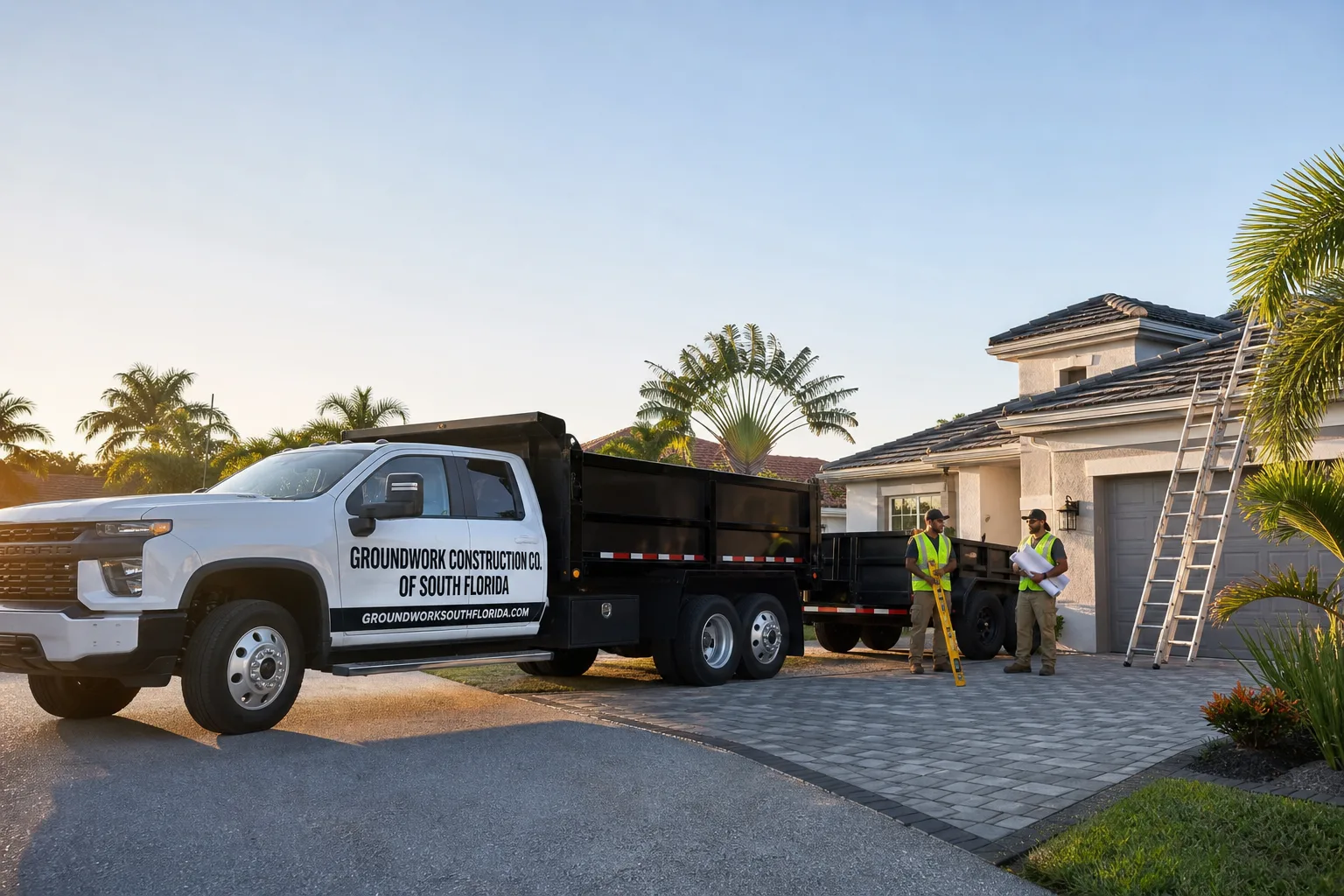
Tile Roofing in Southwest Ranches, FL: What It Costs and How Long It Takes
Tile roofing in Southwest Ranches, FL typically runs $8,000-$20,000 for a full replacement and $600-$2,500 for targeted repairs, with most residential projects taking 5 to 10 working days from tear-off to final inspection. Clay and concrete tile systems are the dominant choice here because they meet Broward County’s High-Velocity Hurricane Zone requirements while handling the intense wet-season exposure that comes with sitting at the edge of the Everglades. Call (844) 665-0162 and we’ll walk your specific roof geometry and give you a written estimate with line-item material choices.
How We Handle a Tile Roof from First Shingle to Final Walk
We’ve learned that Southwest Ranches homeowners want to know exactly when we’ll be on their property, what noise to expect, and when they’ll need to make a decision. Here’s how we sequence every tile roofing project:
Stage 1: Structural and decking inspection (Day 1, 2-4 hours)
Before we touch a single tile, we pull a sample section to check the condition of the underlayment and roof deck. Many Southwest Ranches estates built in the 1980s and 1990s still have original 15-pound felt that’s past its service life. You’ll decide here: replace the underlayment across the full roof or only in failed sections. Full replacement adds a day and roughly $1,200-$3,000 depending on square footage, but it’s what we recommend for any home approaching 25 years.
Stage 2: Tear-off and deck repair (Days 1-2)
Concrete and clay tile is heavy, running 600-1,100 pounds per square. We strip in layers, checking for deck rot around valleys, chimneys, and any low-slope transitions. If your property has multiple structures, common here, we stage debris removal to avoid crossing active pasture or paddock areas. You’ll confirm the disposal path and whether we’re protecting specific landscaping or irrigation lines.
Stage 3: Underlayment and flashing installation (Days 2-4)
In Southwest Ranches, we use a minimum two-ply system: ASTM D226 Type II felt or a self-adhered membrane in valleys and penetrations, with a synthetic underlayment field. Because this town sits in HVHZ, every fastener pattern and overlap gets documented for inspection. You’ll choose between standard valley metal or a more durable woven underlayment detail at this point, a $400-$900 variance on most homes.
Stage 4: Tile layout and installation (Days 4-7)
This is where the visual character gets locked in. We snap chalk lines, set the starter course, and establish the exposure pattern. You’ll do a mid-installation walk to confirm color consistency and profile alignment, especially important if you’ve selected a blended or variegated clay tile. We don’t grout or seal at this stage; the tile needs to settle through a few thermal cycles first.
Stage 5: Final inspection and documentation (Day 8-10)
Southwest Ranches uses the Broward County building department for final inspection, and we schedule that only after our internal punch list is complete. We deliver your manufacturer warranty registration, our workmanship documentation, and photos of the completed system. The town’s small permit office means we handle all scheduling, but you should expect the county inspector to need a 48-hour window.
The Tile Options You’ll Actually Choose Between
Not all tile performs the same here. Southwest Ranches homes, many on 1.25-acre spreads with long roof runs and multiple structures, need materials that handle both hurricane wind uplift and the reflective heat load of western Broward County.
- Standard-weight concrete tile ($8,000-$14,000 typical): The practical default. Profiles mimic clay barrel or flat shake, weighs roughly 950 lbs per square, and carries a Class A fire rating. Concrete absorbs more heat than clay, so we specify lighter colors or reflective coatings for west-facing exposures. Best for budget-conscious replacement on structurally sound decks.
- Lightweight concrete tile ($10,000-$16,000 typical): Engineered down to 600-750 lbs per square, which matters if your original roof was shingle or metal and the deck wasn’t built for standard tile mass. Often the only viable option for older agricultural structures converted to residential use without full structural upgrade.
- Natural clay tile ($14,000-$20,000+ typical): The premium choice for custom estates matching Mediterranean or Spanish Colonial architecture. Clay doesn’t fade, weathers to a softer patina, and handles thermal cycling better than concrete. The weight demands verified structural capacity; we’ll need engineer sign-off on pre-2000 construction.
- Flat or low-profile tile vs. high-barrel S-tile: Flat tile sheds water faster and works on steeper pitches common in custom designs. High-barrel S-tile creates deeper shadow lines but holds more debris in the water courses and needs more frequent valley clearing. Your roof pitch and surrounding tree canopy drive this call.
- Cool-roof rated vs. standard color: Broward’s solar heat gain is real. Cool-roof tile with an SRI above 29 can reduce attic temperatures 15-25 degrees, which translates to measurable AC load reduction on the long roof planes typical here. Adds 10-15% to material cost.
What Tile Roofing Costs in Southwest Ranches, FL
Most full tile roof replacements in Southwest Ranches fall between $8,000 and $20,000. Repairs start around $600 for isolated valley or ridge work and run to $2,500 when we’re addressing multiple leak points or replacing significant tile fields after wind damage.
Five factors move your number within that range:
- Roof size and complexity: A straightforward 25-square ranch on a single plane sits at the low end. A 40-square custom estate with multiple hips, valleys, dormers, and a detached garage pushes toward the top. Every penetration adds flashing labor.
- Existing deck condition: If we open up and find compromised plywood or insufficient fastening to meet current HVHZ standards, deck replacement adds $45-$85 per sheet plus labor. Older agricultural conversions are the most common surprise here.
- Material grade and profile: Standard concrete to premium imported clay can double material cost. We quote multiple tiers so you’re choosing, not being steered.
- Structural upgrade requirements: Pre-2000 homes and barn conversions may need engineered reinforcement to carry tile load. We flag this during inspection, never mid-project.
- Permit and inspection scope: Southwest Ranches projects pull Broward County permits with HVHZ documentation. Agricultural structures add a zoning clearance step that suburban contractors often miss, delaying projects by weeks if not handled upfront.
Our written estimates include tear-off, disposal, underlayment, tile, flashing, permits, and final inspection coordination. They don’t include gutter replacement, soffit repair, or interior drywall remediation from prior leaks, those are quoted separately if needed.
What Southwest Ranches Specifically Means for Your Tile Roof
This town is not Pembroke Pines. Southwest Ranches incorporated specifically to block the density and commercial development patterns that surround it, and that rural-preservation DNA shapes every construction project we take on here.
The housing stock is overwhelmingly custom-built estates and working ranches, many from the 1980s through 2010s, with a significant number of older agricultural structures that predate modern Florida Building Code wind-load standards. Multi-structure properties, main house, detached garage, guest house, barn, equipment storage, are standard. We regularly quote tile roofing projects that span three or four separate buildings, each with different structural capacities and permit paths.
Sitting at the western edge of developed Broward County, these properties face elevated flood and standing-water risk from the Everglades side during the June-November wet season. That shallow water table complicates any ground-access work and means we pay particular attention to low-slope transitions and valley drainage where water can back up during intense afternoon storms.
The permitting reality catches contractors off guard. Southwest Ranches maintains its own small permit office, and the review timeline runs longer than Broward County’s suburban queues, especially for agricultural structures needing zoning clearance. We’ve learned to submit complete packages with HVHZ documentation upfront rather than chasing corrections. If your property includes a barn or paddock shelter that needs re-roofing, that permit path is distinct from your main residence and requires specific agricultural zoning sign-off that almost no surrounding municipality demands.
All new or replacement roofing must meet High-Velocity Hurricane Zone standards, among the strictest in the country. That means enhanced fastening patterns, documented uplift resistance, and inspections that don’t allow shortcuts. We use materials from GAF, CertainTeed, Owens Corning, IKO, Atlas, Tamko, and Boral, selecting the system that matches your structure’s requirements and your aesthetic preference.
Homeowners here often pair exterior envelope work across multiple trades. If you’re considering Impact Windows & Doors in Southwest Ranches or Sliding & Patio Doors in Southwest Ranches, we coordinate that scope under a single schedule and single point of accountability. The same crew relationships, the same permit familiarity, the same inspection sequencing.
Serving Southwest Ranches, FL - Our Local Coverage Area
We’re based in the Southwest Ranches area and know this community well. Use the map below to see our service coverage - if you’re nearby, we can almost certainly help.
Frequently Asked - Tile Roofing in Southwest Ranches
Most residential tile roof replacements take 5 to 10 working days, with agricultural structures or multi-building estates running toward the longer end. The Broward County inspection scheduling adds 1-2 days beyond our labor. Call (844) 665-0162 and we’ll give you a specific timeline after seeing your roof layout.
Yes, all tile roof replacement and structural repair requires a Broward County building permit with High-Velocity Hurricane Zone documentation. If your project includes any agricultural structure, barn, stable, or paddock shelter, Southwest Ranches also requires a separate zoning clearance that suburban contractors often overlook. We handle both permit paths as part of our standard process.
Sometimes, if the existing deck is plywood or OSB in good condition with adequate fastening for HVHZ uplift standards. We verify this during our initial inspection; pre-2000 homes and converted agricultural buildings most often need partial or full deck replacement. You’ll know before we sign a contract, not after we start tearing off.
Tile roofing costs more upfront than asphalt shingle and sits comparable to or below standing-seam metal on a life-cycle basis. The $8,000-$20,000 range for tile compares to our Roofing in Southwest Ranches shingle pricing, but clay tile can last 50+ years versus 20-25 for architectural shingle. For a full comparison across all systems, see our Roofing service overview.
Manufacturer material warranties range from 50 years to limited lifetime depending on the tile line, with our workmanship backed by documented installation standards. We register your warranty with the manufacturer and deliver that paperwork at final walkthrough. Specific terms vary by brand; we’ll show you the exact coverage for each option you’re considering.
Get a Written Estimate for Your Southwest Ranches Tile Roof
Call (844) 665-0162 to schedule a free on-site estimate. We’ll walk your roof, check deck and structural capacity, discuss material options from our curated brand roster, and deliver a written quote with line-item pricing. If your property spans multiple structures, we’ll scope each building and sequence the work to minimize disruption to your daily routine. Southwest Ranches projects are a significant share of our Roofing work, we’re familiar with the town’s permit office, its agricultural zoning requirements, and the specific challenges of roofing at the edge of the Everglades.
Written by Raymond Estevez, Owner at Groundwork Construction Co., serving Southwest Ranches and South Florida.