
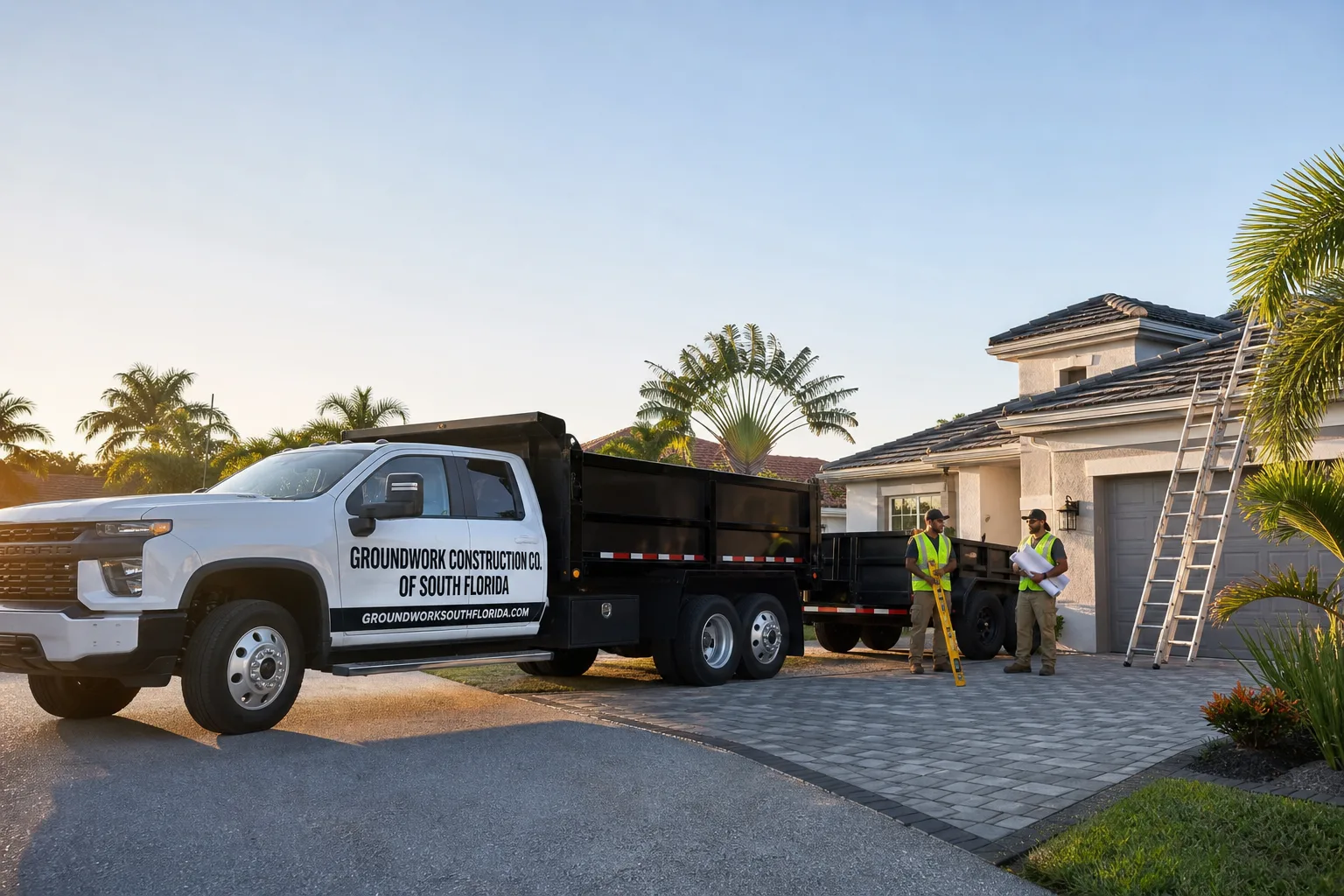
Tile Roofing in University Park, FL - Scope, Timeline, and Cost
Tile roofing in University Park, FL involves removing the existing roof system, inspecting and repairing the wood deck, installing a Miami-Dade NOA-approved underlayment and fastening system, then setting concrete or clay tile to HVHZ standards. Most residential jobs run 5 to 10 working days from tear-off to final inspection, with tile roof repair ranging from $600-$2,500 and full replacement typically falling between $8,000-$20,000 depending on tile type and deck condition. Call (844) 665-0162 and we’ll walk your specific roof and give you a written estimate with line-item choices.
How We Handle a Tile Roofing Job from Start to Finish
We break every tile roofing project in University Park into five distinct stages. Homeowners know exactly where we are, what decisions they need to make, and what comes next.
Stage 1: Site Survey and Material Submittal (1-2 days)
We walk the roof, measure every plane, and photograph the existing deck, flashings, and penetrations. Here’s where University Park’s HVHZ reality hits: we pull the Miami-Dade NOA certificates for every product we’re proposing - the tile itself, the underlayment, the fasteners, the valley metal. Out-of-area crews skip this step and pay for it later. We submit these documents with our permit application so the inspector sees a complete package on day one. You’ll decide between concrete and clay tile at this stage, and whether you want a standard or upgraded synthetic underlayment.
Stage 2: Tear-Off and Deck Inspection (1-2 days)
We strip to the wood. On the 1970s-1990s CBS homes common in University Park, we often find original plywood that’s survived decades but shows soft spots around chimneys, vents, and valleys. We mark every compromised sheet for replacement. This is the point of no return for hidden costs - if the deck needs more than 10-15% replacement, we pause, show you the photos, and adjust the scope before proceeding. No surprises at final invoice.
Stage 3: Dry-In and Flashing (1-2 days)
New underlayment goes down in shingled courses, taped at seams, with HVHZ-approved cap nails or screws at specified spacing. We replace all step flashings, counterflashings, and valley metal with NOA-listed products. The dry-in must pass a mid-roof inspection in Miami-Dade before tile can be loaded. We schedule this inspection ourselves and coordinate with the county - you don’t need to be home for it.
Stage 4: Tile Installation (2-4 days)
Crews set tile from the eaves up, following the manufacturer’s specified fastening pattern for wind uplift resistance. Concrete tile typically covers faster than clay due to uniform dimensions and weight. We pay special attention to ridge and hip caps, which take the highest wind loads in University Park’s storm exposure. You’ll see the color and texture come alive at this stage - it’s the most visible transformation.
Stage 5: Final Inspection and Cleanup (1 day)
Miami-Dade inspects for proper fastening, NOA compliance tags, and finished appearance. We pass the certificate to you with the warranty paperwork. Our crew runs magnetic sweep of the grounds for fasteners and tile fragments. The job isn’t done until you’re satisfied with the site condition.
The Tile Options You’ll Actually Choose Between
Not all tile performs the same in South Florida’s sun and storm cycles. Here’s what we present to University Park homeowners, with the honest trade-offs:
- Standard-weight concrete tile ($): The workhorse option. Manufactured in profiles ranging from flat-S to moderate barrel, concrete tile absorbs more heat than clay but costs 30-40% less. Lifespan runs 25-35 years with proper underlayment replacement at year 20-25. Best for homeowners who want the tile aesthetic without premium pricing, and who don’t mind slightly higher attic temperatures.
- Lightweight concrete tile ($$): Same profiles at roughly two-thirds the weight per square. Useful when the existing structure has load limitations we don’t want to reinforce. The trade-off is slightly reduced impact resistance - we don’t recommend it if you have overhanging trees with heavy branch drop.
- Clay tile ($$$): Natural fired clay, typically in S-tile or barrel profiles. Doesn’t fade, doesn’t absorb water, and sheds heat better than concrete. Authentic Spanish and mission styles require clay. The weight demands a robust deck - on some University Park homes built in the 1970s with original construction, we need to sister rafters or replace decking to handle the load. Lifespan exceeds 50 years; the tile often outlasts two underlayment cycles.
- Cool roof rated tile: Available in both concrete and clay formulations with higher solar reflectance. Adds $1.50-$3.00 per square foot but measurably reduces cooling load. Worth considering if your HVAC struggles in summer or if you’re planning to stay in the home 15+ years.
- Underlayment grade: Standard asphalt felt (30# or 40#) versus synthetic (polypropylene or rubberized asphalt). Synthetics cost more upfront but handle ponding and UV exposure far better during any delays between dry-in and tile set. In University Park’s June-October rainy season, we strongly recommend synthetic - a sudden tropical downpour on exposed felt can compromise the deck.
What Tile Roofing Costs in University Park, FL
| Project Scope | Typical Range |
|---|---|
| Tile roof repair (localized leak, limited tile replacement) | $600 - $2,500 |
| Partial re-tile (one slope or section) | $3,500 - $8,000 |
| Full tile roof replacement, standard concrete | $10,000 - $16,000 |
| Full tile roof replacement, clay or premium profile | $14,000 - $20,000 |
Five variables push your number up or down:
- Roof size and complexity: A simple gable on a 1,800-square-foot ranch costs less per square than a multi-hip roof with turrets and valleys. Every change of plane adds labor.
- Deck condition: Spot repair adds $75-$150 per sheet of plywood. Full deck replacement on a 2,500-square-foot roof can add $3,000-$5,500.
- Tile material: Clay runs 40-60% above concrete in material cost alone. Delivery from specialized suppliers also adds lead time.
- Height and access: Two-story homes or tight lot lines in University Park’s denser neighborhoods require scaffolding or specialized lift access, adding $800-$2,000.
- Permit and inspection scope: Miami-Dade’s HVHZ permitting carries higher fees than standard Florida Building Code jurisdictions, and the required NOA documentation review adds administrative time we build into our estimates.
Our written estimates include tear-off, disposal, deck repair up to a specified percentage, underlayment, flashings, tile, installation, permits, and final inspection. What typically isn’t included: structural engineering if we discover compromised trusses, chimney repair or rebuild, solar panel removal and reinstallation, or interior ceiling repair from pre-existing leaks. We flag these possibilities during the site survey so you’re not caught off guard.
What University Park Specifically Does to a Tile Roofing Job
University Park sits in ZIP 33222, entirely within Miami-Dade County’s High Velocity Hurricane Zone - the most stringent construction jurisdiction in the United States. This isn’t a paperwork distinction. Every roofing fastener, every square foot of underlayment, every piece of valley metal must carry a separate Miami-Dade Notice of Acceptance (NOA) beyond standard Florida Building Code approval. We’ve watched out-of-area contractors roll onto jobsites in University Park with perfectly code-compliant materials that lacked this second layer of certification, only to have the inspector red-tag the job and force a full material swap at homeowner expense.
The housing stock here tells its own story. Most homes are concrete block structures built from the 1970s through the 1990s, many substantially rebuilt or retrofitted after Hurricane Andrew in 1992. Those post-Andrew roofs often have stronger tie-downs and modified trusses, but the original 1970s stock can have undersized rafters for modern clay tile loads. We assess this during the site survey - it’s why we don’t quote tile roofing in University Park over the phone.
Proximity to Florida International University also means a notable inventory of multi-family and townhome complexes in the area, some with commercial-grade flat roofs converted to tile on modified slopes. These jobs trigger commercial inspection protocols and require contractor licensing beyond standard residential roofing - something we carry, but not every roofer advertising in University Park does.
And then there’s the water. University Park’s position on the western edge of Miami-Dade, adjacent to Everglades drainage systems, means the water table sits within two to three feet of grade. While this primarily affects foundation and utility work, it matters for tile roofing too: any crane or material staging on soft ground during the rainy season requires matting, and any dumpster placement needs consideration for load-bearing on saturated soil. We plan logistics around the June-October wet season, not just the weather on install day.
Serving University Park, FL - Our Local Coverage Area
We’re based in the University Park area and know this community well. Use the map below to see our service coverage - if you’re nearby, we can almost certainly help.
Frequently Asked - Tile Roofing in University Park
Most residential tile roofing jobs run 5 to 10 working days from permit approval to final inspection, with repair work often completed in 1 to 2 days. Miami-Dade’s inspection schedule can add a day or two if the county’s backed up during peak season. Call (844) 665-0162 and we’ll check current inspection lead times when we quote your job.
Yes - all tile roofing in University Park requires a Miami-Dade County building permit with HVHZ documentation, and most jobs need two inspections (dry-in and final). We pull the permit, schedule inspections, and ensure every product on your roof has a valid NOA before we start. You won’t need to visit the county office.
We can often preserve existing gutters if they’re in good condition and properly sloped, though we need to detach and reattach them during the roof edge work. If your gutters are more than 15 years old or show significant corrosion, we recommend replacement while the roof is open - it’s far more cost-effective than coming back later. We handle this as part of a full Roofing in University Park scope when needed.
Tile handles South Florida’s UV exposure, thermal cycling, and wind loads better than asphalt shingle, and it carries longer manufacturer warranties - often 50 years versus 25-30 for premium shingles. The trade-off is higher upfront cost and structural load requirements. For homeowners planning to stay 15+ years, tile typically delivers lower lifecycle cost.
Material warranties run 25-50 years depending on tile type, with separate coverage for underlayment (typically 10-30 years). Our installation workmanship is covered for the period we specify in your written contract. We register all warranties with the manufacturer and provide you the documentation - no chasing down paperwork years later. For homeowners also considering exterior upgrades, we often coordinate tile roofing with Impact Windows & Doors in University Park or Sliding & Patio Doors in University Park for unified project management.
Ready to Talk Tile Roofing for Your University Park Home?
Call (844) 665-0162 for a free, on-site estimate. We’ll walk your roof, photograph the condition, discuss concrete versus clay options that fit your structure and budget, and return a written line-item estimate within 48 hours. No deposit required to schedule, and we coordinate all Miami-Dade permitting and inspections. University Park homeowners have enough to manage - your roofing contractor shouldn’t add to it.
Written by Raymond Estevez, Owner at Groundwork Construction Co., serving University Park and South Florida homeowners with full-scope residential construction from driveway to roofline.