
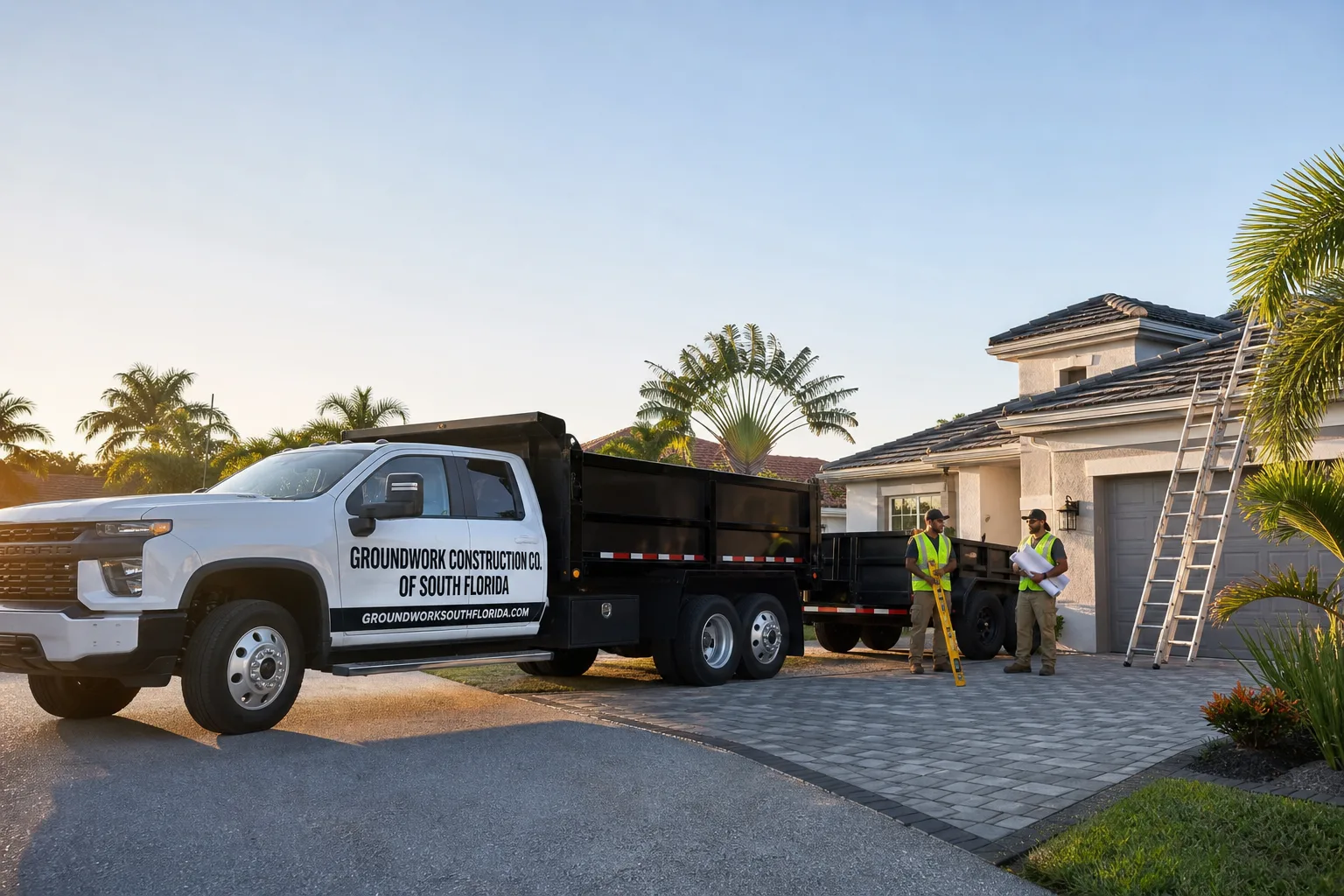
Tile Roofing in West Perrine: What It Costs, How Long It Takes, and What Your Home Needs
Tile roofing in West Perrine typically runs $8,000-$20,000 for a full replacement, with most projects completed in 5-10 working days depending on whether your existing deck needs repair. Because West Perrine sits in Miami-Dade County’s High Velocity Hurricane Zone, every tile product we specify must carry a Miami-Dade Notice of Acceptance - not just a Florida statewide approval. Call (844) 665-0162 and we’ll walk your roof, check your existing permits, and give you a written estimate with exact tile options that clear HVHZ inspection.
How We Handle a Tile Roof from First Call to Final Inspection
We’ve learned that tile roofing in West Perrine goes smoother when homeowners know what’s coming and when they need to make decisions. Here’s how we stage it.
Day 1: Site Evaluation and Documentation
We walk the roof, photograph every penetration, and pull whatever permit history exists on your property through Miami-Dade County’s online system. For the 1950s-1970s CBS homes common in West Perrine, we’re checking whether your roof-to-wall connections have hurricane straps or just toe-nailing - this determines whether your project triggers structural upgrades under current HVHZ rules. You’ll decide at this stage whether you want us to proceed with a full permit package or a preliminary estimate first.
Day 2-3: Tear-Off and Deck Inspection
We strip to the sheathing. This is where West Perrine’s two housing eras split the job. Pre-Andrew homes often reveal rotted plywood over original 1x planking, or worse, a built-up membrane roof that was never designed for tile load. Post-1992 rebuilds usually have adequate structural decking but may show improper fastening patterns from rushed reconstruction. We document everything, photograph the deck, and stop for your approval if the repair scope changes.
Day 4-5: Dry-In and HVHZ-Compliant Underlayment
We install a secondary water barrier - required in Miami-Dade since the post-Andrew code updates - followed by your chosen underlayment system. For tile, we typically specify a self-adhered modified bitumen layer beneath a mechanically attached cap sheet. This stage is where product approvals matter most: our underlayment carries the specific NOA number the county inspector will verify against his clipboard. No substitutions without documentation.
Day 6-8: Tile Installation and Flashing Detail
We set tile according to manufacturer fastening patterns - every tile type has its own HVHZ-approved nailing or screw schedule. Barrel tile, flat profile, and interlocking systems each behave differently in wind-driven rain, and we don’t mix methods. Valley flashing, pipe boots, and chimney saddles get custom-fabricated details. You’ll do a mid-installation walk if you’re available; we find homeowners in West Perrine often spot drainage concerns we can adjust before we’re finished.
Day 9-10: Final Inspection and Punch List
Miami-Dade County sends an inspector who checks product labels against the NOA list, verifies fastening patterns with a spot count, and signs off or flags corrections. We’ve never had a tile roof fail final inspection in West Perrine, but we’ve seen out-of-area contractors get red-tagged for using Broward County spec sheets. Once cleared, we clean the site, roll magnets for fasteners, and turn over your warranty packet.
The Tile Options You’ll Actually Choose Between
Not all tile belongs on every West Perrine roof. Here are the decisions that move your estimate and your long-term satisfaction:
- Clay barrel tile vs. concrete flat profile: Clay runs heavier and more expensive but carries 50+ year life expectancy and authentic Mediterranean character that fits older West Perrine homes. Concrete flat tile costs less per square, weighs less, and offers more color consistency, but its surface glaze can craze after 15-20 years of South Florida UV exposure. We stock both from manufacturers with current Miami-Dade NOAs.
- Lightweight structural concrete vs. standard weight: If your existing roof framing was built for shingle or membrane load, standard tile may require engineered reinforcement. Lightweight concrete tile gives the look without the structural upgrade, though it costs 15-25% more per square and has a shorter track record in HVHZ testing.
- Cool roof rated vs. traditional color: Miami-Dade’s energy code pushes toward Solar Reflectance Index (SRI) values above 29. Light-colored and specially coated “cool” tiles meet this without argument; dark terra cotta may trigger a complicating energy calculation. We run the math both ways so you choose knowingly.
- Two-piece vs. one-piece systems: Traditional two-piece barrel tile (separate pan and cover) allows more ventilation and repairability but costs more in labor. One-piece S-tile or flat interlocking systems install faster and perform well in wind uplift testing. Your roof geometry - hips, valleys, dormers - often dictates which system installs cleaner.
- Underlayment upgrade to self-adhered full coverage: Code minimum is a strip at the eaves and valleys. We recommend full self-adhered underlayment on any West Perrine home where the existing deck showed moisture intrusion. It’s a $1,200-$2,800 add depending on roof size, and it’s the difference between a repairable leak and a deck replacement in ten years.
What Tile Roofing Costs in West Perrine, FL
Tile roof replacement in West Perrine typically falls between $8,000 and $20,000. Tile roof repair runs $600-$2,500 for localized issues like cracked tile replacement, valley reflash, or underlayment patching.
Five variables push you toward the high or low end:
- Roof size and complexity: A simple hip roof on a 1,400-square-foot 1960s ranch sits near the bottom. A 2,800-square-foot home with multiple valleys, dormers, and a chimney in the post-Andrew section of West Perrine climbs toward the top.
- Existing deck condition: Sound plywood that passes our moisture probe keeps labor focused on tile. Rotten decking, especially where flat roofs were converted poorly in the 1990s, adds $2,000-$5,000 in structural repair before tile goes down.
- Structural tie-down upgrades: Pre-Andrew homes without hurricane straps trigger code-required upgrades at the roof-to-wall connection. This is non-negotiable in Miami-Dade permitting and adds $1,500-$4,000 depending on access and framing type.
- Tile material selection: Standard-weight concrete flat tile in a stock color keeps material costs controlled. Premium clay barrel, lightweight structural concrete, or custom color blends can double the material line.
- Permit scope and re-inspection history: If your home’s prior work was unpermitted - common in rushed post-Andrew reconstruction - Miami-Dade may require full current-code inspection of connections and deck. We research this upfront so you’re not surprised.
Our written estimates itemize tear-off, deck repair, underlayment, tile, flashing, permit fees, and final inspection. They do not include gutter replacement, soffit repair, or interior ceiling work from prior leaks - we flag these separately if needed.
Why West Perrine Homes Make Tile Roofing a Different Job
West Perrine’s unincorporated status means no municipal building department shortcuts the process. Every permit routes through Miami-Dade County, and every inspector enforces the HVHZ product-approval list exclusively. We’ve watched contractors who work comfortably in incorporated Cutler Bay walk onto a West Perrine job with Broward County spec sheets and get stopped cold at rough inspection. The invisible boundary matters.
The housing stock here tells its own story. The 1950s-1970s CBS homes along SW 168th Street and surrounding blocks often carry original built-up roofs that were never designed for tile load and lack modern strap tie-downs. When we strip these, we find toe-nailed rafters and 1x skip sheathing that won’t meet current uplift requirements. The early-1990s rebuilds, meanwhile, may have been pulled with permits and built to post-Andrew wind codes - or they may represent rushed owner-builder work that skipped structural inspection. We verify before we quote.
West Perrine’s position on the Miami Rock Ridge also shapes how we approach any structural modification. The oolitic limestone bedrock sits inches below grade in many yards, meaning footing upgrades for added load - if your tile choice requires them - don’t dig easily. Core drilling or jackhammering through solid rock is standard here, and out-of-area contractors who underbid this condition either absorb painful overruns or cut corners. We price it honestly from the start.
Because this work sits within a full roofing project in West Perrine, we coordinate tile selection with any impact windows and doors or sliding and patio door upgrades you’re planning - all of it subject to the same HVHZ approval list, all of it permit-linked through the same Miami-Dade inspection sequence. Our roofing crew works as part of Groundwork’s single-source system, so you’re not managing separate trades across incompatible schedules. We cover West Perrine as part of our South Florida service area, with the local knowledge that keeps permitting smooth.
Serving West Perrine, FL - Our Local Coverage Area
We’re based in the West Perrine area and know this community well. Use the map below to see our service coverage - if you’re nearby, we can almost certainly help.
Frequently Asked - Tile Roofing in West Perrine
Most tile roofing projects in West Perrine take 5-10 working days, with an additional 1-2 weeks for Miami-Dade permit issuance if we’re starting from scratch. Pre-Andrew homes needing structural tie-down upgrades add 2-3 days. Call (844) 665-0162 and we’ll check your permit history to give you a tighter timeline.
Yes - all roofing work in unincorporated West Perrine requires a Miami-Dade County building permit, and tile roofing triggers full HVHZ product-approval verification. We handle the permit package, the NOA documentation, and inspector scheduling as part of our standard process.
Usually, yes - we work around existing penetrations by custom-flashing each one to the tile profile. Relocation is only necessary if your current vent placement violates code minimum clearances or if you’re reconfiguring roof geometry. We identify any relocation need during our initial site evaluation.
Tile roofing typically costs more upfront than asphalt shingle and sits comparable to mid-range metal systems in this market. The trade-off is longevity - clay tile often exceeds 50 years in South Florida conditions, while asphalt shingle in HVHZ exposure typically needs replacement at 15-20 years. We run lifecycle cost comparisons if you’re weighing options.
Manufacturer material warranties on the tile itself typically run 50 years for clay and 30-50 years for concrete, depending on product line. Our workmanship warranty covers installation details for a period we specify in writing. The critical factor in West Perrine is that warranty coverage requires HVHZ-compliant installation - unpermitted or non-NOA work voids most manufacturer protection. We document everything for your file.
Ready to Talk Through Your Tile Roof?
We’ll walk your West Perrine roof, check your existing permit history, and give you a written estimate with tile options that clear Miami-Dade HVHZ inspection. No charge for the site visit. Call (844) 665-0162 or request an appointment - we’ll have a realistic scope and price range for you within 48 hours.
Written by Raymond Estevez, Owner at Groundwork Construction Co., serving West Perrine and South Florida.