
Tub-to-Shower Conversion in Pinewood: What It Costs and How Long It Takes
A tub-to-shower conversion in Pinewood typically runs $3,500-$10,000 and takes 5 to 10 working days from demolition to final inspection. Most 33167 homes built in the 1950s-1970s have the compact 5-foot alcove tub we’re removing, which keeps the footprint predictable. Call (844) 665-0162 and we’ll walk through your exact layout on a free site visit.
How We Handle a Tub-to-Shower Conversion Start to Finish
We’ve done enough of these in Pinewood’s older CBS homes to know where the surprises hide. Here’s the actual sequence, with what you’re deciding at each point.
Stage 1: Site measure and scope lock (Day 0, 1-2 hours on site)
We photograph the existing tub, check which walls are wet (plumbing) vs dry, and confirm whether your drain sits centered or offset. In Pinewood’s 1950s-1970s stock, offset drains are common; moving one adds a day and roughly $800-$1,400. You’ll decide here: keep the footprint or expand it, and whether to add a niche or bench.
Stage 2: Demo and substrate inspection (Days 1-2)
The tub, surround, and valve come out. We expose the subfloor and wall framing to check for rot, which we find more often than you’d expect given Pinewood’s year-round humidity and the fact that many of these original tubs leaked slowly for decades. If the concrete slab is intact and walls are clean, we proceed. If not, we pause for repair and adjust the timeline.
Stage 3: Rough plumbing and blocking (Days 2-4)
New valve body, drain line, and any relocated supplies go in. We also install blocking for grab bars or glass panels, even if you’re not adding them now. The county inspector gets called at this point; Miami-Dade requires a rough plumbing inspection before close-in, and their Pinewood-area inspector typically has a 2-3 day backlog.
Stage 4: Waterproofing and tile prep (Days 4-6)
We use a bonded membrane system (not old-school felt and wire) because Miami-Dade’s NOA requirements favor engineered systems with documented flood-cycle testing. Floors get pre-sloped, walls get sealed to the pan. You’ll see the layout one more time before tile starts.
Stage 5: Tile, glass, fixtures, and final inspection (Days 6-10)
Tile goes up, grout cures 24 hours, glass gets templated and installed, fixtures set. Final county inspection follows, and we hand over care instructions. Total elapsed calendar time is usually 2-3 weeks because of inspection scheduling.
The Options You’ll Actually Choose Between
Every tub-to-shower conversion in Pinewood involves these five decisions. Here’s what each costs you in dollars and daily use:
- Shower pan material: acrylic base vs. tiled mud pan. Acrylic runs $400-$900 installed, is factory-sloped, and carries a 10-year warranty. Tiled mud pans start around $1,800, look seamless with the walls, and last indefinitely if waterproofed correctly. We recommend acrylic for rental properties and mud pans for owner-occupied homes where you’re staying 10+ years.
- Wall surround: fiberglass surround vs. tile to ceiling. Fiberglass three-panel systems ($600-$1,200) install fast and meet code, but the Miami-Dade NOA database has fewer approved fiberglass systems than tile assemblies. Full tile ($1,500-$4,500 depending on material) gives you more approved product choices and handles Pinewood’s humidity better long-term.
- Valve and trim grade: builder basic vs. pressure-balance vs. thermostatic. Pressure-balance valves ($180-$350) protect against scalding when someone flushes. Thermostatic ($450-$900) holds exact temperature. In Pinewood’s older homes with original 1/2-inch supply lines, pressure-balance is usually the practical ceiling.
- Glass enclosure: framed slider vs. frameless hinged. Framed sliders ($800-$1,600) work in tight spaces. Frameless ($1,400-$2,800) needs thicker glass and precise walls; we verify your walls are plumb before quoting this, because 1960s block construction often isn’t.
- Niche, bench, or both. A recessed shampoo niche adds $300-$600. A fold-down or built-in bench adds $400-$1,200. In Pinewood’s typical 60-inch-wide alcoves, a bench often steals too much standing room; we usually recommend a niche and a corner footrest instead.
What Tub-to-Shower Conversion Costs in Pinewood, FL
| Component | Typical Range |
|---|---|
| Basic tub-to-shower conversion (acrylic pan, fiberglass surround, standard valve) | $3,500-$5,500 |
| Mid-grade conversion (tiled mud pan, ceramic tile walls, pressure-balance valve, framed glass) | $5,500-$7,800 |
| Full upgrade (tiled pan, stone or porcelain tile, thermostatic valve, frameless glass, niche, bench) | $7,800-$10,000 |
| Drain relocation | $800-$1,400 |
| Wall repair / rot remediation (if found during demo) | $400-$2,000 |
Five variables push your job up or down this range. First, keeping the existing drain location saves roughly $1,000 versus moving it. Second, the condition of surrounding walls once we open them; Pinewood’s humidity means we find compromised drywall or backer board in about one-third of jobs. Third, material grade, particularly whether you choose porcelain tile ($3-$8/sq ft) versus natural stone ($12-$25/sq ft). Fourth, whether your conversion triggers Miami-Dade’s substantial improvement threshold; if your total renovation crosses 50% of assessed value, code-upgrade costs can dwarf the shower itself. Fifth, glass complexity; a simple slider versus a custom frameless panel with notches for benches or niches.
A written estimate from us includes demolition, disposal, all materials, labor, rough and final plumbing, waterproofing, tile or surround installation, fixture setting, glass, and county permit fees. It does not include bathroom flooring extension (if you want tile beyond the shower footprint), electrical work beyond a simple exhaust fan swap, or any structural repair we discover after demo.
What Pinewood Homes Specifically Add to This Job
Pinewood sits in unincorporated Miami-Dade County, which means every tub-to-shower conversion permit runs through the county’s Building and Neighborhood Compliance office, not a city hall. That’s a distinction with real consequences. Every product we install, from waterproofing membrane to glass adhesive, must carry a Miami-Dade Notice of Acceptance (NOA), a post-Hurricane Andrew requirement that doesn’t exist just over the line in Broward. We’ve seen contractors unfamiliar with 33167 show up with perfectly good materials that lack NOA approval, only to fail inspection and restart the timeline.
The housing stock here is almost exclusively concrete block and stucco single-family homes from the 1950s through 1970s. These are compact bathrooms, usually 5×8 or 5×9 feet, with the tub tucked under a window or against an exterior wall. The original cast-iron tubs weigh 300+ pounds; getting them out without damaging the surrounding block or the floor tile border requires specific technique, not brute force. And because many of these homes sit close to the water table on Pinewood’s oolitic limestone plain, any subfloor work stays shallow; we don’t have the drainage depth you’d get in sandier inland soils.
The county’s substantial improvement rule looms over every project. If your tub-to-shower conversion is part of a larger Bathroom Remodeling in Pinewood that pushes total renovation value past 50% of your assessed property value, the county can require full hurricane-code upgrades, including roof-to-wall straps and impact-rated openings. We calculate this threshold before we pull the permit, so you’re not surprised mid-project. For homeowners also addressing exterior work, we often coordinate with our Metal Roofing in Pinewood and Tile Roofing in Pinewood crews to sequence inspections and avoid redundant mobilization.
Our Bathroom Remodeling crew serves Pinewood and the surrounding unincorporated areas regularly enough to know the inspection routes and the specific NOA numbers that pass.
Serving Pinewood, FL - Our Local Coverage Area
We’re based in the Pinewood area and know this community well. Use the map below to see our service coverage - if you’re nearby, we can almost certainly help.
Frequently Asked - Tub-to-Shower Conversion in Pinewood
Active construction is 5-10 working days, but calendar time is usually 2-3 weeks because Miami-Dade County inspections for Pinewood properties require scheduling rough and final plumbing checks, and county inspector availability typically adds 2-3 business days between stages. Call (844) 665-0162 and we’ll confirm current inspection lead times when we quote your job.
Yes. Because Pinewood is unincorporated Miami-Dade County, any plumbing fixture replacement that involves drain or valve modification requires a county building permit and two inspections: rough and final. The permit fee is typically $150-$300 depending on project valuation. We pull this as part of our standard process.
Often yes, if your existing tub drain is centered or nearly centered in the alcove. Many Pinewood homes from the 1960s and 1970s have offset drains that sit 6-10 inches from center, which forces a decision: accept an off-center shower drain (functional but visually awkward) or relocate it for $800-$1,400. We measure this on our first site visit.
$3,500 is the floor for a code-compliant conversion: acrylic shower pan, fiberglass surround, pressure-balance valve, standard curtain rod instead of glass, no drain relocation, and clean walls behind the old tub. Below that, you’re looking at unpermitted work or skipped waterproofing steps that won’t pass county inspection. We don’t build that way.
We warranty our waterproofing and tile installation workmanship for five years. Manufacturer warranties cover the shower pan (typically 10 years for acrylic), valve cartridge (lifetime on most pressure-balance valves), and glass hardware (varies by brand). Miami-Dade’s NOA requirement means every product we use has documented performance testing, which supports stronger warranty claims than non-approved alternatives.
Get a Free On-Site Estimate for Your Pinewood Tub-to-Shower Conversion
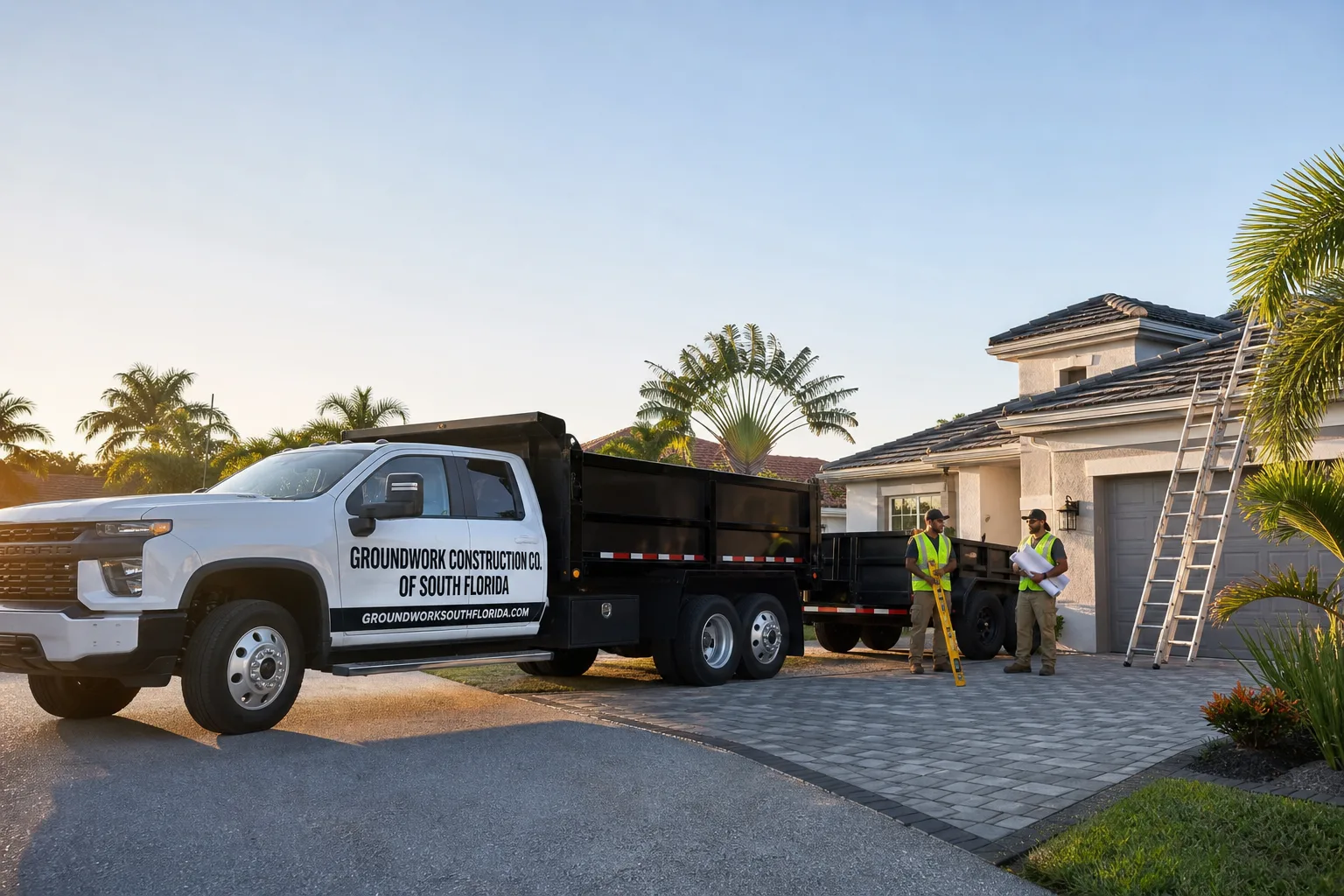
We’ll come to your 33167 property, measure your existing tub and alcove, check drain location and wall condition, and deliver a written estimate with line-item pricing and a realistic timeline that accounts for Miami-Dade permitting. No deposit required to schedule. Call Raymond Estevez and the team at Groundwork Construction Co. at (844) 665-0162.
Written by Raymond Estevez, Owner at Groundwork Construction Co., serving Pinewood and South Florida homeowners.