
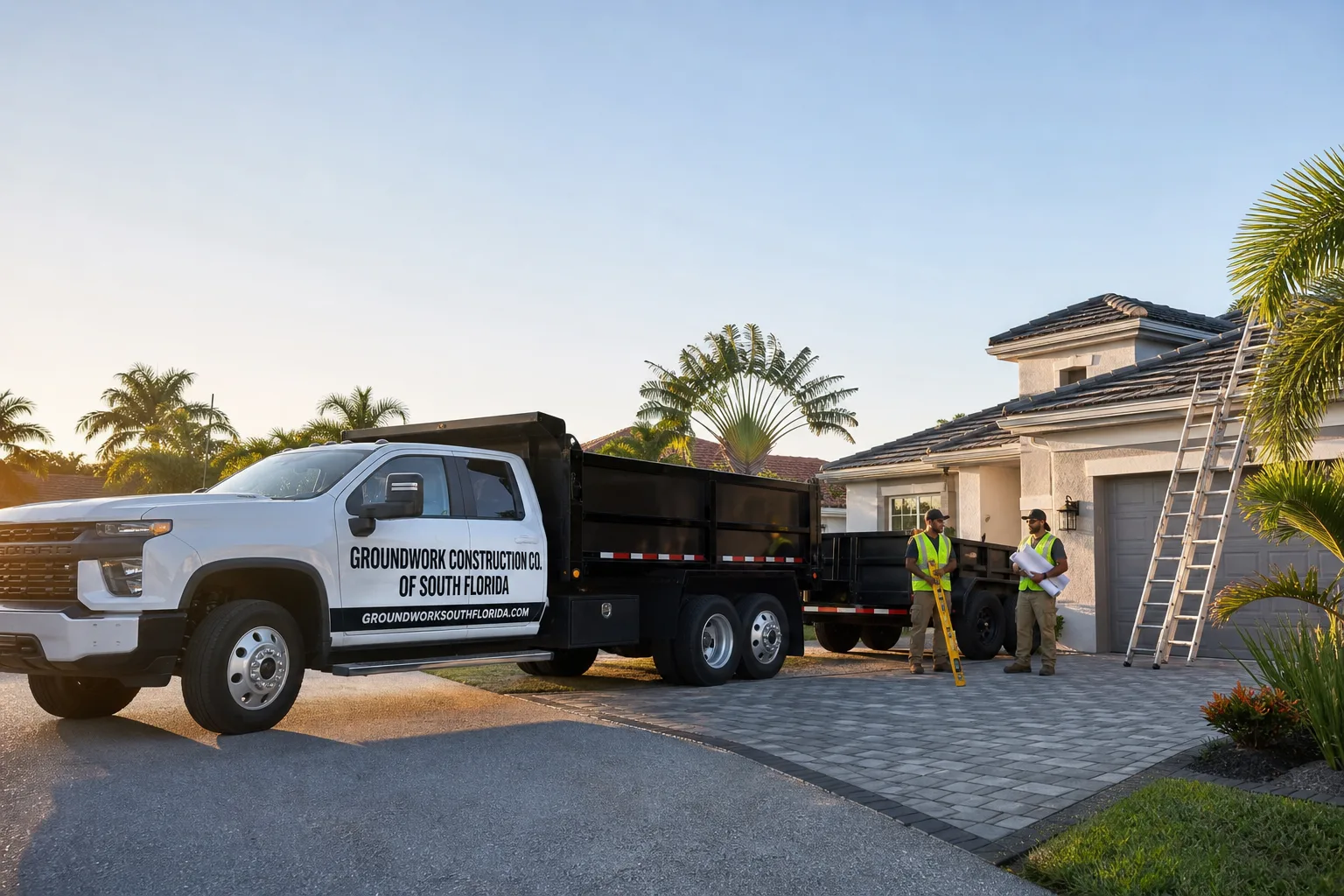
Wood Fence in Brownsville, FL - Cost, Timeline, and What to Know
A wood fence installation in Brownsville typically runs $3,500-$9,000 for residential properties, with most projects completed in 3-5 business days once permits clear. You’ll choose between pressure-treated pine, cedar, or redwood in styles ranging from basic post-and-rail to shadowbox privacy designs. Call (844) 665-0162 for a free on-site estimate and material samples you can see in your actual yard.
How We Build a Wood Fence - Start to Finish
Every wood fence we install in Brownsville follows a five-stage sequence. Here’s what happens, what takes time, and where your decisions matter.
Stage 1: Site measure and layout (Day 1, 1-2 hours)
We walk your property line with you, identify buried utilities through a Sunshine 811 locate, and flag any irrigation, septic, or drainage lines that aren’t on the county map. You’ll decide fence height, gate placement, and whether we’re following your exact lot line or stepping the fence to accommodate a slope. For Brownsville’s flat terrain, grade changes are usually minor, but we still shoot elevations every 10 feet.
Stage 2: Permit application and HOA notice (2-10 business days, concurrent with material order)
Miami-Dade County requires a building permit for any fence over 6 feet or any fence within a front setback. We file on your behalf with a signed owner affidavit. If your home falls under a homeowners association in the Brownsville area, we also submit the fence design for architectural review. Material lead time runs 3-7 days for standard pressure-treated pine; cedar and redwood can take 10-14 days depending on supplier stock.
Stage 3: Demo and post-hole excavation (Day 1 of construction, 4-6 hours)
Existing fence comes out, concrete footings get broken up and hauled. Post holes go 24-30 inches deep in Brownsville’s sandy loam, below the frost line and into stable soil. Because of Miami-Dade’s high water table - sometimes 12-18 inches below grade in this flat interior terrain - we sometimes hit standing water in holes. When that happens, we pump and set posts in rapid-set concrete same-day rather than waiting for natural drainage.
Stage 4: Post setting and frame assembly (Days 2-3)
Posts go in plumb, braced, and left to cure overnight. The next morning we install rails, then pickets or panels. For a 6-foot privacy fence, that’s three 2×4 rails per 8-foot section; for a 4-foot picket fence, two rails suffice. You’ll see the pattern and spacing before we nail off - this is your last chance to adjust board gap or cap style.
Stage 5: Gate hang, hardware, and final walk (Day 3 or 4)
We install gates with adjustable hinges and a latch you can operate from either side. A pressure-treated 4-foot walk gate gets standard zinc hardware; we upgrade to stainless or powder-coated hinges for coastal exposure. Final walk includes checking every post for plumb, confirming gate swing clearance, and cleaning the work area. You sign off, we pull the permit final inspection if required.
The Wood Fence Options You’ll Actually Choose Between
These aren’t abstract categories. They’re the specific decisions that move your fence from basic to built-to-spec.
- Pressure-treated pine ($, 10-15 year lifespan in South Florida) - The standard for a reason. Southern yellow pine, pressure-impregnated with ACQ or CA preservative, resists rot and termites. In Brownsville’s humidity and salt-laden air, expect surface checking and some warp within 3-4 years unless you stain or seal. Best for: rental properties, budget-conscious homeowners, fences you’ll replace when you sell.
- Western red cedar ($$, 15-20 years with maintenance) - Naturally rot-resistant without chemical treatment, lighter weight, straighter grain. Takes stain beautifully. The trade-off: cedar absorbs moisture fast in humid climates, so an unsealed cedar fence in Brownsville will gray and soften within two years. Best for: homeowners who plan to stain every 2-3 years and want the grain visible.
- Redwood ($$$, 20+ years with care) - Denser than cedar, more stable, richer color. Harder to source in South Florida; we order through specific distributors with Miami-Dade NOA documentation. The premium shows in weight and longevity. Best for: permanent residences where the fence is part of a larger landscape design, especially when paired with Paver Driveways in Brownsville or other hardscape work.
- Board-on-board vs. shadowbox vs. stockade - Board-on-board overlaps vertical boards for full privacy and a finished look from both sides. Shadowbox alternates boards on either side of the rail, giving partial privacy with airflow. Stockade butts tight pickets with no gap; fastest to install, least expensive, but warps show more. Your HOA may mandate one style; we check before you decide.
- Post cap and trim details - Flat caps are standard. Pyramid or ball caps add $8-$15 per post. A 2×6 rot board at ground level extends post life by keeping water off the end grain. In Brownsville’s wet season, we recommend it.
What Wood Fence Costs in Brownsville, FL
| Project Scope | Typical Range |
|---|---|
| Basic 4-ft picket fence, 100 linear feet, pressure-treated pine | $3,500-$4,800 |
| 6-ft privacy fence, 150 linear feet, pressure-treated pine | $5,500-$7,200 |
| 6-ft privacy fence, 150 linear feet, cedar or redwood | $7,000-$9,000 |
| Gate addition (per gate) | $350-$800 |
| Removal and haul-away of existing fence | $400-$1,200 |
Five variables push your job to the high or low end of these ranges:
Linear footage and layout complexity. A straight run along one property line is efficient. Multiple corners, a return along the front, or stepped sections on even slight grade add labor and waste.
Existing fence removal. Old wood fence with rotted posts set in concrete takes longer to extract than a chain-link fence with sleeve anchors. We price demo separately so you can compare if you handle it yourself.
Material grade and species. #1 grade pressure-treated has fewer knots and twists than #2, but costs 15-20% more. Cedar and redwood multiply the material line further.
Access and site conditions. Tight side yards, pool equipment that can’t be moved, or a need to hand-carry materials through a gate rather than drive to the back - each adds hours.
Permit scope and HOA requirements. Miami-Dade’s permit fees are standardized, but some Brownsville-area HOAs require engineer-stamped drawings for fences over 6 feet or specific setback variances. We handle the paperwork, but the engineering review adds cost and time.
Our written estimates include materials, labor, permit fees, and final inspection. They don’t include irrigation relocation, tree removal, or sod repair outside the fence line. Call (844) 665-0162 for an exact quote - estimates are free.
What Brownsville Homes Specifically Mean for Your Wood Fence
Brownsville sits in ZIP 33142, inside Miami-Dade County’s High-Velocity Hurricane Zone. That designation changes what materials we can legally use and how inspectors evaluate the finished fence.
Every wood fence product - posts, fasteners, hardware, even gate hinges if they’re metal - must carry a Miami-Dade Notice of Acceptance (NOA). A pressure-treated post with a standard Florida Product Approval number from a supplier in Broward County? Rejected here. We’ve seen contractors from outside Miami-Dade learn this the hard way when an inspector fails a job and requires tear-out. We source specifically through Miami-Dade-approved distributors to avoid that scenario.
The housing stock matters too. Most Brownsville homes are 1950s-1970s concrete block construction, built before Hurricane Andrew rewrote the code. Original lot lines were sometimes informal; we’ve found fences installed 6 inches onto neighboring property because a 1960s survey was never updated. Before we dig, we verify your survey or recommend a boundary line stakeout if there’s any question.
Then there’s the water table. In Brownsville’s flat interior, post holes can hit saturated soil even in dry months. We don’t pour dry concrete and hope; we use rapid-set mixes rated for wet conditions and pump standing water before setting. Skip this step, and posts lean within two seasons. The salt-laden air also means we specify hot-dip galvanized or stainless fasteners even on inland jobs - standard zinc-coated hardware corrodes faster here than in Orlando or Tampa.
Homeowners in Brownsville often pair a new wood fence with other exterior work. If you’re addressing the full property envelope, Fence Installation in Brownsville is part of a broader scope we handle as your single-source contractor. We also build Concrete Driveways & Concrete Work in Brownsville for homeowners who want one accountable team from driveway to property line.
Serving Brownsville, FL - Our Local Coverage Area
We’re based in the Brownsville area and know this community well. Use the map below to see our service coverage - if you’re nearby, we can almost certainly help.
Frequently Asked - Wood Fence in Brownsville
Most wood fence projects take 3-5 business days of actual construction once materials arrive and permits clear. Permit review in Miami-Dade typically runs 3-5 business days for a standard residential fence; HOA architectural review, if required, can add 1-2 weeks. We schedule construction only after both are in hand so you’re not waiting on paperwork mid-job. Call (844) 665-0162 to check current permit turnaround times.
Yes, if your fence exceeds 6 feet in height or sits within a front yard setback. Miami-Dade County requires a building permit with a site plan showing the fence location relative to property lines. We file the application, pull the permit, and schedule inspections. For fences 6 feet or under in side or rear yards, a zoning permit may suffice - we confirm based on your specific lot. The key point: any product we use must have a Miami-Dade NOA, not just a statewide Florida Product Approval.
Usually, yes. We locate irrigation lines through Sunshine 811 and visual tracing before digging. Most residential sprinkler lines run 6-8 inches deep in Brownsville, shallow enough that standard 24-inch post holes don’t intersect them. If your system has a main line running exactly where a post needs to go, we’ll show you the conflict and either shift the post 6-12 inches or temporarily relocate the line. We don’t cut lines and bury the problem.
Pressure-treated pine wood fence typically costs less upfront than vinyl or aluminum for the same linear footage. Over 15-20 years, the math shifts: wood requires staining or sealing every 2-3 years in South Florida’s UV and humidity, while vinyl and aluminum need only occasional cleaning. If you plan to stay in the home long-term and want minimal maintenance, vinyl or aluminum may cost less in total ownership. We install those too through our Fence Installation crew and can price all three for comparison.
We warranty our workmanship - post plumb, gate function, hardware attachment - for the period specified in your written contract. Wood itself is a natural material; we can’t warranty against warp, check, or rot because it’s subject to environmental conditions we don’t control. Pressure-treated pine carries a manufacturer’s limited warranty against fungal decay and termite damage; cedar and redwood rely on their natural properties without a manufacturer backing. We specify the best grade available and proper installation to maximize lifespan, and we’ll show you maintenance steps that protect your investment. Call (844) 665-0162 for warranty specifics in your proposal.
Ready for a Wood Fence Estimate in Brownsville?
We’ll walk your property, confirm your lot lines and any HOA requirements, and leave you with a written estimate that breaks out material options, labor, permit fees, and timeline. No deposit required to schedule. Call (844) 665-0162 or request your free estimate through our Brownsville service page. Raymond Estevez or a member of our team will handle your project from first measurement to final inspection.
Written by Raymond Estevez, Owner at Groundwork Construction Co., serving Brownsville and South Florida homeowners.