
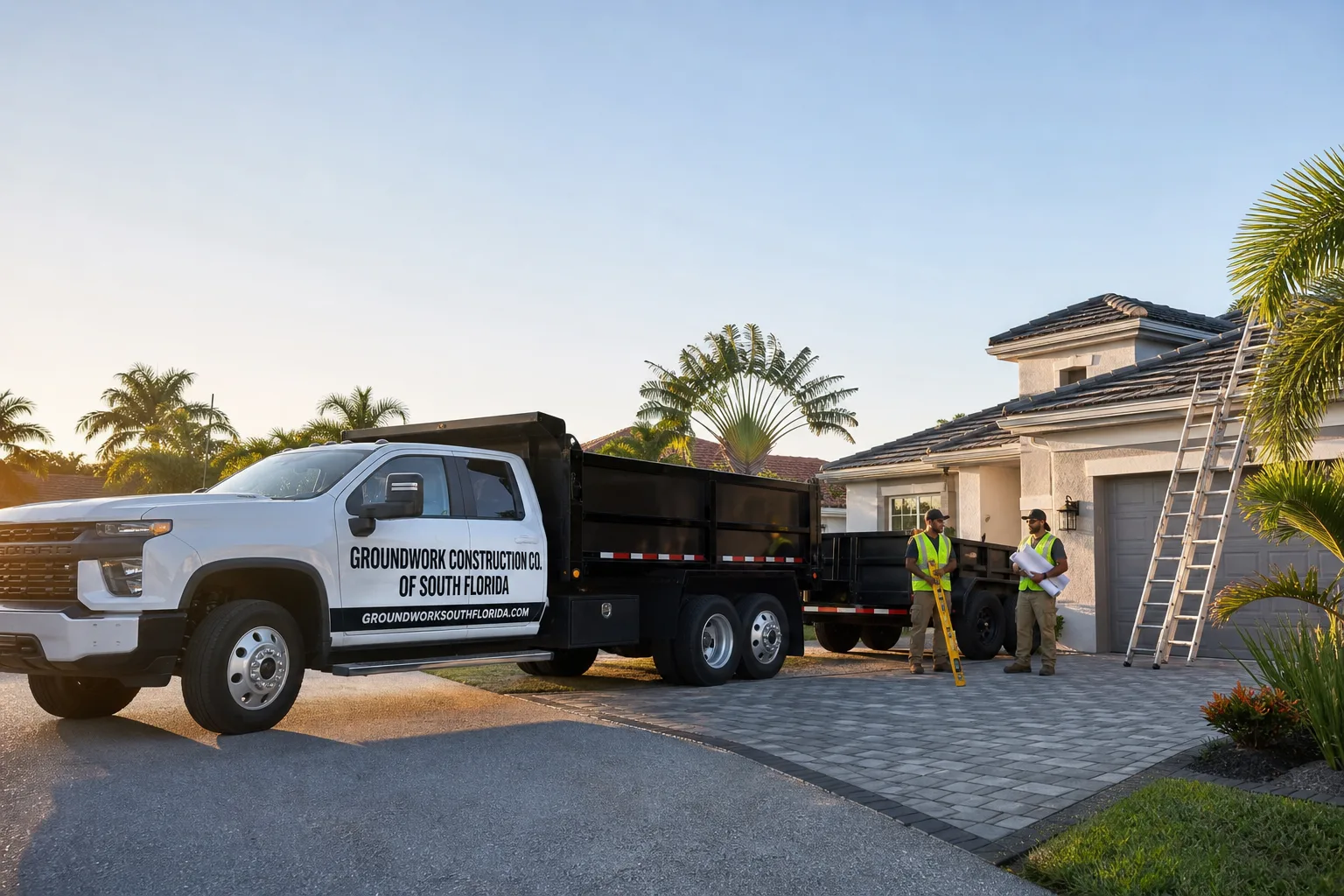
Wood Fence in Homestead, FL: What It Costs and How Long It Takes
A wood fence installation in Homestead typically runs $3,500-$9,000 for a standard residential lot, with most projects completed in 3-5 business days once permits clear. You’ll choose between pressure-treated pine, cedar, or redwood in 4-foot to 8-foot heights, with picket, board-on-board, or shadowbox styles. Call (844) 665-0162 and we’ll walk your property, check your survey, and give you a written estimate with no obligation.
How We Build a Wood Fence from First Stake to Final Picket
Day one is layout and utility locate. We pull your property survey, mark the line with spray paint and stakes, and call 811 for the underground locate. In Homestead’s post-Andrew subdivisions, we often find sprinkler lines running tight to the property edge in Silver Palm or Keys Gate, so we flag those by hand before the auger hits dirt. You’ll need to decide exact gate placement today; once posts are set, moving a gate means new holes and a permit amendment.
Day two is post setting. We dig 24-inch holes minimum, deeper if we hit the marl or organic muck common west of Krome Avenue, and set 4×4 pressure-treated posts in concrete. In flood-prone sections of 33033 and 33034, we sometimes spec post-base anchors or elevated concrete collars to keep the wood out of standing water during wet season. Posts cure overnight; no fence panel goes up until the concrete hits initial set.
Day three is rail and panel hang. We install the horizontal 2×4 rails, then fasten pickets or boards with hot-dipped galvanized or stainless fasteners - never standard screws in Homestead’s salt-air climate. This is when you’ll see the exact spacing and pattern; we stop for your sign-off before the final fastener goes in. Most homeowners in newer Homestead builds want the fence face-out toward the street for curb appeal, but HOA covenants in communities like Oasis or Malibu Bay sometimes dictate otherwise.
Day four is gates, hardware, and detail work. We hang gates with adjustable truss rods, install latches and hinges rated for the gate’s weight, and add a gravity latch or keyed deadbolt depending on whether this is pool access or perimeter security. If you’re part of a full Fence Installation in Homestead project with multiple fence types, we sequence the wood sections last so they don’t take damage from equipment moving through.
Day five is walkthrough and documentation. We photograph the completed fence, note any utility easements or drainage swales we worked around, and hand you the maintenance guide. If Miami-Dade permitting required a final inspection, we meet the inspector and don’t close the job until it’s signed off.
The Wood Fence Options You’ll Actually Decide Between
- Pressure-treated pine: The standard for Homestead fences. Southern yellow pine injected with ACQ or CA preservative, rated for ground contact. Costs least upfront, holds stain well, but checks and cracks within 3-4 years in our UV exposure. Best for rental properties or homeowners planning to sell within five years.
- Cedar: Western red cedar or local equivalent. Naturally rot-resistant, lighter weight, straighter grain. Costs 30-40% more than pine but takes a clear sealant beautifully and doesn’t require pressure-treatment chemicals. The trade-off: softer wood, so dogs and lawn equipment leave marks more easily.
- Redwood: Premium option, rarely spec’d in Homestead unless the homeowner is matching existing California architecture or wants a specific aesthetic. Price jumps significantly, availability is spotty through South Florida distributors, and the performance gain over cedar in our climate is marginal.
- Picket style (4-6 feet): Open, decorative, least wind load. Common in front yards where Homestead HOAs restrict solid fencing. Gaps let hurricane-season gusts through, which matters in HVHZ compliance.
- Board-on-board (6-8 feet): Solid privacy, overlapping vertical boards on both sides of the rail. Blocks sightlines completely, adds wind load that requires closer post spacing and deeper footings. We engineer for 140+ mph gusts per Miami-Dade requirements.
- Shadowbox: Alternating boards on either side of the rail, giving partial privacy with airflow. The compromise pick for homeowners who want screening without the full sail effect of a solid wall in a storm.
- Post cap and trim details: Pyramid, flat, or solar-light caps; 1×4 or 1×6 trim boards at the top. These are where a fence goes from functional to finished, and where a small upgrade budget shows disproportionately.
What Wood Fence Costs in Homestead, FL
Wood fence installation in Homestead ranges from $3,500 to $9,000. Here’s what pushes you toward either end:
| Cost Driver | Low-End Scenario | High-End Scenario |
|---|---|---|
| Linear footage | Under 150 ft (small lot in 33033) | 300+ ft (corner lot or acreage near Redland) |
| Existing fence removal | None or homeowner-handled demo | Old fence with concrete footings to extract |
| Material grade | Pressure-treated pine, standard picket | Cedar or redwood, board-on-board, cap trim |
| Site conditions | Level, clear, no utilities | Expansive soil, drainage rework, sprinkler relocation |
| Gate count and type | Single 4-foot walk gate | Double 10-foot drive gate with hardware upgrade |
A written estimate from our Fence Installation crew includes posts, rails, pickets, fasteners, concrete, basic hardware, and permit application. It does not include sprinkler repair, tree removal, or sod replacement if we need to trench for drainage. If your property line is disputed, we require a current survey before we stake; fence built in the wrong place is an expensive fix in Miami-Dade. Call (844) 665-0162 for an exact quote - estimates are free.
What Homestead Homes Specifically Do to This Job
Homestead’s housing stock is almost entirely post-Hurricane Andrew construction, rebuilt to Miami-Dade High-Velocity Hurricane Zone standards after 1992. That matters for wood fence in ways it wouldn’t in Fort Lauderdale or Palm Beach. Every product and method we use must carry a Miami-Dade Notice of Acceptance (NOA) or Florida Product Approval - a compliance layer that out-of-county contractors routinely miss. We’ve seen fences pulled off market by inspectors in Silver Palm and Keys Gate because a post anchor or fastener lacked the right paperwork.
The CBS construction typical here means your home sits on a slab, often with a narrow planting bed between slab edge and property line. That limits post depth and sometimes forces us to core-drill through existing concrete rather than dig. In the Redland corridor west of Krome Avenue, older agricultural parcels have no slab, but the organic muck and marl soils require longer posts or helical anchors to prevent lean after the first wet season.
HOA architecture committees in master-planned communities are active and specific. Malibu Bay, Oasis, and similar developments typically restrict wood fence to side and rear yards only, mandate 6-foot maximum height, and require stain colors that match the community palette. We pull the design guidelines before we spec your fence; fighting an ARC denial costs more than doing it right the first time.
And then there’s the water table. Homestead’s flat terrain and high groundwater mean any hole we dig wants to fill with water from June through October. We schedule post-setting for drier windows when possible, and we spec ground-contact-rated lumber even for above-grade portions because splash and wicking are constant realities here.
Serving Homestead, FL - Our Local Coverage Area
We’re based in the Homestead area and know this community well. Use the map below to see our service coverage - if you’re nearby, we can almost certainly help.
Frequently Asked - Wood Fence in Homestead
Physical construction takes 3-5 days once we start, but permit review through Miami-Dade adds 2-4 weeks for a standard residential fence. We file the application as soon as you approve the estimate, and we don’t schedule materials delivery until the permit is in hand. If your HOA requires separate ARC approval, add another 1-2 weeks to the front end.
Yes. Miami-Dade County requires a building permit for any fence over 4 feet tall or any fence on a corner lot where sight-line clearance is a factor. We handle the permit application, the NOA documentation for all materials, and the scheduled inspections. Pulling a permit yourself is possible but tedious; most homeowners in Homestead have us bundle it with the construction contract.
Usually, yes. We locate sprinkler lines with 811 and visual tracing, then adjust our post spacing to miss them when possible. If a head sits exactly on the property line, we sometimes cap and relocate that single zone rather than rerouting the main line. We’ll flag any sprinkler conflicts during the site visit so you’re not surprised by change orders.
Cedar costs 30-40% more but resists rot without chemical treatment and holds a natural finish longer in our UV and humidity. For a fence you’ll live with for 10+ years, the upgrade pays off. For a rental or a sale in 3-5 years, pressure-treated pine is the rational choice. We stock both and don’t push either; you choose the brand, we handle the build.
Our workmanship warranty covers post plumb, gate function, and structural integrity for the period we specify in your contract. Wood itself is a natural material; we don’t warranty against checking, warping, or decay from ground contact beyond the manufacturer’s rating. We do provide a maintenance schedule - reseal every 2-3 years in Homestead’s sun - and we offer a maintenance program if you’d rather we handle it. Call (844) 665-0162 to discuss coverage details for your specific project.
Get Your Homestead Wood Fence Estimate
We’ll walk your property, check your survey and HOA guidelines, and deliver a written estimate with line-item pricing and a realistic timeline. No deposit required to schedule, and we don’t start work until you’ve approved every detail. Call (844) 665-0162 or request a callback - most Paver Driveways in Homestead and Concrete Driveways & Concrete Work in Homestead homeowners who hire us for hardscape end up calling back for fence work because they’d rather deal with one contractor who knows their property. We’re ready when you are.
Written by Raymond Estevez, Owner at Groundwork Construction Co., serving Homestead since our founding.