
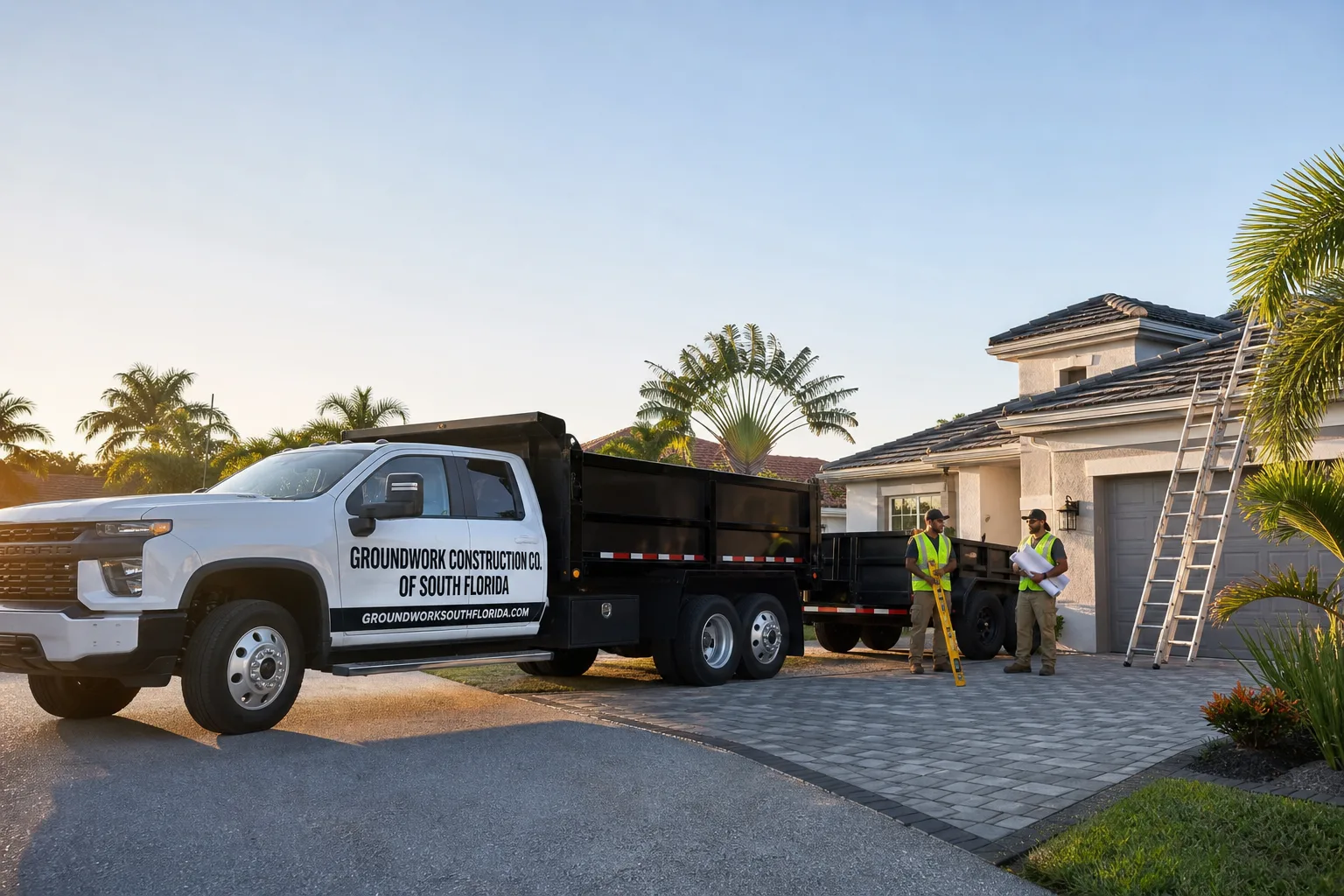
What Does a Wood Fence Cost and Involve in Key Biscayne?
A wood fence in Key Biscayne, FL typically runs $3,500-$9,000 for a standard residential installation, with most projects completed in 3-5 business days once permitting clears. Because Key Biscayne sits in Miami-Dade’s High-Velocity Hurricane Zone, every post, panel, and fastener must meet NOA-approved wind-load standards that mainland Miami doesn’t face. Call (844) 665-0162 for a free on-site estimate and timeline based on your property’s specific exposure and setback requirements.
How We Build a Wood Fence in Key Biscayne - Start to Finish
We’ve learned to build every wood fence in Key Biscayne around the island’s twin realities: salt air that devours standard hardware, and HVHZ code that rejects anything less than engineered wind resistance. Here’s how the actual job unfolds.
Day 1: Layout, Utility Marking, and Post Placement
We arrive with the survey and permit set in hand - Key Biscayne requires both before we break ground. Our crew marks the line, calls 811 for utility locates (mandatory, and the island’s buried infrastructure is dense near Crandon Boulevard corridors), then sets posts in NOA-approved concrete footings. Posts here get set deeper than inland specs: 30-36 inches minimum in sandy, well-draining soil that offers less lateral resistance. We use hot-dip galvanized or stainless-steel post brackets and carriage bolts - standard zinc-coated hardware shows surface rust within 18 months on this island. Homeowner decision needed today: exact gate location and swing direction, which affects post spacing and hinge hardware spec.
Day 2: Post Setting and Initial Inspection
Concrete cures overnight in this climate - the heat and humidity actually accelerate early strength gain, but we still don’t hang panels until the 24-hour mark. If the project falls under a homeowner association along the oceanfront or bay side, this is typically when the HOA’s architectural reviewer walks the line. We’ve worked with most Key Biscayne associations; they generally enforce height limits (6 feet rear, 4 feet front in most covenants) and material consistency with adjacent properties. Homeowner decision: stain color if we’re pre-finishing boards, or whether to leave natural and seal later.
Day 3: Panel Installation and Hardware Hang
Panels go up with stainless-steel fasteners only - every screw, nail, and connector. We spec ring-shank nails or structural screws for shear resistance in hurricane-force gusts. For picket styles, we use 5/8-inch or 3/4-inch thick boards; thinner stock warps faster in this humidity. For horizontal privacy styles, we gap boards 1/4 inch to allow for expansion - without it, boards buckle by the second summer. Gates get three hinges minimum, with marine-grade stainless latches and self-closing spring mechanisms where pools are present. Homeowner decision: cap style on posts (flat, pyramid, or custom), and whether to add a decorative top rail.
Day 4: Final Grading, Drainage Check, and Detail Work
We backfill post holes, grade for positive drainage away from the fence line (standing water accelerates rot at the base), and install gravel or concrete mow strips where requested. Any irrigation lines disturbed during post-setting get repaired or rerouted - common on older lots near the 1960s-era homes off Harbor Drive where sprinkler systems weren’t originally mapped to modern standards. We apply the first coat of sealant or stain if specified in the contract. Homeowner decision: final walk acceptance or punch-list items.
Day 5: Final Inspection and Documentation
Miami-Dade requires a final inspection for all new fencing in the HVHZ. The inspector verifies post depth, concrete footing diameter, fastener type, and wind-load connection details against the NOA documentation. We provide the homeowner with the inspection approval, product NOA sheets, and our workmanship warranty documentation. The fence is now legally complete and insurable. Typical total elapsed time from contract to final inspection: 2-4 weeks, with permitting consuming half that window.
The Wood Fence Options You’ll Actually Choose Between in Key Biscayne
Not all wood fence builds suit this island. Here are the real configurations we quote, with the honest trade-offs for salt-air exposure and HVHZ compliance.
- Pressure-treated pine: The most common spec we install. Southern yellow pine, pressure-infused with ACQ or CA preservative, resists rot and termites. In Key Biscayne’s salt air, it still needs restaining every 2-3 years, and the treatment doesn’t prevent surface checking. Budget-friendly at the low end of our $3,500-$9,000 range, but ongoing maintenance is real.
- Cedar: Western red cedar contains natural tannins that resist decay without chemical treatment. It weathers to a silver-gray if left unstained, which some homeowners prefer. Costs 25-35% more than pressure-treated pine. Softer wood, so it dents more easily - less ideal if you have large dogs or expect heavy gate use.
- Redwood: Premium option with exceptional dimensional stability in humidity swings. We spec this for oceanfront properties where the fence gets direct salt spray. Highest material cost, longest natural lifespan, but still requires sealing to maintain color. Pushes most jobs toward the upper half of our pricing range.
- Picket style (3-4 feet):strong> Front-yard and decorative applications. Meets most Key Biscayne HOA front-yard height limits. Less wind load than solid privacy, so post spacing can stretch to 8 feet. Not suitable for pool enclosures or rear privacy needs.
- Board-on-board privacy (6 feet): Overlapping vertical boards block sightlines completely. Heaviest wind load, so posts go at 6-foot centers with heavier gauge hardware. Required for most rear-yard pool enclosures per Florida pool barrier code. Our standard spec for Key Biscayne single-family homes.
- Horizontal privacy: Modern aesthetic with boards running left-to-right. Requires more posts and blocking for structural integrity in HVHZ. We use 2×6 or 5/4×6 boards minimum to prevent sag. Popular in post-Andrew rebuilds with contemporary architecture.
- Cap-and-trim finish: Adds a 2×6 top rail and 1×2 trim to cover board ends. Reduces water intrusion into end grain, the most common failure point in humid climates. Adds $8-$12 per linear foot but extends stain intervals.
What Wood Fence Costs in Key Biscayne, FL
| Project Component | Typical Range |
|---|---|
| Wood fence installation (total project) | $3,500 - $9,000 |
| Pressure-treated pine, picket style | $3,500 - $5,500 |
| Pressure-treated pine, 6′ privacy | $5,000 - $7,500 |
| Cedar or redwood, 6′ privacy | $6,500 - $9,000 |
| Horizontal style premium spec | $7,000 - $9,000+ |
| Gate with stainless hardware | $400 - $900 each |
| Cap-and-trim upgrade | $8 - $12 / linear ft |
Five variables move your number within this range. Linear footage is obvious - a 200-foot perimeter costs roughly double a 100-foot run. Existing fence removal adds $3-$6 per linear foot for demo and haul-off; older Key Biscayne properties often have concrete footings from previous fences that must be extracted. Material grade separates pressure-treated pine from cedar or redwood, a 25-50% swing. Access difficulty matters on tight lots near the Rickenbacker Causeway where equipment staging is limited - we may hand-carry materials or use compact excavators, adding labor hours. Permit complexity varies: straightforward rear-yard privacy fences clear faster than corner-lot installations or any fence near a wetland setback, where additional Miami-Dade environmental review applies.
Our written estimate includes posts, concrete, panels, fasteners, gates, hardware, permitting, and final inspection. It does not include irrigation repair, tree or stump removal, or HOA application fees - those get itemized separately if needed.
What Key Biscayne Specifically Does to Every Wood Fence Job
Key Biscayne’s geography and regulatory environment reshape wood fence construction in ways that surprise homeowners relocating from mainland Miami or out of state. The island’s average elevation of 4-6 feet above sea level places virtually every residential parcel in a FEMA Special Flood Hazard Area - AE or VE zone - which doesn’t directly govern fence height but does affect how we grade and drain around post footings to prevent scour during storm surge events.
The HVHZ designation is the bigger factor. Miami-Dade’s Notice of Acceptance program means every structural component - post anchors, gate hinges, even the screws holding pickets - must carry NOA documentation proving wind-load capacity. We can’t substitute generic hardware from a big-box store; inspectors will red-tag it. This adds material cost but eliminates the scenario we’ve seen with out-of-town crews: a completed fence that fails final inspection and must be partially disassembled to swap in compliant fasteners.
Salt-air corrosion is accelerated here compared to even Key Biscayne‘s nearby mainland neighbors like Fence Installation in Key Biscayne projects face. The unobstructed Atlantic fetch means stainless steel isn’t a luxury spec - it’s minimum viable. We’ve replaced fences in Harbor Drive-area homes where original zinc-coated hinges failed completely within three years. Our standard spec uses 316-grade stainless for gate hardware, not 304, for maximum chloride resistance.
The Rickenbacker Causeway logistics affect scheduling more than cost. A single tropical storm watch triggers evacuation, and with no alternate bridge, crews and equipment must clear the island. We build contingency into every timeline, and we never schedule final inspections during hurricane season without buffer days. Homeowners often pair their fence project with exterior hardscaping - Paver Driveways in Key Biscayne or Concrete Driveways & Concrete Work in Key Biscayne - which our Fence Installation crew coordinates as part of a full-site approach.
Serving Key Biscayne, FL - Our Local Coverage Area
We’re based in the Key Biscayne area and know this community well. Use the map below to see our service coverage - if you’re nearby, we can almost certainly help.
Frequently Asked - Wood Fence in Key Biscayne
Physical installation takes 3-5 business days, but permitting through Miami-Dade adds 1-2 weeks. HVHZ documentation review and potential HOA architectural review can extend this. Call (844) 665-0162 and we’ll check current permit turnaround for your specific address.
Yes. Miami-Dade County requires permits for all new fencing in the High-Velocity Hurricane Zone, including Key Biscayne. We prepare structural drawings, NOA product documentation, and site plans as part of our standard process.
Often yes, but not always. We locate utilities before digging and adjust post placement to miss known irrigation where possible. On older properties with unmapped systems, we may hit lines; our estimate includes standard repair, and we flag this possibility during the site visit.
Three factors: HVHZ-compliant hardware costs 40-60% more than standard fasteners; stainless-steel gate hardware is mandatory, not optional; and causeway logistics add transport time. The price range of $3,500-$9,000 reflects these real cost drivers.
We warranty our workmanship - post plumb, gate function, hardware integrity - for a period we specify in writing at contract. Material warranties come from the pressure-treatment facility or lumber supplier. Wood is a natural material; we don’t warranty against normal weathering, checking, or stain fade, but we do document the proper maintenance schedule to maximize lifespan.
Get Your Wood Fence Estimate in Key Biscayne
We’ll walk your property, confirm setback and HOA requirements, and deliver a written estimate with line-item pricing and a realistic timeline that accounts for Key Biscayne’s permitting and logistics. Call (844) 665-0162 to schedule - estimates are free, and we typically book site visits within 48 hours.
Written by Raymond Estevez, Owner at Groundwork Construction Co., serving Key Biscayne and South Florida.