
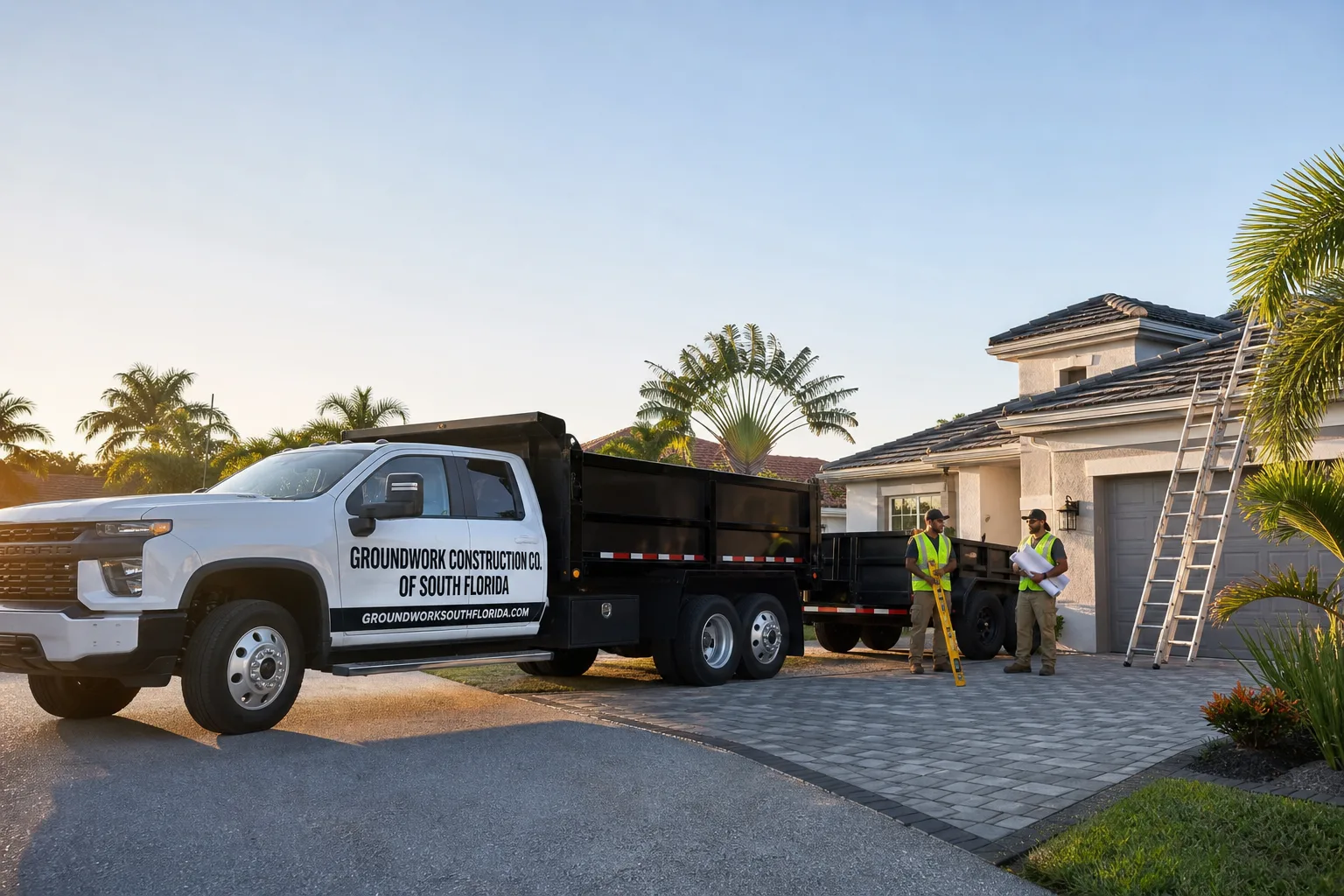
Wood Fence Installation in North Bay Village - What It Costs and How Long It Takes
A wood fence in North Bay Village typically runs $3,500-$9,000 for a standard residential installation, with most projects completed in 3-5 working days once permits clear. You’ll choose between pressure-treated pine, cedar, or redwood in picket, board-on-board, or horizontal styles, with hardware selected for salt-air corrosion resistance. Call (844) 665-0162 for a free on-site estimate and timeline based on your property’s exact layout.
How We Build a Wood Fence in North Bay Village - Start to Finish
We break every wood fence project into five distinct stages so you know what’s happening and when you’ll need to make decisions.
Stage 1: Site survey and layout confirmation (Day 1, 2-3 hours)
We walk your property line with you, verify survey pins or existing markers, and flag any conflicts with utilities, drainage, or HOA sight-line requirements. In North Bay Village, we also check for FEMA flood-elevation considerations that might affect post depth or gate placement on ground-level slabs. You’ll decide fence height, gate location, and whether you want the finished side facing your property or the neighbor’s.
Stage 2: Permit application and utility clearance (3-10 business days, often concurrent)
We file with Miami-Dade County for the fence permit and call for utility locates. On island properties with limited access, we coordinate material delivery timing with your availability and any building management if you’re in a condo with shared grounds. No work starts until clears are confirmed in writing.
Stage 3: Demolition and post-hole excavation (Day 1 of construction, 4-6 hours)
Old fencing comes out, concrete footings get broken up and hauled off. We dig post holes 24-30 inches deep depending on wind-load requirements, set with gravel drainage base, then pour concrete around pressure-treated 4x4s or 6x6s. In North Bay Village’s high-velocity hurricane zone, we use deeper footings and thicker concrete collars than inland Miami-Dade specs minimum.
Stage 4: Frame and picket installation (Days 2-4)
Rails go up first, then pickets or boards get cut, fitted, and fastened with hot-dipped galvanized or stainless hardware. We install kickboards if you’re near grade to block debris and small-animal passage. Gates get hung last with adjustable hinges and marine-grade latches. You’ll do a walkthrough with us before we move to final cleanup.
Stage 5: Final inspection, cleanup, and documentation (Day 4 or 5)
We pull the county inspector for sign-off, touch up any fasteners or board gaps, haul all debris, and leave you with care instructions specific to your wood species and stain choice. The whole build phase rarely stretches past five days unless we’re waiting on a gate hardware special order.
The Wood Fence Options You’ll Actually Choose Between
Every decision below changes how your fence looks, lasts, and what you’ll pay. Here’s where most North Bay Village homeowners land after we walk them through the trade-offs.
- Pressure-treated pine ($, most common): The standard for South Florida fencing. Chemically treated to resist rot and termites, takes stain well, and holds up 10-15 years with maintenance. The downside: it warps and checks more than cedar, and the greenish tint from treatment shows until you stain or paint. Best for budget-conscious projects or rental properties where you need function over aesthetics.
- Cedar ($$-$$$, premium natural look): Naturally rot-resistant with tighter grain and richer color. Stains beautifully, weathers to silver-gray if left unfinished, and resists warping better than pine. Costs 40-60% more than pine and still needs sealing every 2-3 years in salt air. Best for front-yard visibility or when the fence is part of a larger landscape investment.
- Redwood ($$$, statement grade): Densest and most dimensionally stable, with natural tannins that resist decay without chemical treatment. The premium choice for horizontal modern designs where board straightness matters visually. Significantly heavier and pricier; we recommend it for shorter runs where appearance justifies the cost.
- Picket style (3-4 feet, decorative/open): Classic pointed or flat-top vertical boards with gaps for airflow. Code-friendly for front setbacks, doesn’t block breezes (a real consideration in North Bay Village’s heat), and costs least per linear foot. Less privacy, more neighborly visibility.
- Board-on-board (6 feet, full privacy): Overlapping vertical boards with no gaps, staggered on alternating sides of the rail. Blocks sight lines completely, reduces noise, and stands up to hurricane gusts better than single-layer designs. Heavier load on posts and frame; we upsize hardware accordingly.
- Horizontal (4-6 feet, contemporary): Boards run left-to-right instead of up-and-down, often with small gaps for shadow-line effect. Visually striking but requires straighter, higher-grade lumber and more precise installation. Water sheds differently; we angle boards slightly and use wider gaps at the bottom to prevent rot pooling.
- Hardware grade: Standard zinc-coated fasteners corrode within 2-3 years here. We specify hot-dipped galvanized or 316 stainless hinges, latches, and screws for every North Bay Village job. The upgrade adds $150-$400 to a typical installation and prevents the orange-streak failure pattern we see on fences built with box-store hardware kits.
What Wood Fence Costs in North Bay Village, FL
Wood fence installation in North Bay Village ranges from $3,500 to $9,000 for typical residential projects. Here’s what pushes you toward the low or high end of that range.
| Cost Factor | Low-End Scenario | High-End Scenario |
|---|---|---|
| Linear footage | 80-100 ft, small yard | 200+ ft, corner lot or pool enclosure |
| Wood species | Pressure-treated pine | Cedar or redwood throughout |
| Existing fence removal | None or DIY demo | Concrete-heavy old fence, haul-off required |
| Site access and terrain | Open flat yard, truck backs to site | Tight island lot, hand-carry materials, grade correction |
| Gate count and hardware | Single walk gate, standard latch | Double drive gate, auto-close hinges, keypad prep |
Our written estimates include posts, concrete, lumber, hardware, permit fees, and labor. What typically isn’t included: tree or stump removal, sprinkler line relocation, electrical trenching for gate openers, or HOA application fees. If your property needs any of these, we’ll flag it during the site survey so you’re not surprised.
Call (844) 665-0162 for an exact quote - estimates are free and we measure everything in person.
What North Bay Village Specifically Does to Wood Fences
North Bay Village isn’t mainland Miami, and that changes how we build here.
The city sits on three islands - Harbor Island, Treasure Island, and Kennedy Causeway - connected to the mainland by the John F. Kennedy Causeway and 79th Street Causeway. There’s no alternate route for material delivery. When we schedule a wood fence build here, we coordinate lumber and concrete deliveries around causeway traffic patterns and your building’s loading access. A concrete pour or crane delivery scheduled for a Saturday without checking the bridge schedule can strand a crew with wet concrete and no way to get a second truck in. We’ve learned to build that logistics buffer into every North Bay Village timeline.
The housing stock shapes what we see too. The 1950s-1970s concrete mid-rises dominate, but the single-family and townhouse pockets along the bay edges are where most wood fence requests come from. These properties sit at near-sea-level elevation with fill soils that shift and settle, and salt air that accelerates hardware corrosion. We regularly find previous fences installed with standard hardware showing bolt heads rusted to orange dust within four years. That’s why we spec stainless or hot-dipped galvanized for every fastener, hinge, and latch on every North Bay Village job.
Permitting runs through Miami-Dade County, and fence projects here trigger the same high-velocity hurricane zone requirements as the rest of the county. Posts must meet wind-load calculations, and any fence over 6 feet or within 10 feet of a structure needs engineered documentation. If you’re in a condo association, expect additional architectural review - many North Bay Village HOAs have specific sight-line and material restrictions that predate the current building stock.
The post-Surfside structural recertification environment also affects us indirectly. With SB 4-D milestone inspections now mandatory for condos three stories and older, many buildings are opening up concrete for restoration. If your fence sits on a shared wall or property line adjacent to one of these projects, we coordinate our staging to avoid conflicting with scaffolding, concrete repair crews, or building access restrictions.
Serving North Bay Village, FL - Our Local Coverage Area
We’re based in the North Bay Village area and know this community well. Use the map below to see our service coverage - if you’re nearby, we can almost certainly help.
Frequently Asked - Wood Fence in North Bay Village
Most wood fence projects take 3-5 working days to build once permits and utility clears are in hand. Add 1-2 weeks upfront for Miami-Dade permit processing and HOA architectural review if applicable. Call (844) 665-0162 and we’ll check current permit turnaround times for your specific property type.
Yes. Miami-Dade County requires a permit for any fence over 6 feet tall or any fence within 10 feet of a structure, which covers nearly all residential installations here. We handle the application, drawings, and inspection scheduling as part of our project management. Your HOA may require separate approval - we recommend starting that process before permit submission.
Often yes, but it depends on placement. We design the fence line to avoid existing utilities when possible, and we flag conflicts during the site survey. If your ideal fence route crosses a sprinkler zone or sits too close to an A/C condenser, we’ll show you the reroute options and costs before you commit. Minor sprinkler line shifts typically add $200-$500; A/C pad relocation is rarer and more involved.
Cedar holds up better dimensionally and looks richer, but in salt air both species need sealing every 2-3 years to prevent graying and surface checking. If your fence is highly visible from the street or part of a larger landscape investment, cedar’s 40-60% premium pays off in appearance. For side or rear yards where function matters more, properly maintained pine delivers comparable service life at lower cost.
We warranty our workmanship - framing, post setting, and hardware installation - against defects for the period specified in your written contract. Wood itself is a natural material; we don’t warranty against normal weathering, checking, or warp, but we do specify materials and construction methods that minimize these issues in our climate. Manufacturer warranties apply to pressure treatment and any factory-applied finishes. Ask us for the specific terms when we deliver your estimate.
Get Your Free Wood Fence Estimate in North Bay Village
We’ll come to your property, measure your lines, check for utility conflicts and access constraints, and deliver a written estimate with your wood species and style options priced out. No deposit required to schedule. Call (844) 665-0162 or reach out through our Fence Installation in North Bay Village page to get started. If you’re also considering hardscaping work, many homeowners pair fencing with Paver Driveways in North Bay Village or Concrete Driveways & Concrete Work in North Bay Village for a complete exterior refresh handled by one crew.
Groundwork serves North Bay Village and surrounding island communities from our Fort Lauderdale base. Our Fence Installation crew brings the same material rigor we apply to every project category - you choose the species and style, we handle the build, permits, and inspections.
Written by Raymond Estevez, Owner at Groundwork Construction Co., serving North Bay Village and South Florida homeowners since our founding.