
Glass Railing Systems in Plantation, FL - What to Expect
Glass railing systems in Plantation typically run $8,500-$22,000 for a full residential installation, depending on linear footage, mounting surface, and glass specification. Most projects we handle in Plantation’s 1960s-era CBS homes take 5-10 business days from permit approval to final inspection, with templating and glass fabrication adding 2-3 weeks to the front end. Call (844) 665-0162 to schedule a free on-site measure and we’ll bring sample hardware finishes so you can see how each reads against your existing tile or flooring.
How We Install Glass Railing Systems - Start to Finish
We’ve refined our process across dozens of Plantation homes, many of them single-story CBS builds from the 1960s and 1970s with concrete-block walls and original aluminum sliders that never anticipated modern glass railing loads. Here’s how the job actually unfolds.
Stage 1: Site measure and structural assessment (Day 1, 2-3 hours)
We arrive with a laser measure and a structural checklist. For interior stair railings, we’re checking whether your existing stringers or header can accept the point-load of a top-rail or base-shoe system - many Plantation homes from this era have hollow-core concrete block at stairwells that won’t anchor stainless hardware without epoxy-injected threaded rod. For exterior balconies or pool enclosures, we’re verifying the concrete coping or deck slab thickness; the western neighborhoods near Broward Boulevard often have original flat-roof additions with 4-inch nominal slabs that need core-drilling verification before we spec spigot mounts. You’ll decide at this stage: interior or exterior system, framed or frameless aesthetic, and whether you want a handrail cap or clean edge.
Stage 2: Templating and glass specification (Week 1-2)
We template every opening. Glass panels for residential railing in Florida must be minimum 1/2-inch tempered laminated, and we typically spec 9/16-inch or 5/8-inch for spans over 42 inches or any exposure within 30 feet of a pool. The lamination interlayer matters: SentryGlas Plus for coastal exposure or any application where post-breakage retention is critical, standard PVB for protected interior locations. You’ll choose your mounting hardware finish - brushed 316 stainless, polished, or powder-coated aluminum - and whether you want a base shoe (cleanest sight line, requires precise slab prep) or standoff/spigot mounts (more forgiving of uneven substrates, slightly more visible hardware). Template approval locks your lead time; most glass shops run 10-14 days for custom-cut laminated panels.
Stage 3: Substrate prep and blocking (Days 3-4)
We don’t install glass until the mounting surface is right. For wood-framed landings or stairs, we install steel or aluminum backing plates through to joists or blocking - the original 2×10 joists in many Plantation homes from the ’60s are often spaced at 24 inches on center, which means adding sistered blocking at 16 inches for code-compliant rail post spacing. For concrete, we core-drill and epoxy stainless threaded rod at calculated intervals, then seal penetrations with polyurethane to prevent the moisture intrusion that’s already a known issue in CBS construction of this vintage. This stage is where we discover whether your existing substrate is sound; we’ve replaced rotted pressure-treated landings in Jacaranda-area homes where years of pool splash had degraded the mounting surface.
Stage 4: Glass delivery and installation (Days 5-7)
Panels arrive crated; we inspect each for edge quality and lamination clarity before uncrating. Installation sequence matters: we set end panels first, establish level and plumb, then infill center panels with calculated gaps (typically 2-3 inches for thermal expansion in exterior applications, per Florida Building Code). Base-shoe systems get their rubber setting blocks and structural silicone; spigot systems get torque-specified clamping with neoprene gaskets. We never rush this - a 200-pound panel of laminated glass doesn’t forgive a slipped grip. For Plantation’s older homes near University Drive, we’ve learned to verify squareness of original openings; 50 years of settlement can throw a stairwell out of plumb by 3/4 inch across a 10-foot run, which we shim correct at the hardware, not the glass.
Stage 5: Inspection and final walkthrough (Day 8-10, if required)
Permitted installations in Plantation require a building inspector to verify rail height (42 inches minimum for residential, 36 inches for certain interior applications), graspability of any handrail cap, and the structural adequacy of our anchorage. We coordinate the inspection; you don’t need to be present unless your HOA requires owner sign-off. Final walkthrough covers cleaning protocol (never use ammonia on laminated glass; it degrades the interlayer edge over time), hardware torque check schedule, and warranty registration.
The Glass Railing Options You’ll Actually Choose Between
- Frameless base-shoe system: Glass sits in a continuous aluminum or stainless channel, no top rail, maximum transparency. Best for modern interiors and pool enclosures where the view is the point. Trade-off: requires the flattest, most precise substrate; any slab irregularity telegraphs through. Higher labor cost, lower hardware visibility. Best for homeowners who’ve already budgeted for substrate prep or are building new.
- Frameless spigot mount: Individual stainless clamps hold glass panels at bottom, sides, or both. More forgiving of existing slab conditions; we can shim and grout around spigot bases. Slightly more hardware visible, but the hardware itself becomes a design element. Our go-to for retrofitting Plantation’s older CBS homes where we can’t guarantee original slab flatness.
- Semi-frameless with metal posts: Aluminum or stainless posts at 4-6 foot centers, glass infill between. Lower cost, faster install, and the posts can conceal structural weaknesses in original framing. We often recommend this for second-story balconies in Plantation’s 1970s subdivisions where we’re tying into existing flat-roof structure that can’t take point loads without distribution.
- Glass type - tempered laminated vs. heat-soaked tempered: Standard tempered laminated meets Florida code and breaks into granular pieces held by the interlayer. Heat-soaked tempered goes through an additional thermal cycle to reduce nickel sulfide inclusion risk (spontaneous breakage); we spec it for any exterior application over 8 feet of fall height or where access for replacement would require scaffolding. Adds 15-20% to glass cost.
- Interlayer clarity: Standard PVB is slightly milky at edges; SentryGlas Plus is water-clear and stiffer, allowing thinner glass for equivalent span strength. For south-facing pool enclosures in Plantation where you’re looking through glass at water and landscaping all afternoon, the optical clarity difference is noticeable.
What Glass Railing Systems Cost in Plantation, FL
| Component | Typical Range |
|---|---|
| Interior stair railing, frameless, 15-20 linear feet | $8,500-$14,000 |
| Exterior balcony/pool enclosure, 30-50 linear feet | $15,000-$22,000 |
| Semi-frameless with posts, comparable footage | $11,000-$17,000 |
| Glass upgrade to heat-soaked, large spans | +15-20% of glass cost |
| Substrate repair/replacement (if needed) | $1,500-$5,000 |
Five factors move your number. First, linear footage and panel size - larger panels mean fewer seams but thicker, more expensive glass and heavier handling. Second, substrate condition; we won’t know until we open it whether your 1968 CBS stair landing has solid block or a veneer over hollow tile. Third, mounting system complexity; a straight run costs less than a return with custom-angled panels. Fourth, glass specification; going from 1/2-inch to 5/8-inch laminated adds roughly $25-$40 per square foot. Fifth, permit scope; Plantation requires full building permits for any railing replacement that alters height or structural attachment, and if your project triggers a whole-house wind-mitigation review - common in homes still carrying original jalousie windows - that adds inspection cycles.
Our written estimate includes templating, glass and hardware, installation, permit application, and one inspection cycle. It does not include substrate repair beyond standard shimming, finish carpentry to close gaps where old railings left scars, or any HOA architectural review fees.
What Plantation Homes Specifically Do to This Job
Plantation’s housing stock shapes every glass railing project we take on. The city was master-planned from the 1950s onward with its heaviest residential build-out in the 1960s-1970s, leaving a dense stock of single-story CBS homes now 50-60 years old. Florida’s post-Hurricane Andrew building code overhaul combined with insurance-carrier ultimatums is forcing owners of these aging homes into permit-required roof replacements and wind-mitigation retrofits at scale - making code-compliant structural renovation the dominant construction driver in Plantation in a way that distinguishes it from newer planned cities like Weston just to the south.
What this means for your glass railing system: if you’re already pulling permits for roofing, windows, or a full exterior envelope update, we can bundle the railing into the same permit package and avoid the standalone review queue. The older subdivisions along Broward Boulevard and the corridors east of University Drive contain large numbers of flat-roof and low-slope CBS homes whose roofing systems are simultaneously reaching insurance-mandated replacement age, creating a concentrated wave of re-roofing and associated structural tie-down work. We’ve learned to coordinate our railing blocking with the roofers’ tie-down schedules so we’re not drilling into fresh structural connections.
The climate reality matters too. Plantation’s western boundary abuts the Everglades Water Conservation Areas, and the entire city sits atop South Florida’s shallow limestone aquifer where the seasonal water table can rise within one to two feet of grade during the June-October wet season. Any exterior footing or core-drilling for spigot mounts near grade needs to account for hydrostatic pressure; we’ve seen poorly sealed penetrations wick moisture into CBS walls and trigger the very mold remediation that homeowners thought they’d avoided. We seal every penetration to Broward County surface water management standards, not just code minimum.
Finally, the housing stock itself. The vast majority of Plantation’s single-family homes feature low-pitched or flat roofs, jalousie or original single-pane aluminum windows, and sliding glass doors - none of which meet current Florida Building Code impact-resistance or wind-load thresholds. Full renovations routinely trigger mandatory whole-house upgrades to roofing assemblies, fenestration, electrical panels, and supply plumbing before a certificate of completion can be issued. If your glass railing is part of a full Windows & Doors in Plantation project, we’ll sequence our work with the Windows & Doors crew so you’re not paying for multiple mobilizations. Many homeowners in the Jacaranda and Plantation Woods areas pair this work with Fence Repair in Plantation or Paver Driveways in Plantation to complete the exterior transformation in one contract. We cover all of Plantation and the surrounding Fort Lauderdale, Broadview Park, Lauderhill, and Lauderdale Lakes markets.
Serving Plantation, FL - Our Local Coverage Area
We’re based in the Plantation area and know this community well. Use the map below to see our service coverage - if you’re nearby, we can almost certainly help.
Frequently Asked - Glass Railing Systems in Plantation
Most projects take 5-10 business days of on-site work once glass arrives, but templating and fabrication add 2-3 weeks upfront. If your home requires a full building permit rather than a simple trade permit, add 7-10 business days for Plantation’s plan review. Call (844) 665-0162 and we’ll check current permit turnaround times for your specific scope.
Yes, if you’re replacing an existing railing or installing new at any height above 30 inches. Plantation follows Florida Building Code Chapter 16 for structural loads and Chapter 10 for egress requirements; any glass railing must pass inspection for height, graspability, and anchorage. We handle the application and scheduling as part of our scope.
Usually, yes. Glass railing systems are surface-mounted or core-drilled into existing structure; they don’t require the rough-in relocation that a full bathroom or kitchen remodel demands. The exception is if your existing stair or balcony structure is compromised and needs sistered joists or new blocking, which we discover during the Stage 1 structural assessment.
Frameless systems run 20-35% higher for equivalent footage because they demand thicker glass, more precise substrate prep, and heavier hardware. In Plantation’s older CBS homes, we often recommend semi-frameless with posts as the value play; the posts distribute load and forgive original construction that isn’t perfectly square or flat. We’ll show you both installed in nearby homes so you can judge the visual difference against your budget.
We warranty our installation labor for five years, including hardware torque and seal integrity. The glass itself carries a manufacturer’s warranty against spontaneous breakage and delamination, typically 10 years for standard laminated, 15 years for SentryGlas Plus applications. Hardware finish warranties vary by manufacturer; 316 stainless in coastal-exterior applications typically carries a 10-year corrosion warranty when properly maintained. We register all warranties and provide you the documentation at final walkthrough.
Get a Free Estimate for Glass Railing Systems in Plantation
Call (844) 665-0162 to schedule a free on-site estimate. Raymond Estevez or a senior member of our team will bring hardware samples, measure your openings, and give you a written quote within 48 hours that includes permit costs, glass lead time, and a realistic installation schedule. No deposit required to book; we start when you’re ready.
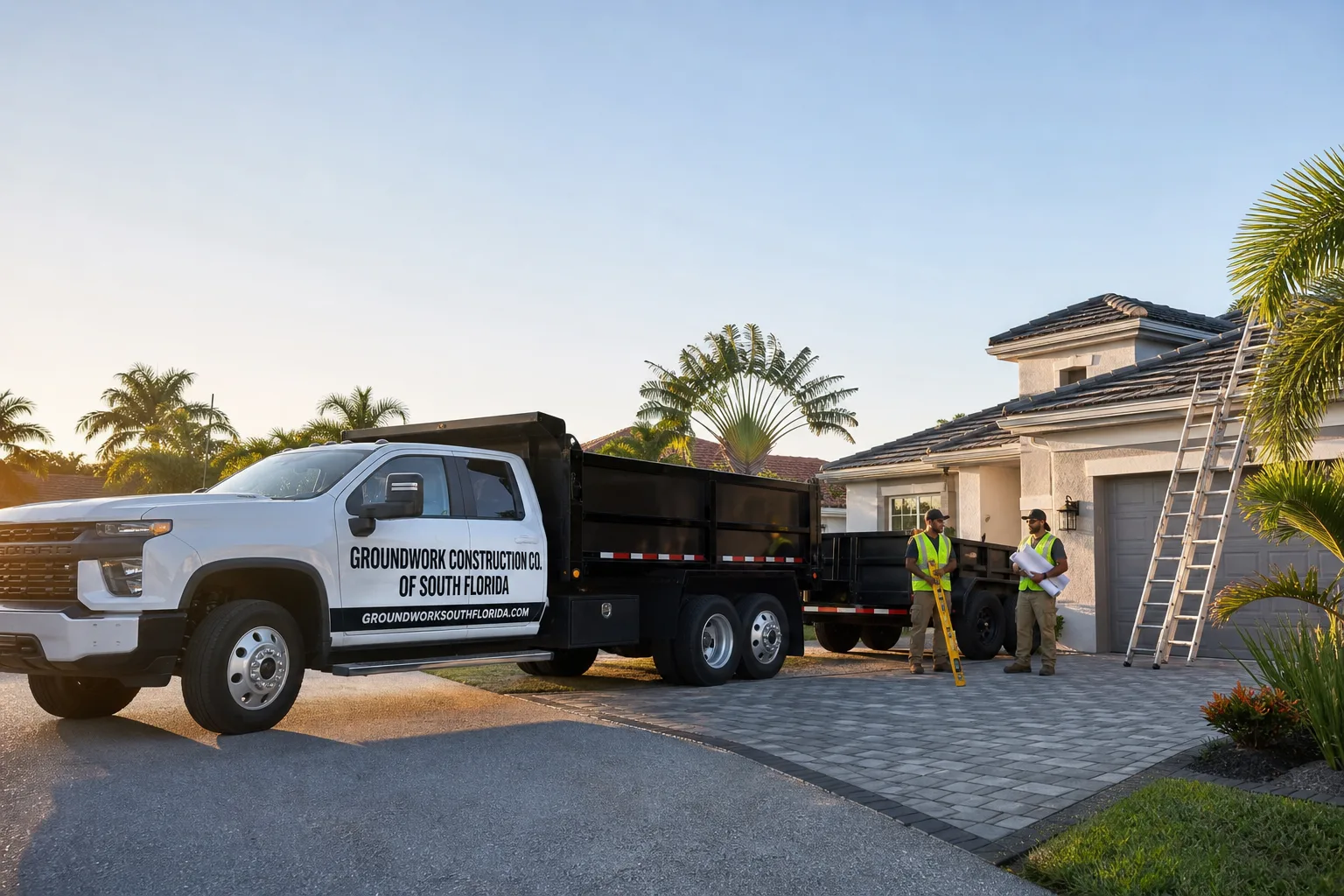
Written by Raymond Estevez, Owner at Groundwork Construction Co., serving Plantation since our founding.