
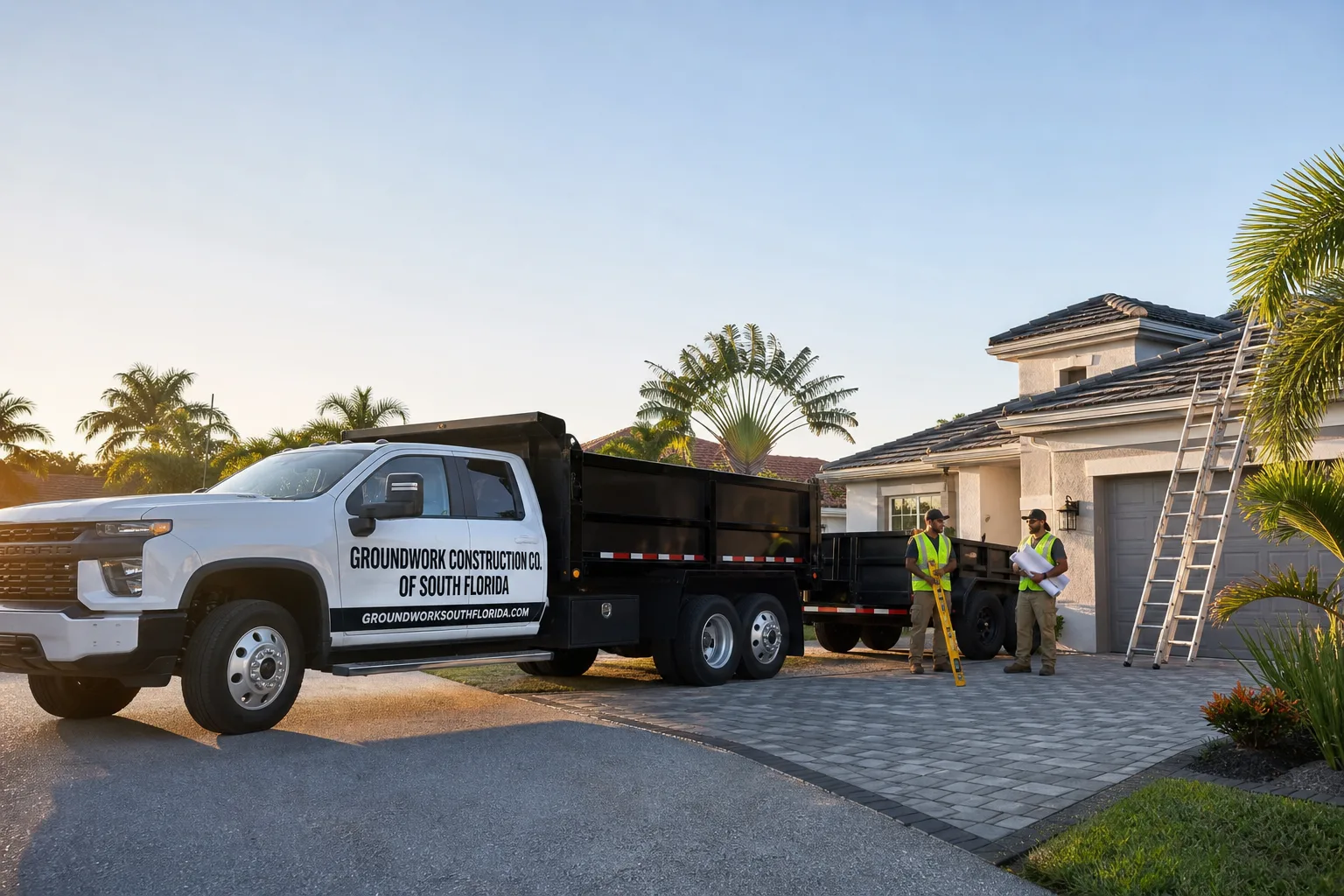
Glass Railing Systems in Fort Lauderdale: Timeline, Cost, and What to Expect
Glass railing systems in Fort Lauderdale typically run $8,500-$22,000 installed, with most residential projects wrapping in 2-4 weeks from permit approval. We work with tempered and laminated glass panels mounted on aluminum, stainless steel, or wood-core frames, all sourced to meet Florida’s High Velocity Hurricane Zone requirements. Call (844) 665-0162 for a free on-site estimate and material samples.
Homeowners along the New River, in Victoria Park condos, and across Las Olas high-rises choose glass railings for the sightlines - they keep water views intact and let coastal breezes flow through a space without the visual weight of traditional balusters. In Fort Lauderdale, though, the decision isn’t purely aesthetic. The same salt air that makes canal living desirable corrodes inferior hardware, and the HVHZ designation means every panel, post, and anchoring method faces stricter scrutiny than you’d find inland.
How We Install Glass Railing Systems - Start to Finish
We’ve refined this into five distinct stages after years of projects from Plantation Park to the finger islands off East Dania Beach Boulevard. Here’s what actually happens, and where you’ll need to make decisions.
Stage 1: Site measure and structural assessment (1-2 days). We template every run, check the substrate your railings will anchor to, and flag any surprises. On older Fort Lauderdale homes - the 1950s-1970s CBS stock common in Poinsettia Heights - we often find that original concrete parapets or wood decks lack the lateral-load capacity for frameless glass. If we’re mounting to a raised deck overlooking a seawall, we verify that the pile foundation or grade beam can handle the moment load of someone leaning against a 42-inch panel. You’ll decide here: frameless (cleanest view, requires stronger structure) or framed (more forgiving of imperfect substrates).
Stage 2: Design and material lock (3-5 days). You choose glass thickness (1/2-inch tempered is standard; 3/4-inch laminated adds hurricane debris-impact resistance), hardware finish (brushed 316 marine-grade stainless holds up best against salt), and mounting style (surface-mounted base shoes, side-mounted standoffs, or core-drilled spigots). For projects that are part of a full windows and doors update in Fort Lauderdale, we coordinate glass tint and frame color across both scopes so the transition from railing to window wall reads as intentional.
Stage 3: Engineering and permitting (2-6 weeks). This is where Fort Lauderdale diverges from most markets. Any glass railing on a structure waterward of the seawall line - common in The Landings and similar canal neighborhoods - triggers dual permitting through the City and the U.S. Army Corps of Engineers. Even inland, Broward County’s HVHZ status requires stamped engineering showing the system can withstand wind-borne debris and the pressure differentials of a Category 3 event. We handle the submittals, but you’ll need to sign off on the engineering drawings before we file.
Stage 4: Fabrication and staging (1-3 weeks). Glass gets cut, tempered, and in some cases laminated to your specs. We don’t keep inventory - every panel is made to order - so this stage doesn’t start until permits are in hand. Hardware ships separately, and we inspect every bracket for pitting before it reaches your site. If you’ve opted for LED base lighting or integrated handrail heating (more common than you’d think on Las Olas corridor terraces), those components arrive now too.
Stage 5: Installation and final inspection (2-5 days). We set posts, install glass, seal penetrations, and torque every fastener to the engineer’s spec. A city inspector verifies anchorage and glass labeling; on canal-front jobs, a Corps compliance check may follow. We don’t consider a job closed until both are cleared.
The Glass Railing Options You’ll Actually Choose Between
Every decision below moves your price and your maintenance burden. We don’t push one over another - we explain the trade-off and let you decide what fits how you live.
- Frameless vs. semi-frameless vs. fully framed. Frameless uses thick glass (3/4-inch minimum) held by minimal base shoes or spigots - maximum transparency, maximum structural demand, highest cost. Semi-frameless adds a top rail or intermittent posts for rigidity; fully framed puts glass inside aluminum or stainless channels. In Fort Lauderdale’s HVHZ, frameless only works where the substrate is engineered for it - we’ve seen too many out-of-market contractors sell the look, then watch panels flex in a tropical storm.
- Tempered vs. laminated glass. Tempered shatters into small granules on impact; laminated holds together on a vinyl interlayer even if cracked. For railings above hard surfaces or anywhere children are present, we recommend laminated. For second-story applications with engineered catchment below, tempered meets code at lower cost.
- Surface-mounted base shoes vs. core-drilled spigots. Base shoes run continuously along the deck edge - easier to waterproof, better for concrete substrates. Spigots anchor through individual holes - cleaner visually, but every penetration must be sealed against Fort Lauderdale’s driving rain. On wood or composite decks, base shoes almost always win.
- 316 stainless vs. aluminum vs. powder-coated steel. 316 marine-grade stainless survives salt air but costs roughly 40% more than aluminum. Aluminum with a quality fluoropolymer coating (Kynar or equivalent) lasts 15-20 years if maintained. Standard steel, even powder-coated, shows rust within 3-5 years here - we won’t install it.
- Clear vs. tinted vs. frosted glass. Clear maximizes views; tinted reduces glare and heat gain on west-facing balconies (significant in Fort Lauderdale’s afternoon sun). Frosted provides privacy for pool enclosures or tight-setback properties. Tint adds 10-15% to glass cost; frosted adds 20-25%.
What Glass Railing Systems Cost in Fort Lauderdale, FL
Glass railing systems in Fort Lauderdale typically range from $8,500 for a straightforward 20-linear-foot residential balcony to $22,000+ for multi-level canal-front installations with laminated glass, marine-grade hardware, and dual permitting.
| Project Scope | Typical Range |
|---|---|
| Small balcony (15-25 linear ft), framed, tempered | $8,500-$12,000 |
| Mid-size terrace (25-50 linear ft), semi-frameless, laminated | $12,000-$18,000 |
| Large or multi-level install (50+ linear ft), frameless, HVHZ-rated | $18,000-$22,000+ |
| Engineering and HVHZ permitting (if not included above) | $1,200-$3,500 |
Five factors push you toward the high or low end of these ranges:
- Existing substrate condition. Sound concrete or steel? Straightforward. Rotting wood deck, corroded original rail, or insufficient lateral bracing? We rebuild first - add $2,000-$6,000.
- Glass specification. Tempered 1/2-inch is your baseline. Laminated, thicker, or tinted glass adds 15-40% to material cost.
- Permit complexity. Standard city permit: $400-$800. Dual City/Corps permitting for canal-front properties: $1,500-$3,500 and 6-14 additional weeks.
- Access and height. Ground-level pool cage? Simple. 15th-floor Las Olas terrace requiring crane or swing-stage access? Labor multiplies.
- Hardware grade. Standard aluminum rail systems start around $85/linear foot installed. Marine 316 stainless with custom machining runs $140-$180/linear foot.
A written estimate from us includes templating, materials, standard permitting, installation, and final inspection. It does not include structural repairs to your substrate, dewatering if we’re anchoring below grade, or expedited permit fees. We itemize both so you’re not surprised.
What Fort Lauderdale Homes Specifically Do to This Job
Fort Lauderdale’s split personality - 1950s-1970s CBS bungalows versus glass towers along the New River - creates two entirely different glass railing scenarios.
In Victoria Park, Plantation Park, and similar mid-century neighborhoods, we’re often retrofitting railings onto concrete balconies that were never designed for them. The original construction assumed simple pipe railings bolted through the slab; modern frameless glass needs continuous moment-resisting connections. We’ve learned to probe for post-tension cables before coring - a surprise cut cable turns a $12,000 railing job into a $40,000 structural repair. The flat roofs and low parapets common in this stock also mean water management: every base shoe penetration needs redundant flashing, or you’ll trap moisture against concrete that already spent sixty years in subtropical humidity.
The luxury high-rise market, concentrated along East Broward Boulevard and the Las Olas corridor, presents the opposite problem. These buildings were engineered for glass, but their HOA boards demand exacting aesthetic continuity. We’ve replaced railings in towers where the board rejected three glass samples for being 2% too green in tint compared to the original. The permitting is simpler - no Corps involvement - but the approval chain is longer.
Everywhere in Fort Lauderdale, the salt air is the constant. Hardware that survives five years in Orlando shows surface rust in eighteen months here. That’s why our windows and doors crew and our railing specialists share material specs - the same 316 stainless and Kynar-coated aluminum that keeps impact windows intact through hurricane season keeps your railings from becoming a maintenance headache. If you’re considering fence repair in Fort Lauderdale or paver driveways in Fort Lauderdale as part of a broader exterior update, we coordinate material palettes so nothing clashes six months later.
The groundwater reality matters too. Any footing or post base near grade - common on pool decks and dockside terraces - sits in soil that’s effectively wet year-round. We specify hot-dip galvanized or stainless embed plates, never standard steel, and we seal every penetration with marine-grade epoxy. It’s not optional here; it’s survival.
Serving Fort Lauderdale, FL - Our Local Coverage Area
We’re based in the Fort Lauderdale area and know this community well. Use the map below to see our service coverage - if you’re nearby, we can almost certainly help.
Frequently Asked - Glass Railing Systems in Fort Lauderdale
Most residential glass railing systems in Fort Lauderdale take 6-10 weeks total: 2-6 weeks for permitting and engineering, 1-3 weeks for fabrication, and 2-5 days for installation. Canal-front properties with Corps of Engineers review add 3-6 months. Call (844) 665-0162 and we’ll check your specific address against current permit timelines.
Yes - every glass railing system requires a city permit, and any installation waterward of your seawall line needs additional U.S. Army Corps of Engineers approval. The HVHZ designation also means your glass and hardware must carry Miami-Dade NOA certification. We handle both permitting tracks as part of our project management.
Usually yes, if you’re replacing an existing railing on the same footprint. We surface-mount or core-drill without disturbing utilities below. Problems arise when you’re extending the railing run, adding a gate, or switching from framed to frameless - then we may need to relocate conduit or irrigation. We map utilities during templating to flag conflicts early.
Tempered glass breaks into small, relatively harmless pieces on impact but offers no post-break structural integrity. Laminated glass cracks but stays in place on its interlayer, preventing falls even after damage. For railings above hard surfaces, around pools, or anywhere fall height exceeds 30 inches, we recommend laminated - the code often requires it, and we agree with the logic.
We warranty our installation workmanship for five years, and the glass and hardware manufacturers back their products with 10-20 year material warranties depending on specification. The warranty is only as good as the installation, though - we’ve been called to fix railings installed by others where the glass survived but salt-corroded fasteners failed. Proper material selection for Fort Lauderdale’s climate matters more than the paper promise.
Get Your Free Estimate for Glass Railing Systems in Fort Lauderdale
Call (844) 665-0162 to schedule a no-obligation site visit. We’ll measure your space, assess your substrate, bring material samples, and deliver a written estimate within 48 hours. Whether you’re updating a mid-century balcony in Plantation Park or finishing a new build on the water, we’ll spec glass railing systems that hold up to Fort Lauderdale’s sun, salt, and storm season.
Written by Raymond Estevez, Owner at Groundwork Construction Co., serving Fort Lauderdale and South Florida.