
How Much Does Fence Repair Cost in Fort Lauderdale, and How Fast Can It Start?
Most fence repair jobs in Fort Lauderdale run between $350 and $1,800 depending on how much of the structure needs work, and our crew can usually assess the damage within 48 hours of your call to (844) 665-0162. We see everything from hurricane-bent aluminum railings along South Seabreeze Boulevard to salt-rotted 4×4 posts in Las Olas courtyard gardens. The key question isn’t whether it can be fixed - it’s whether the repair outlasts the next storm season, and that comes down to what materials we spec for this exact environment.
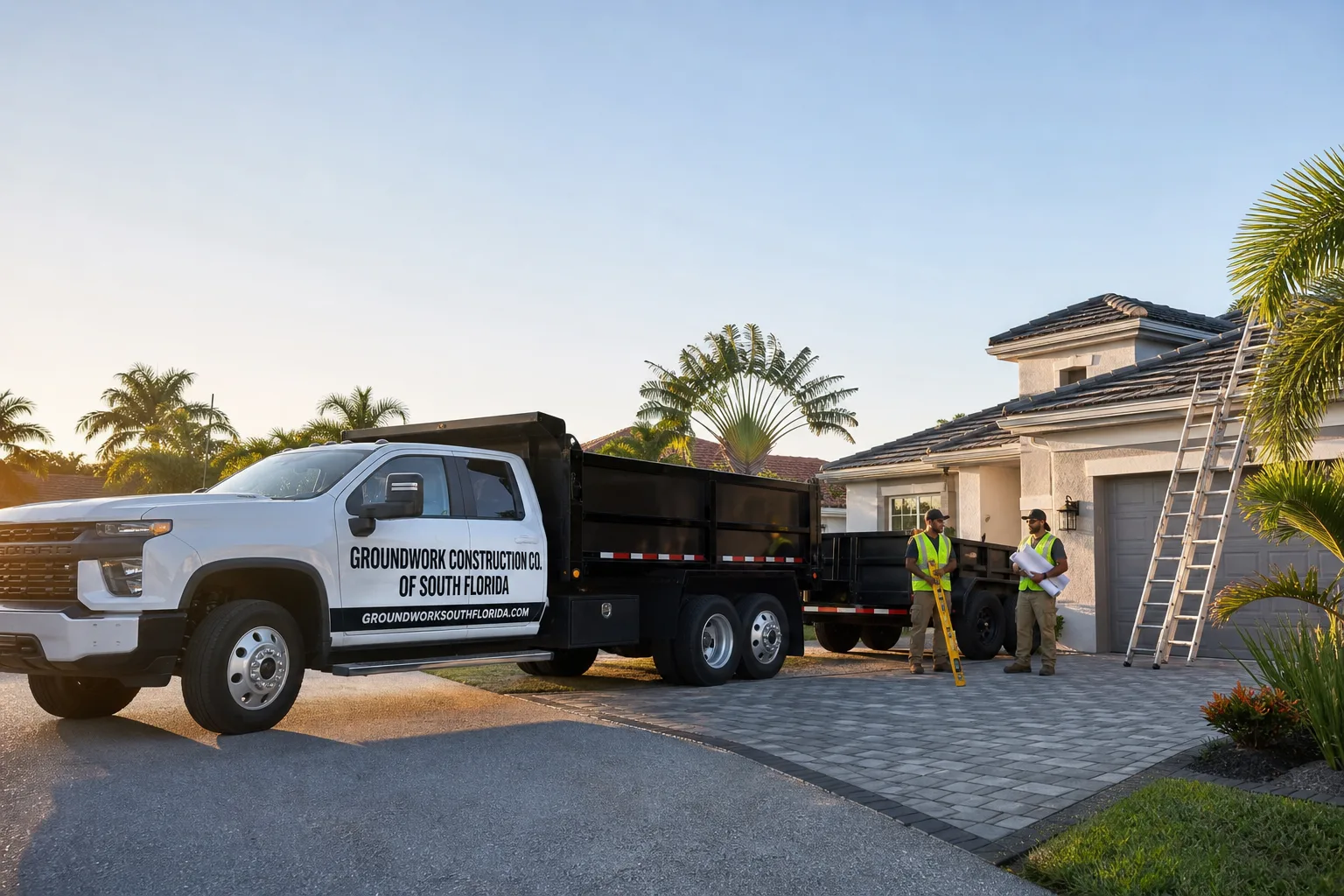
Groundwork Construction Co. treats fence repair as structural work, not a cosmetic patch. In Broward County’s High Velocity Hurricane Zone, a wobbly section after a tropical storm isn’t just an eyesore. It’s a liability that can void your homeowners insurance if it fails again and damages a neighbor’s property. We repair to code, we pull permits when required, and we use hardware rated for coastal exposure because we’ve seen what standard box-store brackets look like after two Fort Lauderdale summers.
How We Handle Fence Repair From First Call to Final Walk
We’ve refined our fence repair process across hundreds of jobs in Plantation Park, Poinsettia Heights, and the canal-front sections of Victoria Park. Here’s what actually happens, and what you’ll need to decide at each stage.
Stage 1: Site assessment and scope lock (Day 1, 45-90 minutes on site)
We walk the full fence line even if you called about one broken section. In 1950s-era neighborhoods like Plantation Park, we often find that the concrete footing has cracked in three places while only one rail is visibly loose. We photograph everything, test post stability, and check for underground irrigation or low-voltage lighting that intersects the fence line. You’ll decide at this stage whether to repair only the failed section or reinforce adjacent posts while we’re there. The latter adds 30-40% to the labor but often prevents a second service call within 18 months.
Stage 2: Material spec and permit check (Day 1-2, office work)
We pull the original permit record if the fence was permitted after 1990, and we verify your HOA guidelines if you’re in a gated community or historic district. For aluminum repairs, we match the alloy grade and powder-coat finish to what’s existing. For wood, you’ll choose between pressure-treated pine (standard), cedar (naturally rot-resistant, 25% premium), or marine-grade mahogany for waterfront properties where salt spray is constant. We source through our standard vendor relationships, not whatever the lumber yard has in back.
Stage 3: Demo and prep (Day 2-3, 2-6 hours field work)
We remove the damaged panels or posts, salvage what hardware we can, and expose the footing. In Fort Lauderdale’s high water table, post holes often fill with groundwater within minutes of digging. We pump or bail as needed, then set posts in gravel-backed concrete with a sloped top to shed water. This detail matters here more than inland - we’ve pulled posts that rotted at the concrete line because the previous installer used a flat pour that trapped moisture.
Stage 4: Repair and rebuild (Day 3-5, duration varies with scope)
We hang new panels, set gates to proper swing clearance, and install stainless or ceramic-coated fasteners throughout. For coastal properties near the Intracoastal or canals off Las Olas Boulevard, we upgrade standard zinc hardware to 316 stainless at your option. The upcharge is roughly 15% but the lifespan difference is real - we’ve seen zinc screws fail in three years on waterfront fences versus 12+ for stainless.
Stage 5: Inspection, cleanup, and documentation (Final day, 30-60 minutes)
We torque-test every post, verify gate latch alignment, and leave you with photos of the repaired sections, a materials list, and the permit closeout if one was required. If your fence borders a canal or seawall and we encountered any setback questions during repair, we note those for your records in case you sell the property.
The Repair Choices That Actually Change the Outcome
Every fence repair in Fort Lauderdale forces a decision between matching what’s there and upgrading for this climate. Here’s where the money goes, and what each choice gets you.
- Fastener grade: standard zinc vs. 316 stainless. Zinc-coated screws and brackets are what you’ll find at any hardware store. They’ll hold for 4-7 years inland. Within a mile of the Atlantic or any navigable canal, salt fog accelerates corrosion enough that we see zinc hardware seize or snap in 2-4 years. Stainless adds $80-$200 to a typical repair but eliminates that cycle.
- Post footing: standard concrete vs. gravel-drained base. Standard concrete to grade is fine for fence posts in Orlando. In Fort Lauderdale, where the water table sits 12-18 inches down, we backfill the bottom 6 inches with compacted gravel before pouring. This gives groundwater a drainage path instead of pooling against the wood or metal post base. Adds roughly $25-$40 per post.
- Wood species: pressure-treated pine vs. cedar vs. mahogany. Pine is the default replacement for cost reasons. Cedar resists rot without chemical treatment, which matters if your fence borders a vegetable garden or pool deck where you don’t want copper leaching. Mahogany is the choice for Las Olas courtyard properties where the fence is part of the architectural statement. Cedar runs 25% over pine; mahogany roughly doubles the material cost.
- Panel construction: prefab replacement vs. stick-built on site. If your fence is a standard stockade or shadowbox from a big-box brand, we can often source matching panels. For custom heights, curved runs following irregular lot lines, or historic properties in Poinsettia Heights with non-standard spacing, we build panels on site. Stick-built adds labor but gives you control over rail count, picket spacing, and cap profile.
- Gate hardware: standard residential vs. marine-grade adjustable. Gates are where fences fail first - they’re the moving part. Standard T-hinges and gravity lasts work until they don’t, usually when a tropical storm tests them. We spec adjustable J-bolt hinges with stainless pins for any gate over 4 feet wide or any property within sight of salt water.
What Fence Repair Costs in Fort Lauderdale, FL
For the repair work itself - not full replacement - most Fort Lauderdale homeowners spend between $350 and $1,800. Here’s what pushes you toward either end of that range, and what our written estimate includes.
| Repair scope | Typical range |
|---|---|
| Single post replacement (wood or metal) | $350-$650 |
| Panel replacement (8 linear feet, wood) | $450-$900 |
| Panel replacement (8 linear feet, aluminum) | $600-$1,200 |
| Gate rebuild or replacement | $500-$1,400 |
| Multiple posts + 2-3 panels + hardware upgrade | $1,200-$1,800 |
Five variables move these numbers:
1. Access. Fences behind locked gates, against seawalls with no equipment path, or in zero-lot-line developments where we can’t get a mini-excavator to the post location mean hand-digging. That adds 1-2 hours per post.
2. Existing material match. Discontinued aluminum profiles or custom wood profiles from the 1970s require either creative sourcing or full panel replacement. Either costs more than dropping in a current stock item.
3. Underground conflicts. Sprinkler lines, pool bonding wire, or low-voltage lighting run along fence lines more often than homeowners realize. We locate and avoid, but rerouting adds $150-$400 if we hit something unexpected.
4. Permit scope. Fort Lauderdale requires permits for fence repair exceeding 25% of the total linear footage or any work on a fence over 6 feet tall. Permit fees are modest ($75-$150) but the review adds 5-10 business days. We handle the filing; you decide whether to wait or repair under the threshold in stages.
5. Hardware upgrade level. Standard repair uses like-for-like fasteners. Coastal-grade stainless adds 15-20% to material but we recommend it for any property east of Federal Highway or within two blocks of a canal.
Our estimates include labor, materials, basic hardware, and permit filing if required. They do not include HOA application fees, tree trimming for access, or irrigation repair if we encounter buried lines. We flag those possibilities during assessment so you’re not surprised.
What Fort Lauderdale Specifically Does to Fences
We’ve repaired fences across 33301, 33309, 33312, and 33004 long enough to recognize failure patterns that don’t show up in contractor manuals written for Kansas or even Orlando.
The salt-air index here is real. Properties within a quarter-mile of the Intracoastal Waterway or any of Fort Lauderdale’s 165 miles of navigable canals - think The Landings, parts of Victoria Park, canal-front stretches off East Oakland Park Boulevard - see metal hardware corrode at roughly twice the inland rate. We regularly open gate hinges that are frozen solid after four years, not the ten you’d expect from the manufacturer’s spec sheet. That’s why we stock 316 stainless as standard for those zones, not as an upgrade.
The housing stock matters too. The 1950s-1970s concrete block homes in Plantation Park and Poinsettia Heights often have original fences set in shallow footings with no gravel drainage. When we repair these, we’re not just replacing a rotted post. We’re frequently excavating to 30 inches, below the common frost-line depth used by out-of-state crews who don’t understand that Fort Lauderdale’s problem is water, not freeze-thaw. The footing upgrade is where the real longevity comes from.
Then there’s the regulatory layer. Broward County’s HVHZ designation doesn’t apply directly to fencing the way it does to roofing or impact windows, but the engineering mindset carries over. We build fences to withstand the wind loads that the same code requires for structures here. And for canal-front properties, we’ve learned to verify seawall setback lines before driving a single post. The City of Fort Lauderdale and the U.S. Army Corps of Engineers share jurisdiction waterward of the seawall, and a fence repair that encroaches can trigger a compliance order that makes the original damage look trivial.
Homeowners in Las Olas courtyard communities often pair fence upgrades with broader exterior work. If you’re considering expanding your property’s usable space, our ADU Design & Permitting in Fort Lauderdale team can evaluate whether your lot supports an accessory dwelling unit, or explore a Garage Conversion ADU in Fort Lauderdale as an alternative to new construction. Both paths require the same attention to setback and code that we bring to fence work.
Serving Fort Lauderdale, FL - Our Local Coverage Area
We’re based in the Fort Lauderdale area and know this community well. Use the map below to see our service coverage - if you’re nearby, we can almost certainly help.
Frequently Asked - Fence Repair in Fort Lauderdale
Most single-section repairs finish in one working day. Multi-post jobs with footing replacement or custom panel builds run 2-3 days. Permit review adds 5-10 business days if the repair exceeds 25% of total fence length or involves a 6-foot-plus height. We schedule the fieldwork as soon as permit approval or your go-ahead comes through, and we don’t leave partial fences unsecured overnight.
You need a permit if the repair covers more than 25% of the total linear footage, changes the fence height, or replaces a fence that was originally permitted. Cosmetic repairs like replacing pickets or tightening hardware typically don’t trigger permitting. We verify your existing permit status during assessment and file any new applications as part of our scope. Call (844) 665-0162 and we’ll check your address against city records at no charge.
We match standard profiles from major manufacturers for aluminum and vinyl fences. For wood, weathering makes perfect color match impossible, but we source the same species and grade, then advise on timing for staining or sealing to blend the repair. In historic districts like parts of Poinsettia Heights, we can replicate custom profiles from our Fence Installation millwork relationships. The goal is a repair that reads as consistent, not invisible.
Repair makes sense when less than 30% of posts or panels have failed, the footing system is sound, and you plan to stay in the home 3-5 years. Full replacement is the smarter spend when multiple posts are rotting at the concrete line, the fence was built without permits and you’re facing an HOA compliance issue, or you’re preparing to sell and want a clean inspection report. We’re a Fence Installation in Fort Lauderdale contractor as well, so we’ll tell you honestly when repair is throwing good money at bad structure.
We warranty our labor for one year against installation defects. Material warranties vary by product: pressure-treated wood carries a 20-year structural warranty from the treating plant, aluminum typically 15-20 years against manufacturing defects, and stainless hardware is lifetime against corrosion failure. The labor warranty doesn’t cover storm damage, vehicle impact, or deterioration from grade-level moisture pooling - conditions we flag during assessment so you understand what’s preventable and what’s not.
Get an On-Site Assessment for Your Fence Repair
We’ll walk your fence line, photograph the damage, and give you a written estimate with material options and permit requirements before we ask for a commitment. Most assessments in Fort Lauderdale happen within 48 hours of your call. Reach us at (844) 665-0162 to schedule. If you’re weighing fence repair against a larger exterior project, we can coordinate timing with our roofing, window, or hardscape crews so you’re not scheduling multiple contractors across multiple months.
Written by Raymond Estevez, Owner at Groundwork Construction Co., serving Fort Lauderdale and South Florida homeowners.