
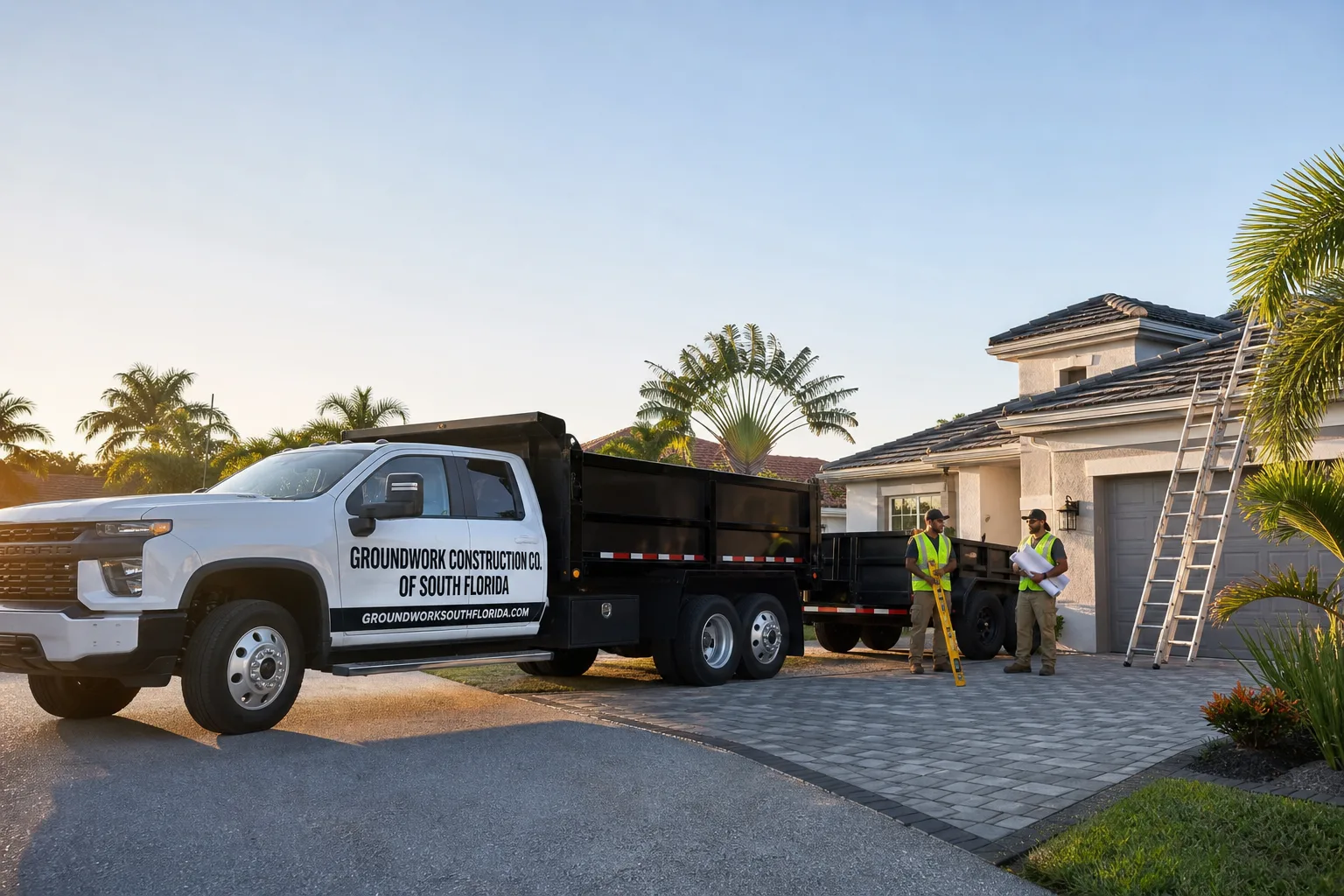
Asphalt Driveways & Resurfacing in Miami, FL
Asphalt driveways and resurfacing in Miami runs $3,500-$9,000 for new paving and $2,500-$6,500 for overlay resurfacing, with most residential jobs completed in 2-4 days once ground prep begins. You’ll need a permit through Miami-Dade County for any new install or full replacement, but simple resurfacing over stable base often qualifies for expedited review. Call (844) 665-0162 and we’ll walk you through which path your property needs.
How We Handle Asphalt Driveways & Resurfacing From Start to Finish
Every asphalt job we do in Miami follows a five-stage sequence. Homeowners who understand the timeline make better decisions about when to schedule and what to expect their yard to look like.
Stage 1: Site evaluation and base assessment (Day 1, 2-3 hours)
We show up, measure, and probe. In Miami’s older neighborhoods like Flagami and Overtown, we’re checking for the real condition beneath the surface: whether your existing driveway sits on compacted limerock, deteriorating shell base, or raw Miami Limestone with groundwater sitting two feet down. We’ll also locate sprinkler lines, shallow electrical runs, and any drainage that feeds toward the street. You decide at this stage whether you want us to handle permit submission or if your architect is already managing that piece.
Stage 2: Permit and utility clearance (3-10 business days)
For new asphalt driveways in Miami, Miami-Dade requires a building permit with a site plan showing stormwater management. Resurfacing an existing stable pad sometimes moves faster through the county’s minor-work track, but we never start demo until we have green light in hand. We also call for utility locates through Sunshine 811. The wait here is the most common place timelines slip, especially if your property sits in a flood zone requiring additional drainage review.
Stage 3: Demolition and base preparation (1-2 days)
We remove existing pavement, haul it to a recycling facility, and grade the sub-base. In Coconut Grove and Coral Gables, where decades of root intrusion from live oaks and banyans have heaved the surface, this stage takes longer. We may need to cut and remove compromised sections, then bring in clean fill and compact it to 95% density. You choose at this point whether to add a geotextile fabric layer between base and asphalt, which we recommend for any driveway with a history of cracking or standing water.
Stage 4: Asphalt placement and compaction (1 day for most residential)
We bring in hot-mix asphalt at 300°F, lay it with a paver or by hand in tight areas, and compact in lifts. Standard residential driveways get 2.5 to 3 inches of compacted asphalt over 6-8 inches of prepared base. We edge against existing concrete curbs or forms where needed, and we slope everything toward your drainage point. Miami’s afternoon thunderstorms mean we watch weather closely; rain on fresh asphalt ruins the mat.
Stage 5: Cure and final inspection (24-48 hours)
You can walk on the surface immediately, but we ask you to keep vehicles off for 48-72 hours while the asphalt cools and sets. If Miami-Dade requires a final inspection, we schedule it. We do a joint walkthrough, mark any utility cleanouts, and leave you with care instructions. Sealcoating should wait 6-12 months for the oils to cure out.
The Material and Design Choices You’ll Actually Make
Asphalt isn’t one product. On every asphalt driveways and resurfacing job in Miami, we walk homeowners through these specific decisions:
- Hot-mix grade: Standard AC-20 works for most residential traffic. If you’re running commercial vehicles or have a steep approach, we spec polymer-modified PG 76-22, which handles heavier loads and Miami’s heat without rutting. The upgrade adds roughly 15-20% to material cost but extends service life significantly.
- Base depth and type: Limerock base is standard and economical. Where groundwater is chronically high, we may recommend raising the grade and using a cement-stabilized base, which costs more upfront but prevents the potholing and edge failure we see in low-lying Allapattah lots.
- Full-depth new vs. overlay resurfacing: If your existing driveway has stable base, minor cracking, and no drainage issues, a 1.5-2 inch overlay saves 40-60% versus full replacement. But if the base is failing, overlaying traps the problem and you’ll be redoing it in three years. We’re direct about which path makes sense.
- Edge treatment: Tapered edges blend into lawn but erode faster. Concrete ribbon curbs or Belgian-block edging contain the asphalt and define the driveway formally. In historic Coral Gables, some HOAs require specific edge standards that we build to.
- Drainage integration: Miami’s flat grades and intense rainfall mean water has nowhere to go. We discuss whether to add trench drains, channel cuts to the street, or regrade the approach. This decision often matters more than the asphalt itself for long-term performance.
What Asphalt Driveways & Resurfacing Costs in Miami, FL
| Scope | Typical Range | Most Common |
|---|---|---|
| New asphalt driveway (standard residential) | $3,500-$9,000 | $5,500-$7,500 |
| Overlay resurfacing | $2,500-$6,500 | $3,500-$5,000 |
| Driveway extension or apron | $1,500-$4,000 | $2,000-$3,000 |
| Base reconstruction (per sq ft) | $4-$8 | $5-$6 |
Five factors push your number up or down:
1. Square footage and shape complexity. A straight 600-square-foot rectangle is efficient to pave. Tight curves, multiple turns, or integrated parking pads add labor and waste.
2. Existing condition and base needs. If we can overlay, you save. If we hit saturated limestone, failed base, or buried debris that has to be excavated and exported, costs rise fast.
3. Drainage modifications. Simple slope-to-street is included. Adding trench drains, catch basins, or tie-ins to existing storm systems is additional.
4. Material grade and thickness. Standard spec versus polymer-modified, 2-inch overlay versus 3-inch full depth. We quote both when the choice is genuine.
5. Permit scope and HOA requirements. Miami-Dade permits for new work, expedited or standard. Some Coral Gables and Coconut Grove HOAs require architectural review with their own fees and timelines.
Our written estimates include asphalt, base material, compaction, edging as specified, haul-off, and permit fees. They do not include tree removal, utility relocation, or decorative finishes like stamped borders. Call (844) 665-0162 for an exact quote on your property - estimates are free.
What Miami’s Conditions Specifically Do to Asphalt Work
Miami’s combination of porous limestone, shallow groundwater, and salt-air exposure creates failure modes you don’t see inland. We’ve paved driveways in Flagami where the water table rose through the sub-base during a king tide and softened the limerock before we could compact it. In those cases, we switch to cement-stabilized base or raise the grade with fill, both of which add cost but prevent the alligator cracking that follows a wet base.
The housing stock matters too. The CBS homes built from the 1940s through 1970s in 33126, 33127, and surrounding ZIPs often have original driveways poured thin, without reinforcement or proper base, decades before modern codes. When we demo these, we frequently find rebar that’s corroding from salt intrusion, or utility lines that were buried shallow because the ground was too wet to trench deeper. We flag these issues during evaluation so you’re not surprised mid-project.
Permitting in Miami-Dade is its own layer. The county’s Notice of Acceptance system means every structural component, including the fasteners and geotextiles we use in base preparation, needs Miami-Dade-specific approval. Products that pass in Broward County, just north in Fort Lauderdale, may not be legal here. We source through Miami-Dade-approved suppliers specifically to avoid inspection failures that delay completion.
And in Brickell and downtown ZIPs like 33129, the construction density means concrete pump trucks and heavy equipment share limited street access with high-rise projects. We coordinate scheduling weeks ahead, but this logistics environment can extend lead times beyond what the same job would take in a less congested area.
Homeowners often pair driveway work with larger exterior updates. If you’re expanding your home’s footprint, our New Detached ADU in Miami service integrates the driveway approach into the overall site plan from the start. For interior reconfiguration instead, Junior ADU & Interior Conversion in Miami projects frequently include rethinking how the driveway serves a now-multi-unit property.
Serving Miami, FL - Our Local Coverage Area
We’re based in the Miami area and know this community well. Use the map below to see our service coverage - if you’re nearby, we can almost certainly help.
Frequently Asked - Asphalt Driveways & Resurfacing in Miami
Most residential jobs finish in 2-4 days of active work after permits clear, though permit review itself takes 3-10 business days depending on scope. Weather delays from afternoon thunderstorms can push paving day by 24 hours. Call (844) 665-0162 and we’ll give you a realistic timeline for your specific property.
New asphalt installation and full replacement require a Miami-Dade building permit with site drainage review. Overlay resurfacing on stable existing base sometimes qualifies for minor-work expedited permitting. We handle the application and drawings as part of our standard process.
Yes, if the base is stable, cracks are not severe, and drainage is functional. An overlay adds 1.5-2 inches of new asphalt and costs 40-60% less than full replacement. If the base is failing or you have chronic ponding, overlaying wastes money; we’ll tell you directly which situation you’re in.
New paving typically runs $4-$8 per square foot installed, with most Miami residential driveways falling in the $5-$6.50 range. Overlay resurfacing is $3-$5 per square foot. Your exact price depends on base condition, access, and drainage needs. Call (844) 665-0162 for a free on-site estimate.
We warranty workmanship and base preparation for one year. The asphalt itself carries the manufacturer’s standard material warranty. Long-term performance depends heavily on drainage, base stability, and whether you sealcoat at the recommended 2-3 year intervals. We document all of this in your project closeout packet.
Get Your Free Estimate for Asphalt Driveways & Resurfacing in Miami
Call (844) 665-0162 to schedule a free on-site evaluation. We’ll assess your base condition, check drainage, confirm permit requirements for your specific Miami address, and deliver a written estimate with real numbers. No deposit required to get started, and we only schedule work we have capacity to complete on time. If your project is part of a full exterior update, our Driveway & Pavers in Miami page covers the broader scope, and our Driveway & Pavers service hub details how our crew handles material selection across asphalt, concrete, and paver systems. We serve Miami and surrounding areas including Allapattah, Brownsville, Coconut Grove, and Coral Gables.
Written by Raymond Estevez, Owner at Groundwork Construction Co., serving Miami since our founding.