
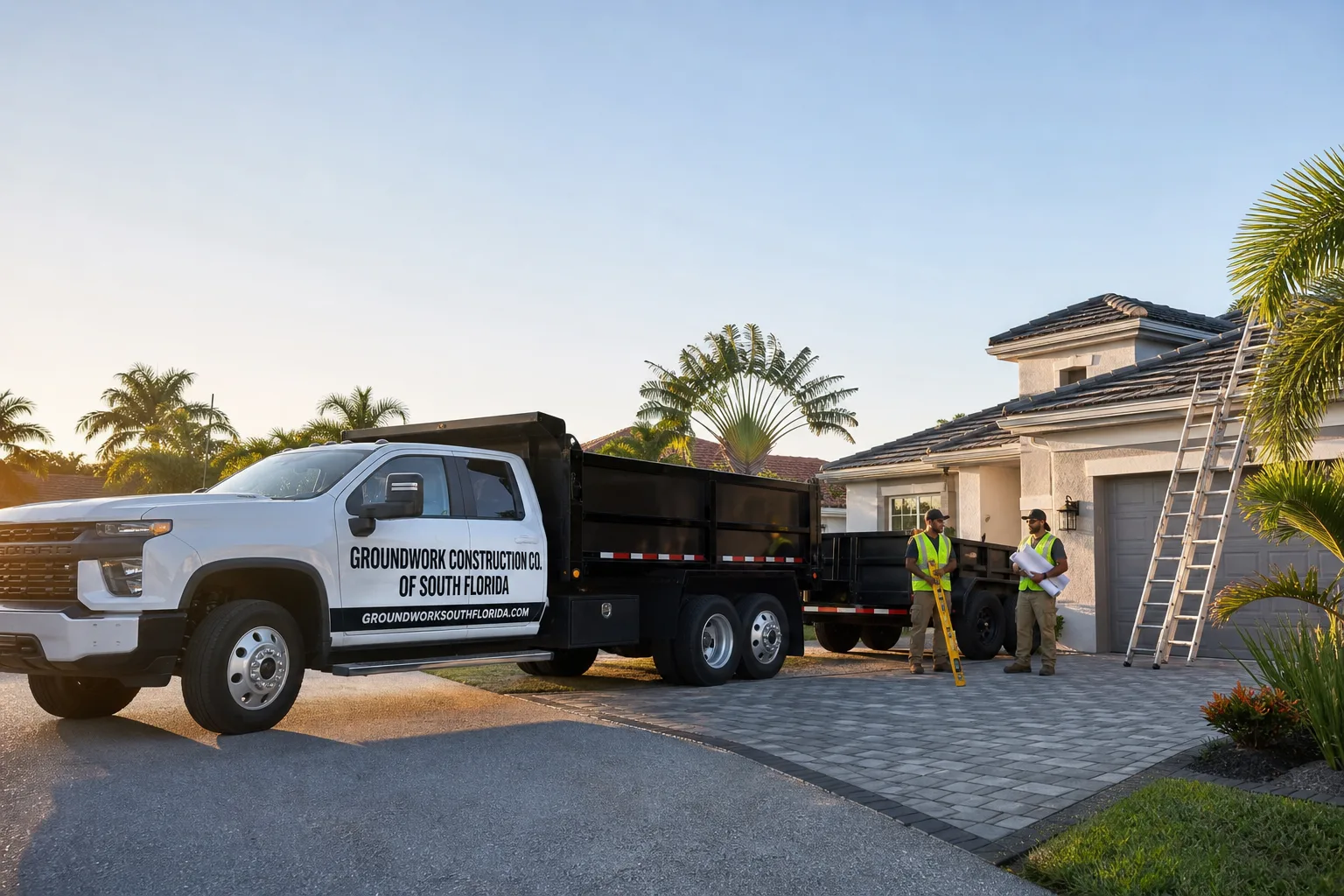
Glass Railing Systems in Lauderhill, FL - What to Expect
Glass railing systems in Lauderhill typically run $8,500-$22,000 for a full residential installation, depending on linear footage, mounting surface, and whether your existing structure needs reinforcement to meet current Florida Building Code wind-load requirements. Most projects we handle in Lauderhill take 3-5 business days from template to final inspection, with permitting adding another 2-3 weeks. Call (844) 665-0162 and we’ll walk your property, take precise measurements, and deliver a written estimate with no obligation.
These systems aren’t just aesthetic upgrades in this market. With Lauderhill’s concentration of 1960s-1970s CBS homes originally built with minimal tie-down hardware, glass railing installations on second-story balconies, pool enclosures, or converted Florida rooms often expose structural deficiencies that must be resolved before the county will sign off. That’s why we start every job with a structural assessment, not a sales pitch.
How We Install Glass Railing Systems - Stage by Stage
We’ve refined our process across dozens of railing projects in Broward County. Here’s what actually happens, and where your decisions matter.
Stage 1: Site assessment and structural verification (Day 1, 2-3 hours)
We arrive with a structural engineer’s checklist. For Lauderhill homes, this means examining the concrete or wood substrate where rails will mount, checking for spalling in older CBS construction, and verifying that the attachment points can handle the 120+ mph wind-load criteria Florida now enforces. If we’re replacing rusted aluminum railings on a 1960s garden apartment balcony or a converted carport deck, we often find inadequate embedment depth or deteriorated base plates. You’ll get photos, a written findings summary, and a clear go/no-go on whether reinforcement is needed before glass goes in.
Stage 2: Templating and glass specification (Day 1-2, 1 hour on-site)
This is where you choose. We laser-measure every run, account for thermal expansion gaps, and confirm glass thickness - typically 1/2″ tempered for residential guardrails, 3/4″ laminated for top-rail-free designs or pool enclosures where post-fall safety is paramount. You’ll decide on tint (clear, low-iron, gray, or bronze), edge treatment (polished or flat-ground), and hardware finish ( brushed stainless, powder-coated aluminum, or marine-grade 316 stainless for properties near the C-13 canal corridor where salt-air corrosion accelerates). We send templates to our fabricator; lead time is currently 10-14 business days for standard clear, 3-4 weeks for low-iron or custom tint.
Stage 3: Structural prep and reinforcement (Day 3, variable duration)
If your existing substrate failed assessment, this is where we remediate. Common in Lauderhill: core-drilling new stainless embeds into sound concrete, installing steel backing plates where wood framing lacks continuous support, or pouring new curb walls where the original slab edge was too shallow for code-compliant post spacing. We handle this in-house - no subcontractor handoffs. Most reinforcement adds 1-2 days and $1,200-$4,500 to the project, but it’s non-negotiable for permitted work in Broward County.
Stage 4: Glass delivery and installation (Days 4-5, 6-10 hours)
Fabricated panels arrive on a dedicated flatbed with padded A-frames. We set posts or base shoes first, shim for level (critical on older Lauderhill slabs that have settled unevenly), then set glass with structural silicone and mechanical clips per manufacturer spec. Tempered glass cannot be field-cut, so precision at templating stage is everything. We pressure-test the assembly and clean all surfaces before you walk the installation.
Stage 5: Final inspection and documentation (Day 5 or shortly after)
Broward County requires a structural inspection for all guardrail replacements and new installations. We schedule this, meet the inspector on-site, and provide stamped engineering letters if reinforcement was performed. You’ll receive maintenance guidelines - mostly annual hardware torque checks and silicone inspection - plus warranty registration for the glass and hardware components.
The Glass Railing Options You’ll Actually Choose Between
Not all glass railing systems suit every Lauderhill property. Here’s where homeowners typically land after we walk them through the trade-offs:
- Framed (post-and-rail) systems: Aluminum or stainless posts at 4-6 foot intervals with a continuous top rail. Most affordable at $180-$280 per linear foot installed. The top rail provides hand compliance without additional hardware. Downside: the horizontal lines interrupt views, and in Lauderhill’s salt-air environment, lower-grade aluminum will show pitting within 5-7 years unless you specify marine-grade 316 stainless or premium powder coat.
- Frameless (standoff or spigot) systems: Glass panels secured with minimal stainless brackets or floor-mounted spigots, no top rail. Clean sightlines, premium aesthetic. Runs $320-$480 per linear foot. Requires thicker laminated glass and more precise structural support. Best for second-story balconies and pool decks where the view is the point. Wind-load engineering is stricter here - expect the structural assessment to be more involved on older Lauderhill homes.
- Base shoe (channel) systems: Glass sits in a continuous aluminum or stainless channel, top rail optional. Mid-range at $260-$380 per linear foot. Popular for pool enclosures and raised patios where you want protection without visual weight. The channel must drain properly; in Lauderhill’s rainy season, poor drainage design traps water against the slab edge and accelerates spalling in older concrete.
- Glass type - tempered vs. laminated: Tempered is standard, breaks into granular pieces on impact. Laminated (two glass layers with interlayer) stays in frame if broken, required for top-rail-free designs and recommended where fall height exceeds 30 inches. Adds 25-35% to glass cost. For homes with young children or elderly residents, we typically recommend laminated regardless of code minimum.
- Hardware finish: Brushed 304 stainless works inland in Lauderhill; if you’re west of Inverrary Boulevard near the water management canals where salt intrusion is more pronounced, we spec 316 stainless or premium fluoropolymer coating. The upfront cost difference is 15-20%; the replacement cost if you get this wrong is the entire system.
What Glass Railing Systems Cost in Lauderhill, FL
For the Lauderhill market, expect $8,500-$22,000 for a typical residential glass railing installation, with most single-family projects landing in the $12,000-$16,000 range.
| Project Scope | Price Range |
|---|---|
| Small balcony or porch (20-30 linear ft, framed) | $8,500-$12,000 |
| Pool enclosure or patio (40-60 linear ft, base shoe) | $14,000-$18,500 |
| Second-story deck or multi-level (frameless, structural reinforcement needed) | $18,000-$22,000+ |
Five factors move you within or above these ranges:
Linear footage and configuration complexity: Straight runs are efficient. Multiple corners, stairs, or radius sections multiply fabrication and labor costs. A simple rectangular pool deck costs less than a wraparound balcony with three stair transitions.
Existing structural condition: This is the big variable in Lauderhill. Homes built 1955-1975 often need post bases drilled into new concrete footings, or wood framing sistered with steel. We’ve seen $3,000 railing jobs become $11,000 projects once we exposed the substrate. The assessment stage exists precisely to eliminate this surprise.
Glass specification: Low-iron glass (Starphire or equivalent) eliminates the green tint visible in thick standard glass, but adds 30-40% to material cost. Custom tints, etched patterns, or switchable privacy glass push higher.
Permit and engineering scope: Broward County requires permits for all guardrail work, with structural calculations for frameless systems or any installation over 8 feet in height. We handle submission, but permit fees and engineering stamps run $800-$1,800 depending on complexity.
Access and protection: Second-story installations requiring scaffolding or interior protection for occupied homes add labor hours. Homes with delicate landscaping or pool decks that can’t bear equipment weight need alternate access planning.
Our written estimates itemize glass, hardware, structural prep, permit fees, and labor separately. You’ll know exactly where your money goes before you sign.
What Lauderhill Homes Specifically Do to This Job
Lauderhill’s built environment shapes every glass railing project we take on here. The city was largely developed by General Development Corporation from the 1950s through 1970s as one of South Florida’s first master-planned communities, and that legacy shows up in our structural assessments constantly. The dominant housing stock - single-story CBS tract homes and low-rise garden apartments along corridors like Inverrary Boulevard and Commercial Boulevard - was constructed before Hurricane Andrew rewrote Florida’s building code. Original jalousie windows, flat roofs with minimal slope, and concrete block walls without adequate roof-to-wall straps are the norm, not the exception.
What this means for glass railing systems: nearly every installation on an elevated surface triggers a compliance review that wouldn’t be necessary in a 1995-built home. When we install railings on converted Florida rooms or second-story additions that Lauderhill’s Caribbean-American homeowners often build to accommodate multi-generational families, we’re working on structures originally permitted under 1960s codes. The county inspector will want to see that the supporting structure meets current wind-resistance standards, not just that the railing itself is code-compliant.
Water is the other constant factor. Lauderhill sits on flat, low-elevation interior Broward County land with a seasonally high water table. During the June-October rainy season, hydrostatic pressure pushes moisture through slab edges and below-grade block walls. For base-shoe or surface-mounted railing systems, this means we specify weep holes, drainage channels, and stainless hardware as standard - not upgrades. We’ve replaced too many competitor installations where aluminum channels trapped water against spalling concrete, turning a $15,000 aesthetic improvement into a structural repair within three years.
The local permitting reality: Broward County’s Unified Permitting Office reviews structural calculations carefully, and inspection scheduling can add 2-3 weeks to project timelines. We build this into our schedules and handle all submissions, but homeowners should know that rushing a glass railing job in Lauderhill isn’t feasible for permitted work. The county’s thoroughness is frustrating if you’re unprepared; it’s protection if your contractor knows how to navigate it.
Serving Lauderhill, FL - Our Local Coverage Area
We’re based in the Lauderhill area and know this community well. Use the map below to see our service coverage - if you’re nearby, we can almost certainly help.
Frequently Asked - Glass Railing Systems in Lauderhill
Most glass railing systems in Lauderhill take 3-5 business days of on-site work once materials arrive, but the full timeline from contract to final inspection is typically 5-7 weeks. Fabrication lead time is 10-14 days for standard clear tempered glass, and Broward County permitting adds another 2-3 weeks for plan review and inspection scheduling. We coordinate templating, fabrication, and permit submission in parallel to compress this where possible. Call (844) 665-0162 and we’ll give you a realistic timeline for your specific project.
Yes, Broward County requires a building permit for all new guardrail installations and replacements, with structural calculations required for frameless or elevated systems. Given Lauderhill’s concentration of pre-Andrew housing stock, inspectors also verify that the supporting structure meets current Florida Building Code wind-load requirements. We prepare and submit all permit documentation, including engineering stamps if structural reinforcement is needed. The permit fee is itemized in your estimate, typically $800-$1,200 for residential guardrail work.
Usually yes, since glass railing systems mount to structural surfaces rather than penetrating walls where utilities run. The exception is integrated lighting or heated glass applications, which we rarely see in Lauderhill residential work. Our assessment includes a scan for embedded electrical in concrete slabs - occasionally necessary on homes where pool equipment or landscape lighting was retrofitted. If you’re considering glass railings as part of a full Windows & Doors in Lauderhill renovation, we’ll coordinate with our Windows & Doors crew to sequence utility work efficiently.
Minimal but specific: rinse glass monthly with fresh water to prevent salt and mineral buildup, especially if you’re near Lauderhill’s canal corridors where irrigation and groundwater carry minerals. Check stainless hardware annually for torque - thermal expansion loosens fasteners over time. Avoid pressure-washing directly at silicone joints. In Lauderhill’s rainy season, verify that base-shoe channels drain freely; standing water accelerates concrete spalling and hardware corrosion. With this routine, expect 15-20 years from quality stainless hardware and 25+ years from laminated glass before replacement considerations arise.
Repair rarely makes sense for the aluminum railings common in 1960s-1970s Lauderhill construction. The original systems are typically undersized by current code, corroded at hidden connections, and incompatible with modern glass infill. We can sometimes retrofit glass panels into existing steel frames if the structure is sound, but most Lauderhill projects benefit from full replacement with code-compliant, wind-rated systems. For a precise comparison on your property, call (844) 665-0162 - our assessment will give you real numbers for both paths.
Ready for Glass Railing Systems on Your Lauderhill Property?
We’ll walk your site, assess your structure honestly, and deliver a written estimate with itemized pricing for glass, hardware, any needed reinforcement, and permits. No pressure, no surprises. Call (844) 665-0162 to schedule your free estimate. Most Lauderhill homeowners we serve also ask about Fence Repair in Lauderhill or Paver Driveways in Lauderhill while we’re on-site - one contractor, every phase, and you choose the materials that fit your project.
Written by Raymond Estevez, Owner at Groundwork Construction Co., serving Lauderhill and South Florida.