
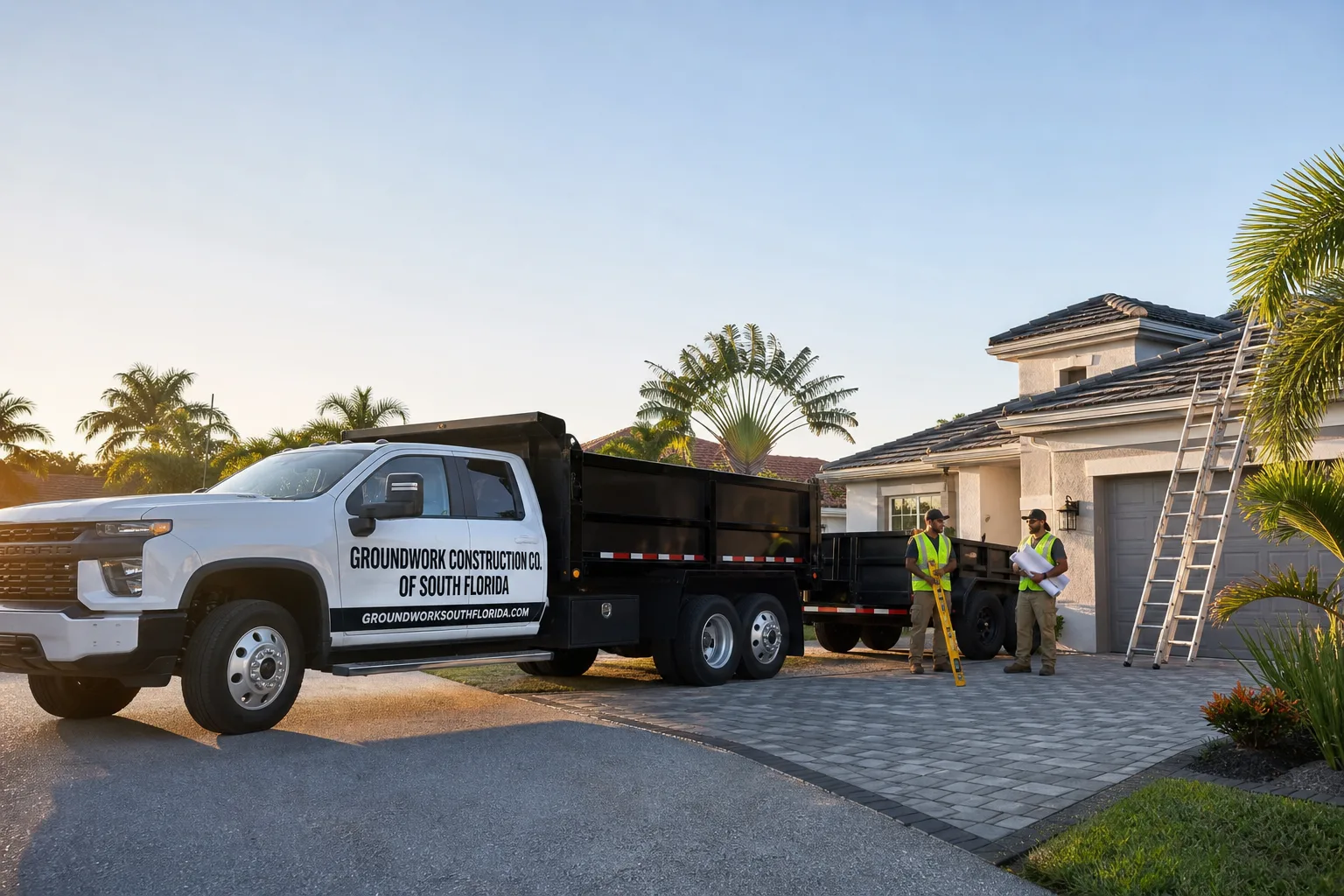
What Specialty Roofing in Sunrise, FL Involves and What It Costs
Specialty roofing in Sunrise covers the non-standard systems that standard shingle crews won’t touch: flat and low-slope membranes on condo buildings, TPO and modified bitumen on commercial-adjacent mixed-use properties, and standing seam or architectural metal on custom homes where wind uplift ratings matter. Most jobs run 3 to 10 business days depending on access, deck condition, and whether we’re working around a live building. Call (844) 665-0162 for a free on-site estimate - we’ll scope the exact system, timeline, and price while we’re there.
How We Handle Specialty Roofing Start to Finish
Every specialty roofing job in Sunrise follows a five-stage sequence. We’ve refined this over years of working on the flat roofs and low-slope systems that dominate the city’s 1970s and 1980s building stock.
Stage 1: Access and structural assessment (Day 1)
We walk the roof with moisture detection and core sampling tools. On older CBS buildings near Sunset Strip, we’re checking for saturated insulation, rusted decking fasteners, and whether the existing membrane was installed directly over old layers. You decide at this stage whether you want us to proceed with full tear-off or, in limited cases, a recover if the deck tests dry and the building code allows. This takes 2 to 4 hours. We photograph everything and send you a written report before we leave the site.
Stage 2: Material specification and permit pull (Days 2 to 4)
We finalize the membrane type, insulation R-value, and fastening method based on your building’s wind exposure and any HOA architectural requirements. For Sunrise properties in the 33304 corridor, we often spec 60-mil TPO with mechanically attached seams for flat roofs, or 24-gauge standing seam with concealed clips for architectural metal jobs. You approve the spec and we file permits with Broward County Building Code Services. Turnaround is typically 3 to 5 business days for straightforward re-roofs; longer if your building is in the 40-year recertification cycle and needs engineering sign-off first.
Stage 3: Tear-off and deck prep (Days 5 to 7)
Crews strip to the structural deck, replace compromised plywood or concrete topping, and install tapered insulation crickets to eliminate ponding. On mid-rise condos, we coordinate crane time and material hoists with building management. This is when we discover whether the original 1980s construction included adequate roof-to-wall anchorage. If not, we add the structural upgrades before the membrane goes down. You don’t want to find out your parapet clips are corroded after the new roof is installed.
Stage 4: Membrane or panel installation (Days 8 to 12)
TPO and modified bitumen get heat-welded or torched in overlapping runs, with walk pads placed at HVAC access points. Metal systems get panel runs cut to length on-site, clipped to standing seams that handle 150+ mph wind uplift. We schedule this stage around the wet season when possible - June through October thunderstorms in western Broward can shut down exterior work for hours at a time. Your project manager texts daily updates with progress photos.
Stage 5: Inspection, punch, and warranty registration (Days 13 to 15)
Broward County inspects for code compliance, especially on buildings under recertification. We handle the inspector walk-through, correct any punch items same-day, and register your manufacturer warranty. You get a final packet with care instructions, warranty certificates, and photos of the completed system for your records.
This sequence is part of a full Roofing in Sunrise project when we’re also replacing gutters, fascia, or coordinating with window work. Our Roofing crew can phase the job to keep your building watertight throughout.
The Specialty Roofing Options You’ll Actually Choose Between
- TPO single-ply membrane: White reflective surface, heat-welded seams, 15 to 20 year service life. Best for large flat roofs where cooling costs matter. Lower material cost than modified bitumen, but requires a cleaner substrate and skilled welders. We typically spec Carlisle or GAF EverGuard for Sunrise condo projects.
- Modified bitumen (torch-down or self-adhered): Two-ply system with asphalt-based sheets, excellent puncture resistance for roofs with frequent foot traffic or HVAC service. Heavier than TPO, better for buildings where mechanical damage is a concern. Slightly higher labor cost due to the two-layer application.
- Standing seam metal (architectural grade): Concealed fasteners, no exposed screws, available in 24-gauge steel or .032 aluminum. The premium choice for custom homes and any property where hurricane wind ratings are non-negotiable. Costs roughly double a membrane system but lasts 40 to 60 years with minimal maintenance.
- Fluid-applied restoration: Silicone or acrylic coating over an existing sound substrate. Not a full replacement, but a 10-year life extension for roofs with limited budget or access constraints. Only viable if core testing shows dry insulation and intact decking. We don’t recommend this for buildings already showing leaks.
- Insulation and slope package: Every flat roof needs this decision. Tapered polyiso insulation adds slope for drainage; the alternative is a dead-flat roof that ponds water and fails prematurely. The slope package adds $1.50 to $3.00 per square foot but eliminates the failure mode we see most often on older Sunrise buildings.
Homeowners often pair a roof project with Sliding & Patio Doors in Sunrise to complete the exterior envelope upgrade, or add Glass Railing Systems in Sunrise for balcony and terrace areas that get exposed during the roofing work.
What Specialty Roofing Costs in Sunrise, FL
| Scope | Price Range |
|---|---|
| Flat/low-slope membrane (TPO or modified bitumen), 1,500-3,000 sq ft | $8,000 - $18,000 |
| Standing seam metal, residential custom | $15,000 - $40,000 |
| Fluid-applied restoration (eligible roofs only) | $3,500 - $8,500 |
| Structural deck repair (per project, if needed) | $2,000 - $7,500 |
Five variables push your job to the low or high end of these ranges. First, existing condition: a roof with one dry layer and sound decking starts near the bottom; multiple saturated layers with corroded fasteners adds tear-off labor and dump fees. Second, access complexity: mid-rise condos need cranes and hoists; single-story detached homes don’t. Third, material grade: 45-mil TPO versus 80-mil, or 26-gauge versus 24-gauge metal. Fourth, structural upgrades required by code or recertification, especially roof-to-wall connections on pre-Andrew construction. Fifth, timing: scheduling outside wet season (November through May) avoids weather delays and can improve crew availability.
A written estimate from Groundwork includes material, labor, permits, and warranty registration. It does not include interior drywall repair from pre-existing leaks, standalone structural engineering if your building needs it, or HOA application fees. We flag these items during assessment so you’re not surprised.
What Sunrise Homes Specifically Do to This Job
Sunrise was built out as a master-planned suburban community in the 1970s and 1980s, and that era’s construction dominates what we work on. The city has an unusually high density of mid-rise condominiums and garden-style apartment complexes built under pre-Hurricane Andrew codes, which means roof-to-wall connection retrofits are a constant companion to any specialty roofing project. When we’re working along NW 44th Street or the Sunset Strip corridor, we expect to encounter buildings in Broward County’s 40-year mandatory structural recertification cycle. Inspectors from Building Code Services flag corroded rebar, spalled concrete, and inadequate wind uplift anchorage. We can’t install a new membrane until those structural items are engineered and repaired, and that sequencing adds time and cost that a standard shingle re-roof in a newer city wouldn’t face.
The local climate compounds this. Sunrise sits inland adjacent to the Everglades water conservation areas, with a seasonally high water table and intense afternoon thunderstorms from June through October. Flat roofs here fail faster if they pond water, which is why we insist on tapered insulation packages even when owners want to save money. The wet season also compresses our exterior construction window - we book specialty roofing jobs 4 to 6 weeks out in dry season, and we keep contingency days built into summer schedules.
Our Sunrise crew knows the city’s building department inspectors by name, which matters when a recertification project needs same-day corrections to keep a certificate of occupancy valid. We’ve worked with enough HOAs in the area to know which ones require color samples and which ones need full architectural review before we can start.
Serving Sunrise, FL - Our Local Coverage Area
We’re based in the Sunrise area and know this community well. Use the map below to see our service coverage - if you’re nearby, we can almost certainly help.
Frequently Asked - Specialty Roofing in Sunrise
Most specialty roofing jobs in Sunrise take 3 to 10 business days for the roof work itself, plus permit lead time. Buildings in the 40-year recertification cycle may need 2 to 4 additional weeks for structural engineering and repairs before roofing can begin. Call (844) 665-0162 and we’ll assess your specific timeline during a free on-site visit.
Yes. Broward County requires permits for all roof replacements and most recover projects, and specialty roofing systems trigger additional wind uplift documentation. If your building is under 40-year recertification, you’ll also need structural sign-off before the roofing permit gets issued. We handle both filings as part of our standard process.
Usually, yes. We work around existing HVAC curbs, exhaust fans, and satellite equipment on flat roofs. The exception is when the equipment sits on a deteriorated curb that needs replacement as part of the job - then we coordinate a licensed HVAC contractor to disconnect and reconnect, which we can arrange through our single-source project management. You don’t need to find your own trades.
Flat and low-slope membrane systems run comparable to architectural shingles on a per-square-foot basis, but metal specialty roofing costs roughly 50 to 100 percent more upfront. The trade-off is lifespan: a properly installed TPO roof lasts 15 to 20 years, while standing seam metal lasts 40 to 60. For Sunrise buildings facing recertification, the longer-lived system often makes financial sense.
Manufacturer material warranties range from 15 years on standard TPO to 40 years on premium metal systems. Our workmanship warranty covers installation defects for 5 years. We register both warranties in your name and deliver the certificates at project closeout. For exact coverage terms on the system you’re considering, call (844) 665-0162 - we’ll walk through the specific manufacturer documents before you sign.
Get Your Free Specialty Roofing Estimate in Sunrise
We’ll come to your property, assess the existing roof system, and deliver a written estimate with material options, timeline, and exact pricing. No deposit required to schedule. Call (844) 665-0162 or request a callback through our site. Raymond Estevez or a member of our project team will handle your inquiry directly.
Written by Raymond Estevez, Owner at Groundwork Construction Co., serving Sunrise and Broward County homeowners since our founding.