
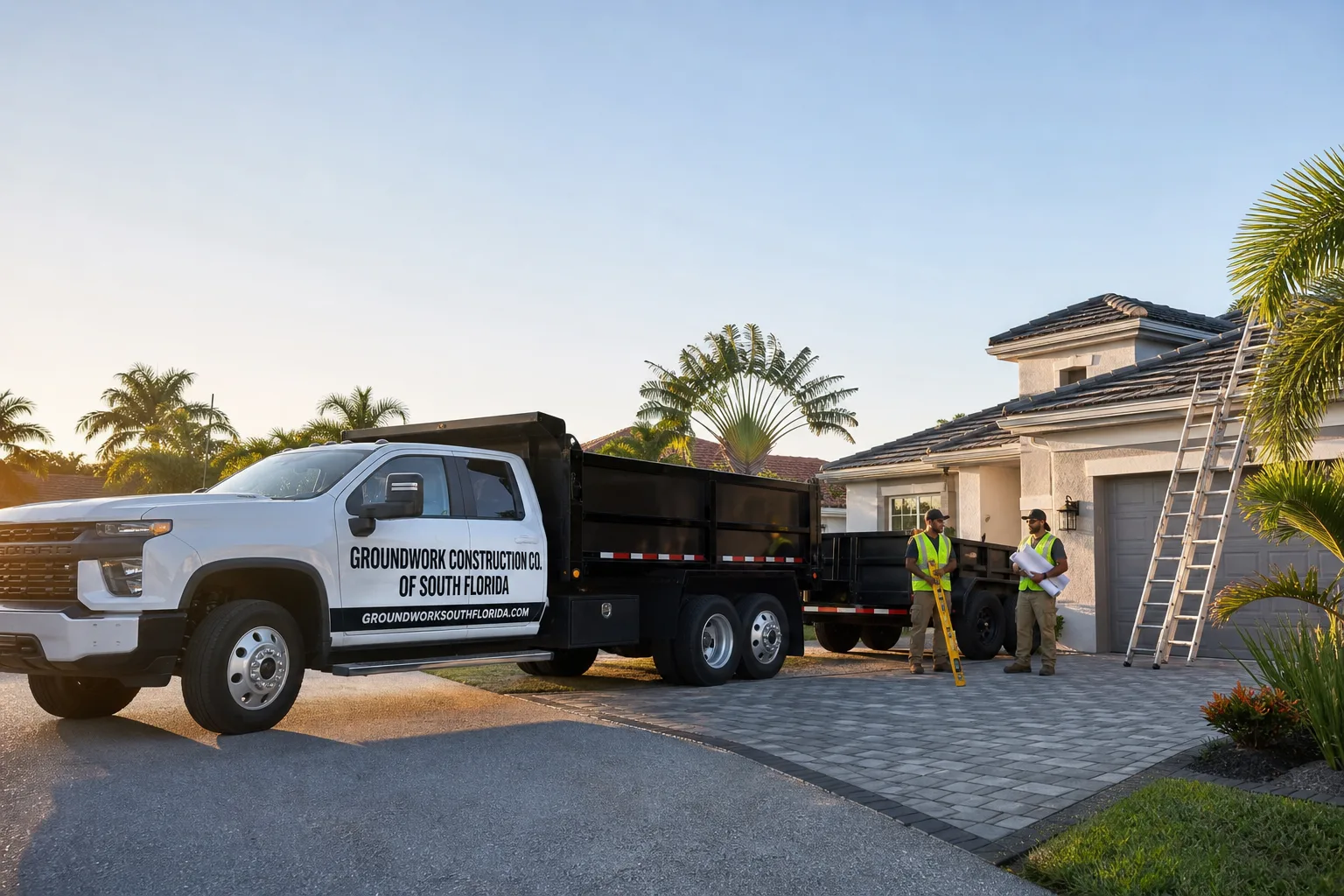
How Much Does Tile Roofing Cost in Sunny Isles Beach, and How Long Does It Take?
Tile roofing in Sunny Isles Beach typically runs $600-$2,500 for repairs and $8,000-$20,000 for full replacement, with most projects taking 2-5 weeks depending on building access and HOA scheduling. Every job here operates under Miami-Dade’s High-Velocity Hurricane Zone code, so wind-uplift ratings and fastening patterns are engineered to 175+ mph standards, not optional upgrades. Call (844) 665-0162 and we’ll walk your specific building’s requirements and get you a written estimate.
Our Tile Roofing Process from First Site Visit to Final Inspection
We’ve learned that tile roofing in Sunny Isles Beach follows a different rhythm than mainland jobs. The towers along Collins Avenue don’t allow the casual material drops and extended timelines that work elsewhere. Here’s how we sequence it.
Stage 1: Building access and structural assessment - 1-2 days
Before we touch a tile, we coordinate with your building manager to secure service elevator reservations and review your building’s construction rules packet. Some towers restrict work to 9 a.m.-5 p.m. weekdays; others require 48-hour notice for any rooftop access. We’re simultaneously inspecting your roof deck, truss connections, and existing fastening patterns. If your building went up in the 1998-2008 wave of luxury construction, we’re checking whether the original tile installation used the heavier mortar-set method or the newer mechanical-fastening systems that HVHZ codes now mandate. You’ll decide at this stage whether we’re targeting repair, partial retile, or full replacement.
Stage 2: Material selection and engineering - 3-7 days
This is where you choose your tile profile, and it matters more in Sunny Isles Beach than most places. Flat concrete tile sheds wind differently than S-tile or barrel profiles. We’re also specifying underlayment: standard 30# felt won’t pass muster for most tower re-roofing projects here. You’ll typically select between synthetic underlayment with taped seams or a self-adhered modified bitumen layer, depending on your building engineer’s requirements and your budget. We order materials during this window and schedule crane or high-capacity elevator time if your roof requires palletized delivery.
Stage 3: Tear-off and deck prep - 2-4 days
Removal of existing tile happens carefully; even salvageable tile gets staged for potential reuse or recycling. We’re inspecting the wood deck or concrete substrate for salt-spray corrosion, particularly around HVAC penetrations and parapet walls where Atlantic exposure is relentless. Any compromised fasteners get replaced with stainless steel or hot-dip galvanized hardware - standard zinc-coated fasteners won’t survive five years here. If we find deck damage, we pause for your approval on the repair scope before proceeding.
Stage 4: Installation - 5-14 days
Underlayment goes down first, followed by battens (if your tile system requires them) set to engineered spacing. Each tile gets fastened per the HVHZ nailing pattern - typically six fasteners per tile in the field, more at hips, ridges, and eaves. In Sunny Isles Beach, we regularly see building managers require photographic documentation of fastener placement before they’ll sign off on inspection readiness. We’re coordinating with your HOA or building engineer throughout this phase, not just at the end.
Stage 5: Inspection and closeout - 2-5 days
Miami-Dade roofing inspection, building-specific final walkthrough, and debris removal. We handle the permit closure and provide you with manufacturer warranty documentation and our workmanship guarantee. Most buildings here also require a post-job elevator inspection to confirm no damage occurred during material transport.
The Tile Options You’ll Actually Choose Between
Not all concrete tile performs the same on a Sunny Isles Beach high-rise roof. Here’s what we present and why each matters:
- Flat/Shake-profile concrete tile: Lower wind profile, easier to walk during maintenance, but requires more precise fastening because it doesn’t interlock as aggressively. Best for buildings with strict weight limits or where the original design specified flat tile. Generally the most economical option.
- S-tile or Spanish-profile concrete tile: Superior interlocking and water shedding, heavier per square, more dramatic shadow lines. The classic South Florida look. Costs more per square foot and demands stronger deck structure, but the interlock provides genuine secondary water defense if a tile cracks.
- Barrel tile (clay or concrete): The most traditional aesthetic, longest track record in hurricane zones, but also the heaviest and most expensive. Clay barrel tile in particular resists salt corrosion better than concrete, though at a significant price premium. We specify this when a building’s architectural review board mandates historical consistency.
- Lightweight concrete or composite alternatives: Roughly 40% less weight than standard concrete tile, which matters enormously in high-rise construction where structural load calculations are tight. The trade-off is shorter manufacturer warranty and less thermal mass. We recommend these only where structural engineers have confirmed load restrictions.
- Cool-roof rated colors and coatings: Not a tile type but a specification choice. Reflective coatings reduce cooling load in glass-heavy towers where rooftop heat radiates directly into penthouse units. Worth the upcharge for top-floor residences, less critical for lower floors.
We source concrete tile from manufacturers including Boral and others in our roofing portfolio, selected to match your building’s existing color palette and your engineer’s load specifications.
What Tile Roofing Costs in Sunny Isles Beach, FL
Tile roof repair in Sunny Isles Beach typically ranges $600-$2,500. Full tile roof replacement runs $8,000-$20,000, with most mid-range projects landing between $12,000 and $16,000 for an average-sized high-rise roof area.
Five factors push your number up or down:
- Roof size and accessibility: Smaller roofs cost less, but difficult crane access or restricted elevator windows can add labor days that offset the savings.
- Existing condition: A single cracked tile over sound underlayment is a quick repair. Multiple leaks, corroded fasteners, or saturated deck sections require tear-off and structural repair before new tile goes down.
- Material grade and profile: Standard flat concrete tile at the low end; imported clay barrel tile or custom color blends at the high end. Underlayment upgrades from synthetic to self-adhered modified bitumen add $1-$2 per square foot.
- Building-specific requirements: Some Collins Avenue towers mandate after-hours work premiums, dedicated freight elevator booking fees, or third-party engineering review of fastening patterns. These aren’t optional and aren’t in our base estimate until we’ve reviewed your building’s rules packet.
- Permit and inspection scope: Miami-Dade HVHZ permitting includes wind-load calculations; if your project triggers Florida DEP Coastal Construction Control Line review, add 2-4 weeks and associated fees to the timeline and budget.
Our written estimates include tile, underlayment, fasteners, flashing, permits, and labor. They don’t include potential deck repair, structural engineering if your building requires it, or HOA access fees your building management charges directly.
What Sunny Isles Beach Specifically Does to a Tile Roofing Job
We’ve replaced tile on towers from the original 1950s motels that survived the redevelopment wave to the glass supertalls that went up after 2005. The difference in what we find is stark. Pre-Andrew construction often lacks the continuous tie-down patterns and reinforced parapet details that Miami-Dade now mandates. When we’re called to repair tile on these older low-rise holdouts, we’re frequently recommending full re-roofing not because the tile failed, but because the fastening substrate no longer meets HVHZ standards.
The luxury high-rises built during the 1998-2008 capital influx present their own challenges. Their original tile installations often used mortar-set methods that seemed adequate before engineering advanced, but which we now know perform poorly in cyclic wind loading. We regularly see entire tile fields that test loose during our assessment, held in place by weight and habit rather than genuine mechanical resistance.
Salt spray is the hidden accelerant. Positioned between the Atlantic and the Intracoastal Waterway, every Sunny Isles Beach roof gets hit from both sides. We’ve opened tile roofs where standard galvanized fasteners were reduced to rust dust after eight years. That’s why we specify stainless or hot-dip galvanized hardware on every job here, and why we inspect flashing terminations and HVAC curb penetrations with particular attention. The coating specification on your tile isn’t cosmetic preference; it’s corrosion defense.
Then there’s the dual-permitting reality. Miami-Dade HVHZ permits are expected. But if your building sits seaward of the Coastal Construction Control Line - and on this half-mile-wide barrier island, most do - Florida DEP CCCL permitting adds a separate review layer. We’ve learned to run these in parallel rather than sequence, or a “simple” retile stretches across months.
Finally, the building rules packets. Each tower’s version is different. One Collins Avenue building we work in requires dust-barrier inspection before any demo begins. Another mandates specific elevator padding schedules that can delay material delivery by a week if we don’t book early. Ignoring these doesn’t risk a fine; it risks a building manager halting the job mid-project, with crew demobilization costs that come out of the budget.
Homeowners in these towers often pair exterior envelope work with Impact Windows & Doors in Sunny Isles Beach to bring the full facade up to current HVHZ standards. Others coordinate with Sliding & Patio Doors in Sunny Isles Beach as part of a broader balcony and terrace renovation. We’re structured to handle that coordination as Roofing work that’s part of a full Roofing in Sunny Isles Beach project scope, not an isolated trade call.
We cover Sunny Isles Beach and the surrounding mainland communities including North Miami Beach, Ojus, Aventura, and Hallandale Beach.
Serving Sunny Isles Beach, FL - Our Local Coverage Area
We’re based in the Sunny Isles Beach area and know this community well. Use the map below to see our service coverage - if you’re nearby, we can almost certainly help.
Frequently Asked - Tile Roofing in Sunny Isles Beach
Most tile roofing projects in Sunny Isles Beach take 2-5 weeks from signed contract to final inspection, with building access restrictions typically adding 3-7 days compared to mainland jobs. Your building’s construction rules packet governs work hours and elevator access, which we coordinate before scheduling begins. Call (844) 665-0162 and we’ll review your specific building’s timeline after a site visit.
Yes, all tile roofing work requires a Miami-Dade County building permit with HVHZ wind-load documentation, and most buildings here also need Florida DEP Coastal Construction Control Line clearance due to the barrier island location. We handle permit application, engineering drawings, and inspection scheduling as part of our standard process. The dual-permitting typically adds 2-3 weeks to pre-construction compared to inland Miami-Dade jobs.
Usually yes - tile roofing is a surface-level replacement that doesn’t require relocating rooftop mechanicals unless your HVAC curbs or plumbing vents are corroded or improperly flashed. We inspect all penetrations during our assessment and flag any that need simultaneous repair. Most Sunny Isles Beach towers have equipment we work around; we coordinate crane or rigging access for curbs that must be temporarily lifted.
Repair is cheaper for isolated cracked or slipped tiles with sound underlayment beneath - typically $600-$2,500. Replacement becomes the better investment when you’re seeing widespread fastener corrosion, multiple leak points, or degraded underlayment, because repeated repairs on a failing substrate cost more long-term. We assess this honestly during our site visit and tell you which path makes financial sense for your roof’s condition.
Manufacturer warranties on concrete tile typically run 50 years for material integrity; we provide a separate workmanship warranty covering installation quality. The specific terms depend on the tile manufacturer and underlayment system you select. We document both warranties in writing at project closeout, and we register manufacturer coverage in your name, not ours, so it transfers if you sell.
Get a Written Estimate for Your Tile Roofing Project
Call (844) 665-0162 to schedule a free on-site assessment. We’ll review your roof condition, walk your building’s access requirements, and deliver a written estimate with material options from our roofing portfolio. Raymond Estevez and our crew handle every phase directly - one contractor, every phase, built to spec.
Written by Raymond Estevez, Owner at Groundwork Construction Co., serving Sunny Isles Beach and South Florida.