
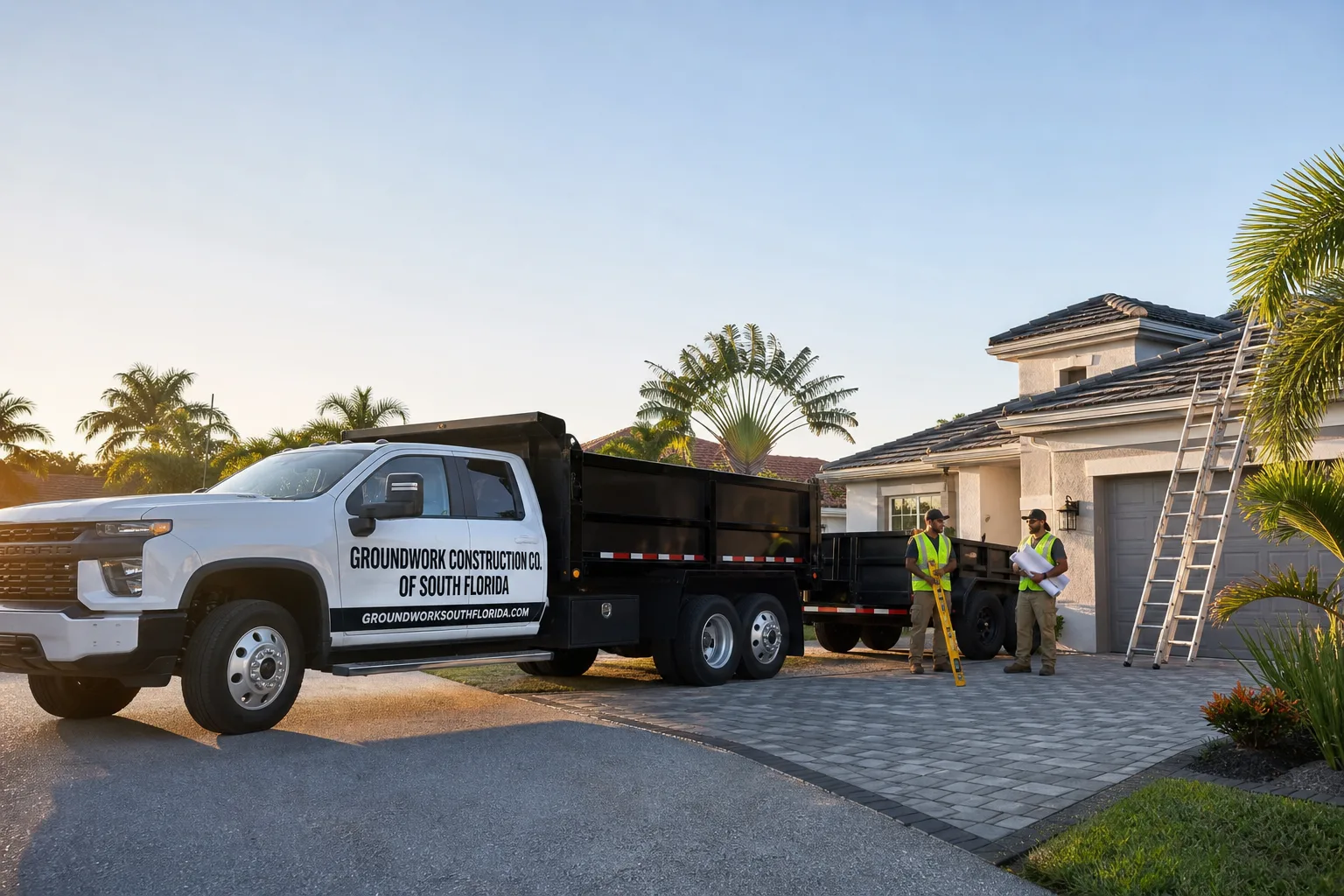
Glass Railing Systems in South Miami, FL - What to Expect
Glass railing systems in South Miami typically run $8,500-$22,000 for a full residential installation, depending on linear footage, mounting surface, and whether you’re working with existing concrete block structure or new construction. Most projects we handle in the 33143 area take 3-5 days of active build time after permits clear, though South Miami’s dual-track permitting process can add 2-4 weeks before we set foot on site. Call (844) 665-0162 and we’ll walk you through what’s realistic for your specific layout.
Homeowners here aren’t just after the clean sightlines. In a city where mature live oaks and royal poincianas dominate the view from every second-story deck and balcony, a solid railing wastes what makes South Miami worth living in. Glass keeps the canopy visible, the breeze flowing, and meets Miami-Dade HVHZ wind-load requirements when spec’d correctly. But “spec’d correctly” is where most projects stumble, especially in this municipality.
How We Build Glass Railing Systems - Start to Finish
We’ve refined this into five distinct stages after years of working CBS ranch homes from South Miami’s post-WWII stock. Each stage has a decision point where your input shapes the next step.
Stage 1: Site measure and structural assessment (Day 1, 2-3 hours)
We don’t estimate from photos. A technician walks the mounting surface - concrete slab, wood-framed deck, or tie-beam edge - and checks for plumb, level, and load capacity. On South Miami’s aging CBS construction, we often find spalling concrete or corroded rebar at the mounting edge, especially on homes built before 1970 with original flat roofs that have leaked for decades. You’ll decide here whether we repair the substrate as part of our scope or bring in a separate concrete restoration contractor. Most homeowners fold it in; the coordination savings usually outweigh any modest premium.
Stage 2: Design lock and permit submission (1-2 weeks)
You’ll choose glass thickness (1/2-inch tempered vs. 3/4-inch laminated), top cap style (stainless steel flat rail, wood cap, or frameless edge), and mounting hardware finish (brushed 316 marine-grade stainless, powder-coated aluminum, or black oxide). We draft structural drawings showing wind-load calculations for 170 mph gusts per Miami-Dade HVHZ requirements. Here’s where South Miami’s separate building department matters: we file simultaneously with the city for the railing permit and, if your lot has protected trees within the construction zone, with the urban forestry division for the mandatory arborist survey. Missing this second track kills timelines. We’ve seen contractors who work Kendall or Coral Gables assume county-unified permitting and face six-week delays.
Stage 3: Material fabrication (2-3 weeks, concurrent with permitting)
Glass gets cut to measured lengths, polished, and tempered or laminated per spec. Hardware is machined. We don’t keep inventory; every job is fabricated to fit, which is why accurate field measurements matter. You’ll receive a delivery window once fabrication completes, typically 48 hours before install.
Stage 4: Installation (Days 1-3 of active build)
Demo of existing railing if present. Core drilling or surface mounting per engineering. Setting posts or base shoes, installing glass panels, attaching top caps, and sealing all penetrations. On South Miami’s chronically flood-prone lots, we slope all horizontal surfaces and use marine-grade sealants at every penetration to prevent the standing-water damage we see on neighboring properties.
Stage 5: Final inspection and walkthrough (Day 4 or 5)
South Miami building inspectors verify structural attachment and glass labeling (tempered or laminated certification marks must be visible). We walk you through cleaning protocols - no ammonia-based products, ever - and document any punch-list items. Final payment is due at this walkthrough, not before.
The Glass Railing Options You’ll Actually Choose Between
- Framed vs. frameless: Framed systems use posts every 4-6 feet with glass captured in aluminum or stainless channels. They’re less expensive ($180-$280 per linear foot installed), tolerate minor substrate irregularities better, and meet HVHZ requirements with lighter glass. Frameless base-shoe systems run $320-$450 per linear foot, demand laser-level substrates, and deliver the uninterrupted views that sell this product in the first place. Most South Miami second-story balconies go frameless; ground-level pool enclosures often go framed for the cost savings and kid-resistant durability.
- Tempered vs. laminated glass: Tempered breaks into granular chunks; laminated holds together when shattered like a car windshield. Laminated costs 30-40% more but is required by code for railings above certain heights and recommended anywhere falling glass would endanger a walkway or pool deck. We default to laminated on all South Miami installations - the tree canopy means branches come down in storms, and laminated survives impact better.
- Top rail or no top rail: A stainless steel or wood cap provides a hand grip, reduces edge-chip damage, and meets some interpretations of graspability code. Going without (true frameless) looks cleaner but requires thicker glass and more rigid mounting. Your call, but we’ll flag when code limits the choice.
- Surface mount vs. core drill: Surface-mounted base plates bolt to your slab or deck; core-drilled spigots sink into concrete with epoxy. Core drill looks cleaner but requires 4-6 inches of sound concrete depth - often missing in South Miami’s older slabs with post-tension cables or shallow pours. We assess this in Stage 1 and won’t promise core drill until we’ve verified substrate.
What Glass Railing Systems Cost in South Miami, FL
| Project Scope | Typical Range |
|---|---|
| Small balcony (20-30 linear ft), framed, tempered | $8,500-$12,000 |
| Mid-size deck (40-60 linear ft), frameless, laminated | $15,000-$22,000 |
| Pool enclosure (80+ linear ft), framed, tempered | $18,000-$28,000 |
| Structural substrate repair (if needed) | $1,500-$5,000 |
| South Miami tree survey/mitigation (if triggered) | $800-$2,500 |
Five variables push you to the high or low end of these ranges. First, linear footage is obvious but non-linear: short runs have higher per-foot costs due to fixed mobilization and minimum fabrication charges. Second, existing condition of your mounting surface - spalling concrete, rotted wood, or inadequate tie-beam depth all add repair scope. Third, glass type and thickness, with laminated frameless at the premium end. Fourth, access difficulty: second-story balconies requiring scaffolding or interior protection cost more than ground-level pool decks. Fifth, permit complexity: South Miami’s tree-canopy ordinance triggers that dual-track filing on roughly half the residential lots we work, adding both direct fees and timeline.
Our written estimates include fabrication, installation, hardware, sealants, and one post-installation inspection visit. They don’t include tree survey or mitigation fees (paid directly to the city or their contracted arborist), structural engineering if your home requires stamped drawings beyond standard calculations, or finish carpentry to repair interior drywall disturbed during balcony access. We itemize these so you’re not surprised.
What South Miami Homes Specifically Do to This Job
South Miami’s 2.3 square miles of incorporated land operate by rules that surprise even experienced Miami-Dade contractors. The city maintains its own building department with code amendments separate from unincorporated county procedures, and its urban tree-canopy protection is among the most aggressive in the region. Any construction permit - including glass railing systems mounted to an existing balcony - triggers a mandatory tree survey if protected species fall within the construction radius. We’ve seen homeowners on Sunset Drive and Red Road assume a simple “no trees in my way” exemption, only to learn that a neighbor’s mature live oak root zone extends across the property line and into the build footprint. The city then requires an arborist report and potentially a mitigation fund payment before issuing the building permit. Contractors who don’t file both tracks simultaneously cost their clients weeks.
The housing stock compounds this. Most homes here are concrete block structure ranches built 1945-1970, many with original flat roofs, aging tie-beam construction, and electrical panels that no longer meet current HVHZ standards. A glass railing installation on a second-story balcony often reveals that the tie-beam edge has spalled from decades of moisture intrusion, or that the original slab pour was shallow and won’t accept core-drilled mounting without structural reinforcement. We address this in our initial assessment rather than discovering it mid-project, but it means “just the railing” rarely stays that simple in South Miami.
The flood risk is real and specific. South Miami’s limited stormwater infrastructure means lot-level ponding during summer thunderstorms is routine, not exceptional. Every penetration we make into a concrete slab or deck gets marine-grade sealant and deliberate slope to shed water. We’ve repaired too many neighboring installations where standard caulk failed after two wet seasons and corrosion bloomed behind the base plates.
Homeowners in Glenvar Heights and Coral Gables sometimes ask us to cross the municipal line, but we maintain separate permitting workflows for South Miami precisely because the process differs. If you’re also considering exterior work beyond railings, Windows & Doors in South Miami covers the full envelope scope, and many clients bundle balcony railings with sliding door replacement as part of a single Windows & Doors project managed by our crew. For properties in the broader area, we also serve South Miami from our Fort Lauderdale base. Some homeowners pair exterior upgrades with hardscape work - Fence Repair in South Miami or Paver Driveways in South Miami - to coordinate site access and finish schedules.
Serving South Miami, FL - Our Local Coverage Area
We’re based in the South Miami area and know this community well. Use the map below to see our service coverage - if you’re nearby, we can almost certainly help.
Frequently Asked - Glass Railing Systems in South Miami
Active construction takes 3-5 days, but permitting in South Miami typically adds 3-6 weeks due to the city’s separate building department and potential tree-survey requirements. Call (844) 665-0162 and we’ll check current turnaround times based on your lot’s specific tree canopy situation.
Yes, all glass railing systems require a building permit, and South Miami’s tree-canopy ordinance may trigger a secondary arborist survey before issuance. We handle both filings simultaneously as part of our standard process.
Typically yes - glass railings mount to structural edges and rarely interfere with interior systems. The exception is older South Miami homes with electrical conduit run exterior-wall surface; we route around or briefly interrupt service during mounting, restored same-day.
Framed systems with 1/2-inch tempered glass on sound existing substrate, skipping the frameless premium and laminated upgrade, land around $180 per linear foot installed. We won’t spec below HVHZ wind-load minimums regardless of budget. Call (844) 665-0162 for an exact quote - estimates are free.
We warranty installation workmanship for two years and pass through manufacturer warranties on glass and hardware, which range from 10 years to lifetime depending on brand and finish selected. Glass breakage from impact isn’t covered - that’s homeowner’s insurance territory.
Ready to See Through Your New Railing
Glass railing systems in South Miami reward homeowners who plan for the city’s specific permitting rhythm and aging housing stock. Call (844) 665-0162 to schedule a free on-site measure. Raymond Estevez or a member of our team will walk your balcony or deck, assess substrate condition, flag any tree-canopy triggers, and deliver a written estimate with real numbers - no placeholder ranges, no surprises after permit filing.
Written by Raymond Estevez, Owner at Groundwork Construction Co., serving South Miami since our founding.