
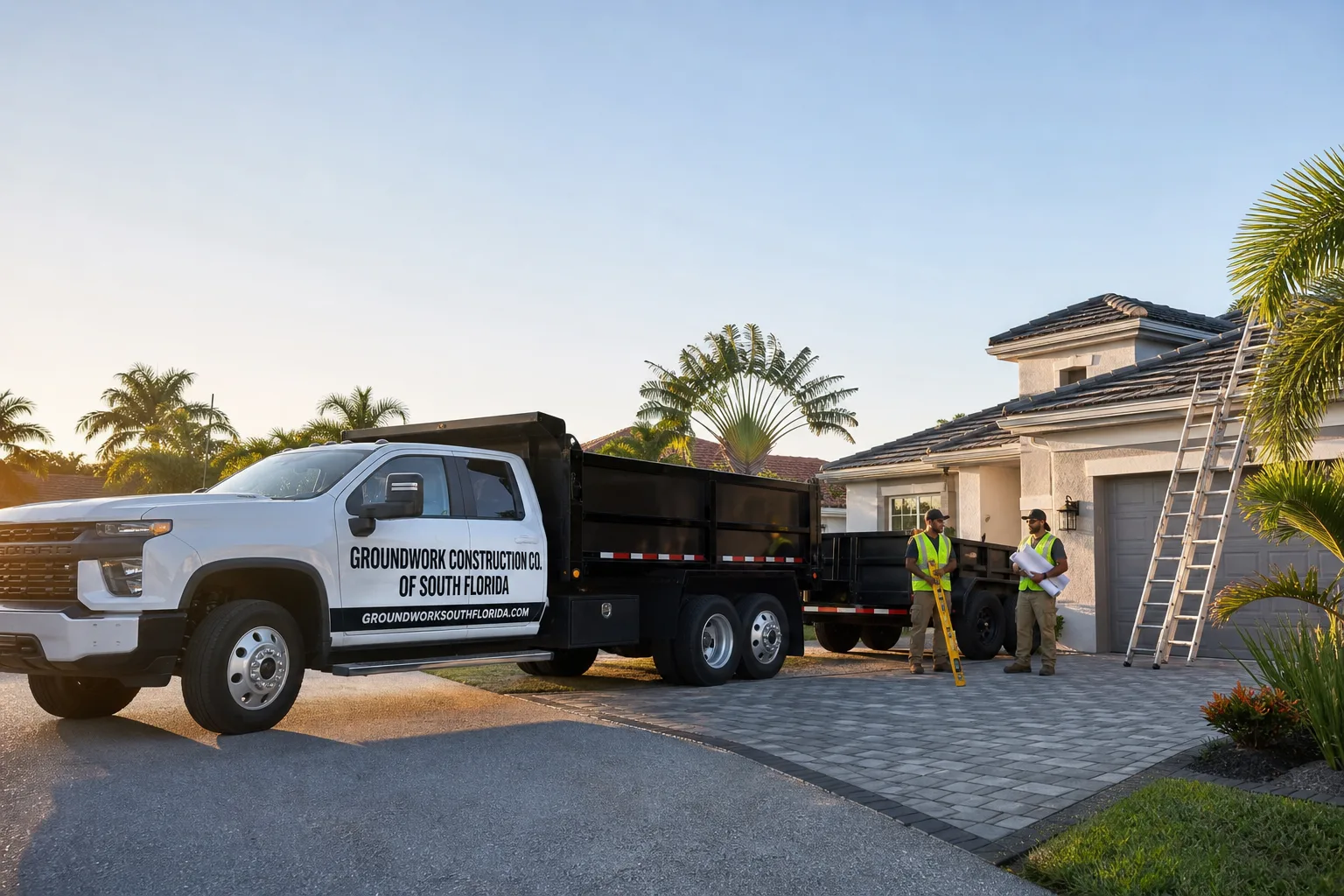
Tile Roofing in Hobe Sound, FL: Scope, Timeline, and What to Budget
Tile roofing in Hobe Sound, FL involves removing your existing roof system, inspecting and repairing the decking, installing underlayment and hurricane-rated fastening, then laying clay or concrete tile with proper flashings and ventilation. Most residential tile roof projects here take 7 to 14 working days from tear-off to final inspection, depending on whether your home needs structural upgrades to meet current Martin County wind codes. For a typical Hobe Sound home, you’re looking at roughly $15,000 to $40,000 for a full tile roof installation. Call (844) 665-0162 and we’ll walk your property with you to narrow that range before you commit to anything.
How We Handle a Tile Roof Installation Start to Finish
We’ve learned that homeowners stay calm when they know what’s happening above their heads each day. Here’s how we sequence a tile roofing job in Hobe Sound.
Day 1: Tear-off and decking inspection. We strip the old roof to the deck, then walk every square foot with you or send photos if you’re off-site. In Hobe Sound, we regularly find soft spots near the eaves where salt air has corroded the fasteners, or original 1960s-70s decking that’s below today’s 7/16″ minimum. If we hit damaged wood, we flag it immediately. You decide then whether to replace sections now or patch and monitor. This stage takes one day on most homes, two if we’re dealing with multiple layers or a barrel tile overlay that was never fully removed.
Day 2-3: Dry-in and structural prep. We install synthetic underlayment (we prefer double-layer systems in flood-prone zones) and begin any hurricane-strapping upgrades. Martin County inspectors want to see continuous load paths from roof to foundation on remodels where the roof is opened up, so older homes in the 33455 mainland often need additional tie-downs at this point. This is where the job timeline can stretch if we discover the original builder skipped strapping. We’ll show you exactly what’s missing and what code requires before we proceed.
Day 4-8: Tile installation. Clay S-tiles, flat concrete, or high-profile barrel tiles go down in sections, starting at the eaves and working up. We stage materials close to the roofline to avoid crushing landscaping, a real concern on the mature lots common in Hobe Sound’s older neighborhoods. Each tile gets fastened to Miami-Dade HVHZ standards, not just nailed. You choose your tile profile and color before this stage begins; once we’re laying, changes cost time and money.
Day 9-10: Flashing, ventilation, and detail work. Valley metal, ridge caps, pipe boots, and any custom metalwork get finished. We also verify your attic ventilation meets current standards. Hobe Sound’s heat and humidity punish poorly vented tile roofs; we’ve seen premature underlayment failure on homes where the original builder relied on gable vents alone.
Day 11-14: Inspection and cleanup. Martin County requires a roofing inspection for tile installations, and if you’re in a flood zone or near the Coastal Construction Control Line, the inspector may want to see your elevation certificate and strapping documentation. We handle the scheduling and meet the inspector with your file. Final walkthrough with you, magnet sweep for fasteners, and we’re done.
The Tile Choices You’ll Actually Decide Between
Tile roofing in Hobe Sound isn’t one product. The material you pick drives cost, weight, and how your roof handles our coastal environment.
- Clay S-tile or Spanish tile: The classic curved profile, 800-1,100 pounds per square. Genuine clay weathers salt air better than concrete and can last 50+ years, but it’s the most expensive option and requires heavier structural support. Best for homeowners planning to stay long-term and willing to reinforce framing if needed.
- Flat concrete tile: 900-1,200 pounds per square, lower cost than clay, and available in more colors and finishes. Concrete absorbs more moisture and can show efflorescence in our humid climate, though modern surface treatments help. A practical middle ground for many Hobe Sound ranches and Mediterranean-style homes.
- High-profile barrel tile: Dramatic curves, excellent water shedding in heavy rain, but the most visually dominant choice. Works well on custom builds and renovations where architectural character matters. Weight and cost sit between clay S-tile and flat concrete.
- Lightweight composite or metal tile lookalikes: Under 600 pounds per square, often acceptable on existing structures without structural upgrades. These trade some authenticity and longevity for feasibility on older homes with limited load capacity. We evaluate your rafter spacing and span before recommending this route.
- Underlayment grade: Standard felt vs. self-adhering membrane vs. full double-layer synthetic. For Hobe Sound’s wind exposure and driving rain, we typically spec double-layer systems on homes within a mile of the Atlantic or Intracoastal. The up-front cost difference is modest compared to the protection it buys.
Our roofing crew sources tile from manufacturers including Boral and others in our broader roofing portfolio, so you’re choosing from proven products rather than whatever’s in the warehouse this week.
What Tile Roofing Costs in Hobe Sound, FL
For a full tile roof installation in Hobe Sound, most homeowners land between $15,000 and $40,000. Tile roof repair runs $600-$2,500 for localized issues.
Five factors push you toward the high or low end of that installation range:
- Roof size and complexity: A simple gable roof on a 1,800-square-foot ranch costs less than a multi-plane roof with turrets, dormers, or multiple valleys. Each break in the plane adds labor and flashing material.
- Existing condition and structural needs: If your decking is sound and your framing already meets current wind codes, you save thousands. If we need to sister rafters, add strapping, or replace significant decking, that labor and material adds up fast.
- Tile material and profile: Clay S-tile runs 30-50% more than flat concrete for the same roof area. Barrel tile and custom colors or blends add premium.
- Access and protection requirements: Homes on Jupiter Island or tight mainland lots with mature oak canopies require more careful material handling and protective measures. Pool enclosures, delicate landscaping, or tight setbacks between structures slow the crew and add labor hours.
- Permit scope and inspection complexity: Martin County’s coastal construction rules can trigger additional reviews if your home sits near the CCCL or in an AE flood zone. We handle this paperwork, but the permit fees and potential re-inspections factor into total project cost.
A written estimate from us includes tear-off, disposal, decking repair up to a specified square footage, underlayment, tile, fasteners, flashings, ventilation components, permits, and inspections. It does not include interior repairs from pre-existing leaks, structural engineering if your framing needs redesign, or tree trimming for access. We’ll flag any of those separately before you sign.
What Hobe Sound’s Conditions Mean for Your Tile Roof
Hobe Sound sits entirely within Martin County, which has spent decades legally defending its slow-growth policies against development pressure from Palm Beach County. That regulatory stance isn’t abstract for your roof project. It means contractors here must navigate the Coastal Construction Control Line, environmental buffers tied to the Hobe Sound National Wildlife Refuge, and Loxahatchee River-adjacent flood zone requirements that simply don’t apply just across the county line in Jupiter or Palm Beach Gardens.
The housing stock tells its own story. On the mainland side in 33455, we work on mid-century Florida ranches from the 1960s through the 1980s, many with original roofs long past service life. These homes often lack modern hurricane strapping and require full tie-down upgrades when the roof comes off for permitted work. The barrier island corridor near Jupiter Island drives different demands: high-end construction with strict wind-load and impact-rated envelope requirements, where tile roofing must integrate with impact windows and reinforced garage doors as part of a complete system.
Salt-air corrosion is the failure mode we watch most closely. Homes within a mile of the Atlantic or Intracoastal Waterway show accelerated fastener and flashing deterioration. We’ve replaced tile roofs in Hobe Sound where the tiles themselves were fine but every nail and valley metal had turned to powder. That’s why we spec stainless or hot-dip galvanized fasteners and copper or lead-coated valley metal in coastal exposure zones, even when code doesn’t demand it.
And if your property borders the refuge or known gopher tortoise habitat on the north end of town, Martin County’s Development Review Committee can impose stop-work orders on ground-disturbing work that seemed routine. We research your parcel’s environmental constraints before we quote, not after we’re shut down.
Many homeowners tackling a full exterior upgrade pair tile roofing with Impact Windows & Doors in Hobe Sound or Sliding & Patio Doors in Hobe Sound to meet the same wind and water intrusion standards throughout the envelope.
Serving Hobe Sound, FL - Our Local Coverage Area
We’re based in the Hobe Sound area and know this community well. Use the map below to see our service coverage - if you’re nearby, we can almost certainly help.
Frequently Asked - Tile Roofing in Hobe Sound
Most tile roofing projects in Hobe Sound take 7 to 14 working days from tear-off to final inspection. Older homes needing structural upgrades or properties in flood zones with additional permit reviews can stretch toward three weeks. Call (844) 665-0162 and we’ll give you a tighter timeline after seeing your roof structure.
Yes. Martin County requires a roofing permit for all tile roof installations, and homes near the Coastal Construction Control Line or in AE/VE flood zones may need additional elevation and environmental review. We pull permits as part of our standard process and meet inspectors on your behalf. The permit cost is included in your written estimate.
Sometimes, if your decking is sound, properly nailed, and meets current thickness standards. We can’t know until we tear off the old roof and inspect. In Hobe Sound’s older housing stock, we find compromised decking more often than not, especially near eaves and valleys where leaks pooled undetected. We photograph everything and let you decide before cutting any new wood.
Tile roofing costs more upfront than asphalt shingle and sits in a similar range to metal on many homes, but it outlasts both in Hobe Sound’s climate when properly installed. Clay tile can exceed 50 years; concrete typically reaches 30-40. The weight requires sound structure, so it’s not right for every home. We’ll tell you honestly if your framing or budget points toward a different material.
Material warranties come from the tile manufacturer and vary by product line, typically 50 years for premium clay and 30-50 years for concrete. Workmanship coverage is separate and depends on the scope and conditions of your specific project. We detail both in writing before you sign, so there’s no ambiguity about what’s covered and for how long. Call (844) 665-0162 to review warranty terms for the tile you’re considering.
Ready to Talk Through Your Tile Roof Project?
We’ll walk your Hobe Sound property, assess your existing roof structure, and give you a written estimate with real numbers, not a range designed to get our foot in the door. No pressure, no deposit required to get the quote. Call (844) 665-0162 or reach out through our Hobe Sound service page. If your tile roofing project is part of a full exterior renovation, we’ll also coordinate how it ties into Roofing in Hobe Sound more broadly, including any impact-rated windows, doors, or structural work needed to bring the whole envelope up to current Martin County standards.
Written by Raymond Estevez, Owner at Groundwork Construction Co., serving Hobe Sound since our South Florida expansion. Every estimate includes a face-to-face site review, not a satellite guess.